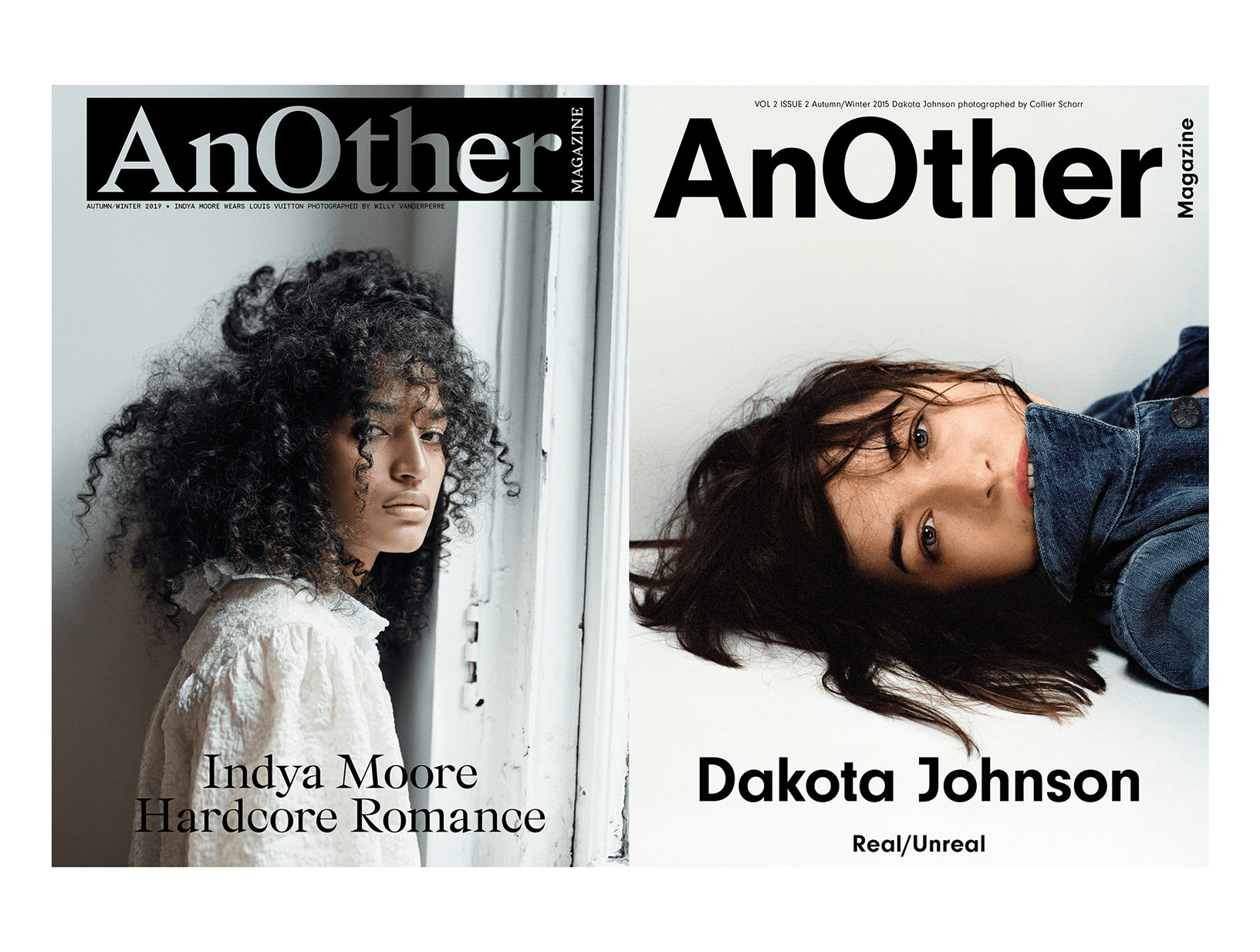
Left: ANOTHER MAGAZINE Autumn/Winter 2019; INDYA MOORE. Photography by WILLY VANDERPERRE; Right: ANOTHER MAGAZINE Autumn/Winter 2015; DAKOTA JOHNSON. Photography by COLLIER SCHORR

‘Wondering Is Underestimated’: Susannah Frankel on creativity and depth in fashion journalism

Susannah Frankel
fashion journalism
fashion industry
creativity in the digital age
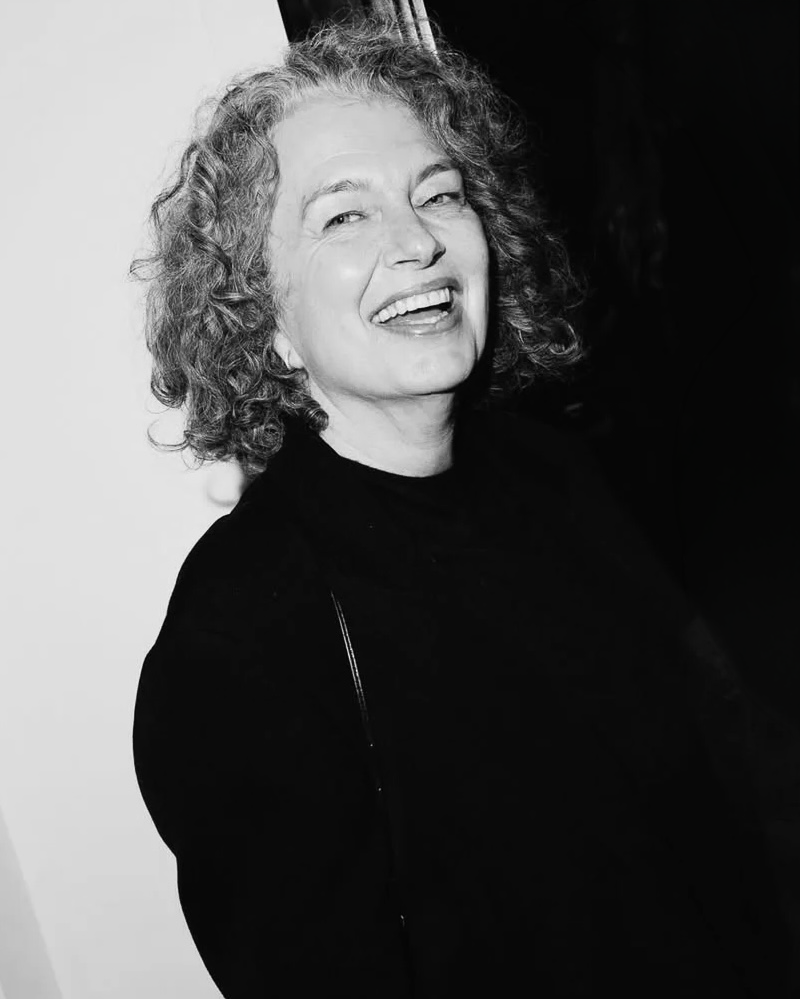
Courtesy of SUSANNAH FRANKEL
Susannah Frankel
fashion journalism
fashion industry
creativity in the digital age
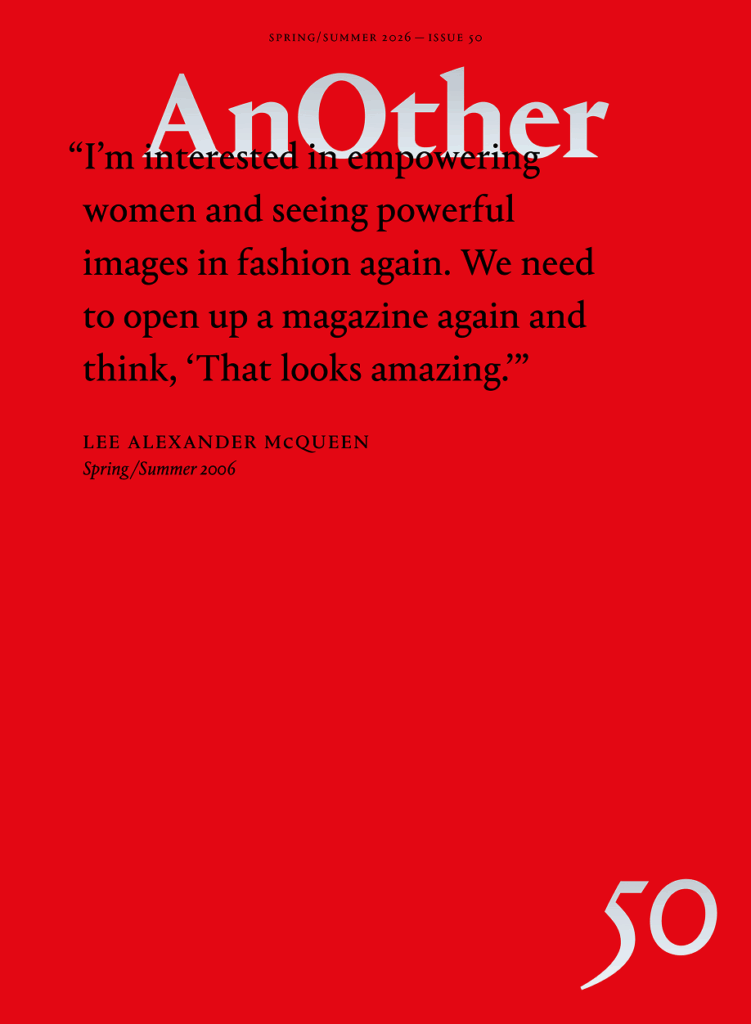
ANOTHER MAGAZINE Spring/Summer 2026 – Kinship
Quote by LEE ALEXANDER MCQUEEN, Spring/Summer 2006

Susannah Frankel has been one of the most important voices in fashion journalism for several decades. Her career moves between institutions and moments that reshaped the industry itself—from early roles at BLITZ, to fashion editor at The Guardian and The Independent, and now editor-in-chief of AnOther, a biannual publication she has helped develop into a distinct voice in contemporary fashion and culture.

Early on, she moved between art and fashion publishing, working on editorial projects that placed her in unusually rich creative environments before joining BLITZ. The real shift came in the 1990s, when she began writing about a new generation of designers changing the language of fashion from within. She reported on the McQueen and Chalayan shows that helped redefine what fashion could be. It was also through Lee Alexander McQueen that her work took on a more personal dimension—an encounter that became, in her own words, a defining point in how she thought about fashion, and her role within it.

A long-standing champion of creativity in the digital age, Susannah works closely with photographers, stylists, and designers who have pushed fashion closer to art, giving them the time and space to fully realise their vision. In a media landscape defined by speed, noise, and volume, her position is almost contrarian: slow down, look harder, let things be.

In this conversation with hube’s editor-in-chief, Sasha Kovaleva, she reflects on decades in the industry, the designers who changed her, the pressures weighing on independent publishing, and what she still hopes readers feel when they close the magazine.

Sasha Kovaleva: Many people fall into media, but few stay with it the way you have—with such passion and curiosity. Could you tell us more about your professional journey? What encounters or turning points shaped it most profoundly?

Susannah Frankel: I studied English at Goldsmiths. After graduation, in 1986, I worked at Academy Editions, a publisher of books and two magazines focused on art and architecture. I was very young when I found myself editing the work of renowned writers on both subjects—Charles Jencks was one of them—and collaborating with the Tate’s education department on a series of symposia featuring speakers such as Bernard Tschumi, Peter Eisenman and Zaha Hadid. When I think about it now, it was crazy that someone of my limited experience fell into that role. I was completely out of my depth.

From there, I took what was probably a more realistic position at BLITZ magazine, coordinating and writing art and fashion coverage. I worked with Kim Bowen, which was a riot. When she first moved to LA, I looked after her cat in her flat above the Pillars of Hercules in Soho. By the time BLITZ closed in 1991, I had become deputy editor.

After that, I worked as a freelancer, including for the consumer section of Time Out magazine. My friends called me ‘Consumer Woman’. Then, I landed the role of fashion editor at The Guardian.

I was an unlikely choice. I think the editors assumed I would be anti-fashion and certainly anti anything costing more than £100. However, the opposite happened with me. The liberal press in the UK at that time was suspicious of, and even hostile towards, fashion. The wish to secure advertising and nurture a symbiotic relationship was just beginning. Writer and editor Sally Brampton became my mentor. Through her, I met Rei Kawakubo, John Galliano, Yohji Yamamoto, Issey Miyake, and Azzedine Alaïa. Sally was brilliant—an inspiration.

On my own, I met Lee McQueen, and that was a turning point. I feel that many writers have one person in particular who drives their passion for their work, and for me, that person was Lee. He made me think harder, work harder, try harder. I wrote about him in The Guardian. Our personal relationship began when I started accompanying him to events. He was nervous. I was too. We went to 10 Downing Street and to a dinner hosted by the current King, who was then the Prince of Wales. We were seated at a table with Prince (the singer-songwriter, not the future King) and Lenny Kravitz. No one really talked to us.

The minute I met Lee, I knew he was special: someone who understood and created the most awe-inspiring fashion, but whose aesthetic and sensibility travelled way beyond that. There was scope then for the kind of experiential shows that Lee (and Hussein Chalayan) staged in London in the late 90s. I feel incredibly privileged to have witnessed that and to have had personal and professional relationships with them both. Back then, The Guardian wasn’t so keen on fashion, but the fashion world loved The Guardian. Lee was particularly excited by the wide-angle shots of his shows in the paper the following morning—probably more so than by any accompanying words.

Lee introduced me to Jefferson Hack and I started writing for Dazed. I then moved from The Guardian to The Independent as fashion editor. Simon Kelner, editor of that paper at the time, was respectful towards fashion and gave us room to do something different. I worked with Sophia Neophitou as a stylist, and looking back, we achieved some incredible things that you could never imagine being possible in a national newspaper today. For example, we did a Margiela story, shot by Martina Hoogland Ivanow (I still love her work; she shot for the last issue of AnOther).  In one image the model was completely naked except for a mask. We also did a story with Mert & Marcus at the beginning of their careers. They photographed the Autumn/Winter 1999 McQueen Overlook collection for us. There were wolves, which were expensive to hire, and the budget was an issue, but we didn’t care. Sophia was, and still is, a wonderful human being and such a force.

When AnOther was launched in 2001, Jefferson [Hack] asked me to be the Fashion Features Director. Ten years ago, he offered me his position as editor-in-chief. I remember he called me while I was in Paris, and I was so happy. I feel emotionally attached to the title for many reasons. All of the work that I am most proud of, aside from books, has been published in AnOther. It was Jefferson who gave me the opportunity to work with more of fashion’s great stylists, photographers, and art directors.

To be fair to myself, I think I had the writing—and perhaps the voice—nailed. I will always be grateful to him, though. Being an independent publisher is not easy, but Jefferson and Rankin have consistently encouraged creativity and individuality. They support people who know what they think and love what they do. We have the freedom to be ambitious, to nurture talent, to celebrate it, and to collaborate with it at the highest level—which is increasingly rare. Our approach is always collaborative, and we are nothing without our collaborators and contributors.

AnOther is not only a fashion magazine. It is built around culture more broadly. But fashion, in a cultural context, is at its core. For me, it has always been about the designers: Karl Lagerfeld, with whom I spent more than my fair share of time, Rei Kawakubo, whose show still brought tears to my eyes this season after thirty years (I’m a crier), Vivienne Westwood, with whom we had a lovely dinner a long time ago, Rick Owens, the most brilliant, warm and intelligent man, Yohji Yamamoto, Alber Elbaz, Helmut Lang, Junya Watanabe, John Galliano, Issey Miyake, Dries Van Noten, Martin Margiela, Miuccia Prada, Raf Simons, Pieter Mulier, Jonathan Anderson and, of course, Sarah Burton, whom I also love. How amazing to have met and worked with them all. Why would I ever want to stop?
SK: What do you think is missing from today’s fashion and cultural media discourse? Are there narratives, voices, or formats that you feel remain overlooked or underrepresented?

SF: Time and space are missing. There are so many shows, so much product, so many voices, so much noise. While I love the internet’s original democratic spirit and its current presence across social media platforms, our job as creatives—writers, photographers, stylists, and art directors—has changed immeasurably. The joy of the biannual is that its raison d’être is to slow things down, to make time and space for thought, and to allow contributors creative freedom. Of course, there are commercial considerations—and sometimes constraints—but the politics of that conversation are also exciting. I always think that, at its roots, fashion is about sex, money, and power, and that is a pretty dynamic and intoxicating combination.

SK: Independent magazines are often celebrated for their freedom—but in reality, no publication is ever fully independent. What kinds of invisible pressures (financial, cultural, political) do you feel weigh most heavily on AnOther?

SF: I’ve already answered that in part, but mainly at AnOther we survive by focusing on people whose work we respect. It’s nothing new that even the big news titles are less willing to take a critical stance, but this far into my career, I understand why you would want to. As a young journalist, I was sometimes motivated by biting the hand that feeds and the strength of rebellion. That no longer interests me so much. I want to celebrate the great things about fashion and culture, and the things we think are great are in the edit. The things we don’t—aren’t.

SK: You’ve witnessed the transformation of fashion journalism over decades. Do you feel the role of the critic has fundamentally changed, or just the conditions in which they speak?

SF: I always say that I would hate to be a reviewer now. Apart from anything else, there are so many shows. The job of a fashion journalist has also changed completely. When I started, there were no show notes, no previews, no access to designers’ post-show—unless you were the wonderful Suzy Menkes or worked for Women’s Wear Daily or The New York Times. You would see a show, leave, and then write about it, knowing that, pre-internet, no one had seen what you were writing about. At least half of the job was therefore to describe it in a vivid, vital, and entertaining way. Sometimes you understood what a designer was trying to say; other times, you missed the point. But that really didn’t matter. It was more about any honest response—good or bad.

Now, the majority of open criticism is at the fringes of fashion journalism, on the more maverick social media platforms, which I enjoy and follow for that. Having seen how hard people in fashion work and the pressure that entire teams are under—not to mention that the lives of hundreds of thousands of people depend on the fashion industry—more establishment reviewers are rightly more careful. That takes resourcefulness. The good ones—Alexander Fury, our main reviewer on the magazine website, being one of them—build stories around clothes and put shows into historical and cultural context. The one thing that I hope remains the same, then as now, is the wish to excite the readers as much as I or they are excited. There’s an almost evangelical push to communicate just how life-enriching, fashion can be. There certainly is for me.

SK: Fashion and art increasingly overlap, yet they still operate within different economies and expectations. Where do you feel the conversation between them becomes most meaningful?

SF: I understand the relationship, of course. In the end, both are centred around aesthetics. But fashion and art are different media, and in the magazine, we keep them distinct. I know that art coverage may varnish fashion, and sometimes vice versa, but I prefer them to be separate. I’m proud of our art projects. We do a major project in every issue. We are giving someone we greatly admire and whose work and world is not always well known or easily understood, the space to curate a section of the magazine, either in the edit or by giving us new work. I wouldn’t feel comfortable if there were a commercial slant to that.

SK: London has long been associated with a certain rawness and unpredictability. Do you still feel that energy in the city today, or has it shifted into something else?

SF: I wish I could say it was the same. While there are exceptions, the fundamental shift in arts education—which now requires students to pay for it—has changed things. I doubt very much that designers like John Galliano and Alexander McQueen could make it in today’s world. There’s no grant system, and education is prohibitively expensive. That makes me sad.

SK: What does a truly honest relationship between a publication and a brand look like to you—if it exists at all? Is there a point beyond which you’re no longer willing to compromise?

SF: For us, the secret is to work with people whose point of view we understand and respect, and I hope that it’s mutual. Of course, there are compromises on both sides, but the goal is for these never to affect the quality of the end result. Relationships are built mostly on trust, and we hope that people trust us. The vast majority of the time, we trust the people we work with. The theme of the 50th issue of AnOther is kinship: the idea of like-minded individuals coming together to create something beautiful. There is great joy in the making of things. That is the aim, the joy, and the goal.

Susannah Frankel
fashion journalism
fashion industry
creativity in the digital age
ANOTHER MAGAZINE Autumn/Winter 2023
HUNTER SCHAFER
Photography by VIVIANE SASSEN
Susannah Frankel
fashion journalism
fashion industry
creativity in the digital age
ANOTHER MAGAZINE Spring/Summer 2016
KARL LAGERFELD
Artwork by ROB MUNDAY
Susannah Frankel
fashion journalism
fashion industry
creativity in the digital age
ANOTHER MAGAZINE Spring/Summer 2026
Self-portrait by CATHERINE OPIE (1970)
Susannah Frankel
fashion journalism
fashion industry
creativity in the digital age
ANOTHER MAGAZINE Spring/Summer 2026 – Kinship
SOLANGE
Photography by GABRIEL MOSES

SK: When someone closes an issue of AnOther, what do you hope lingers with them?

SF: I never want to dictate. I always want to be open-minded and encourage people to think about what they have read or seen for some time afterwards. I want to be thoughtful and considerate, and of course I want there to be a clear—and, hopefully, original—point of view. But I also want to give people the space to think beyond that point of view, and inspire them to dig deeper and look further afield. Personally, I always want that from a magazine, or a book, a painting, a film, or a piece of music—I like it when it pushes me to wonder. Wondering is underestimated.

SK: What frustrates you the most about the fashion industry today and what gives you hope?

SF: I’m frustrated by how corporate and overcrowded the modern fashion industry has become. However, there are many exceptions—people who have found ways to work within that structure and still produce extraordinary work. These exceptions give me hope.

SK: Do you have a favourite cover at AnOther? If so, why that one?

SF: I love the lenticular portrait of Karl Lagerfeld for Spring/Summer 2016 for personal reasons, even though it is not the most aesthetically refined. It’s the only time we’ve ever featured a designer’s face on the cover. For the fifteenth anniversary of AnOther, ten years ago, I spent a year following Karl—Jefferson’s idea—going to all the shows, previews, and backstage, and interviewing him everywhere. That was one of the greatest experiences of my career. He was incredibly generous with his time, accommodating, and always so funny. Sometimes he would say to me: ‘Is that the best you can do today, Mrs Frankel?’ (in a room full of journalists). Once, he said: ‘You need to read your Marlowe, Mrs Frankel.’

I also love Indya Moore by Willy Vanderperre and Olivier Rizzo (Autumn/Winter 2019). It’s a quiet image and a great team: sensitive, dignified, and true. Another favourite is Dakota Johnson, by Collier Schorr and Katie Shillingford, AnOther’s fashion director (Autumn/Winter 2015). It feels so direct and pure. You can really feel the relationship between photographer and subject. Then there’s Hunter Schafer by Viviane Sassen and Katie Shillingford (Autumn/Winter 2023). A ladybird landed on her face and Viviane captured the moment. That feels beautiful to me.

If I had to choose for the current issue, which is difficult, I would say Catherine Opie’s self-portrait—the first one she ever took—along with Chanel by Willy Vanderperre and Olivier Rizzo, and Solange by Gabriel Moses and Nell Kalonji. For the first time, we gave the literary section—Document—a cover. It’s just words, a quote from an interview with Lee McQueen. I love all the covers for this issue. It was hard work for me and the entire, incredible AnOther magazine team—there is no way I would ever be able to do this on my own, or want to. It was equally rewarding.

SK: What was the last piece of art, music, or writing that moved you deeply?

SF: I have just finished reading Virginia Giuffre’s Nobody’s Girl, an important book that I feel everyone should read. I loved Pillion. It’s so funny and very moving. I love horror films—pretty much all of them. And I love TV. I watch everything. I just finished watching all fifteen seasons of ER. I missed it the first time around. I am now even more of a hypochondriac. The headlines in AnOther all come from music, film, and books—some grand, some pop, some obscure, some obvious. Reading, watching, talking, and listening are all important.

SK: If you could invite three people from any time—living or dead—to dinner, knowing they would definitely accept, who would you choose?

SF: Vivienne Westwood, for her intelligence and humanity. Andy Warhol, without whom none of this would have been possible. And Jane Bowles—her Two Serious Ladies is one of my favourite books. All three are champions of otherness in their own way, communicating via different media. I like that.

SK: What three words would you use to describe the future?

SF: To be determined.

ISSUE 8

issue no8

Discover the new issue — available now