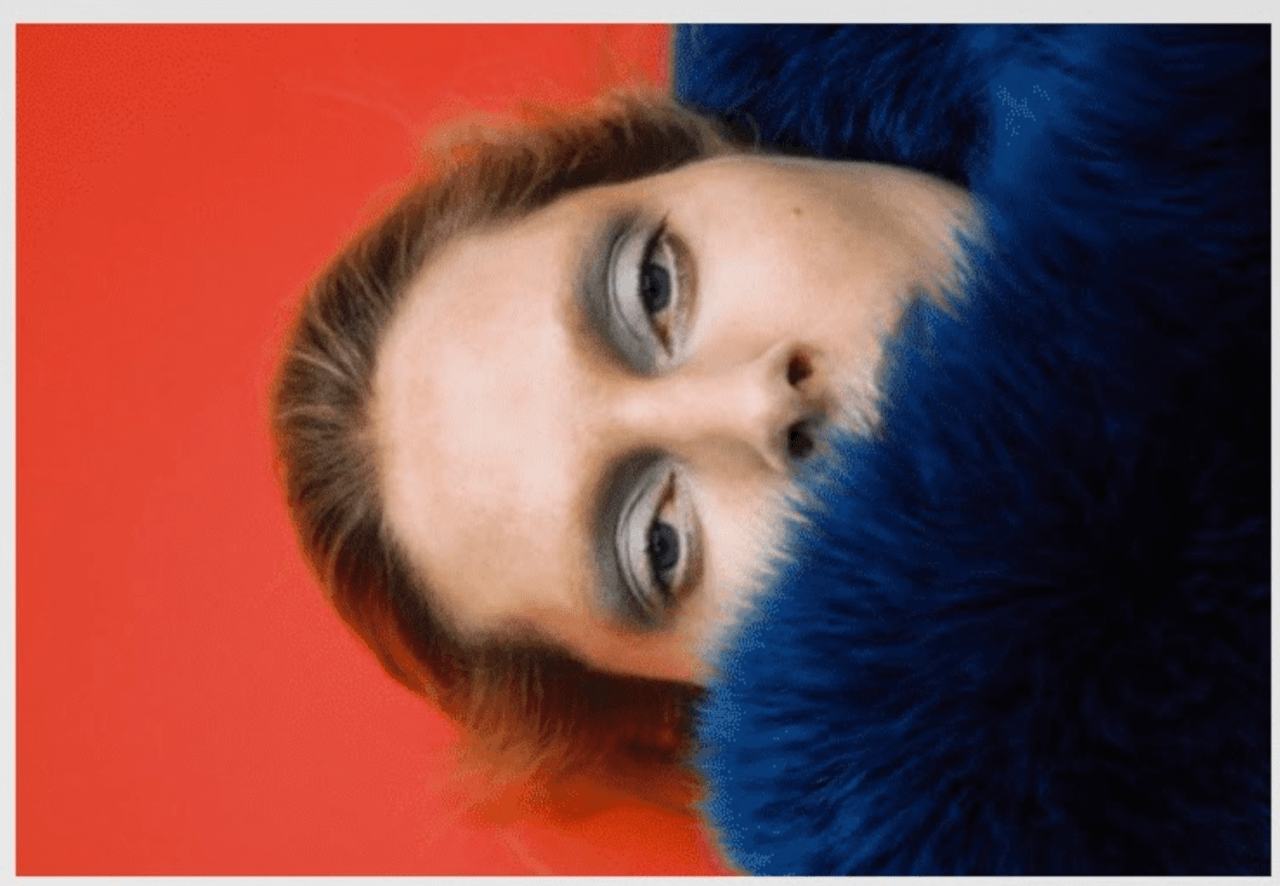
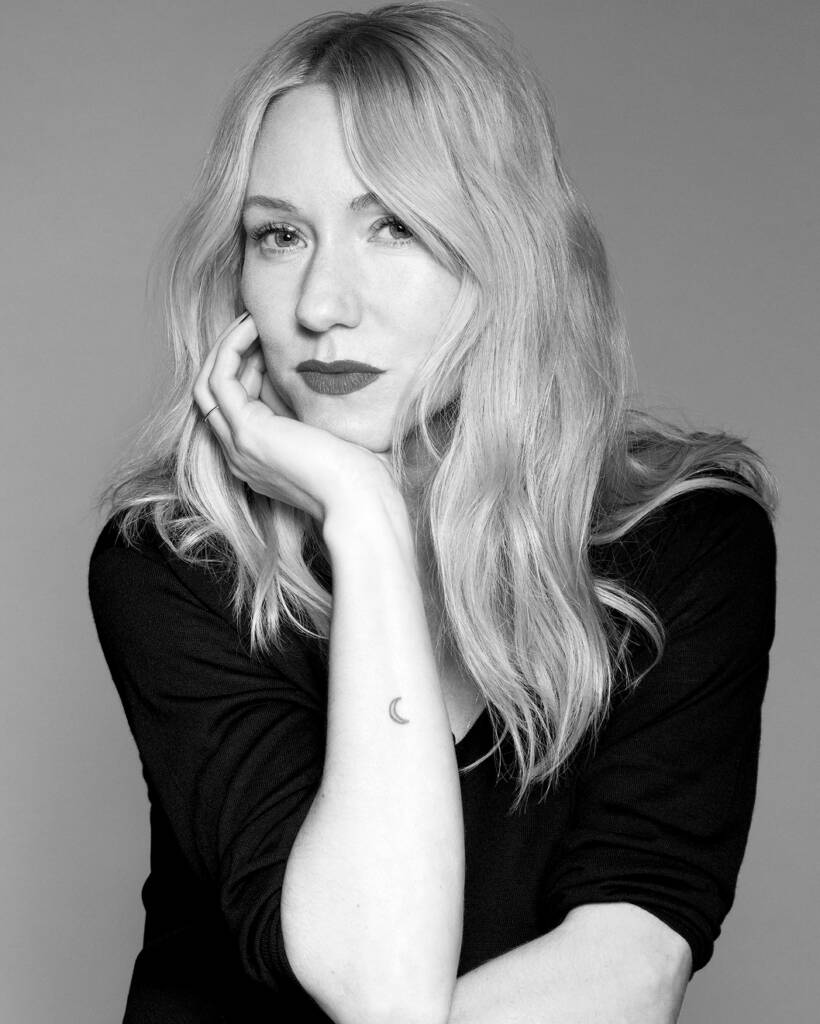
Lynsey Alexander, Prada Beauty’s Global Creative Make-up Artist, has become a leading figure at the forefront of the luxury beauty world–working with the biggest names in fashion, while also crafting palettes meant to be used by women of all walks of life. During her time at Prada, with the team she has vastly diversified the brand’s foundation colour scale, using AI technology to create tones for people of all shades while creating palettes embodying the Prada colour ethos–browns and metallics found together–this time fit to suit all groups of women. Born in Scotland with creative parents, Alexander arrived in the city of London with fresh eyes and a talent that could have been applied to any medium, yet found the beauty industry by chance. Lynsey Alexander sits down with hube to discuss her work, her drive, and her life outside the two that make it all worthwhile.
hube: How has your background in philosophy shaped the way you approach beauty and its purpose in our lives?
Lynsey Alexandre: When I started studying philosophy, if it shaped what I do in beauty, curiosity is what sparks the conversation. For me, philosophy is about asking questions. It’s about seeking information. You’re storytelling and exploring escapism, characters, fantasy worlds. There are all sorts of different angles to go down in the world that I work in creatively. So, for me, I love that escapism part of it, creating a different world, whether it’s fantasy or reality, or from the past or the future. It’s very much about exploring. That’s how I would connect the two.
hube: How has your background in philosophy shaped the way you approach beauty and its purpose in our lives?
Lynsey Alexandre: When I started studying philosophy, if it shaped what I do in beauty, curiosity is what sparked the conversation. For me, philosophy is about asking questions. It’s about seeking information. You’re storytelling and exploring escapism, characters, fantasy worlds. There are all sorts of different angles to go down in the world that I work in creatively. So, for me, I love that escapism part of it, creating a different world, whether it’s fantasy or reality, or from the past or the future. It’s very much about exploring. That’s how I would connect the two.
hube: So, for you, escapism is really a form of creative expression?
LA: Absolutely. 100%. And the older I get, the more I return to the inspiration coming from the natural world, the universe greater than the standard pop culture, film, art, and architecture. Things that are happening around us in the world contribute to where you land creatively.
Being in tune with the world and the times and the needs, more than ever, as a culture of people with so much disaster and destruction around us, it’s such a luxury to work in a world that is creative and an outlet—escape and create wonderful, magical things through art, fashion, and people and storytelling. The world that we work in, it’s a live subject matter. It’s not fixed. So, it’s not like you start out with a fixed idea; the world of makeup, fashion, photography, and art can be very surreal. And sometimes, you set off on a journey trying to create something, and by accident, you end up somewhere completely different. Those are often the most rewarding moments in the work that we create because you have that freedom to explore.
Makeup is my subject. If you put me on a stage to talk about politics, I would shrivel up and panic. But to me, I’ve been surrounded by art and creativity. My mum was an artist, my brother’s an architect. It’s part of my DNA. And I think, going back to the philosophy thing, I think it was that natural exploration for information that took me there that weirdly has lent itself very well to working in the creative industry. People say to me all the time, ‘How did you get into makeup? Did you always love makeup?’ No was the answer (growing up) I care about the creative image. I care about the team. I always knew at school I loved fashion, but I didn’t ever want to be a fashion designer. And nobody ever told us, ‘You don’t have to just be a fashion designer.’ I stumbled into makeup by accident. I didn’t know it was a job. When you’re filling out your university forms, makeup artist is not on there. And I grew up in a small farming town in Scotland, so it’s a happy accident that I went down that road. I always loved art. I loved travel, I loved languages. I loved English and, weirdly, makeup. I travel the world. I get to speak French, I get to speak Italian. I get to talk creatively about my subject matter. I get to create more avante-garde style painting but on a live subject, which is, for me, even more exhilarating than a 2D item. I’m working on 3D—which behaves and responds in ways that you might not expect. You constantly have to change your style when you’re creating something in makeup because you are working on a live matter. Their eyes might start watering, they might start sweating etc. I had a boy at a show in Paris this weekend who had stitches above his lip. You never really know what you’re going to be dealt with. And I quite love the challenge of that being a live matter and it never being stagnant or predictable.
hube: Makeup is increasingly being recognised as a true art form. What is it like to work with a canvas that’s always evolving—human, emotional, unpredictable?
LA: It just gives you a completely different connection. I did a shoot recently with Charlotte Rampling, an absolute icon. So, first of all, I was a little nervous, apprehensive, but she is so experienced and so beautiful, she set the tone for the day. She put everyone at ease, and everyone then becomes creatively more confident because you’re not afraid. So, there’s this wonderful connection with the talent and the artists. It’s not a piece of paper we are working on. It’s something that you get energy back from. And the more boundaries that are broken down and the more open that conversation is, and that dialogue and that communication, the more creative and free you can be to create something. And I watch it all the time. It’s the exact same with a model in a chair with a photographer. If you have a young girl who’s maybe very inexperienced and very shy and not sure how to model, perhaps a little bit awkward in their body, it really is the team’s job to empower them, to make them feel confident, to bring out the best of them. Otherwise, you end up with the expected when you’re in this creative environment and you can come together as a team and really bring out the best of everyone. Same with my team. When I have them backstage, I’ve watched so many people backstage at fashion shows get stressed with their team, lead hairdressers, lead makeup artists, stylists, and it suppresses people. We don’t get the best out of people when they work from a place of fear. When you can work openly and encouragingly and subjectively and give creative and objective feedback, it empowers people. There’s a big part of my job that isn’t just necessarily painting faces or coming up with concepts and briefs, but it’s about developing people and making them feel safe, confident, and brave. There are a lot of philosophical elements that naturally filter into what I do day to day—no one has really ever asked me that question, but now I’m answering it. I guess it is quite relevant.
hube: When working with a new face, what’s the first thing you notice? Structure, energy, emotion and what is the role of fear in your work—how you navigate it, how you’re motivated by it, how you suppress it?
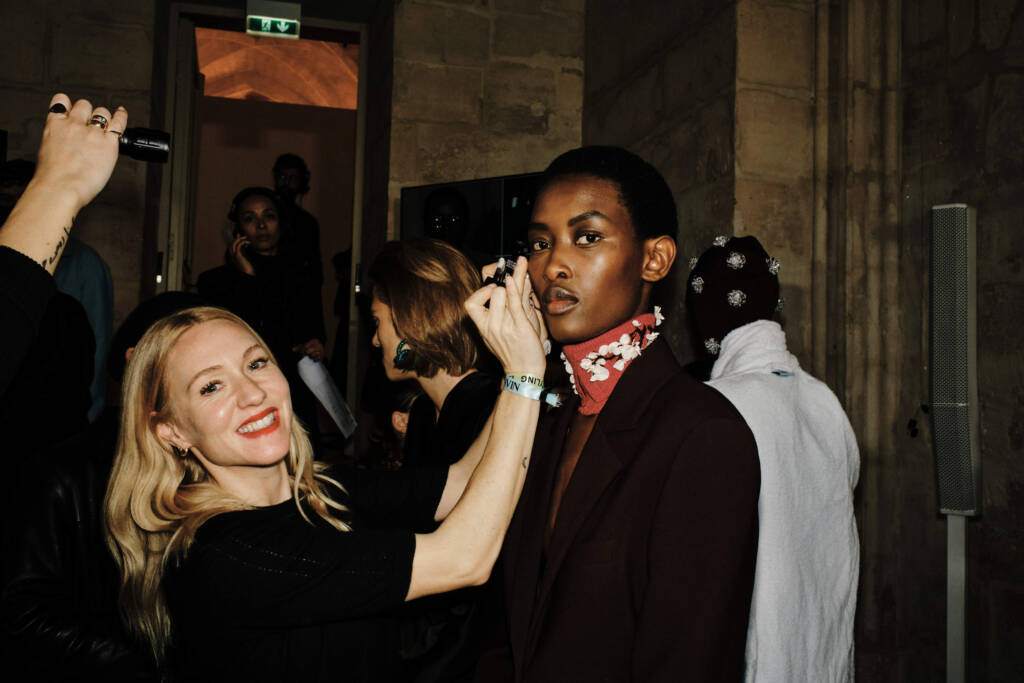
LA: I think fear is the biggest restrictor in our lives. Fear of failing, fear of not being good enough, fear of not fitting in. If I speak to my colleagues, everybody, somewhere in the back of their minds, has this feeling of imposter syndrome—but sometimes, fear can work in your favour, and it does keep you on point, and it does push you to be the best that you can be. I’m very lucky that I work in a team. I don’t ever work solo, so I never get to be left too long on my own. And that’s maybe where fear can creep in a little bit, if you’re just left to your own thoughts and emotions. But when you work in a team, it really is your job to remove fear and implore and encourage confidence and growth. And the fun thing about what I do is it’s not permanent. It takes a lot, but if something isn’t working, I’m not afraid to take it off and start again. Sometimes if I’m not sure where I’m going with something Ive stopped and thought actually, it’s not working. And then, sometimes, the beauty is in what you remove, not what you add. 15 years ago I’d have asked myself, ‘What can I add to make this better? What would the finishing touch be to make it more magical?’ Now I’m asking myself the question, ‘What can I remove to make this better?’
Can I take something away to make this more magical? I’m a little bit bored of more being the better option, and I’m simplifying the way I work and trying to be a little bit more mindful and work in a manner that maybe less is more.
hube: Could you please elaborate on the role of permanence in your work? You’ve mentioned that its absence gives you a sense of freedom—has that always been the case, or is it something you’ve come to over time?
LA: I think that’s confidence. I think that’s time and confidence. And there’s a real culture at the moment from the way the Internet’s evolved and the way blogging has evolved. There’s a lot of experts in my field who aren’t experts. They’ve maybe got a million followers on some sort of social channel, but they haven’t really done the time and the work of being backstage, assisting other people, being there and living it. And that kind of confidence and belief in yourself truly only can come from time. I remember starting out, for years I felt like I didn’t belong. I felt like I shouldn’t be there. I felt like I had to prove myself. And of course now I’ve got more experience, and that brings a natural confidence. But I just think doing the time is the secret—I’m a horse rider and I compete as an amateur, and I’m pretty rubbish because I do it for a week and then I go to New York for a week, and then I come back to the saddle and I get frustrated with myself and I ask, ‘Why am I not better? I’m putting in so much effort. Why am I not getting better results?’ I’ve got this brilliant mentor, she’s an amazing supermodel—Edie Campbell—an incredible horse rider, and she’s always pushing me, and always reminds me, ‘Lynsey, it’s hours in the saddle.’ There’s no quick fix. There’s no cheat. It’s hours behind the craft, perfecting, making mistakes, learning through time.
hube: Your collaboration with Prada on ‘Rethinking Beauty’ introduced a radical minimalism—yet with intense emotional clarity. What was your starting point for this line, aesthetically and philosophically?
LA: The starting point came from the house. I had to delve deep into the archives of Prada, and I wanted to create something that was instantly recognisable to that brand. A lot of my time in the beginning (this was five years ago in the middle of lockdown) was spent looking through the archives. I started working on a colour story in my head, and in my mind, I kept seeing repeat patterns. They have this insane archive in Tuscany where there are over 30,000 prints, everything is in vaults. It’s so inspiring, but also pretty overwhelming. And I felt this huge pressure to deliver for a brand so established. It was quite scary. I really had to keep my head together. And honestly, a big part of what I did for that project was following my gut. Makeup for me is instinctive. It’s right or it’s wrong.
I can look at something objectively but it is subjective, what I might love, someone else might hate, and what I might hate, someone else might love, but I have the confidence of my own opinion that I can respond very quickly and instinctively to colour, texture, finish, quality, and to different options. That becomes quite instinctive to me. That was how I started. I started seeing these colours repeating and these patterns happening, and I knew I wanted to play with this kind of clash of colour that Mrs. Prada’s so extraordinarily talented at—taking the mundane,a mucky brown colour for example,which could be described as ugly, and juxtaposing it with a shocking bright green or a baby pink or a even a silver—something completely old and new that shouldn’t really go together, that just looks so mesmerising.
I wanted that to be the storytelling for the makeup. When you look at the palettes, you’ll see there’s this array of neutral colours because I also hated the idea of women buying a makeup palette and using only one colour. When I grew up, I have this clear memory of my mum having these palettes, and one colour would be empty, and she’d have to buy the whole palette to get that colour. And I just thought, ‘No, this is wrong.’ I wanted to do the opposite, and I wanted to create a neutral palette with the unexpected twist of a shocking colour in there, so that people had this ‘everyday makeup language’. I wanted to create a uniform, something that everybody could attach themselves to very minimally, very effortlessly, and very chic. Too much makeup is not so beautiful. There’s a real art to minimal, natural makeup. I always call it ‘a whole lot of nothing.’ People call it natural. It’s a real art form to do good natural makeup because you’re structurally looking at a face, you’re correcting, you’re enhancing, but you’re doing it invisibly, and you’re responding to the face as well. If it’s too shiny, or if it’s got textured skin, you’re correcting, but invisibly.
Too much makeup, unfortunately, isn’t very cool. Too much makeup is ageing, and I wanted that to really be the driving force in the range of makeup. I wanted this idea of minimalism and modernity.
Prada and technology is an interesting conversation. We really leaned into this.we used the best machines, involving groundbreaking technology. We used AI to do colour ranges for our foundations. We scanned 3,000 faces from around the world the lightest to the darkest, and using an algorithm, condensed it into 33 flexible shades. We have this foundation range in 33 shades that covers 3,000 skin tones. That, to me, is quite groundbreaking and quite forward-thinking and super cool. We wanted this—not just another makeup range. The world has too much makeup, so it had to have a point of difference. It had to be sustainable, had to be recyclable, had to have this tech element, and it had to be instantly recognisable as Prada and cool and effortless but also shocking. It was a dream job for me, really, because it was a blank canvas. I had a strong story to tell, to share through colour, and I had no boundaries. There were no parameters.
hube: Is there a recurring visual ambition or aesthetic ideal that guides your work from project to project?
LA: No. I’m very, very much inspired by the people I work with. Every day is different. For instance, last week as I mentioned I got to work with the amazing Charlotte Rampling and we did some crazy makeup on her, which I didn’t expect. And she was so open and encouraging. She was transforming into a character. It was amazing. And then the next day, I did something completely minimal, and then the next day it was crazy eighties. I don’t ever have a preconceived idea. You always have to be open to moving and never have a fixed idea in your head of what something should be. I work really closely with the amazing hairdresser, Anthony Turner, we have known each other for a very long time and there is a lot of trust and respect there. Sometimes we will say to each other ‘should we pull it back a bit,’ or, ‘Let’s push it.’ And it really is about that nurturing environment in a creative space that brings out the best in a team.
hube: Makeup sits at the intersection of the intimate and the public. How does that duality affect the way you work with people?
LA: Hugely. People are exposed and they’re vulnerable, so it’s my job and it’s a privilege that it’s my job to not only make them look better and feel great, but to actually feel empowered, and to feel better about themselves. And that’s a real luxury to have as a job. Sometimes being in the hair and makeup room is a bit of a therapy session.
It’s a nice, nurturing, safe environment. It’s about sharing, and you naturally do find yourself involved in people’s close situations. That comes back down to trust. And that’s the lovely thing of working in a team. You can build trust and through that, and it brings openness.
hube: There’s been a lot of discussion lately about beauty trends as indicators of social and economic shifts. In what ways do you think makeup reflects the state of society and culture at large?
LA: Fashion in general is a response to politics, society, what’s happening in the world around us. Some of the most creative designers came out of complete repression and being stripped back to no money, no resources. I watched a brilliant documentary about Alexander McQueen recently. He was telling the story of how he got his brand started, and how he was the designer for Givenchy. And on a Friday night, he said they used to go to the Givenchy cupboards, fill the back of his car with leather silks, chiffons and drive it back to London and make his own collections on the weekends. I just think Wow. Here’s someone that is in a pretty niche position as a top designer, but still financially restricted and challenged and having to really think outside the box and pull from every resource available to get creative. And sometimes, when those resources are limited and you have a border of what’s available you’re forced to get really creative. And again, it goes back to the thing of me as a makeup artist asking myself, ‘What can I remove? How can I work with less?’ I don’t carry 10 suitcases around the world. I have two. And I always say to people, ‘If you can’t make what you need, you shouldn’t be doing this job.’ It is my job as a colour developer. If I don’t have a neon matte magenta, I need to make it. And with that, it’s a lot of fun, that alchemy of not having everything available and being a bit more creative and leaning in on having fewer options to create something more bespoke as well, not something that’s just necessarily off the shelf. When I look at my makeup, I don’t look at it as if it’s an eyeshadow and that’s a lipstick. I did a shoot yesterday where I did the whole eye makeup in lipsticks, shocking oranges and shocking fuchsia, and it looked so great because it wasn’t expected. It wasn’t powdery pigment or a shiny eyeshadow, it was a wet greasy lipstick texture. It looked quite abstract and quite painterly, and I could never have got that from an eyeshadow. So it’s this idea of getting creative with what you have around you.
hube: Who or what are your biggest creative influences—both within and outside the beauty world?
LA: You can’t not be inspired by the masters before. When you go to Paris and you go to the galleries, it’s inspiration overload. From Flemish painters—the way they used light, to modernist and abstract artists. All that lends itself so well to makeup creativity. For me, I take most of my inspiration at the moment from nature. I live in the countryside, I grow vegetables and flowers and try and play my part in the environment a little bit at home. I find that space and that colour palette lends itself so creatively to what I do, but also, mainly it’s the people that I work with. I get to work with some amazing art directors, photographers, and I could say things like movies, music. Those are all naturally, inherently within me from growing up. I was born in the eighties, I grew up in the nineties. There are so many amazing subculture pop references and things like that. But really, it’s about the people. I hate to be boxed into something. I hate to be too literal. I love the idea of maybe looking back at something and taking an element from it and making it new, modern, unexpected and evolving. That is the fun part of makeup. You have the ability to dip into art history or musical culture or film. At Prada I feel there is often a siren reference from film. You see these characters popping up time after time. Mia Farrow is a forever icon. You can see so much of the sixties and the twenties, all these movements that keep reoccurring in different collections. But the question is, how do we make it new? How do we reinvent? And again, it goes back to the whole concept of the makeup. It was about rethinking beauty, not necessarily just taking references and using them as direct inspiration, but going forwards.
hube: It’s striking that you’re so much a part of the industry while also staying so removed. Do you find this offers you some level of “protection”?
LA: Balance. I lived in the city for over 20 years and I was suffocated and almost resented it. And now I have this balance of nature and travel. I have cats, and dogs and horses at home ,and beautiful roses, and endless lavender and home-grown vegetables. I find that it gives me the ability to get on a plane, go to New York, and be really psyched up for it and not resent it. To reconnect and switch off, I can have my bare feet on my grass, watering my flowers, and I feel completely restored. It’s a simple balance. I don’t work to live, which lets me have the freedom to be creative because I have a young son, I have horses, I have other responsibilities outside of work. When you have more than just work, it lets you enjoy it. Work almost becomes a treat. Anything in too much consumption can make you resent it. And finding individually what gives you that work-life balance or that nature versus city balance I find is the secret.


Courtesy of LYNSEY ALEXANDER
Words: ISABELLA MICELI
