Xander Zhou AI in fashion cultural identity fashion as a system

Xander Zhou: the system through the process

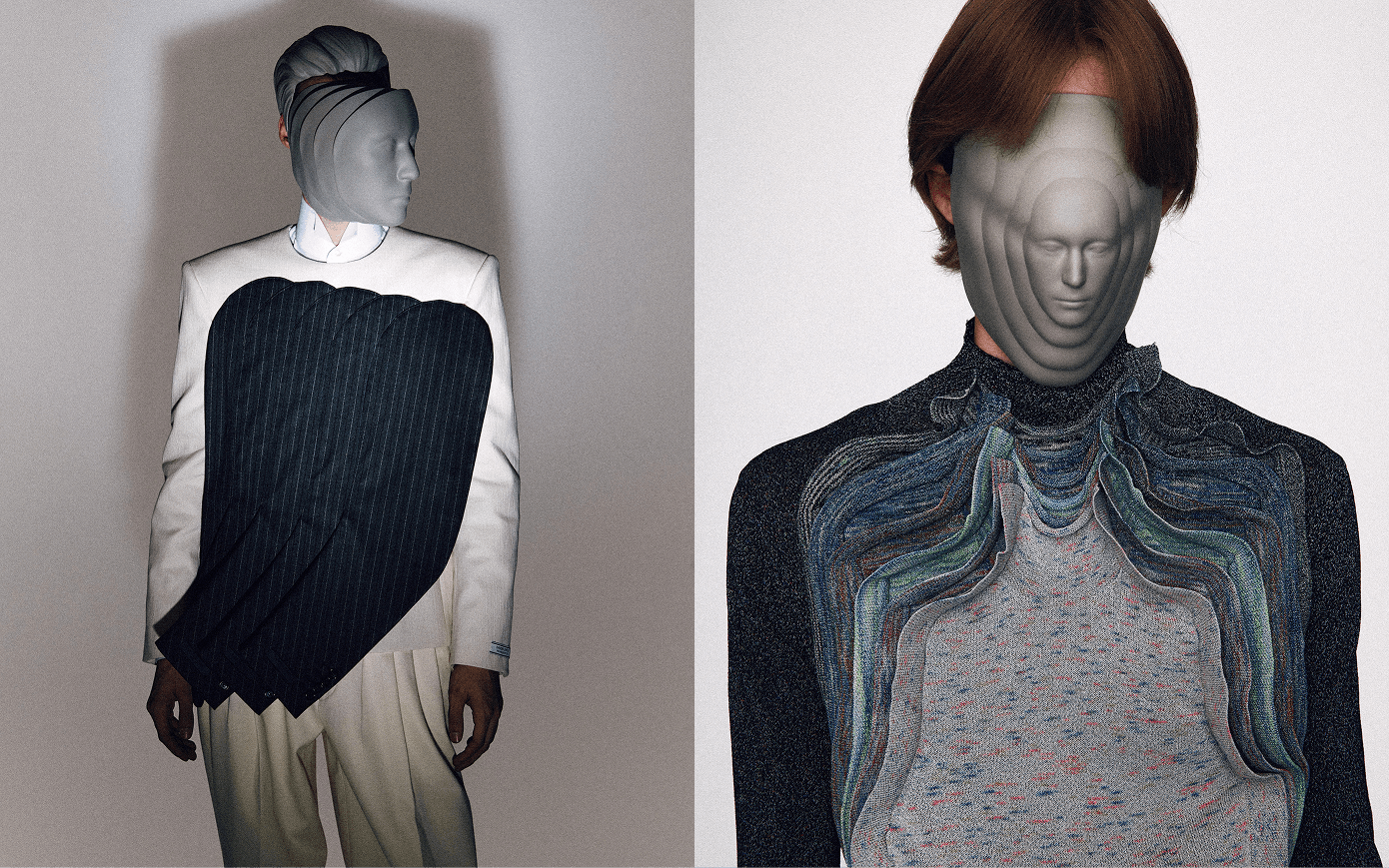
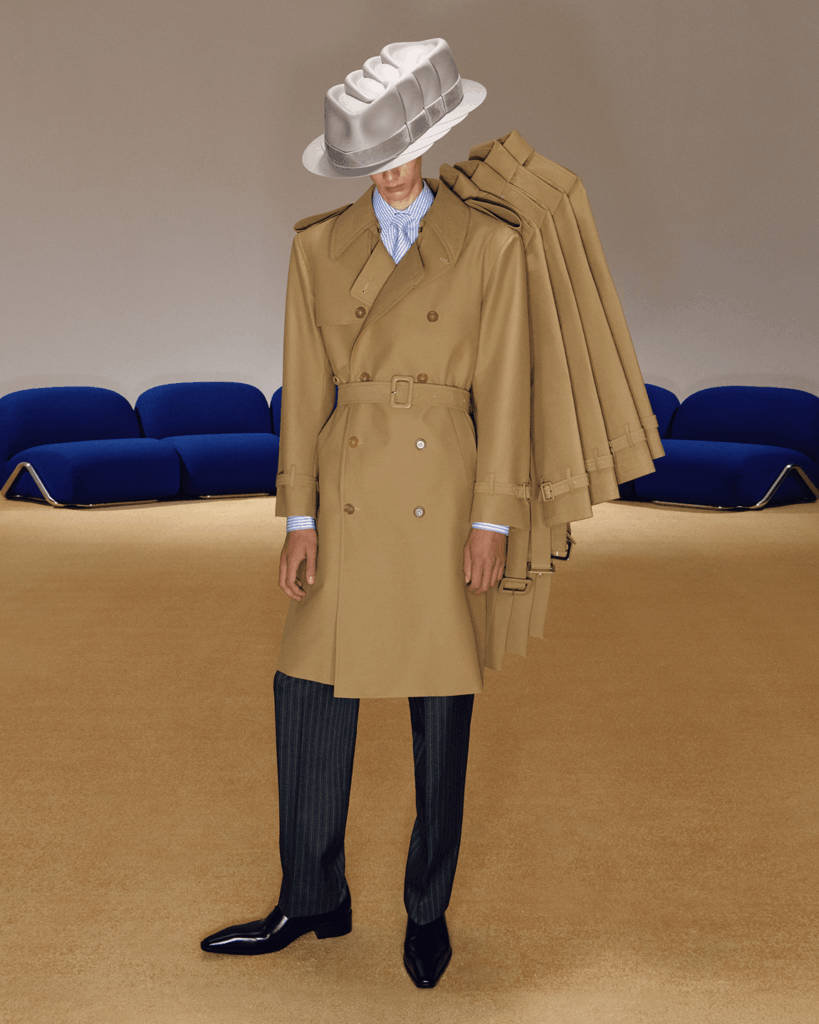
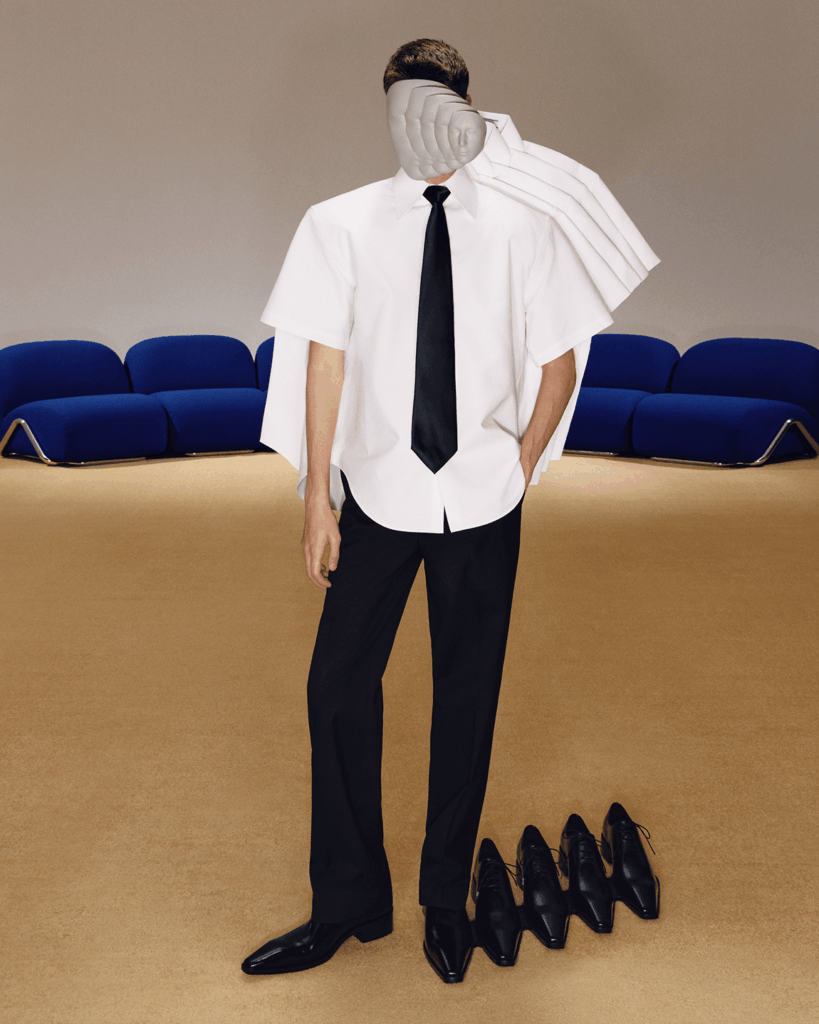
Xander Zhou has always been fascinated by how clothing constructs identity and how a single collection can carry an entire world. The Beijing-based designer—founder of his eponymous label and the first Chinese designer to show at London Fashion Week Men’s—has spent nearly two decades developing a rich, interconnected universe populated by humans, aliens, and humanoid robots, guided by the belief that the boundaries between them are illusory.

At the heart of Zhou’s practice is a commitment to fashion as a system—one that builds coherent worlds rather than following already established ones. Deeply engaged with questions of cultural identity and the evolving role of AI in fashion, he draws on Eastern philosophy, creative freedom, and the fluid intersections between ancient thought and contemporary technology. In conversation with hube, Zhou reflects on these themes and explains why building a life he genuinely enjoys has now become a subject in its own right.

hube: You’ve spoken about moving through different stages in your relationship with your own cultural heritage, from ignorance to denial to something closer to reconnection. Where does that relationship stand today?

Xander Zhou: I no longer think about this relationship in terms of “returning” or “reconnecting.” For me, culture is more like a constantly shifting structure. It’s not fixed, not linear, and not something you can go back to. What interests me now is the way of thinking itself—for example, the relational structures and logic of transformation found in Eastern philosophy, and how these can be reactivated today. I’m also interested in the possible connections between these ancient systems of thought and cutting-edge science. I’m no longer interested in culture being used as a visual symbol.
Xander Zhou
AI in fashion
cultural identity
fashion as a system
Xander Zhou
AI in fashion
cultural identity
fashion as a system
Xander Zhou
AI in fashion
cultural identity
fashion as a system
Xander Zhou
AI in fashion
cultural identity
fashion as a system
Xander Zhou
AI in fashion
cultural identity
fashion as a system

h: Each collection follows a script with characters, worlds, chapters that build on one another. At what point did it become clear to you that what you were really doing was writing a story, and that the clothes were one part of it?

XZ: I don’t think there was a specific moment when I realised this. It feels more like something that was embedded in my creative system since the beginning. I’ve never been able to separate clothing from everything else. Maybe I’m not that interested in fashion or trends themselves. What interests me is how clothing can construct identity and character. Clothing alone is not enough to carry what I want to express. I need to build a larger system. Right now, I’m using fashion as a platform—clothing becomes a kind of language, a way to translate the world I’m constructing. If one day I feel that fashion is no longer the right medium, I would simply move to another platform.

h: You keep a near-daily record of thoughts, observations, sketches. Is that something that comes naturally, or is it a practice you’ve had to maintain? And what does it feel like when you step away from it?

XZ: At the beginning, recording things felt very natural, but over time it also became a habit. I like to capture those moments that feel like sudden flashes of inspiration, but when I look back, I realise they were never random—they were always connected. All my intuitive creative moments happen within a logic that I’ve built for myself. Once I realised that, I became even more committed to recording things, because I know I will use them one day. So I don’t overthink it—I just record, casually. This is not about organising ideas, but about maintaining a continuous state of perception. If I stop, nothing dramatic happens immediately, but over time I might lose a certain continuity of thinking, like becoming slightly disconnected from my own system.

h: Inspiration is never the problem for you. How do you manage that? What is the process of deciding what belongs in a collection and what gets left behind?

XZ: For me, the problem has never been a lack of inspiration. I have many things I want to express. What I need is to quiet down and ask myself what I want to express most at this moment, what feels the most urgent. What I choose is usually something very direct, something more personal. Each collection, or each fictional world I create, is closely connected to how I feel during that period. It might not correspond to a specific real-life event, but it is always a projection of a certain feeling or state. The process is about removal: removing unnecessary parts, removing noise, making the system clearer. In the end, I check whether each element really needs to exist.

h: Your research process pulls from many directions: AI-generated images, reverse searches, unexpected visual associations. How much of a collection do you know before you begin, and how much appears along the way?

XZ: I usually start with a few keywords or fragmented feelings. What I enjoy is that once you fix a few starting points, the process itself begins to lead you somewhere unknown, somewhere you didn’t expect. That sense of movement and unpredictability is what keeps the process alive for me. This uncertainty is important because it allows the system to emerge through the process, rather than being fully designed in advance.

Xander Zhou
AI in fashion
cultural identity
fashion as a system
Xander Zhou
AI in fashion
cultural identity
fashion as a system
Xander Zhou
AI in fashion
cultural identity
fashion as a system

h: The world you’re building brings together humans, AI, aliens, and humanoid robots under the same roof. Beyond the aesthetic, what does that universe stand for? What does it value, and what does it believe in?

XZ: More precisely, it’s about removing boundaries between them. Humans, AI, aliens—these are just different states of existence. Our current reality is full of labels and misunderstandings. In the world I create, I try to dissolve these separations. Everything exists freely in the same space, operating within the same system. This world is not about identity, but about a way of being. What it believes in is love.

h: You’ve always resisted having a brand strategy in the conventional sense, driven instead by a commitment to saying what you want to say. As the industry grows more algorithm-dependent and market-driven, does that position feel difficult to hold or more necessary than ever?

XZ: I can continue this way because I still enjoy it. If one day I stop, I hope it’s simply because I no longer enjoy it, not because of external pressure. As the industry becomes more driven by algorithms, data, and market logic, if you fully enter that system, the work quickly starts to look the same. That was never why I was drawn to this field. What I’m doing is creating memories for my own life. I live for my own feelings. I don’t feel the need to follow industry rules. My way of thinking is quite simple and direct, so making decisions isn’t that difficult. As I said before, if one day I feel it’s no longer interesting, I will just move on. I won’t regret it.

h: You’ve described AI as a potential tool, assistant, even a creative partner. Do you worry at all about where that partnership leads, or does that uncertainty excite you more than it concerns you?

XZ: I’m not particularly worried. I neither fully embrace nor reject AI. I’ve always preferred to understand new things first, rather than fear them. There’s no need to exaggerate it. If used well, it’s simply a tool that helps you go beyond your own limitations. Uncertainty has always been part of the creative process. AI just makes that more visible. For me, it remains a tool, but also something that can introduce unexpected shifts.

h: Even in your most technologically driven work, you’ve always said it’s the human element that interests you most. Has that priority shifted at all as you’ve worked more closely with these tools?

XZ: It hasn’t changed. If anything, it makes me more certain that the human element is the most important. Especially now, when digital imaging can easily produce visuals, what becomes rare is human perception and expression. This is what I’ve always referred to as “personal taste.” We don’t need perfect images. Technology can generate visuals, but it cannot decide why they exist.

h: You’ve said your only real mission is to express how you see the world, and that this can mean hope, denial, or not taking things too seriously. Which of those feels most true to where you are right now?

XZ: I think I’m somewhere in between now. Not entirely hopeful, not in denial, and not deliberately distant. It feels more like observing things with a certain clarity, while not being fully absorbed by them. Also, my focus has shifted—I care more about how I live than about creation itself. There was a time when I sacrificed a lot of personal time for my work. I think I’ve passed that stage. Now, building a life system that I actually enjoy has become a new subject for me.

h: Freedom in your work and your life is how you define success. By that measure, how are you doing?

XZ: I think I am successful. I can still decide what I want to do and how I want to do it. I’ve always been doing what I enjoy, and in different ways I’ve realised things I once imagined. In terms of how I experience life, I feel free. For me, that is success: being myself.

Xander Zhou
AI in fashion
cultural identity
fashion as a system
Xander Zhou
AI in fashion
cultural identity
fashion as a system
Xander Zhou
AI in fashion
cultural identity
fashion as a system
Xander Zhou
AI in fashion
cultural identity
fashion as a system
Xander Zhou
AI in fashion
cultural identity
fashion as a system
Xander Zhou
AI in fashion
cultural identity
fashion as a system
Xander Zhou
AI in fashion
cultural identity
fashion as a system
Xander Zhou
AI in fashion
cultural identity
fashion as a system
Xander Zhou
AI in fashion
cultural identity
fashion as a system
Xander Zhou
AI in fashion
cultural identity
fashion as a system

Courtesy of XANDER ZHOU

Words: ARINA V

ISSUE 8

issue no8

Discover the new issue — available now