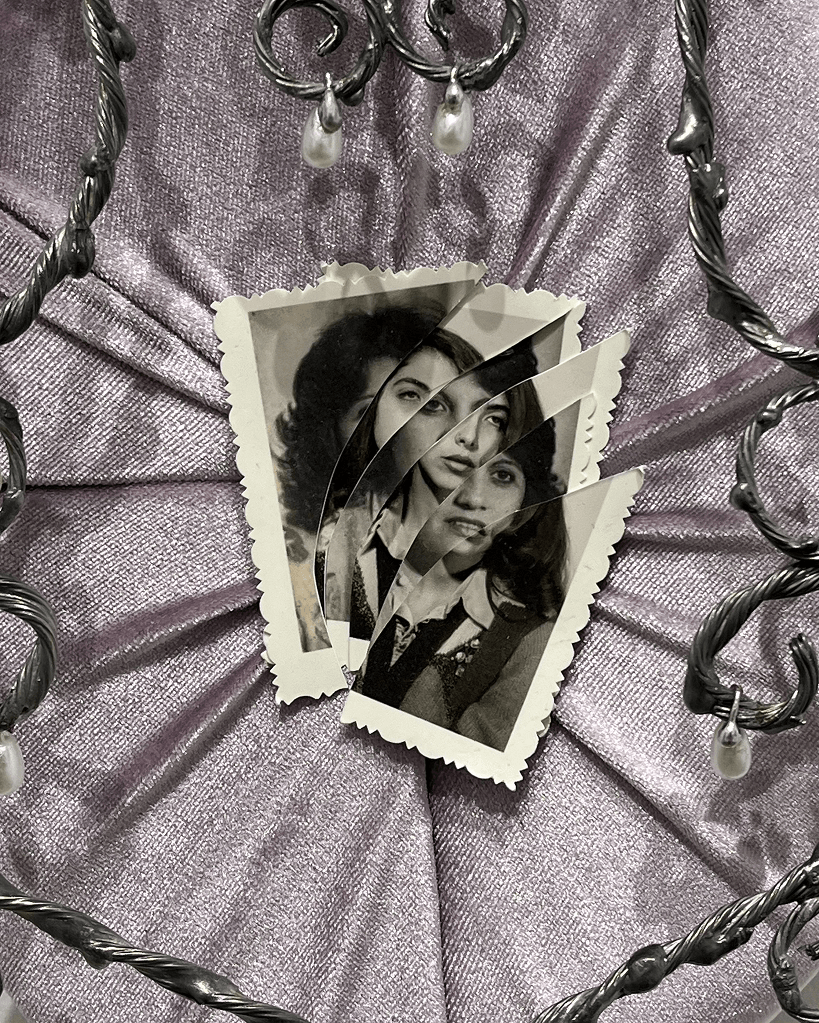
Lebanese artist Yasmina Hilal possesses a rare clarity—an intelligence and composure that seem to exceed her years. Still early in her career, she has already contributed to GQ Middle East, Harper’s Bazaar Arabia, AD Middle East, and Condé Nast, notably gracing the cover of Dazed Middle East. Her work has also been presented in both solo and group exhibitions, including I See Me In You at the MENA Art Fair (Brussels, 2023), The Age of Dystopia at the Dalloul Art Foundation (Beirut, 2024), and The Material Woman at Soho Revue (London, 2024).
Her practice spans hand-developed analogue photography and experimental mixed media, often incorporating materials such as lead and other metals into sculptural, three-dimensional works. Across all her pieces, art and identity are deeply intertwined. Hilal traces the contours of womanhood, family, and nation—meticulously archiving and transforming the legacy of a people resisting erasure. Her work stands as an act of insistence and remembrance: we were here. We are here. We exist.
hube: Your practice incorporates layered materials and processes—analogue techniques, film, resin—each adding density and complexity. Do you find that this sensitivity to layering extends into your daily life? Is there a kind of heightened, dimensional awareness that informs how you move through the world?
Yasmina Hilal: Absolutely. Because of the lived experiences that I’ve gone through, I feel like many of these layers have to do with grief and finding yourself. Something isn’t complete unless it’s broken down and then rebuilt.
My mother was a photographer and collage artist, so my first memory of collage is her tearing up paper, gluing and sticking it. All these things made me understand the mannerisms of using my hands and how important it is to break down something so aesthetically pleasing and give it a new form—a form similar to a scar in the way it heals and rebuilds. There’s beauty within preserving those things and building onto them.
h: You’ve mentioned your mother and grandmother as key influences. What does “heritage” mean to you today, especially in a digital world where everything is constantly saved and shared?
YH: Heritage is quite important because there’s a lot of erasure within the context of war, the context of when you’re bound to these experiences in life. I think it’s really important to be able to tune into the women and men around you. My grandfather was a photographer as well. He left behind a big digital archive that I have been working on, figuring out how I want to piece it together. My father was a carpenter, so he is an engineer. He built a lot of the things at home: the tables, the woodwork, the closets, the beds. It made me understand the beauty of tactility and preservation. My mother was a photographer and collage artist. She gave me my first analogue camera when I was fifteen, so I kind of grew learning this technique from her.
My grandmother’s home is very much of a collectible home with so many different trinkets and objects. It was the place that I was born and raised in, and I have so many memories there. She also had a clothing boutique store called Beverly Hills at Clemenceau in Beirut, and she would source these beautiful outfits from all over Europe and sell them. It’s quite a special thing to be raised by people that use their craft and pass it down to you.
I’ve live through several wars. But, I feel like this one in particular is the most intense for me, in a way where I’m really understanding how it feels when your land or your home is taken away from you. I’ve felt it before, but just by having family in the south that had to leave their homes—this is not the first time when I had to leave my home in the first war when I was a kid, so I wasn’t really experiencing that type of belonging just yet. But I do feel it more than ever now, and I feel that I have a moral duty to be able to raise these things and talk about collective erasure, because a lot of the artisanal work that we have now has become so small because of the economy, the systems, the war, and the deaths. It’s really important to see how that affects art as well, and how that affects people losing their homes.
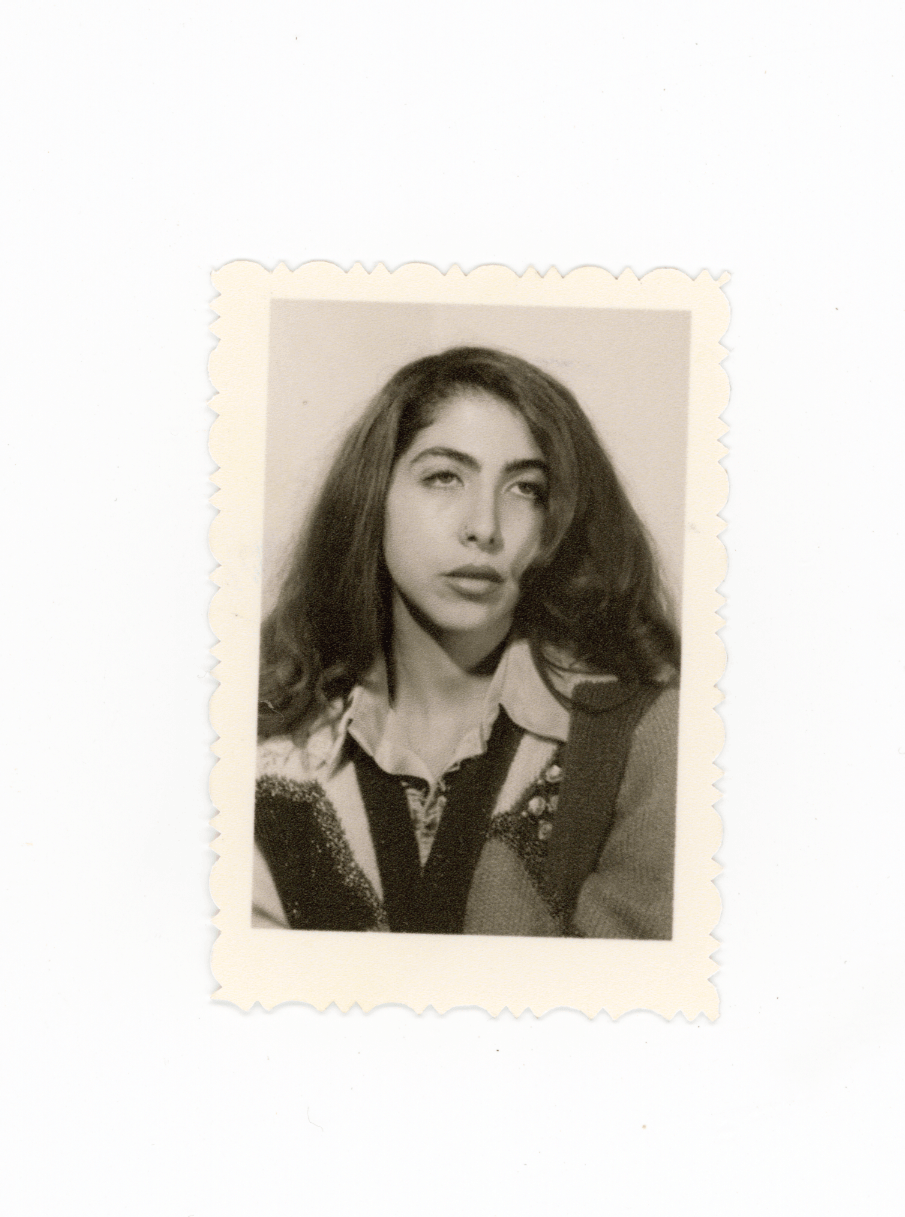
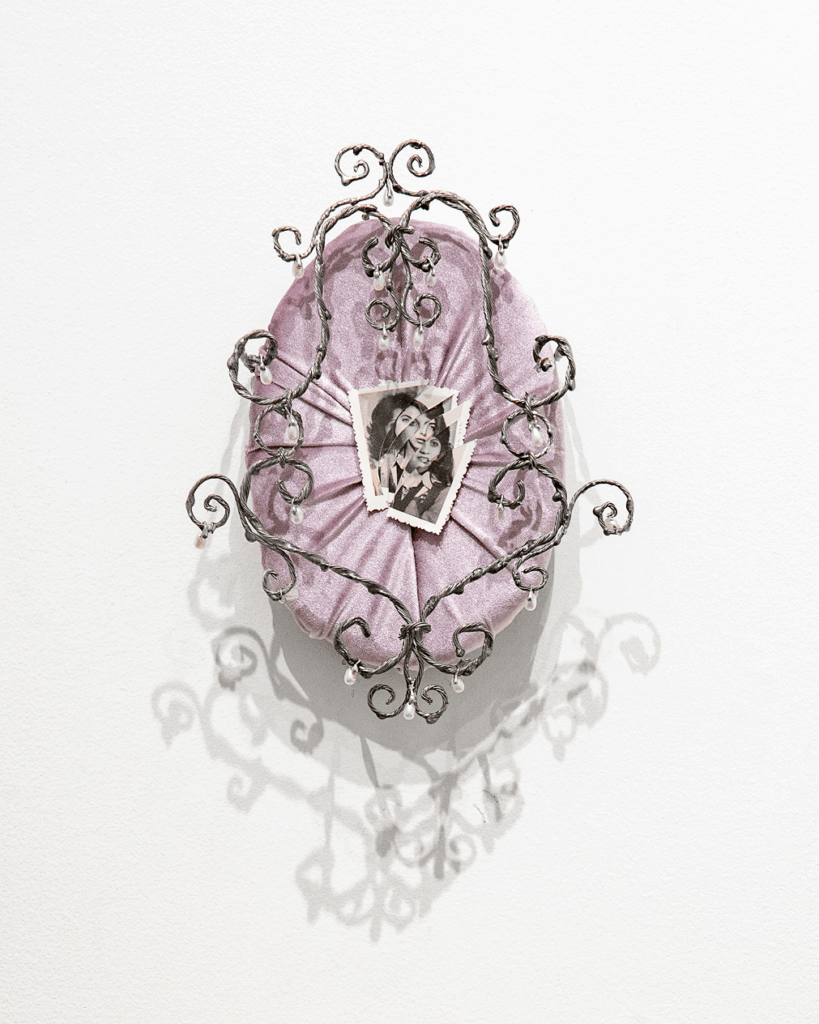
Portrait d’identité (1976-2026)