The Zayed National Museum has officially opened in Abu Dhabi, marking a major milestone in the UAE’s cultural evolution. Arriving as the country celebrates 54 years, the new institution introduces a landmark that blends national heritage with contemporary vision. Set within the Saadiyat Cultural District, the museum welcomes visitors with an introduction that reflects both its historical mission and its forward-looking approach to sustainable architecture.
A new cultural chapter rooted in vision
Dedicated to the legacy of Sheikh Zayed bin Sultan Al Nahyan, the museum traces the story of the Emirates across seven galleries, covering eras from early human settlement to the modern nation. Conceived over more than a decade, the project aims to become not only a repository of history but an active participant in Abu Dhabi’s cultural landscape. The design team approached the project as a conversation between tradition and innovation, creating a building that responds to the desert environment while honouring the cultural values of the UAE’s founding father.
Zayed National Museum architecture: falcon wings, light, and desert topography
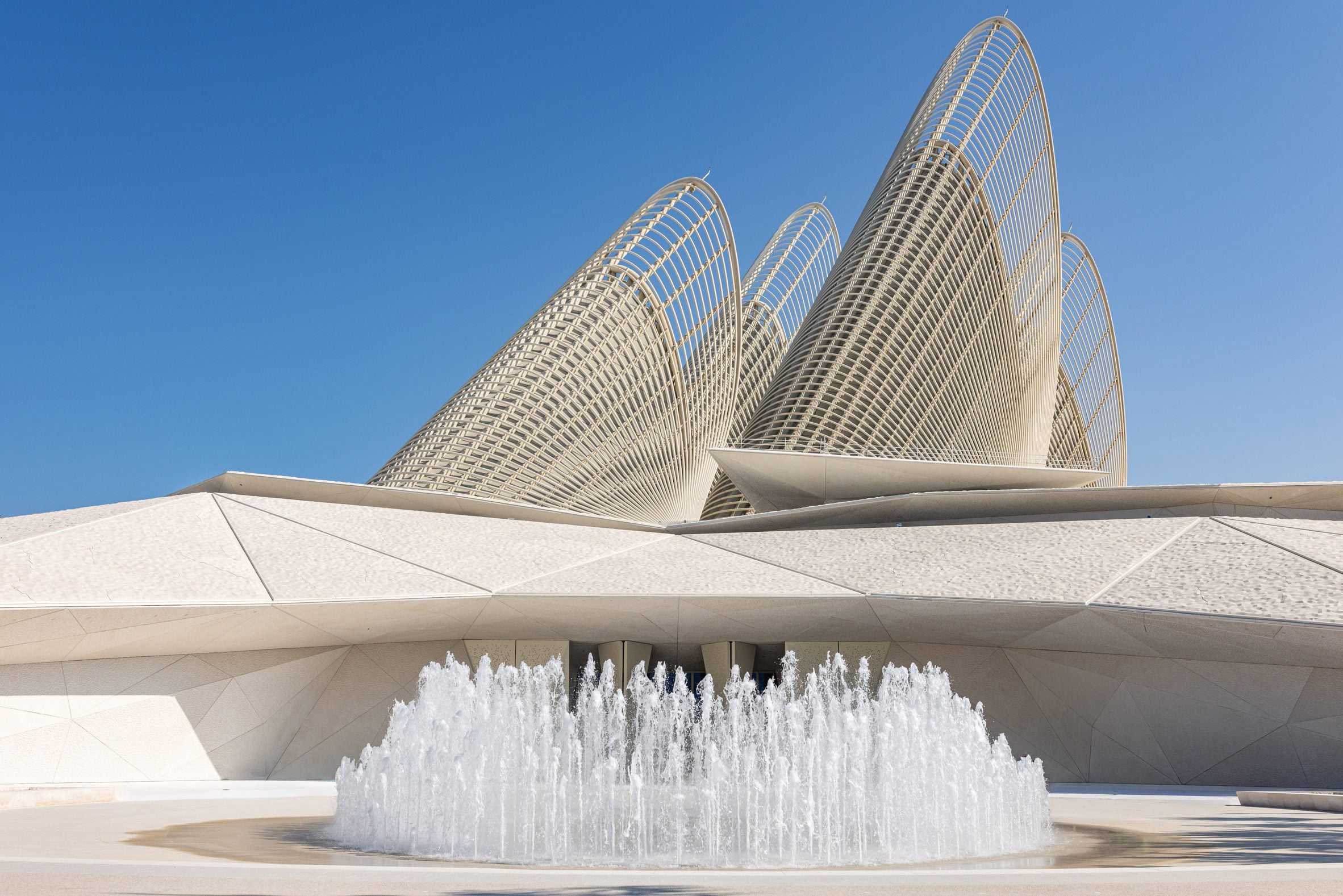
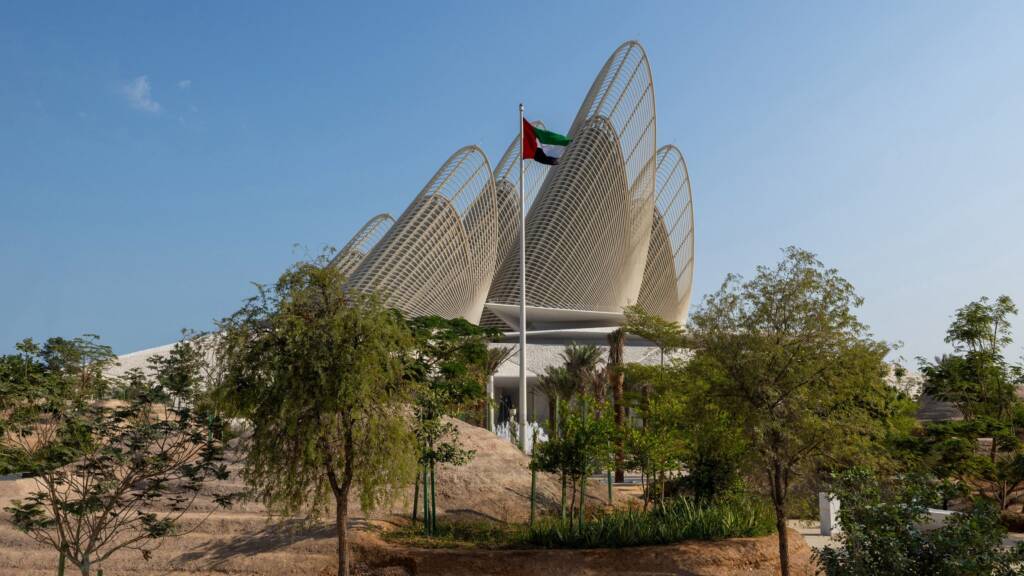
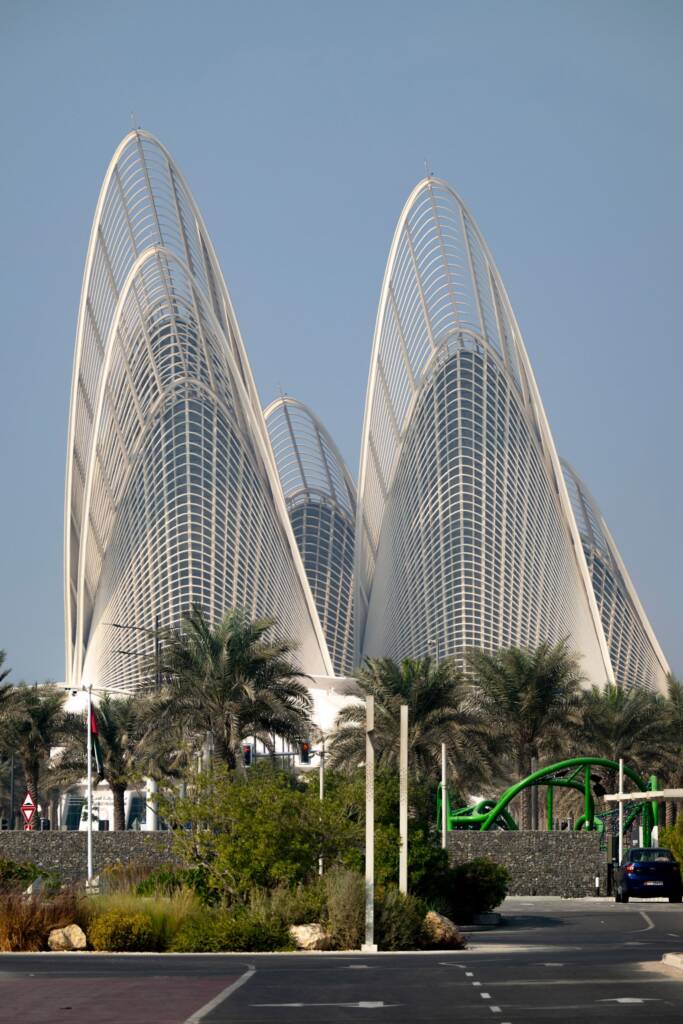
Designed by Foster + Partners, the Zayed National Museum architecture is defined by five soaring steel towers that evoke the wings of a falcon—an emblem closely associated with Sheikh Zayed. The towers act as thermal chimneys, using the region’s natural air currents to cool the interior. Their varying heights, including one reaching 123 metres, help choreograph the flow of sunlight into the museum, giving the galleries a dynamic quality throughout the day.
Beneath these wings lies a faceted mound inspired by the UAE’s desert terrain. The structure, composed of locally sourced white concrete and bronze accents, protects the museum from intense heat while providing shaded public pathways and a new elevated viewing platform.
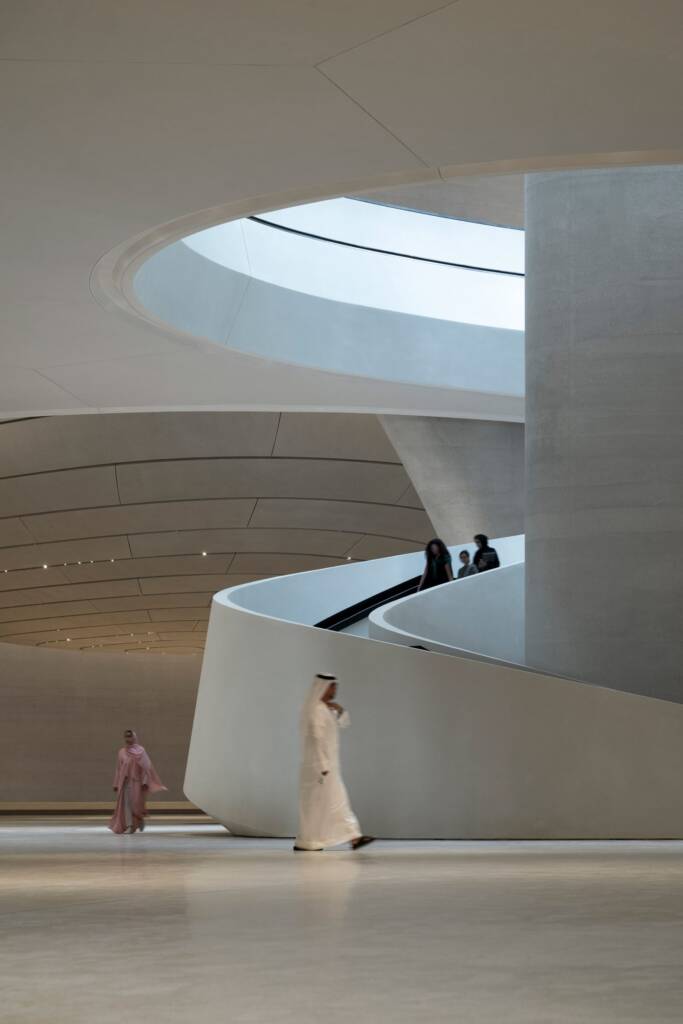
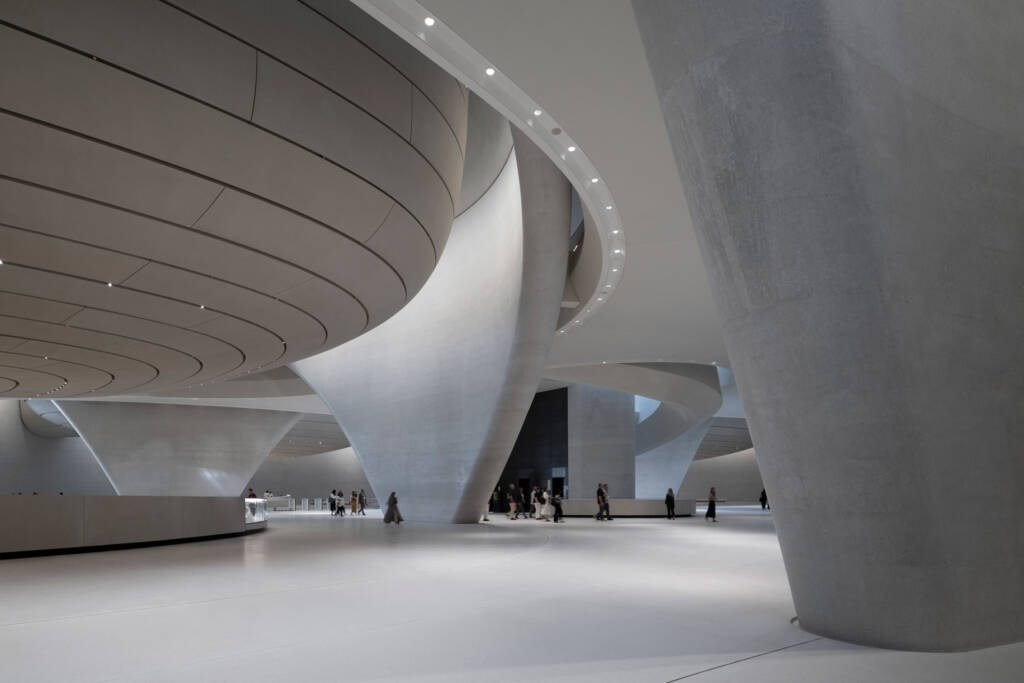
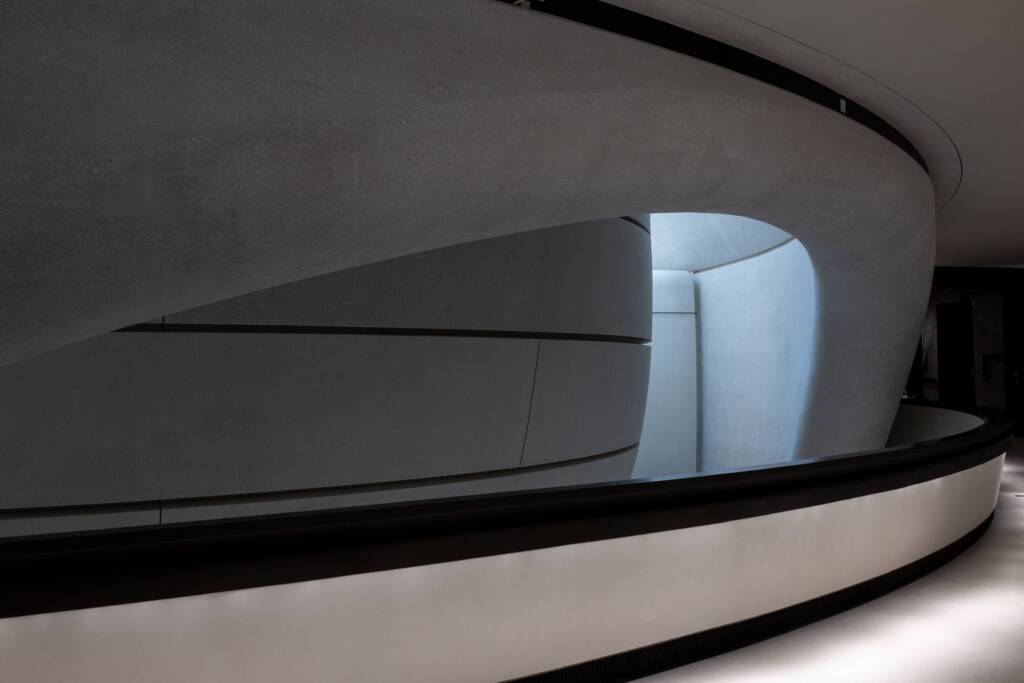
Inside, visitors enter a dramatic atrium known as Al Liwan, from which suspended pod-like galleries appear to float in the light. This deliberate layering of forms creates a shifting sense of scale as guests move through the building, mirroring the complexity of the nation’s history.
Sustainable architecture shaped by landscape and climate
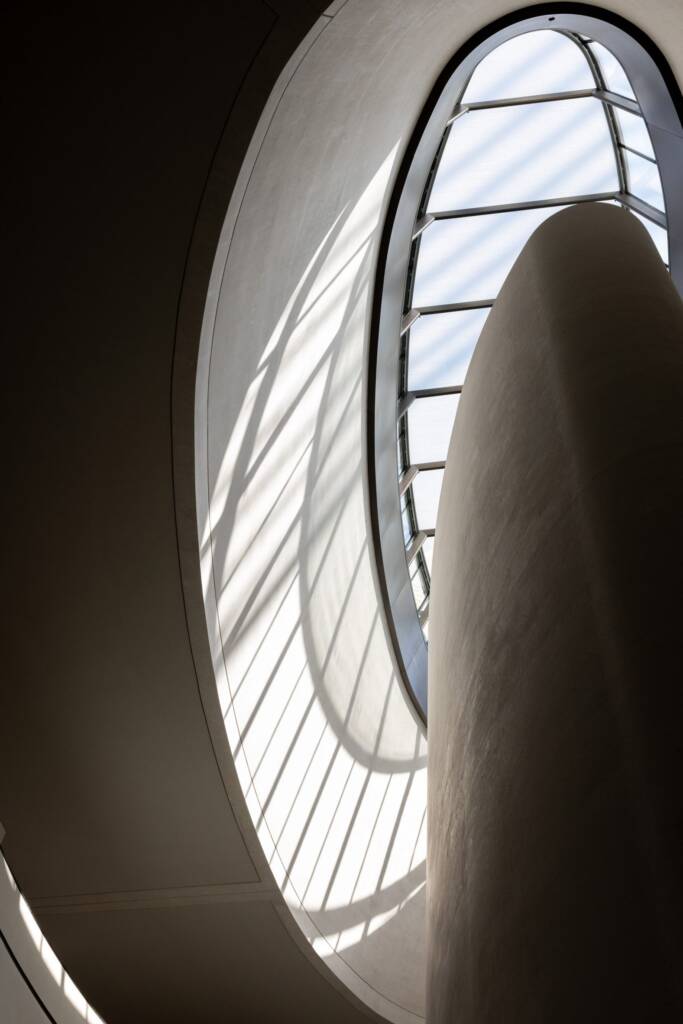
A cornerstone of the project is its commitment to sustainable architecture. The museum integrates a passive cooling system that channels naturally cooled air from beneath the desert floor and releases warm air through the heated tips of the steel towers. The glazing and electrochromic rooflights regulate daylight with precision, reducing energy demand while creating an atmosphere of calm luminosity.
With its opening, the Zayed National Museum has become the centrepiece of Saadiyat Island’s cultural landscape, joining the Louvre Abu Dhabi and the future Guggenheim Abu Dhabi. Representing more than just an architectural feat, the museum is a refined and sustainable symbol of national identity, inviting visitors to explore the UAE’s past while looking towards its future.
Photography courtesy of ZAYED NATIONAL MUSEUM