
Caroline Guiela Nguyen is an acclaimed French author, theatre director, and filmmaker, renowned for productions that use storytelling as a device for social commentary. In 2009, she founded the theatre company Les Hommes Approximatifs, creating ensemble works with the mission of giving voice to stories often unrepresented on stage. Her early productions included Se souvenir de Violetta, Elle brûle, and Mon grand amour before achieving international recognition with Saïgon, a play exploring colonial and migratory histories that has toured worldwide.
Nguyen’s approach draws on research into real experiences to shape narratives, unpacking the complexity of ethics as collectively understood truths. She has collaborated with major European theatres and, since September 2023, serves as director of the Théâtre National de Strasbourg. Her work has earned several honours, including the SACD Nouveau Talent Theatre prize and the decoration of Chevalier de l’Ordre des Arts et des Lettres.
Nguyen’s productions bring marginalized voices onto major stages without reducing them to case studies, sending a clear message: inclusive, socially conscious theatre can and should belong at the highest level of French performing arts.
hube: You often speak about the idea of “collective imagination.” In the context of theatre and directing, what does that phrase truly mean to you? How did it become a guiding force in the way you build worlds on stage and create space for multiple voices to shape a shared narrative?
Caroline Guiela Nguyen: I talk about it because it directly touches on the collective imagination. To give you a concrete example: the first time I staged a play with the Vietnamese community in France, there was a very simple scene—a French soldier who was romantically involved with a Vietnamese woman during the colonial period.
The first time we put this soldier on a French stage opposite a Vietnamese actress, we realised that the entire imaginary universe that surfaced was made up solely of references such as Apocalypse Now, The Deer Hunter, Full Metal Jacket. In other words, an imagination drawn almost exclusively from a different war: that of the Americans against the Vietnamese.
This reveals a lack: the absence, in our collective imagination, of images, stories and representations of the French colonial period in Vietnam. This “blind spot” is precisely what interests me today in my theatrical work. What do we create with? Which narratives do we have to work with—and sometimes struggle against?
As a writer—before even being a director—I ask myself this question: what is my share of responsibility in the stories and imaginaries I inject into our human communities? Which worlds am I helping to bring into existence?
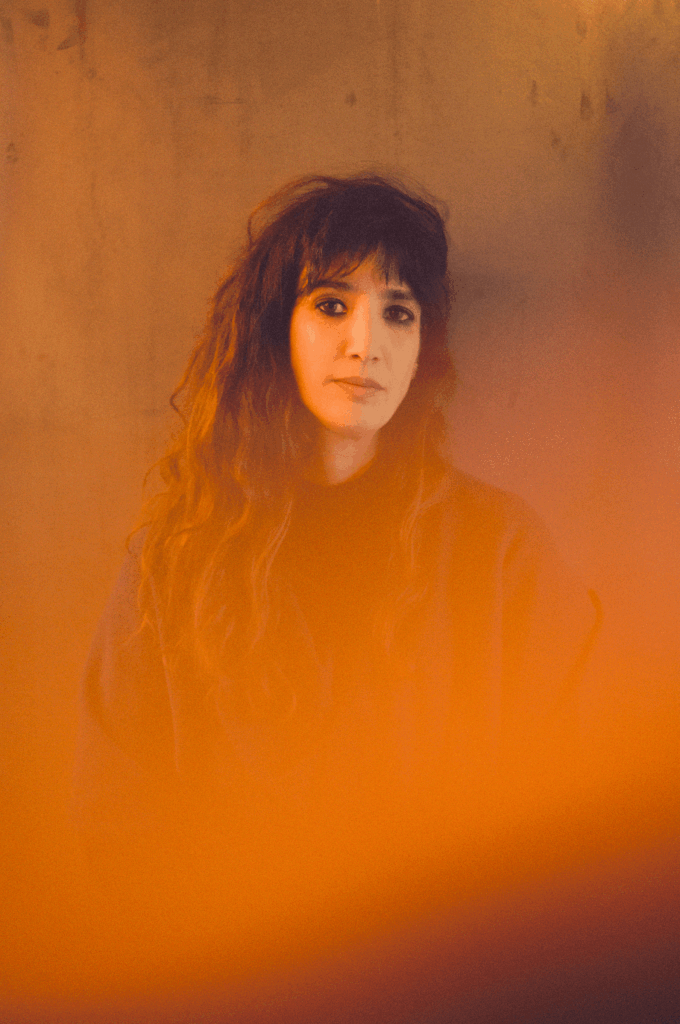
Courtesy of SMITH
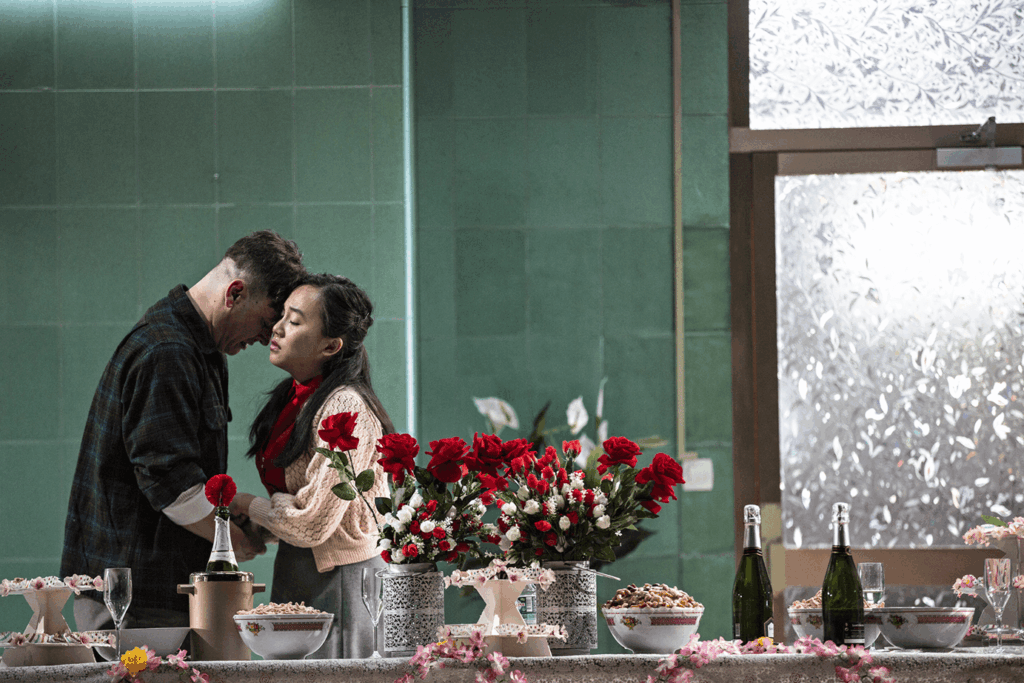
Courtesy of JEAN-LOUIS FERNANDEZ
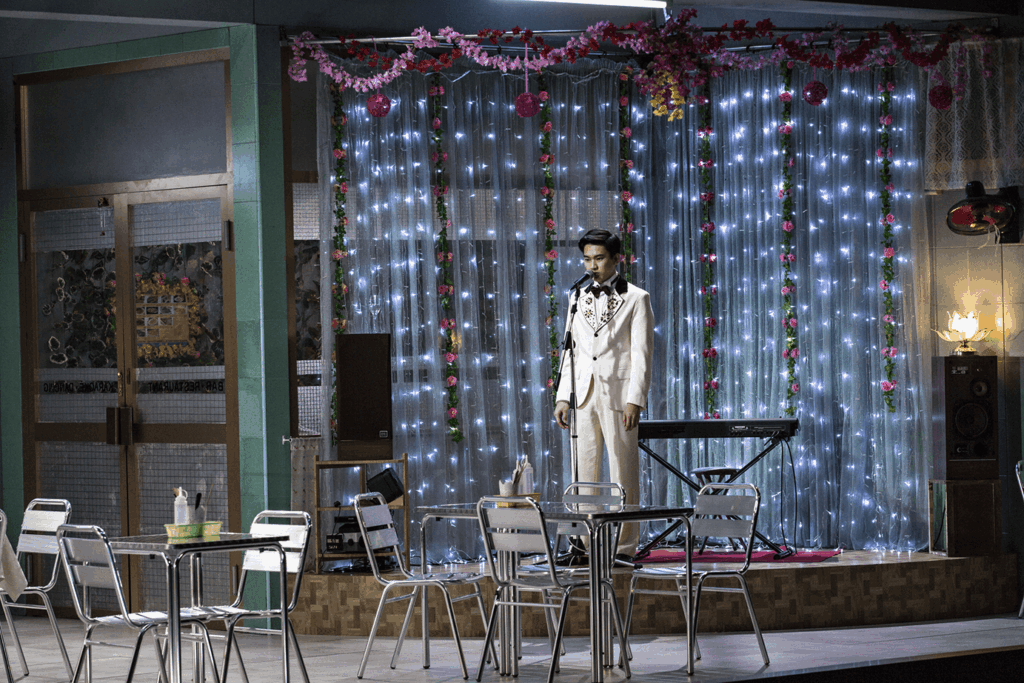
Courtesy of JEAN-LOUIS FERNANDEZ
Courtesy of JEAN-LOUIS FERNANDEZ

Courtesy of JEAN-LOUIS FERNANDEZ

Courtesy of JEAN-LOUIS FERNANDEZ

Courtesy of JEAN-LOUIS FERNANDEZ
h: What is something you once believed to be true—about art, about theatre, or about yourself—that you no longer hold in the same way?
CGN: I love this question, because I think there are many things I once believed and no longer do. But if I had to choose one, the one that most intensely runs through my current life—including my artistic life—it would be the relationship between reality and art.
When I started making theatre about fifteen years ago, extraordinary things were already happening on stage. But there were very few racialised people, you almost never heard accents, never other languages. I felt that an entire part of reality—my life, therefore reality itself—was not being represented.
At that time, I began to sacralise reality and, at the same time, to mistrust art. As if art were the enemy of my reality. That is how I built myself: in a state of constant vigilance, almost suspicion, towards what art could do to the world. Then time passed. It wasn’t only me who changed—the world around me changed. The artists in schools, on stage, in writing, are no longer the same. And with them, something shifted within me.
Today, I no longer believe that art is the enemy of reality. On the contrary, I have never needed art more as another space. I remain deeply attached to reality; I cling to it constantly, I do not know how to detach myself from it—it is my way of writing, of looking, of being in the world. But I also feel very clearly that reality is no longer enough for me. Reality today produces saturated spaces. I need elsewhere, another plane in which to think, to breathe, to move things. That space is art. And art has become, for me, the greatest ally of my political thinking.
h: Your project Saigon traced the lives of those marked by French colonial history, including your own family. In creating it, how did your sense of belonging shift—whether to a place, to a memory, or to the broader arc of history?
CGN: With Saïgon, my sense of belonging did not shift; it became more precise. I discovered something fundamental: for a long time, I believed I was going to talk about Vietnam, about my “Vietnamese origins”. That was the term I used, as we often did at the time. I thought my question was one of origins.
But during Saïgon, I understood that all of this was false. My deep question was not that of my Vietnamese origins, but that of my mother’s condition—what she is: a Vietcu. This word literally means “foreign Vietnamese”—both Vietnamese and forever foreign.
That is what I encountered through the performance: a paradoxical belonging, that of people who continue to belong, in language, in thought, in memory, to a country to which they no longer truly belong. My mother waited forty years before returning to the country where she was born. Her country became a lost country.
Saïgon did not therefore allow me to “return to my Vietnamese origins”. It allowed me to understand that my mother’s country is a lost country, and that it is this loss that I inherit. My sense of belonging shifted to that precise place: belonging to those who belong to a country that no longer really exists for them. To an inner geography made of exile, memory and absence.
h: This year, LACRIMA captured international attention with its exploration of the unseen labor behind luxury fashion. What did your research process for the project involve, and what truths or tensions were you hoping to bring to light through the piece?
CGN: LACRIMA is a show I wrote without knowing its subject from the outset. I only knew that I wanted to work on violence and secrecy. As in all my projects, I start from a desire for choral work: telling stories of humans in close proximity, beings connected to one another by a place, a job, a shared situation. I therefore had to find what would bring them together.
It was a workshop. Then came the question: what, at the heart of this place, could crystallise both violence and secrecy? One day, I came across an article explaining that Lady Di’s dress had been commissioned from a haute couture house under absolutely staggering confidentiality clauses. Everyone involved was subject to extreme protocols: mixing fabric scraps so none could be identified, having some seamstresses work from home, fragmenting the stages of production.
I thought it was almost like a fairy tale. At the centre of this world could stand a dress—an object that is both sublime and forbidden. That is how I began investigating the métiers of haute couture. I discovered a world permeated by violence and secrecy: lace-makers who only know a fragment of the work, collections hidden from other employees, skills scattered in order to remain protected.
This field seemed immensely rich to me. It allowed me to celebrate craftsmanship and love of the métier, while also telling the story of what is never seen. We live in a world where haute couture is hyper-visible—I am thinking, for instance, of the Cannes red carpet, where dresses parade before the eyes of the entire world—while those who make them remain invisible. Who knows that certain embroideries are made in India by artisans with unique know-how?
As soon as I sense that there are shadow zones, I feel the need to write. It is almost visceral. As if what is invisible must become real through writing. Annie Ernaux says: ‘As long as it isn’t written, it isn’t real’. I deeply believe that. With LACRIMA, I wanted to make this hidden world real for those who watch it.
h: You often place nonprofessional performers alongside trained actors, allowing their lived languages, cadences, and gestures to shape the emotional realism of your work. What does their presence bring to the stage that traditional training cannot, and how do you create a rehearsal environment where those who are new to acting can feel both protected and essential to the storytelling?
CGN: Surprisingly, I make no distinction between professional and non-professional performers. I work in exactly the same way with both. There is no difference in nature between these two types of interpreters in my method.
The only thing that can sometimes differ concerns specific technical needs, particularly regarding voice. Non-professional performers have not always acquired the vocal techniques necessary to project without a microphone on stage. In such cases, it is important to bring in someone who can support them in this learning, so that they can gain ease and confidence.
Otherwise, the work is identical. And what is very beautiful is that this encounter is always reciprocal: non-professional performers learn from professionals, and professionals also learn a great deal from non-professionals. Dan Artus, an actor I work with regularly and who is also head of the acting department at the Théâtre National de Strasbourg, often tells me this: being in contact with non-professional performers is a reminder that technique can be a support, but that it is not always necessary. There is sometimes a spontaneity, an obviousness of gesture or speech, that can unsettle professional actors—and that is usually a very good sign.
Finally, there is one point to which I am particularly attentive: everything we create is always fiction. I make sure that what is brought onto the stage remains within a relationship of play—in the simplest and freest sense of the term, like a child’s game—and never tips into something that would be painful or costly for the people involved. With non-professional performers, I may be even more vigilant on this point: it is essential that everyone clearly understands that this is about playing, and in no way about exposing their personal lives or wounds. The stage must remain a space of safety, freedom and the joy of play.
h: You once said that you ‘fell out of love with theatre’. What ultimately brought you back, and what would you say to another artist who finds themselves in that same moment of doubt or distance from their work?
CGN: It’s true, I said that one day. And today, I say precisely the opposite.
To recontextualise: there was a moment in my life when I had fallen out of love with theatre. It wasn’t so much that I didn’t like it, but rather that I distrusted it. I didn’t find on stage the people, accents and languages that populated my childhood. I didn’t encounter narratives capable of carrying the pains that also ran through my life. The theatre as I saw it then did not resemble me, and I did not recognise myself in it.
At that moment, a kind of “divorce” was necessary for me to understand what I could bring to theatre myself. What was truly essential to me? How could theatre become a tool for saying the world as I had experienced it? What was I going to fill it with? What would, in a way, be my mission towards this art? That phrase of disaffection dates back about fifteen years.
Since then, the theatrical landscape in France has profoundly changed—fortunately. Thanks to artists, activists, collective struggles, but also to very concrete initiatives such as Premier Acte, launched here by the former director of the Théâtre National de Strasbourg, Stanislas Nordey. Today, on stage, I feel that I am seeing a much fairer representation of the people of our time.
So today, not only do I love theatre, but I also feel a very strong responsibility: to ensure that this place can be, for any artist, a space in which they can recognise themselves, feel legitimate and exist fully.
h: Since taking the helm at the Théâtre National de Strasbourg, you’ve made a point of including voices and languages that are often absent from French stages, from supertitles in Arabic, Hebrew, Turkish, and Ukrainian, to telling previously untold stories. How does bringing linguistic and cultural diversity into the theatre shape not only the work itself but also the audiences’ experience, and what do you hope it teaches future generations of actors and directors about identity and belonging?
CGN: It is important for me to say first that the artists invited to the Théâtre National de Strasbourg are invited because they are great artists, full stop. They are not invited because they come from this or that community. They are there for the strength of their work, for the singularity of their perspective, for what they bring artistically.
Then, it seems to me that there is today a generation of artists who, through their lives, sensitivities, trajectories and aesthetic landscapes, naturally bring forth new forms, new gestures and new narratives. I find myself confronted with writings and ways of working that profoundly renew the stage. And I find this both immensely joyful and absolutely essential to champion today.
Regarding the question of languages on stage, and particularly surtitling—since we decided to surtitles several productions this season in twelve languages—this decision is directly linked to a show I have just created, Valentina.
This show tells the story of a little girl forced to translate her Romanian mother’s medical consultations, because the hospital fails to provide professional interpreters. This situation deeply shook me: how can we accept that, in a public hospital, a person cannot be treated with dignity, and that a responsibility that should never be theirs is placed on the shoulders of a child?
While creating Valentina, I said to myself: I am also the director of a public institution. How can I avoid reproducing, within the institution I lead, what I denounce in a show? What is my responsibility, as the director of a national theatre, to ensure that these works are truly accessible to as many people as possible?
From there, we decided to offer surtitles in the languages of the main allophone communities present in the Strasbourg area, so that theatre too can be a place of welcome, dignity and sharing for those who are too often kept at a distance.
h: If you had to describe the coming year in three words—grounded in reality or drawn from pure imagination—what would they be?
CGN: Le pire serait de ne plus y croire. [The worst thing would be to stop believing in it.]

Courtesy of JEAN-LOUIS FERNANDEZ

Courtesy of JEAN-LOUIS FERNANDEZ

Courtesy of JEAN-LOUIS FERNANDEZ

Courtesy of JEAN-LOUIS FERNANDEZ

Courtesy of JEAN-LOUIS FERNANDEZ
Words: ISABELLA MICELI
