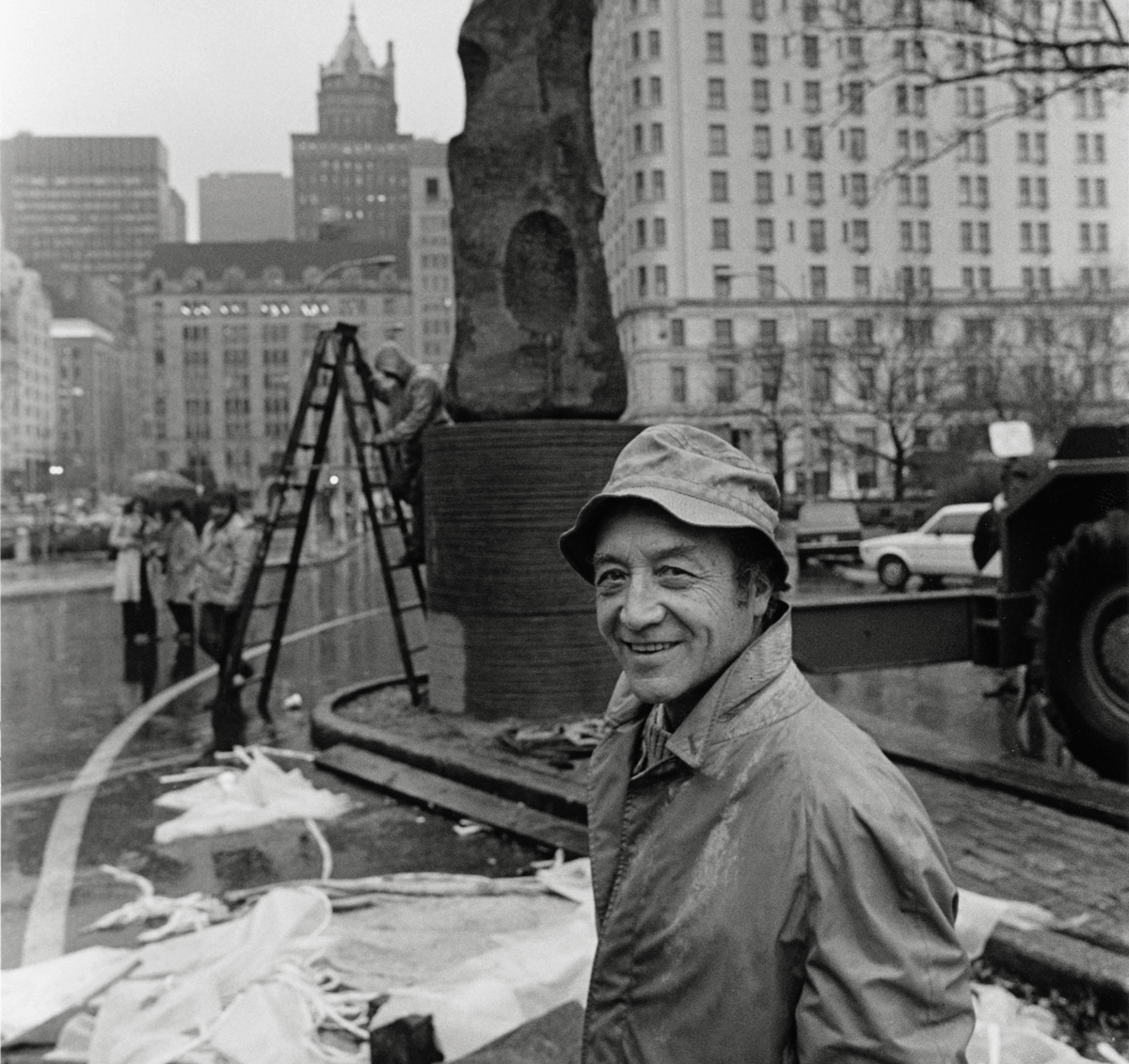
Opening on February 4th, 2026, Noguchi’s New York arrives at The Isamu Noguchi Foundation and Garden Museum, remaining on view through September 13th, 2026. Marking the Museum’s 40th anniversary, the exhibition positions Isamu Noguchi not only as a sculptor of objects, but as a visionary thinker who treated New York itself as a material—shaping, challenging, and reimagining the city through art. Naturally, weaving together themes of Isamu Noguchi’s sculpture and his deep and dynamic relationship with New York City, the project traces how the metropolis informed Noguchi’s practice, and how he, in turn, sought to transform urban life.
Isamu Noguchi and New York: a lifelong dialogue
Noguchi first arrived in New York in 1922 at just seventeen. Though his career unfolded across Paris, Tokyo, and Mexico City, the city remained his constant point of return. Noguchi’s New York examines this enduring relationship, revealing how New York’s political tensions, architectural density, and civic ambitions shaped his artistic vision. Through more than 50 works—spanning sculpture, models, photographs, films, and archival material—the exhibition charts six decades of artistic experimentation rooted in the city’s social fabric.
Isamu Noguchi’s sculpture as a public vision
Central to the exhibition is Noguchi’s radical rethinking of public sculpture. A key section brings to life his unrealized playground and plaza proposals—projects that imagined art as a catalyst for communal play rather than passive monumentality. Models and blueprints for works such as Play Mountain (1933) and Contoured Playground (1941) are animated through newly commissioned short films, translating speculative designs into vivid, moving form. These projects reveal Noguchi’s belief in sculpture as an active social force, designed to be touched, climbed, and inhabited.
From unrealised dreams to iconic public works
The exhibition also traces the history of Noguchi’s realised public commissions in New York, including Red Cube (1968) and the Sunken Garden at Chase Manhattan Bank Plaza (1961–64). Archival photographs and documents revisit works later altered or destroyed, underscoring the fragility of public art within shifting political and commercial landscapes. Together, these projects frame isamu noguchi sculpture as both visionary and vulnerable—caught between idealism and urban reality.
The city as a catalyst
An additional archival section uncovers newly discovered proposals, from a sculptural garden for MoMA to a complete redesign of Washington Square Park. These speculative projects reinforce Noguchi’s conviction that art could reshape civic experience. As curator Kate Wiener notes, New York was the ground on which Noguchi tested his most ambitious ideas—often meeting resistance, yet never abandoning his faith in art’s social purpose.
Noguchi’s New York ultimately presents the city not as a backdrop, but as an active collaborator. By foregrounding both realised works and unrealised visions, the exhibition reveals Isamu Noguchi as an artist who believed that sculpture—especially public sculpture—could create shared spaces of imagination, reflection, and play, bringing the moon a little closer to earth.
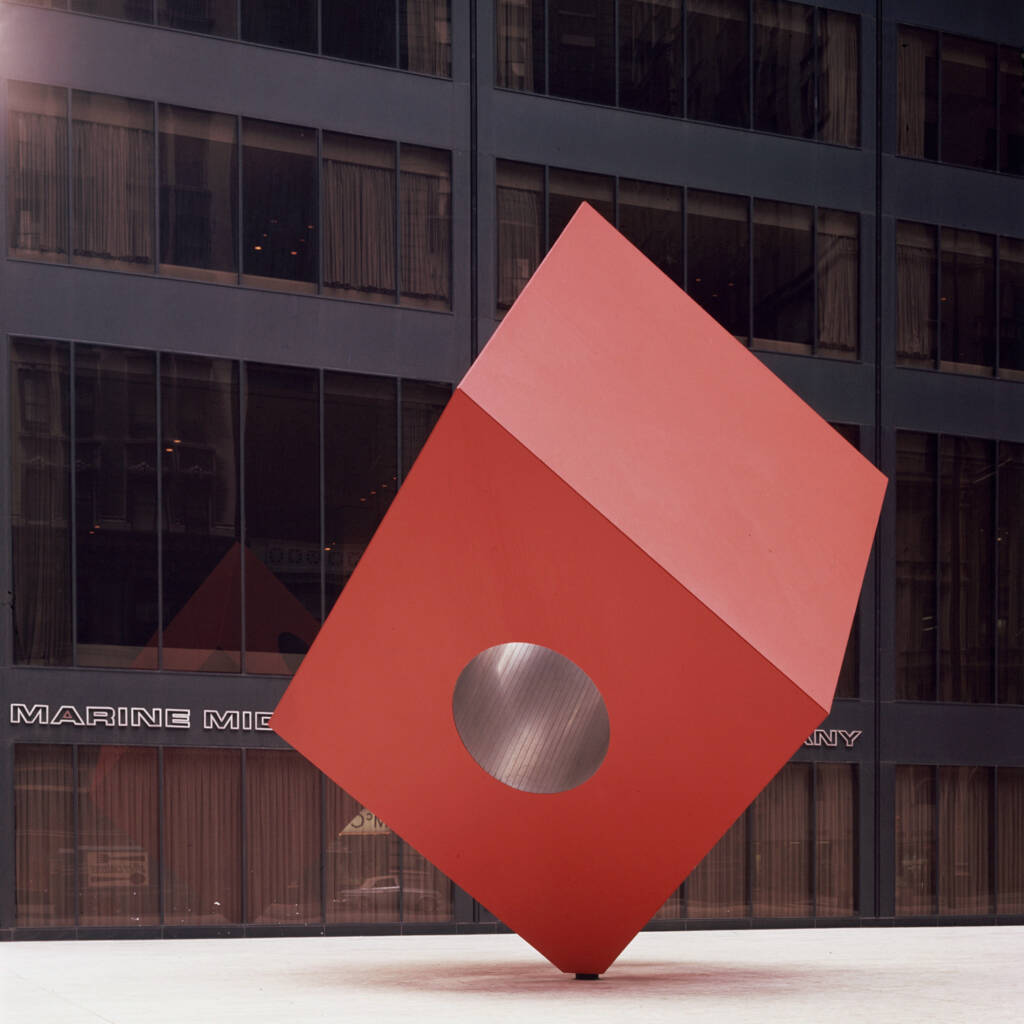
ISAMU NOGUCHI
Red Cube, 1968; 140 Broadway, New York, NY
Courtesy © THE ISAMU NOGUCHI FOUNDATION AND GARDEN MUSEUM, New York / ARTISTS RIGHTS SOCIETY (ARS)
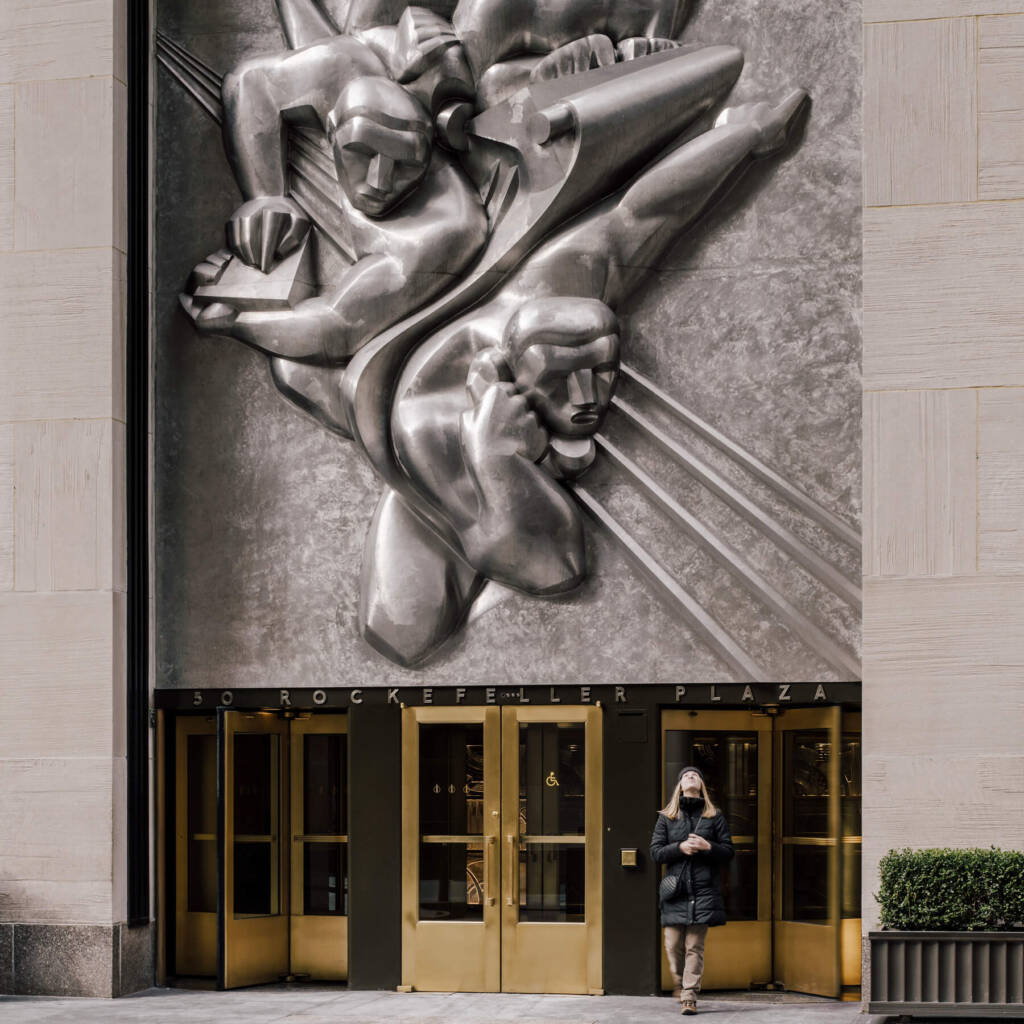
News (Associated Press Building Plaque) at 50 Rockefeller Plaza, 1938–1940
Photography by MIGUEL DE GUZMÁN and ROCÍO ROMERO / IMAGENSUBLIMINAL. Courtesy © THE ISAMU NOGUCHI FOUNDATION AND GARDEN MUSEUM, New York / ARTISTS RIGHTS SOCIETY (ARS)