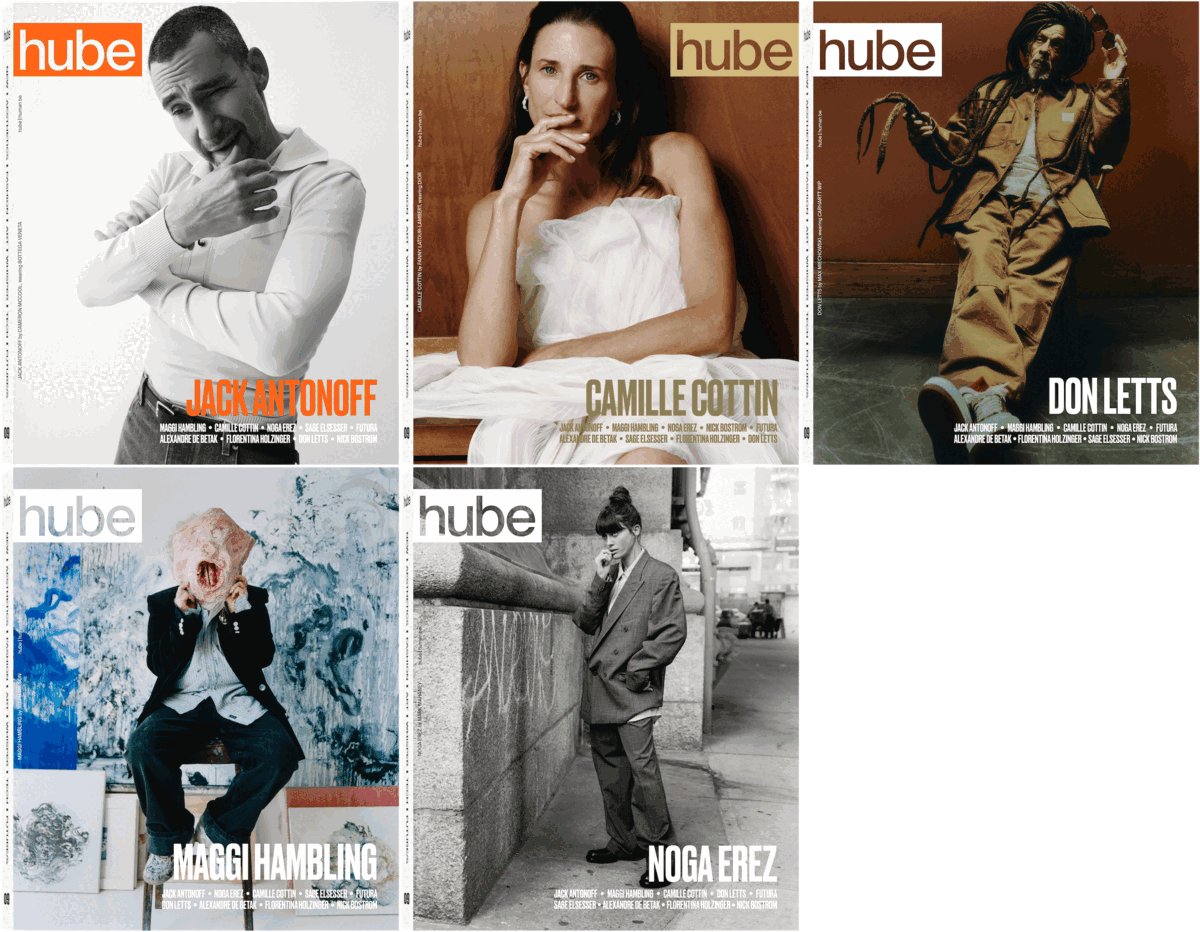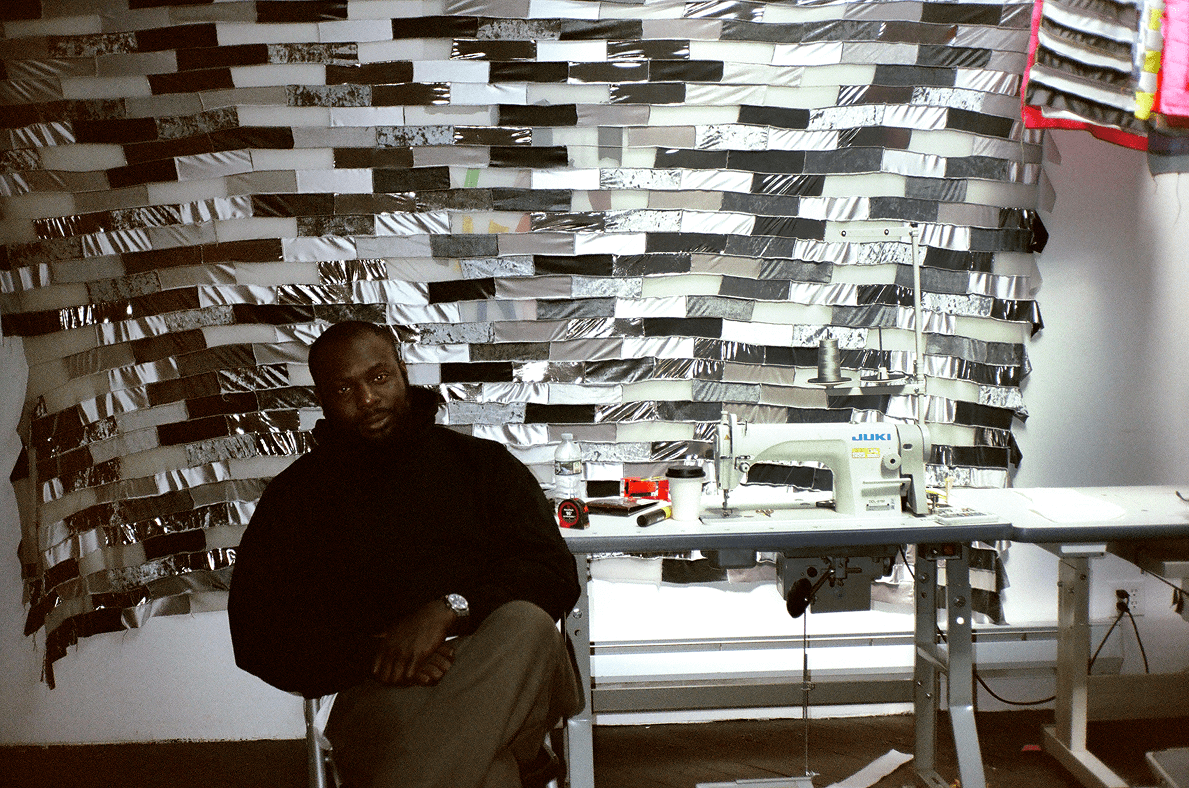
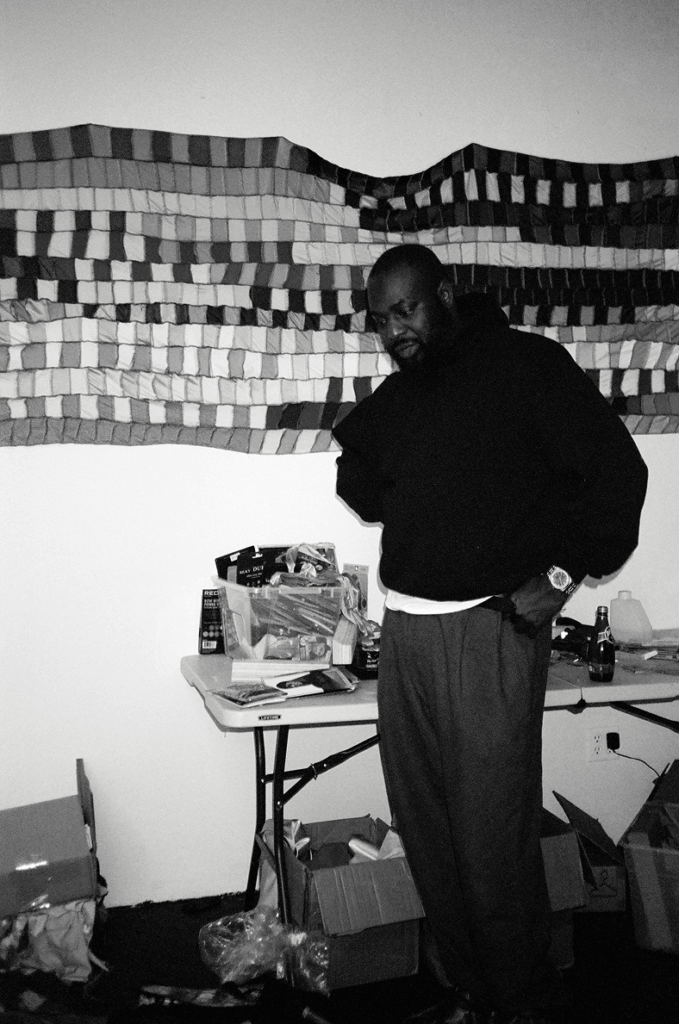
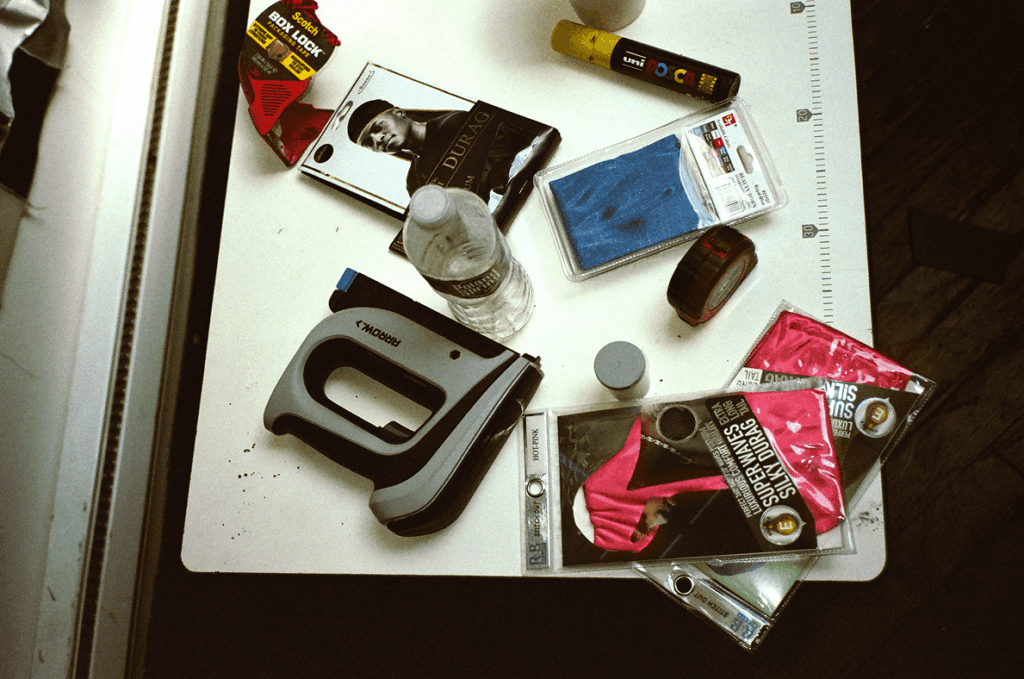
Nigerian‑American artist Anthony Olubunmi Akinbola has emerged as an incisive voice in examining the diasporic Black experience within the material world, making profound contributions to contemporary conversations on identity in art. His celebrated Camouflage works repurpose, with reverence, the durag as a medium—large textile‑based pieces that carry with them the ever‑evolving story of the African American experience. Akinbola has exhibited at leading institutions, including the Institute of Contemporary Art San Francisco, Schirn Kunsthalle, and the Museum of Arts and Design in New York City, where he currently resides, and his work is featured in major international collections such as the Solomon R. Guggenheim Museum, the Pizzuti Collection, the Speed Art Museum, and the Ogunquit Museum of American Art.
At only thirty‑four, Akinbola has already made his mark on the New York art scene through his ability to position contemporary cultural criticism within a larger global context, demonstrating mastery over his craft while suggesting that his most defining work may still lie ahead. Looking forward, he is featured by Carbon 12 Gallery at Art Dubai in April 2026, marking an important engagement with the UAE contemporary art scene and signaling the continued global reach of his practice.
Ivona Mirkovic met with the artist in his studio to capture the essence of his process and the nuances of his practice, while hube sat down to discuss the intersections of identity, materiality, and diaspora in his work.
hube: Much of your practice revolves around identity—both personal and collective. How has moving from Missouri to Nigeria and later to Brooklyn reframed the way you locate yourself within a global Black diaspora? How do those geographies inform your sense of belonging, or even the audiences you imagine for your work?
Anthony Akinbola: I think the beauty of the concept of diaspora is that it’s not subject to just one physical location or experience. I am a collection of my experiences and it’s these experiences that shape my idea of blackness. I hope people can see themselves in my practice, but ultimately I believe what’s more important is that they feel inspired to share their stories and contribute to the ever-growing pool that makes up this ‘global Black diaspora’. I feel like people don’t always appreciate some of the more banal parts of their lives, but it’s these things that create new and unique perspectives compared to the more sensationalised stories we tend to hear more often.
h: From a purely technical perspective, what has working with du-rags taught you about surface, tension, and modularity? Do they behave in ways that force you to adapt, and how do those limitations shape the outcome?
AA: Over the years I’ve learned more and more about the material and have been able to develop different techniques around working with it. I find myself constantly trying to push the limits of the material and what I can do with it, and I spend a lot of my time experimenting in the studio. Most of the time I don’t really know what I’m going to get until what I’m working on is finished, but I also think that’s the beauty of it; there’s an element of spontaneity I like. I don’t think I would be as interested if I knew what I was going to get.