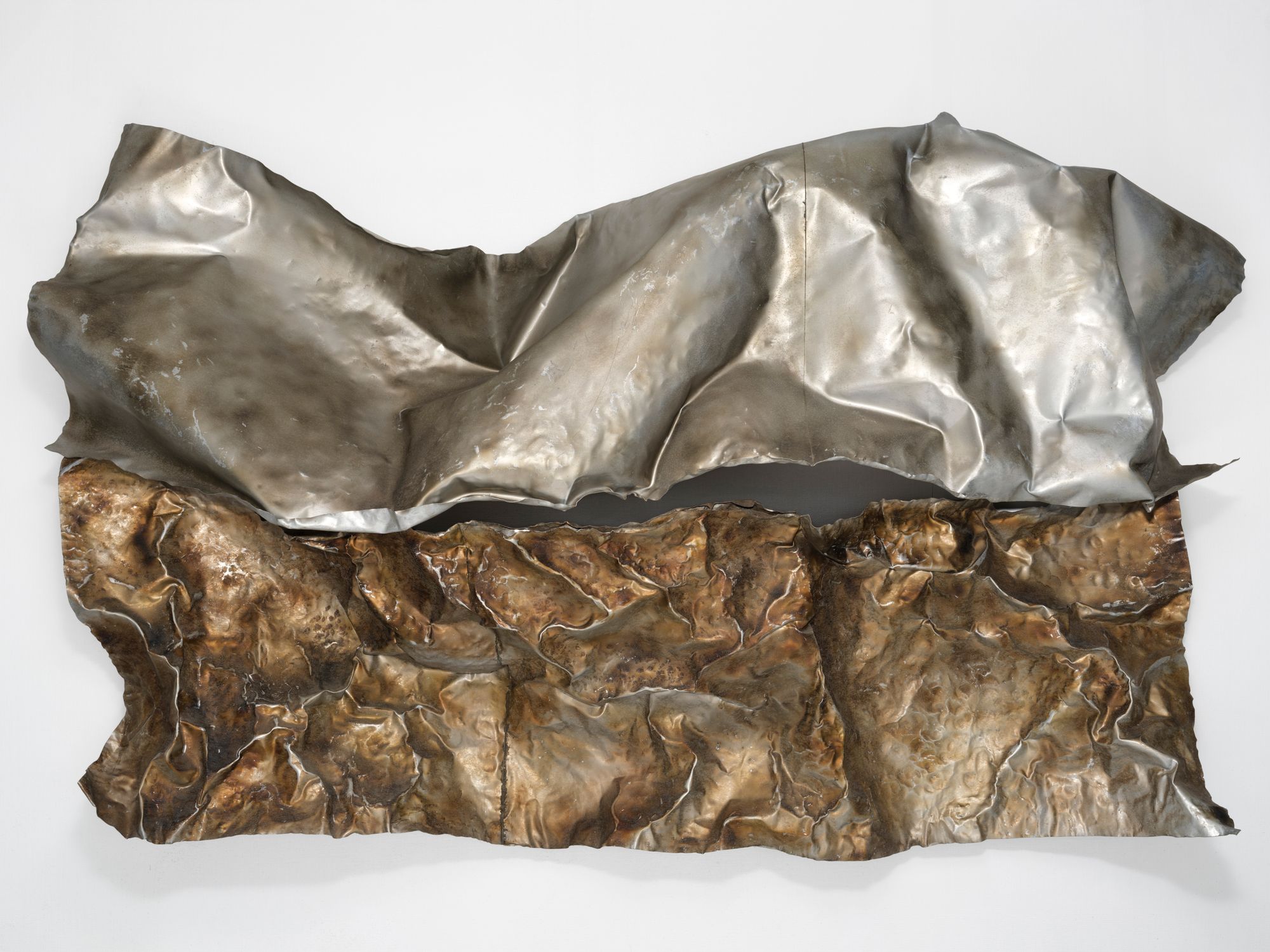
At the National Museum of Modern Art, Tokyo, a major exhibition reframes postwar Japan through the overlooked practices of women artists who worked against the grain of dominant artistic narratives. Anti-Action: Artist-Women’s Challenges and Responses in Postwar Japan brings together around 120 works by 14 artists active in the 1950s and 1960s, a moment often defined by the rise of Action Painting and its masculine-coded ideals of force, gesture, and heroism.
Rather than embracing spectacle or bravura, these artists pursued quieter, more experimental paths—approaches that history largely sidelined. The exhibition asks how Japanese modern and contemporary art might look if told from their perspective.
Postwar Japan beyond Action Painting
In the years following World War II, Japanese avant-garde art was shaped by international movements such as Art Informel, imported from Europe, and later by American Action Painting. While early abstract experiments briefly opened doors for women artists, critical attention soon narrowed. “Action” became synonymous with physical power and scale, and women were pushed to the margins of art discourse.
Drawing on the concept of “anti-action,” proposed by art historian Izumi Nakajima, the exhibition highlights artists who responded differently—through repetition, surface, material sensitivity, and introspection. Their practices resist easy categorization, offering an alternative reading of postwar Japan that complicates linear, male-dominated histories of the avant-garde.
Yayoi Kusama’s work and the power of resistance
At the heart of the exhibition is Yayoi Kusama’s work, shown alongside key figures such as Tanaka Atsuko, Fukushima Hideko, and Yamazaki Tsuruko. In her autobiography Infinity Net, Kusama famously recalled rejecting Action Painting in the early 1950s, insisting on creating art that emerged from “the depths of my soul.” Her position, the exhibition reveals, was far from isolated.
Kusama’s early paintings, obsessive in rhythm and radically inward, sit in dialogue with works by fellow artists who also rejected dominant expectations. Together, they demonstrate how restraint, repetition, and conceptual rigor could be just as radical as explosive gesture.
Rewriting art history
Installed at MOMAT, the exhibition situates these works within the broader history of modern art, arguing for their lasting relevance. Many of the artists shown enjoyed international recognition during their lifetimes—exhibiting abroad, participating in major biennials—only to be later written out of the canon.
By recovering forgotten works, including pieces never before exhibited, Anti-Action challenges how value and legacy are constructed in art history. It positions these practices not as footnotes, but as essential to understanding the complexity of postwar Japan—and to rethinking the global narrative of abstraction beyond the rhetoric of Action Painting.
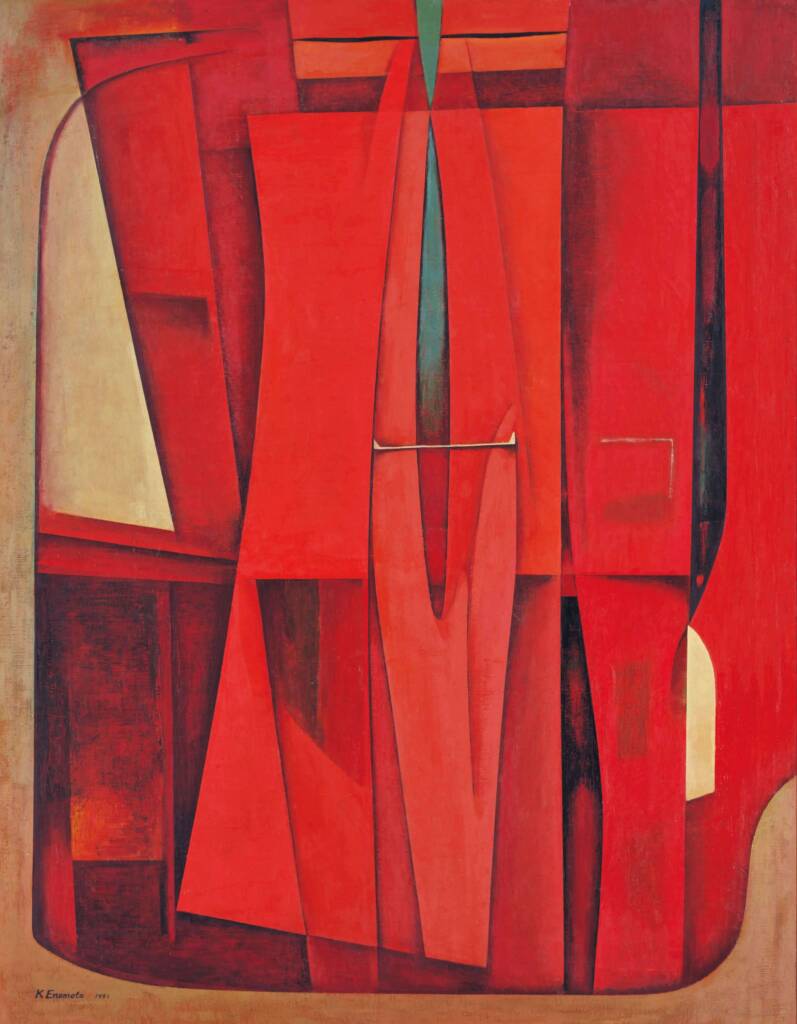
Section (1), 1951. ITABASHI ART MUSEUM
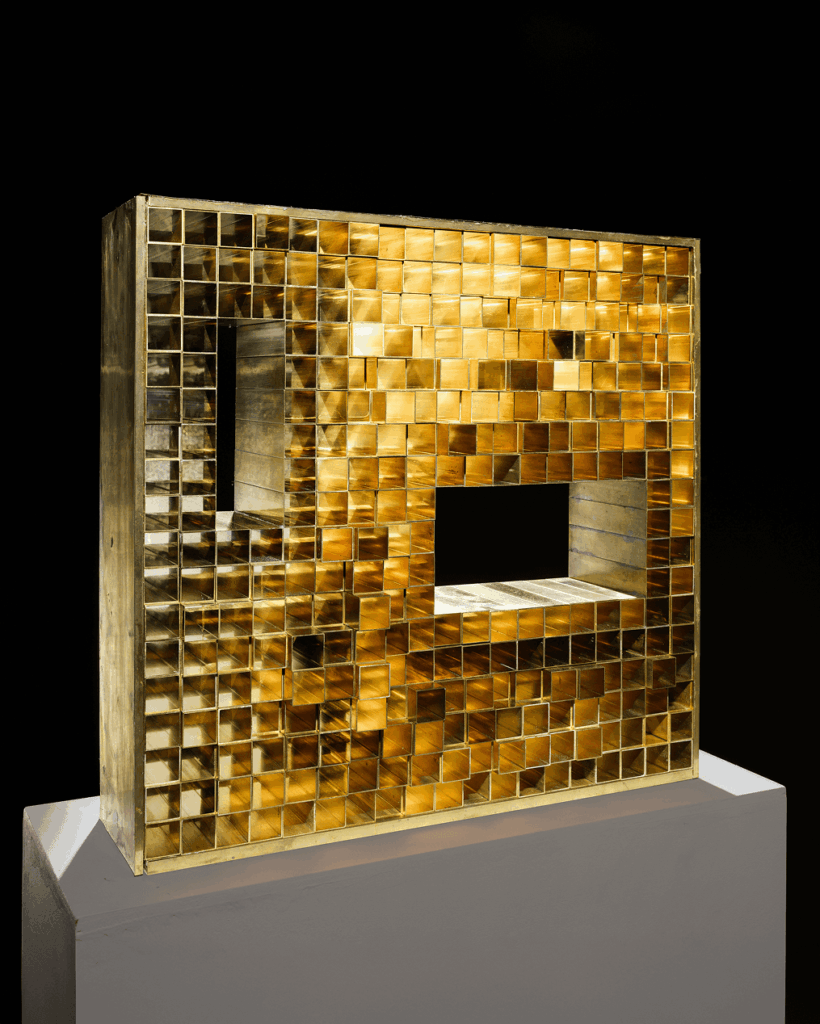
Work, 1967
Photography by NAKAGAWA SH
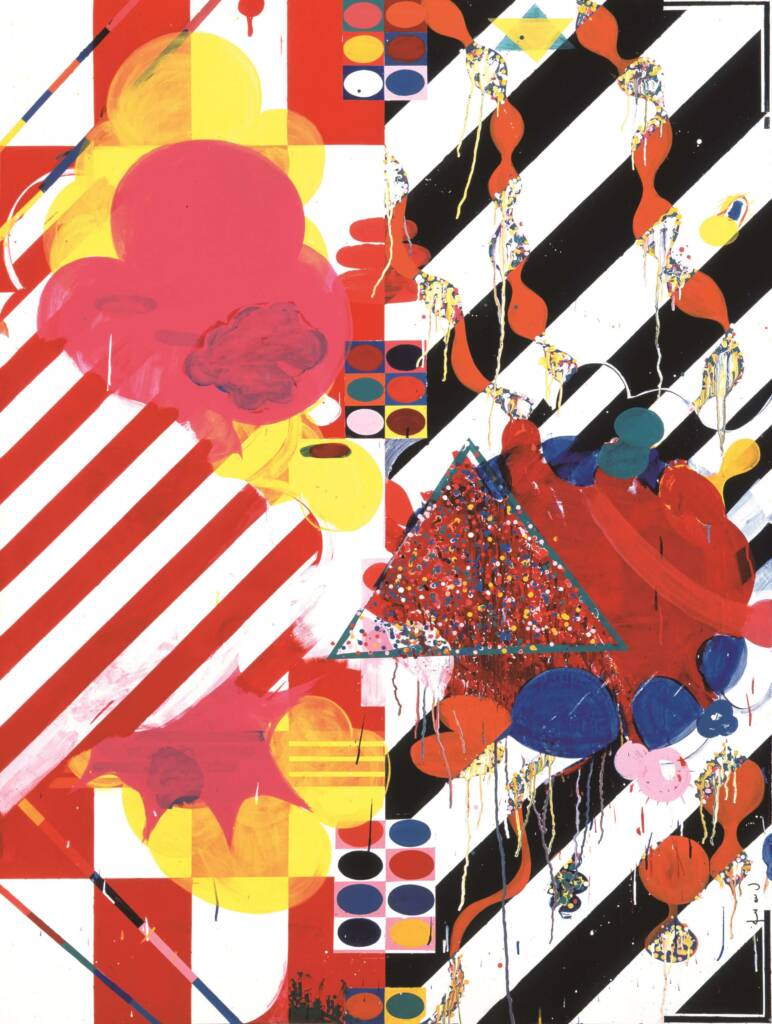
Work, 1964. ASHIYA CITY MUSEUM OF ART & HISTORY. © ESTATE OF TSURUKO YAMAZAKI
Courtesy of LADS GALLERY, Osaka and TAKE NINAGAWA, Tokyo