The desert has never been a neutral arena in literature or cinema, as it resists our grasp while exposing the fragility of human endeavour. It is both space and condition, appearing—when seen from a distance—like an intensely coloured ocean rather than solid ground. That paradox of invisibility and intensity surrounds Diriyah, the former capital of Saudi Arabia and now the site of its Contemporary Art Biennale in Riyadh. This year’s edition, entitled In Interludes and Transitions, directed by Nora Razian and Sabih Ahmed together with a host of curators, introduces an exhibition that proposes to trace “the movements, migrations and transformations that have long connected the Arab region with the world.” As always with such scaled-up events, the manifesto proves ambitious: to think of geography as relation rather than boundary, and identity as circulation rather than origin. Such a proposition resonates with the late French writer and critic Édouard Glissant’s concept of the Poetics of Relation, in which cultures are not isolated but entangled entities shaped by encounter. For Glissant, opacity is the right not to be reduced to clarity for the comfort of others. The biennale’s thematic insistence on transition and exchange gestures toward this relational thinking, avoiding the presentation of the Arab region as a static terrain awaiting interpretation and instead framing it as historically and contemporaneously interwoven with the rest of the world.
Yet the biennale’s scenography frequently confronts its own conceptual fluidity. Heavy platforms, assertive wall panelling, elevated plinths and monumental staging introduce a solidity that appears at odds with the curatorial narrative. In that sense, the exhibition mirrors what Polish-British sociologist Zygmunt Bauman described in Liquid Modernity: a world defined by flux and fluidity, countered by institutions that attempt to reassert order through rigid structures. The intentions of the biennale are to evoke migration and metamorphosis; its architecture, however, remains institutional. Works are lifted from the ground, distanced from the dirt, staged rather than allowed to settle. The result is a subtle but persistent friction, as artworks risk becoming props, the layout favouring presentation over process. Stripping the art of its uncertainty—the dirt, contingency and unfinishedness that give contemporary practice its humanity and urgency—creates a theatrical encounter. Individual works rest on these bounded blocks, even as the accompanying literature and the artworks themselves challenge such categories and containment. Palestinian-American academic Edward Said reminds us that geography is never innocent. Places are narrated, staged and symbolically arranged within systems of power. The desert, historically, has been cast as emptiness—a surface upon which meaning may be projected. The directors and curators consciously resist this reductive framing at the level of discourse, positioning the region as interconnected rather than peripheral. Yet the insistence of scenographic control reinscribes authority in another form—not exoticisation, but institutionalisation. Despite these tensions, the artistic selection demonstrates real conviction.
Con-junto (2015) and Ambulancia (2022–23)
Con-junto (2015) and Ambulancia (2022–23)
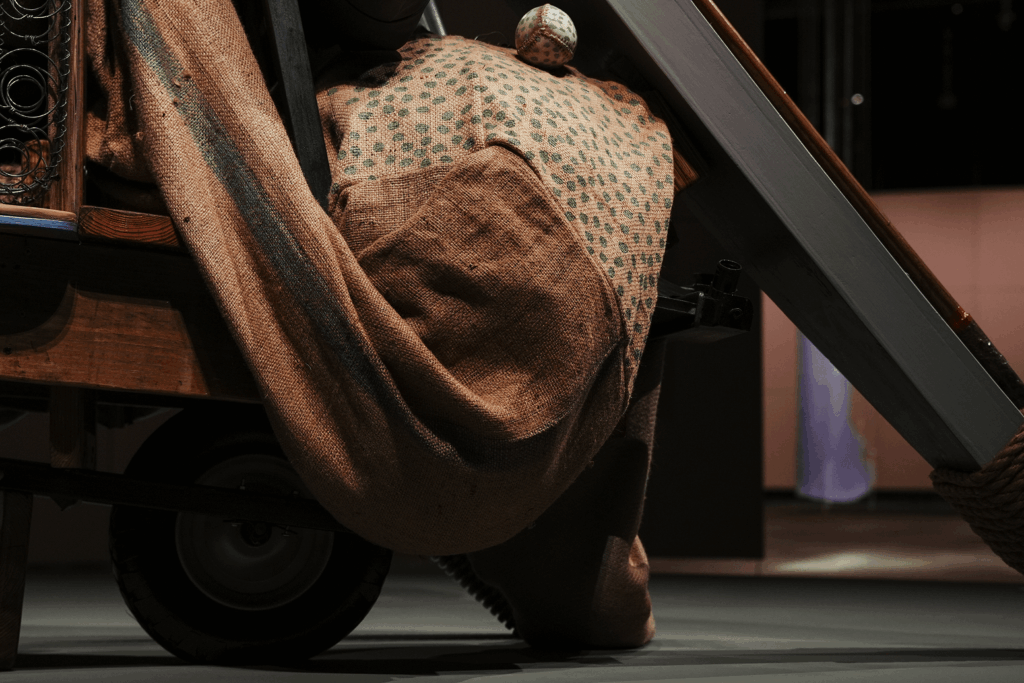
Con-junto (2015) and Ambulancia (2022–23)
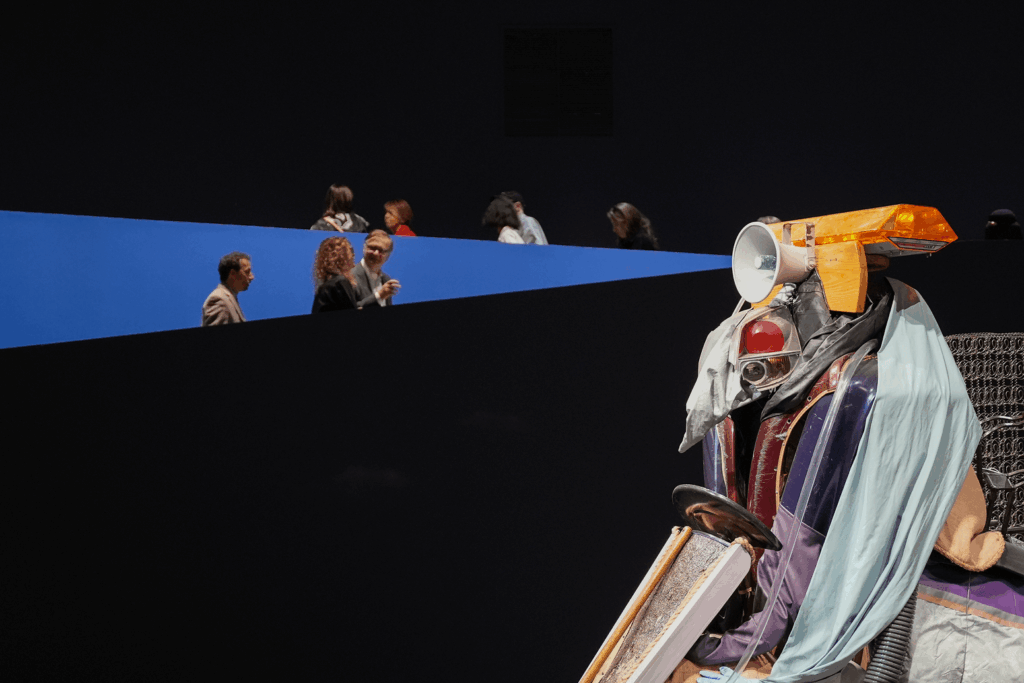
Con-junto (2015) and Ambulancia (2022–23)
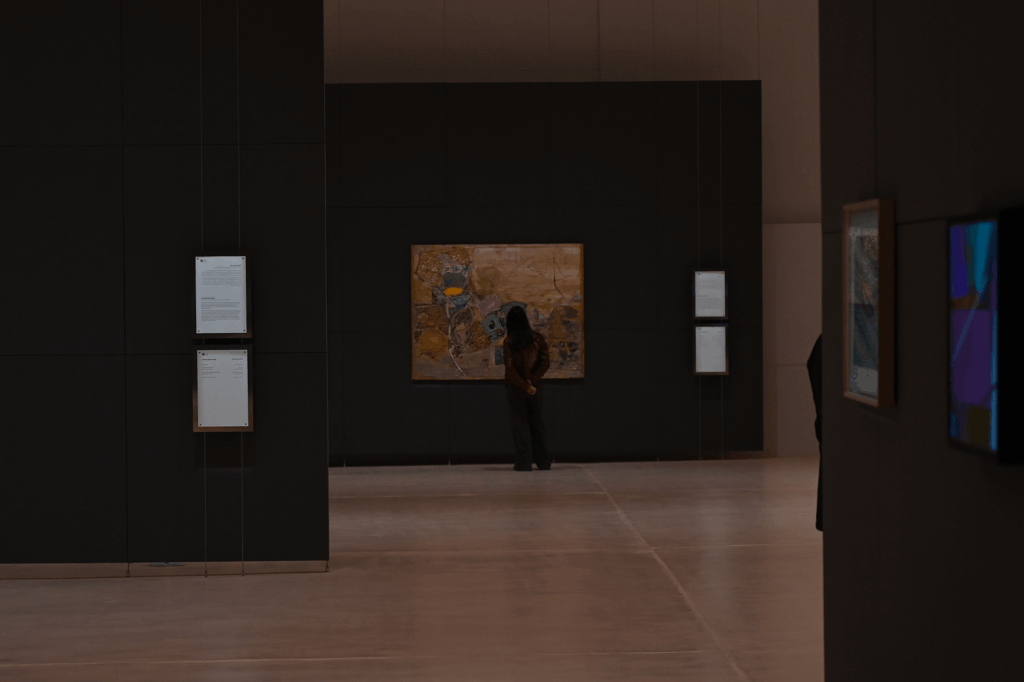
Untitled, 2000-2018
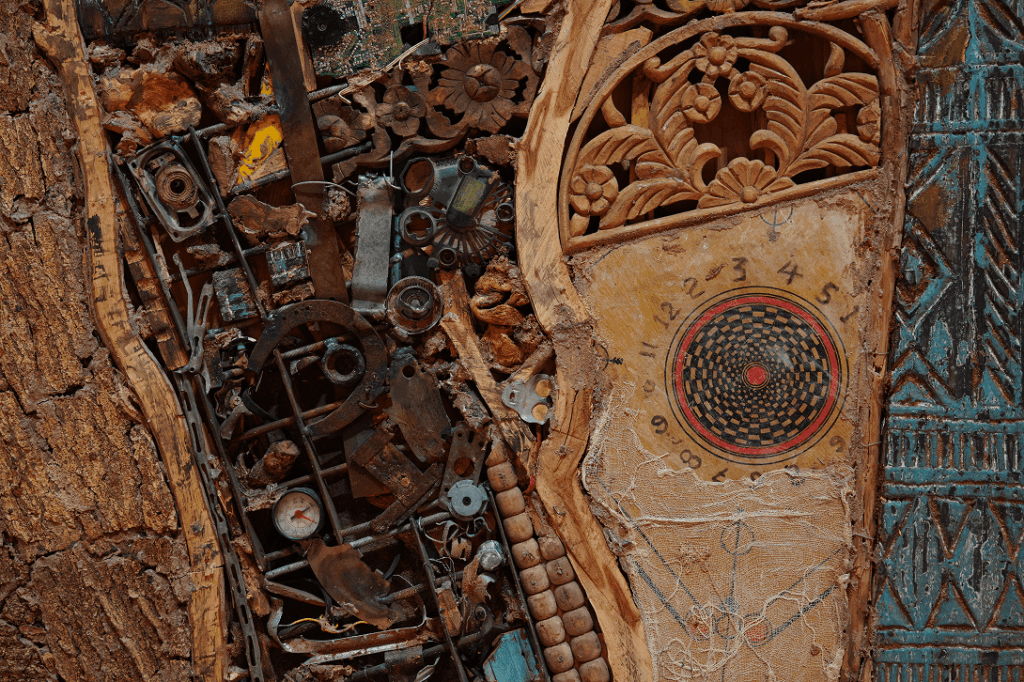
Untitled, 2000-2018
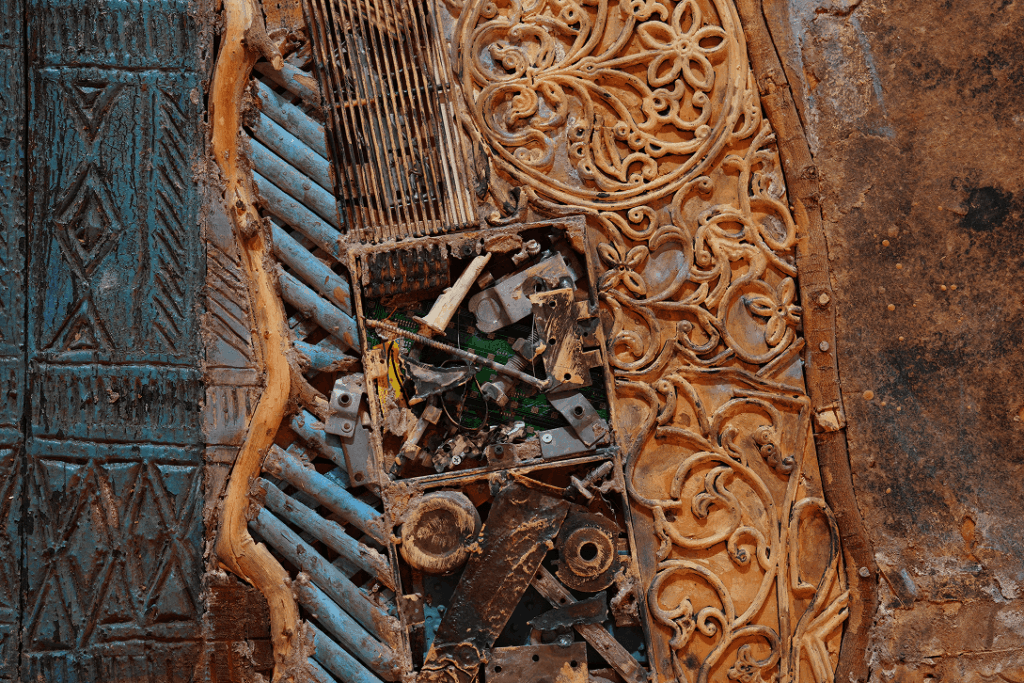
Untitled, 2000-2018
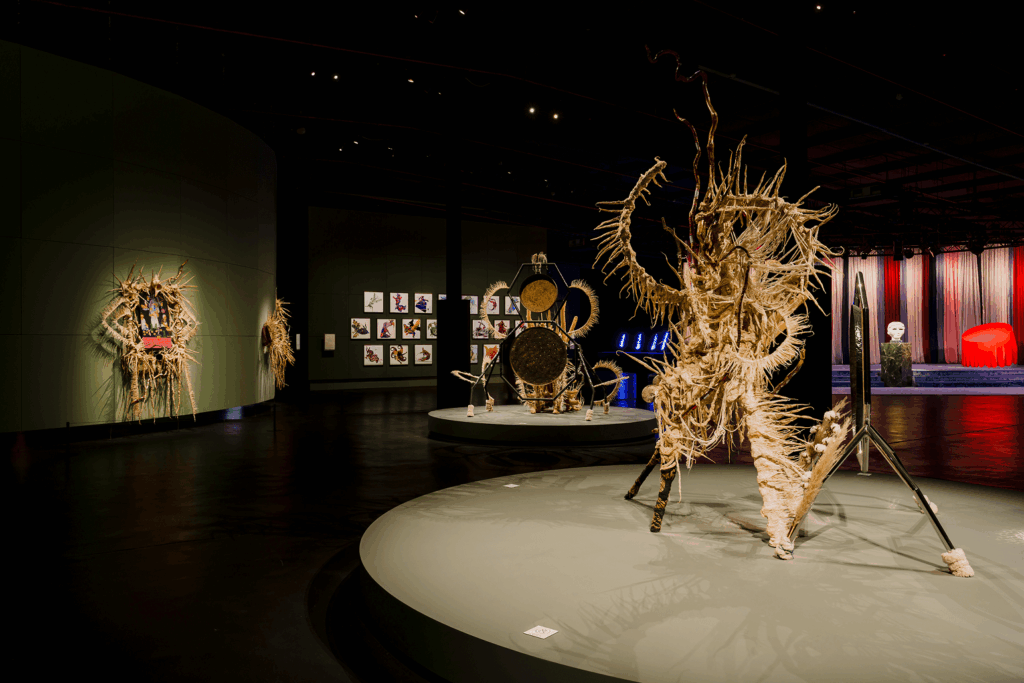
Disease Throwers, 2022–2024
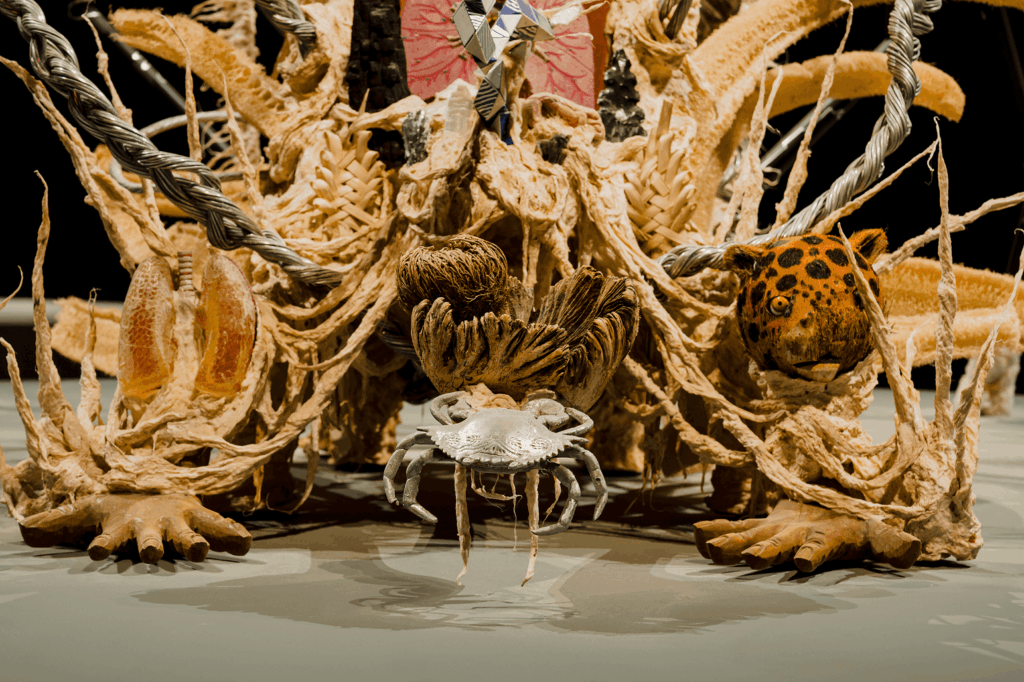
Disease Throwers, 2022–2024
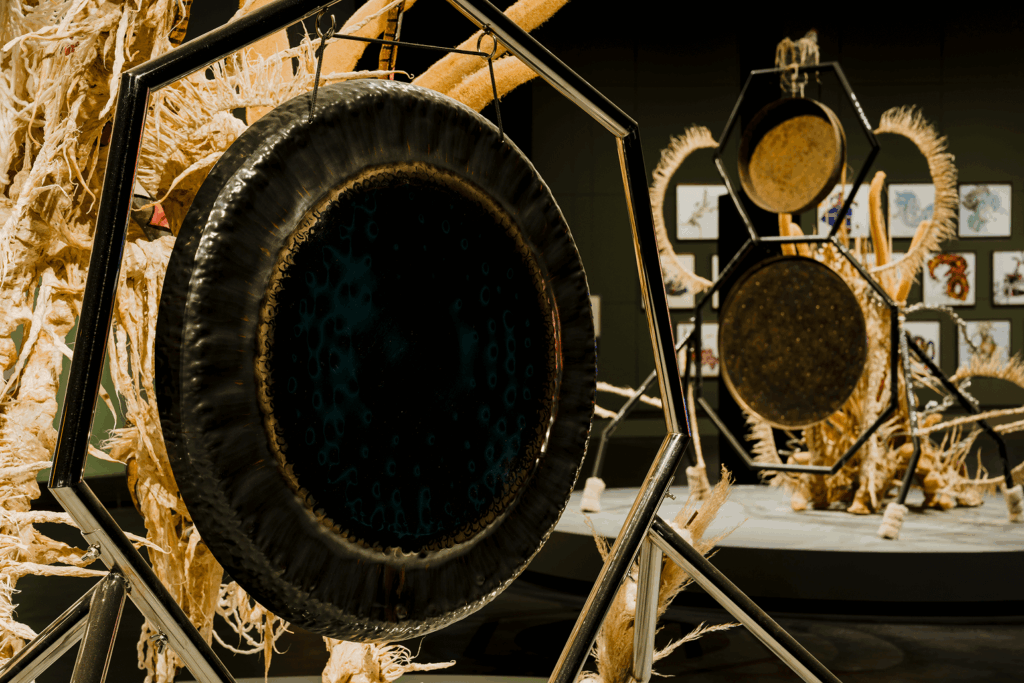
Disease Throwers, 2022–2024
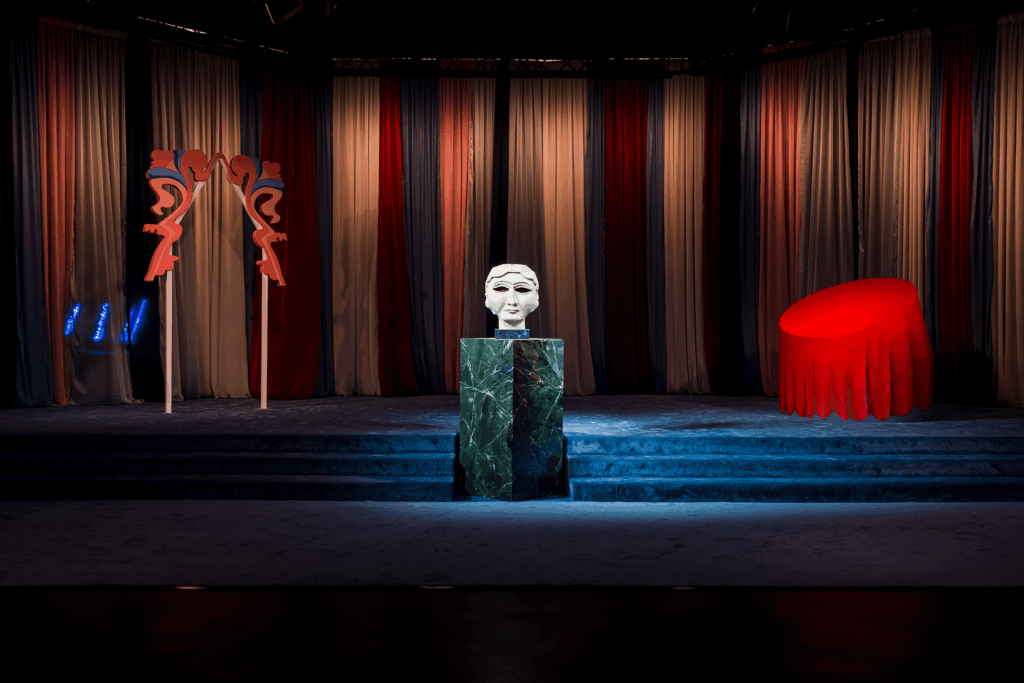
Years of the Shining Face, 2026
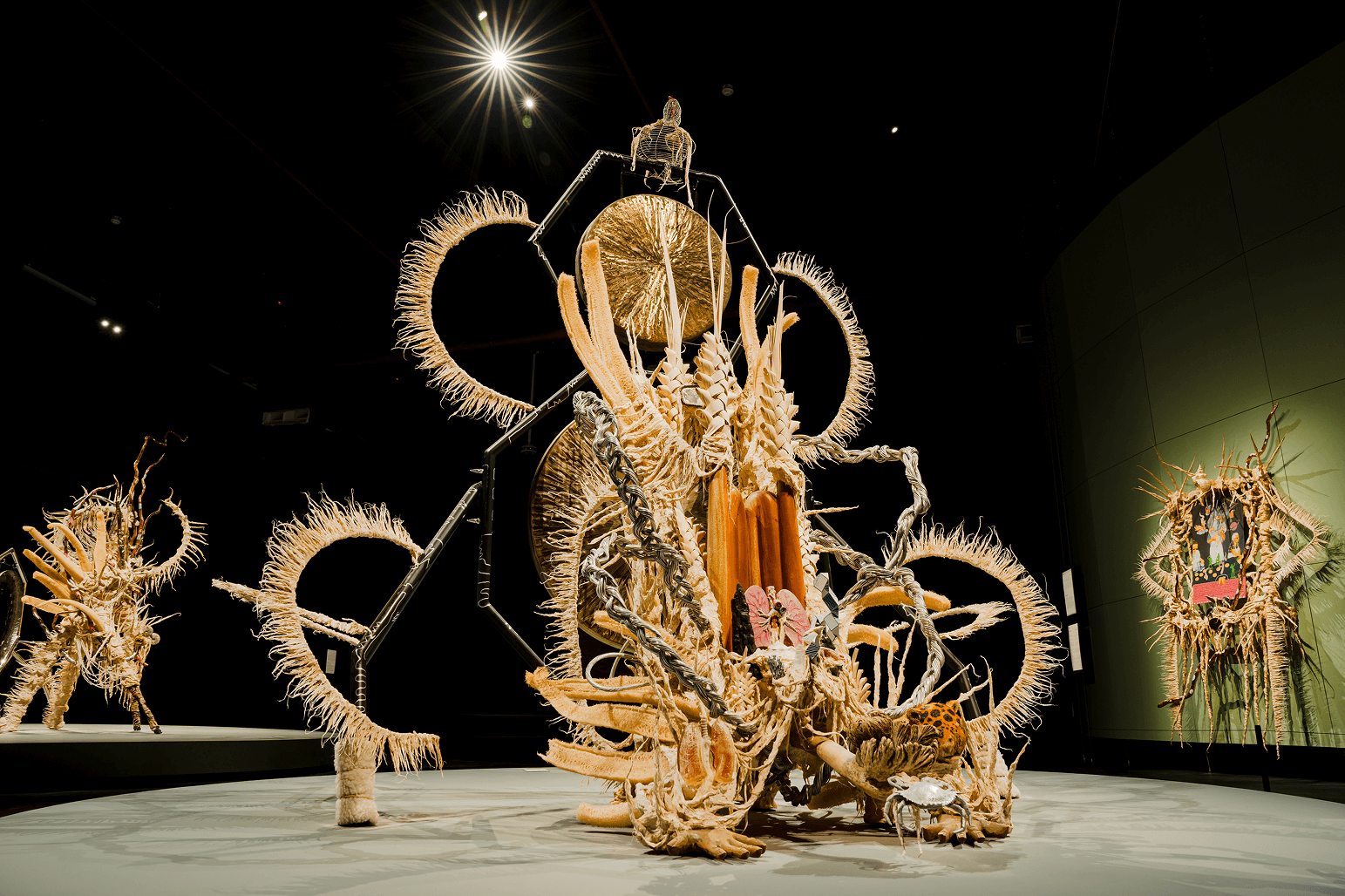
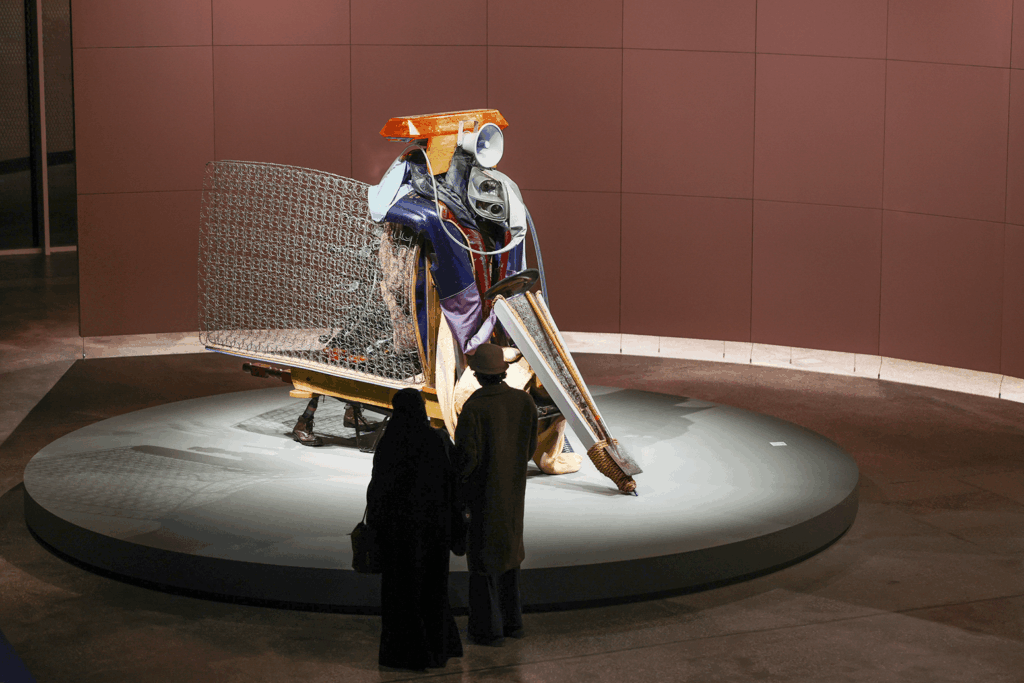
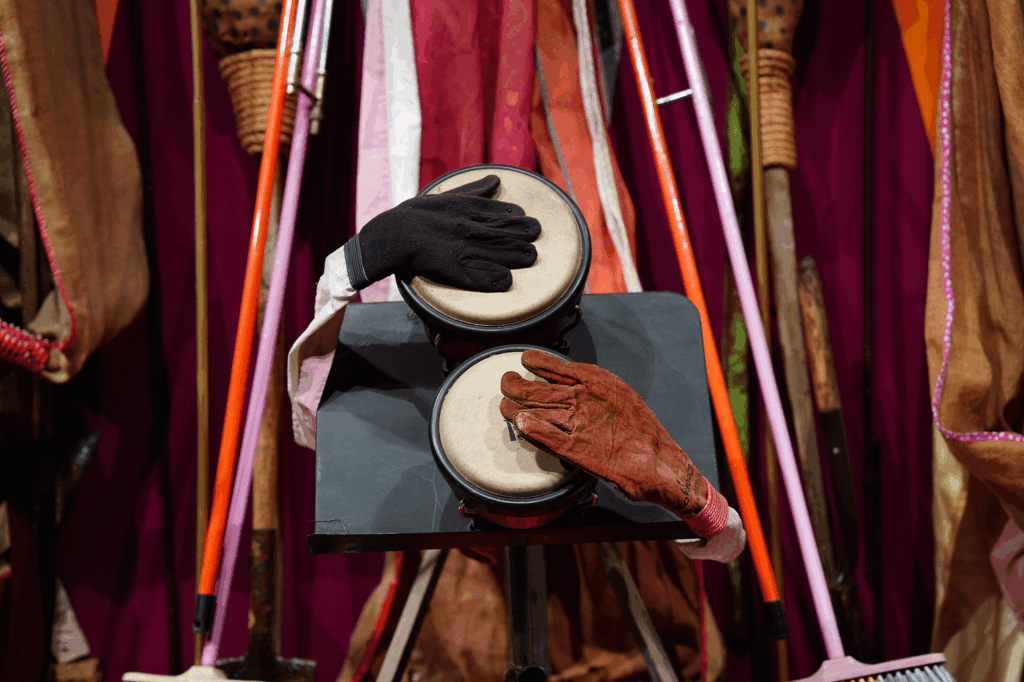
Guadalupe Maravilla’s Disease Throwers (2022–2024) stand like resonant witnesses to migration, illness and survival. They hum with embodied memory rather than declarative spectacle. Hussein Nassereddine’s Years of the Shining Face (2026) constructs a theatrical architecture of coloured curtains framing a fibreglass face perched upon a plinth—suspended between ritual and artifice, revelation and ceremony. The late Etel Adnan’s ceramic mural radiates chromatic warmth, its colours reverberating off the temporary walls as though light itself were a material. Daniel Otero Torres’s Echoes of the Earth (2026) turns structures inside out, exposing interior frameworks and questioning the solidity of constructed systems. South African Moshekwa Langa’s deliberately crude multimedia collages, Collapsing Guide (2000–2003), embrace a childlike aesthetic that is anything but naïve. Fact overlays fiction; longing exceeds political structure. His work suggests a world still becoming—a geography not yet fully mapped. Saudi-born Mohammad Al-Ghamdi’s mixed-media montages, Untitled (2000/2018), oscillate between play and discipline, evoking at moments the gestural freedom of Jackson Pollock and the assemblage sensibility of Robert Rauschenberg, yet grounded in local resonance. Kosovo-born, Berlin-based Petrit Halilaj presents a stage-like installation that knowingly mirrors the theatricality of exhibition-making itself. It reads as a set awaiting performance—or perhaps already haunted by one—subtly challenging the more dominant scenographic gestures surrounding it. Puerto Rican artist Daniel Lind-Ramos’s monumental scrap-metal sculptures, Con-junto (2015) and Ambulancia (2022–23), rise toward the ceiling of the aircraft-hangar space, metamorphosing discarded materials into mythic figures. These assemblages appear restless in their new guises, poised to disrupt. Yet their forensic staging partially neutralises their insurgent potential. Removed from the environments of their making, they risk becoming relics of energy rather than embodiments of it, deserving perhaps of the dust and contingency from which they emerged.
Where the biennale becomes most persuasive is in its quieter gestures. Hazem Harb’s gauze-like forms hover between corporeality and disappearance. One imagines the artist casting translucent fabric across sand-coloured grounds, allowing gravity and chance to participate—not unlike Marcel Duchamp’s chance operations. These works refuse theatrical amplification; they operate through suspension. Raven Chacon’s black-and-white digital prints (2017–20) similarly enact subtraction. Conceived as scores, they privilege silence over assertion, reconfiguring perception through absence. Rajesh Chaitya Vangad’s water-on-cloth compositions, Untitled (2018), articulate indigenous cosmology through disciplined geometry, unfolding with measured patience like an extended game whose rules are inherited rather than imposed. Pacita Abad’s Asian Abstractions (1983–1992), shaped by decades of migration across continents, refuse fixed interpretation. Their surfaces remain migratory, their readings multiple. Bogotá-born, Los Angeles-based Gala Porras-Kim’s meticulous drawings of museum vitrines (2025) render displaced objects with forensic care, turning institutional display itself into subject. These two-dimensional works expand the imagination quietly, filling space not through scale but through concentration. In these practices, Glissant’s opacity becomes visible. They do not demand immediate legibility. They allow meaning to remain layered, relational and unfinished.
For all its achievements, the biennale continues to negotiate a balance between relational thought and architectural authority. Branding risks replacing artistic tension with curatorial certainty. In a context already saturated with symbolic weight, such over-determination can feel redundant. The desert, after all, does not require amplification. The exhibition succeeds most fully when it relinquishes control—when platforms recede into the background, when everything opens up, and when works spill into space. In those moments, the desert ceases to function as metaphor and becomes structural principle. Meaning emerges not through proclamation, but through encounter.
This year’s Diriyah Biennale thus stands as a project in transition: intellectually ambitious, globally conversant, increasingly confident in its artistic selections, yet still negotiating how to spatialise its philosophical commitments. Between Glissant’s opacity, Bauman’s liquidity and Said’s critique of narrated geography, the exhibition finds itself at a crossroads. Its future strength will lie not in amplifying monumentality, but in refining restraint—in trusting that art, like the desert, does not need to announce its power to exert it. For the desert does not easily explain itself, yet it endures.
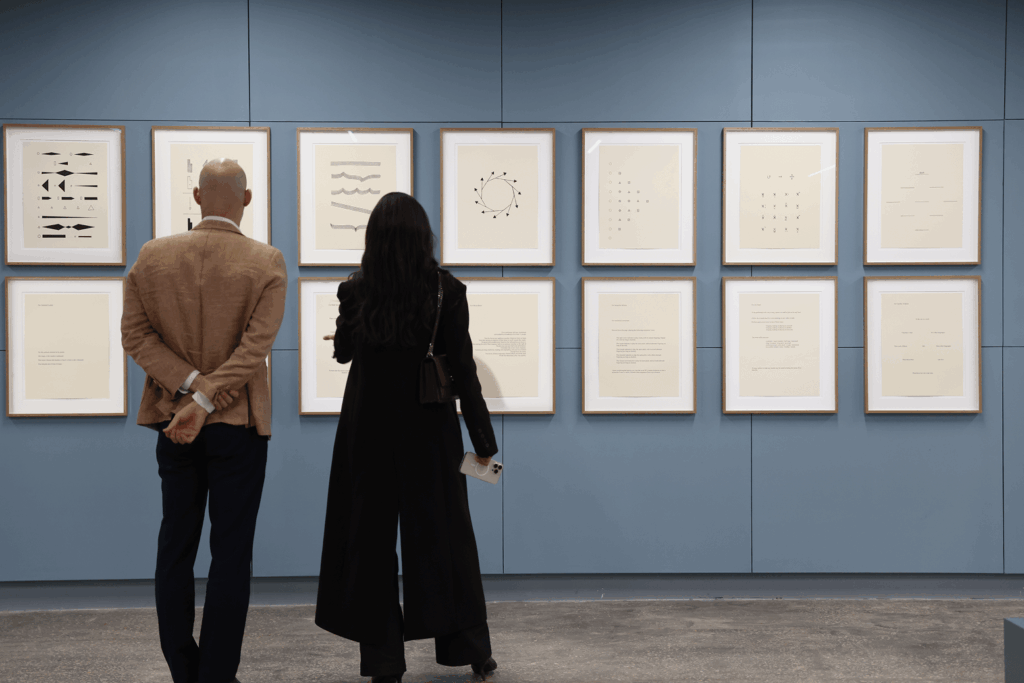
Black-and-white digital prints, 2017–2020
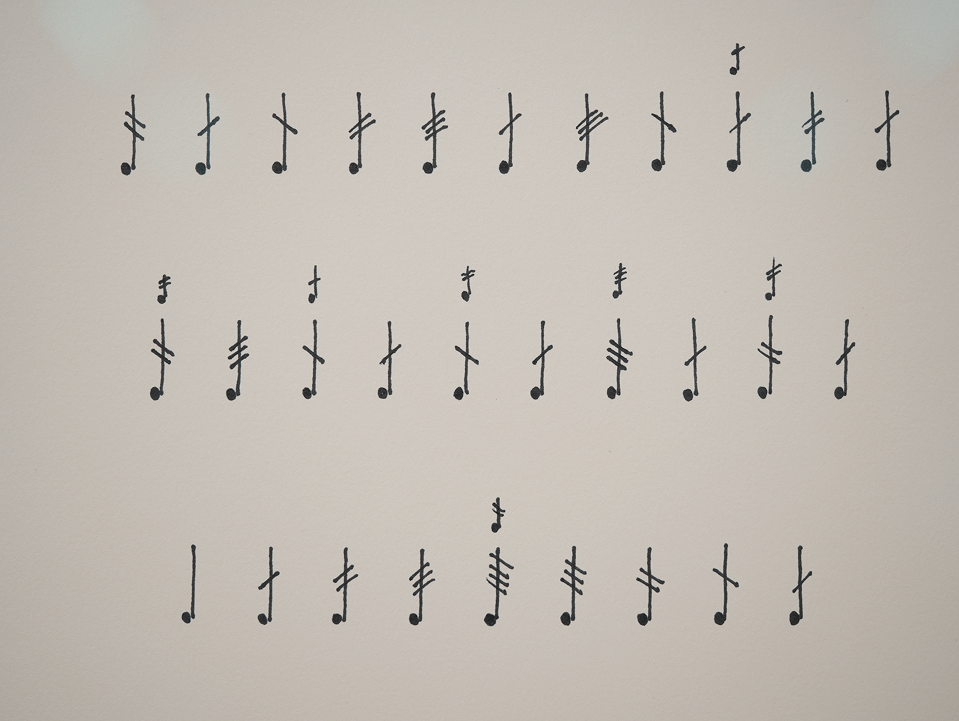
Black-and-white digital prints, 2017–2020
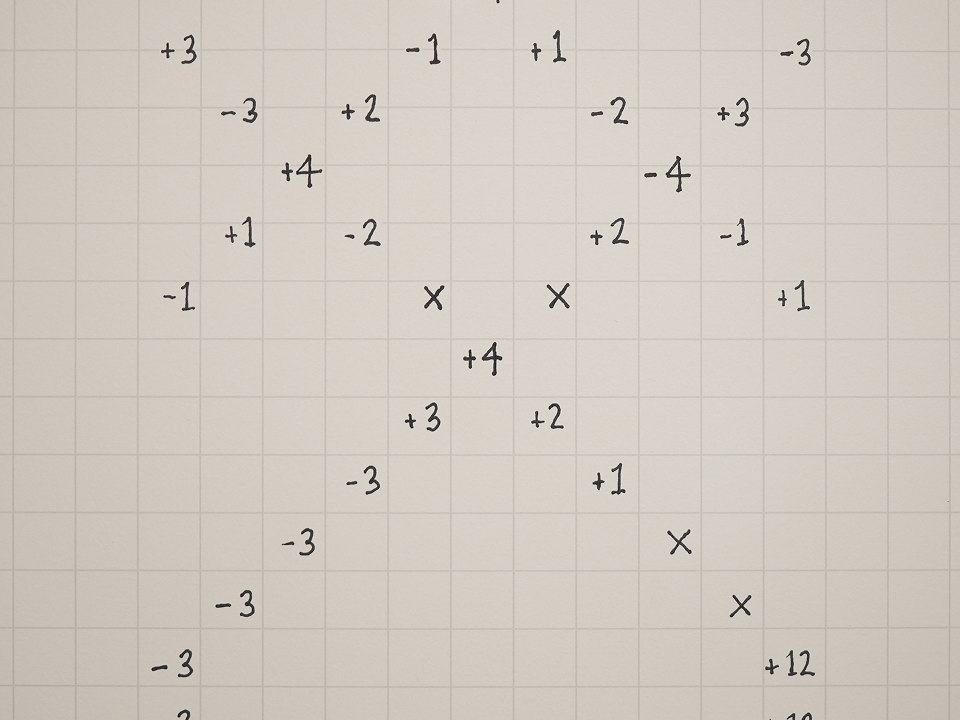
Black-and-white digital prints, 2017–2020
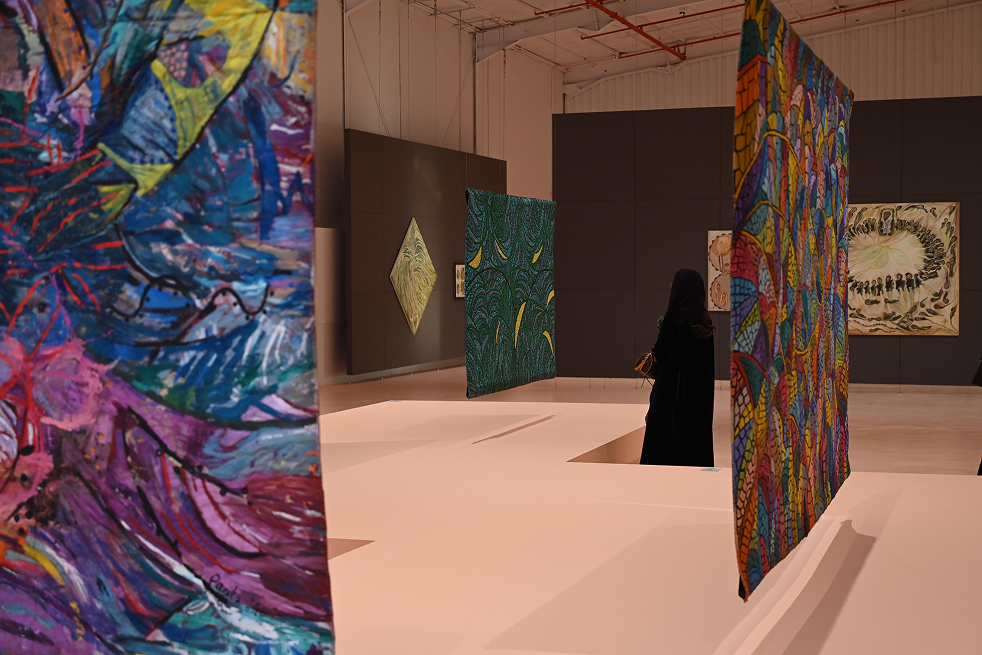
Asian Abstractions, 1983–1992
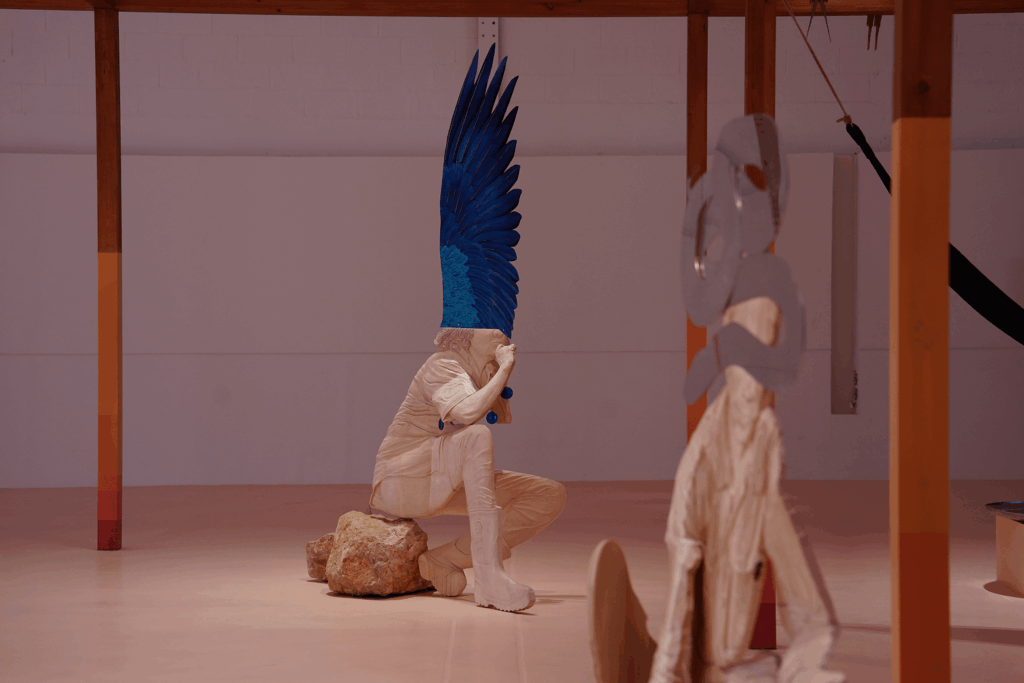
Echoes of the Earth, 2026
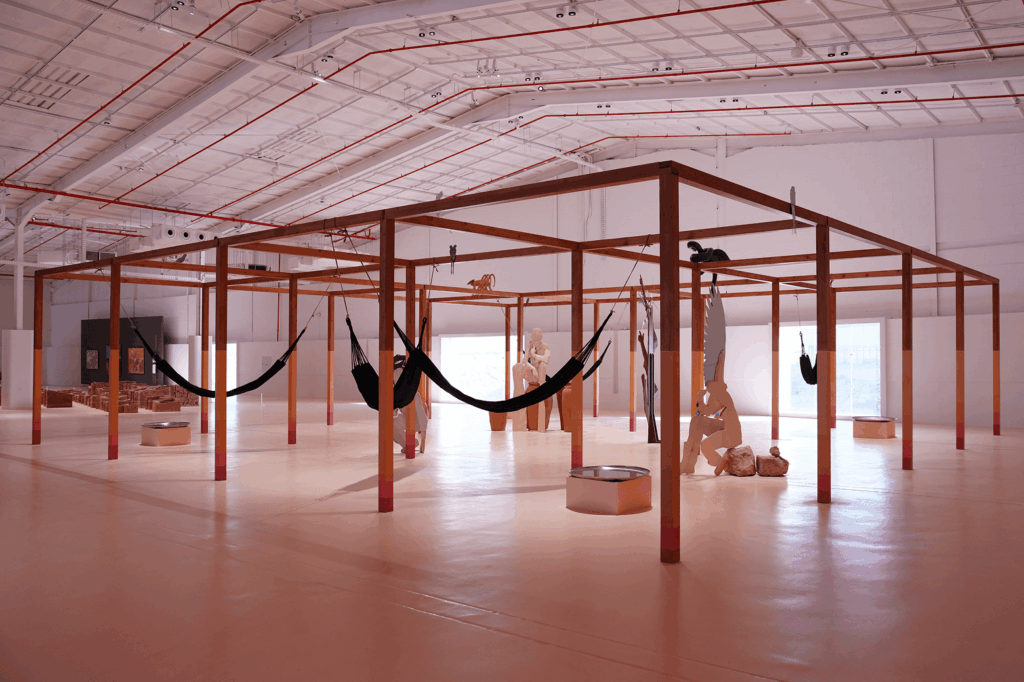
Echoes of the Earth, 2026
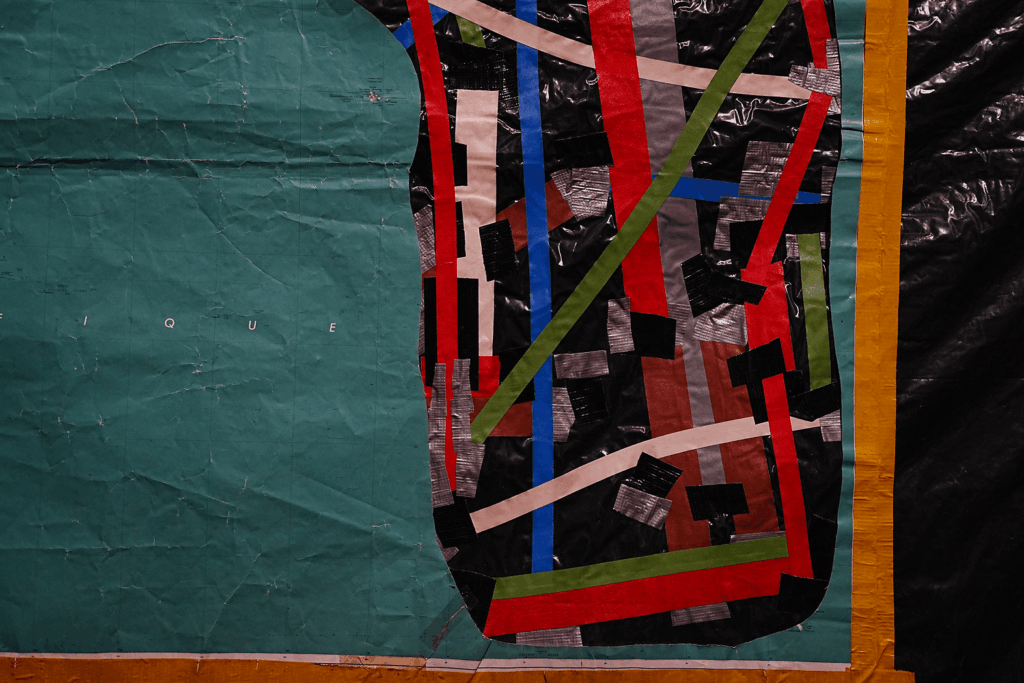
Collapsing Guide, 2000–2003
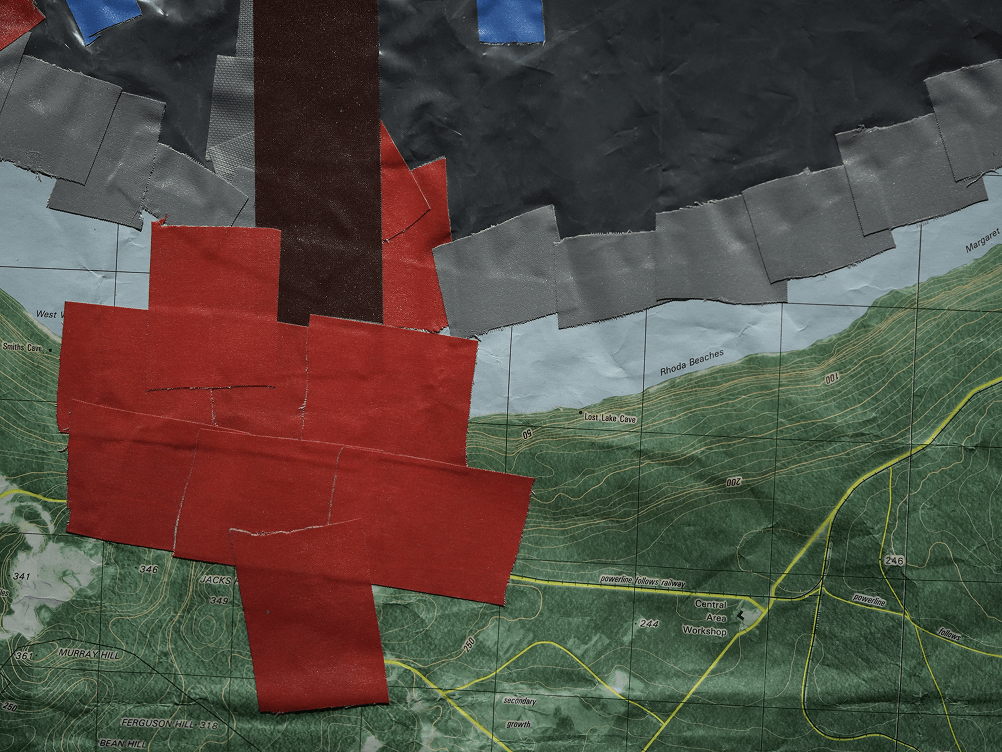
Collapsing Guide, 2000–2003
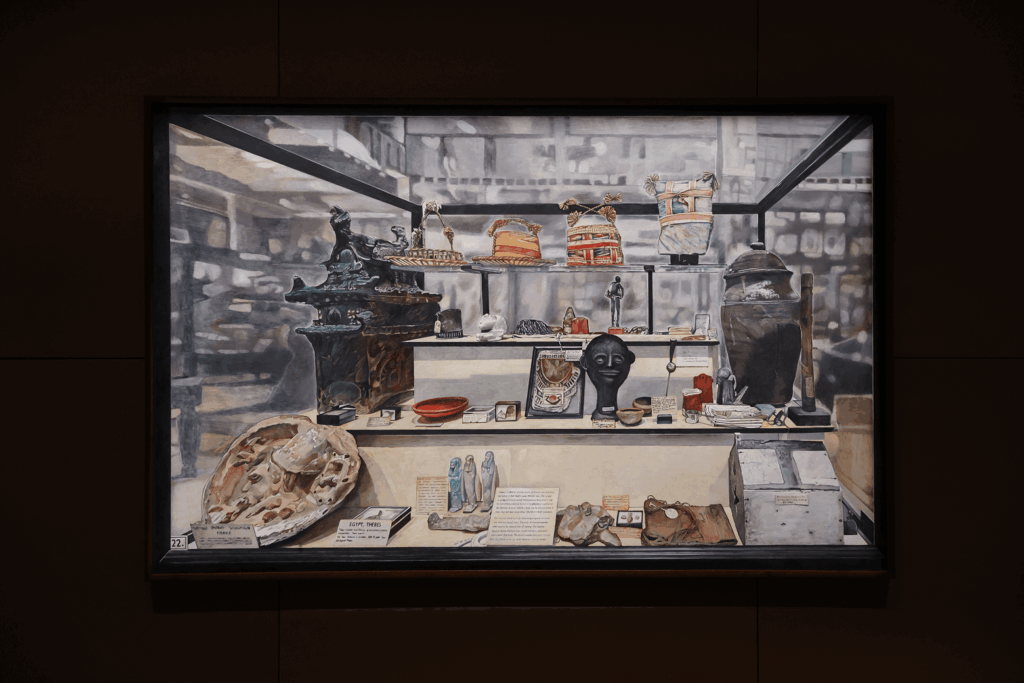
Vitrines, 2025
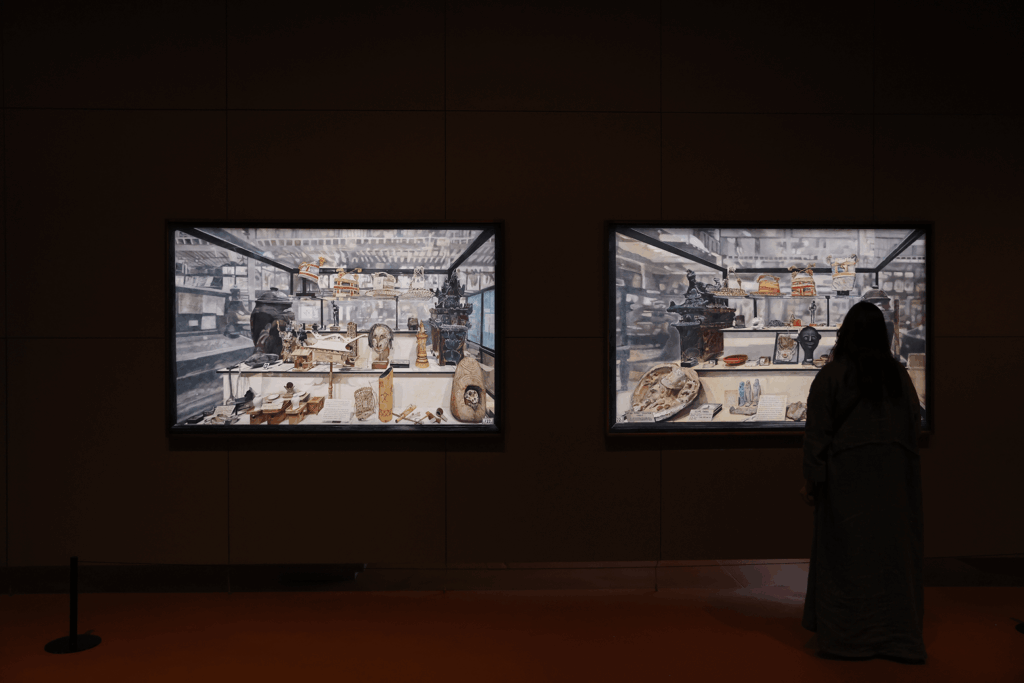
Vitrines, 2025
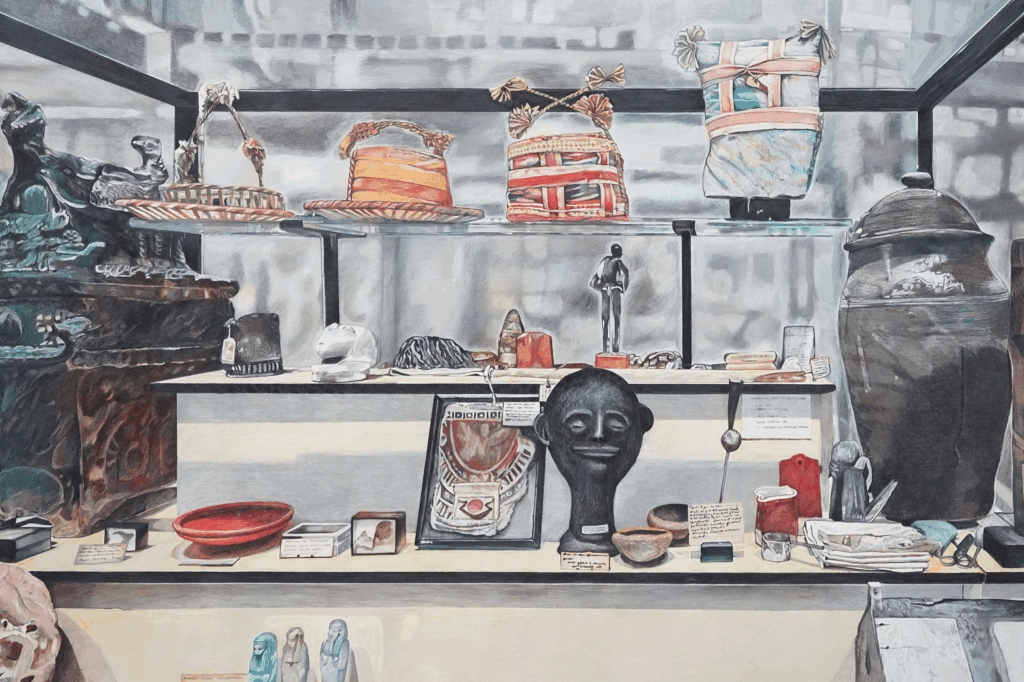
Vitrines, 2025
Words: RAJESH PUNJ