The third edition of Diriyah Contemporary Art Biennale (In Interludes and Transitions, led by Co-Artistic Directors Nora Razian and Sabih Ahmed, 30 January 2026—2 May 2026) unfolds against a backdrop of movement—of processions, nomadisms, migrations, and transitions that have shaped, and continue to shape, the Arab world’s relationship to itself and to the wider globe. Framed as a meditation on circulation and transformation, the exhibition proposes culture as something carried, negotiated, and continually remade.
Yet within this expansive vision, questions of visibility and power remain unavoidable. Who is allowed to move freely within cultural narratives, and who remains structurally constrained? Nowhere is this tension more apparent than in the persistent imbalance in the representation of women artists—an imbalance that echoes a much longer historical condition. To engage with this biennale, then, is not only to follow the flows it celebrates, but also to confront the exclusions that still shape how artistic value is produced, recognised, and transmitted.
Of the nearly seventy artists represented, barely a quarter are women. Does this striking imbalance reflect a genuine scarcity of women artists, or does it instead expose curatorial frameworks that continue to render them invisible, even within contexts that claim plurality and inclusivity?
While the visibility of women artists in the Arab world has expanded markedly over the past decade—and women are increasingly recognised as central producers of form and discourse– they are still compelled to confront inherited power structures: patriarchal, colonial, and institutional.
Whether in the work of deceased pioneers, long-established figures, or younger generations, the struggle remains continuous. Their practices do not detach themselves from gender, but rather acknowledge it as a lived condition, a site of negotiation, and a source of embodied knowledge.
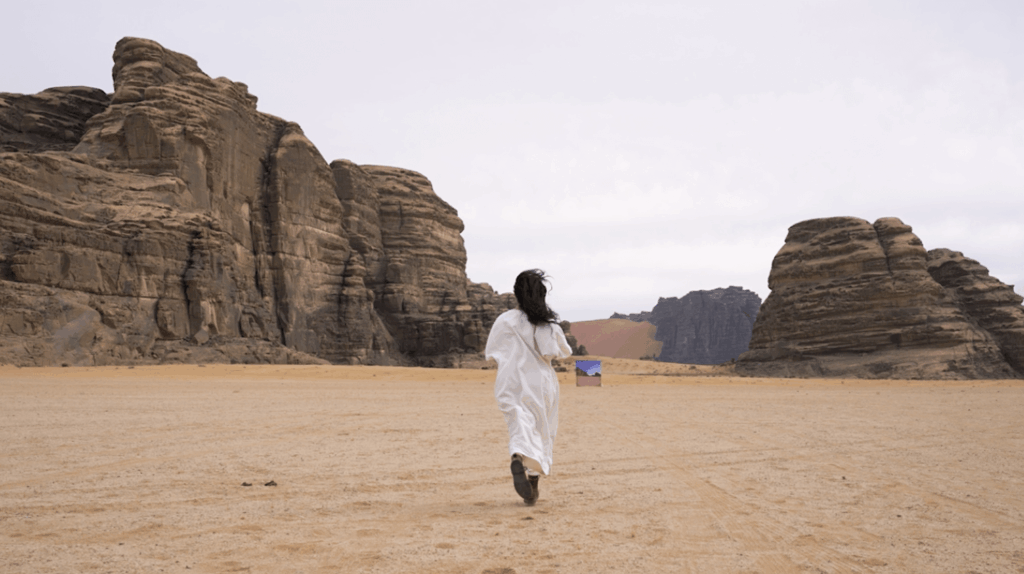
The Run, 2025
Photography courtesy of AHAAD ALAMOUDI
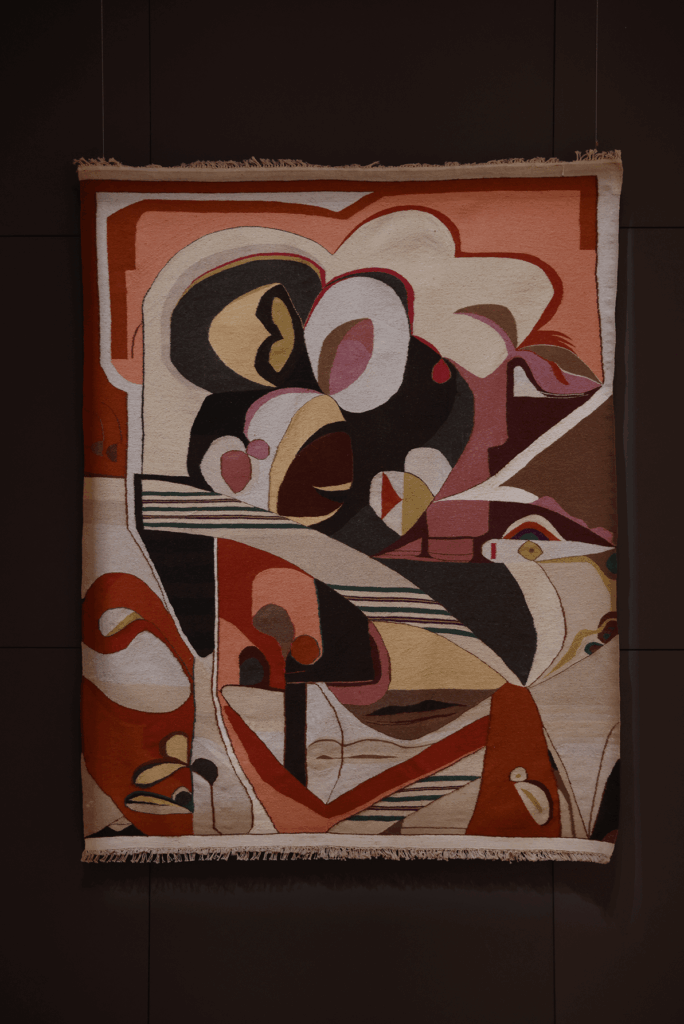
Tazoghran, 2010
Courtesy of DIRIYAH BIENNALE FOUNDATION
Courtesy of DIRIYAH BIENNALE FOUNDATION
Courtesy of DIRIYAH BIENNALE FOUNDATION
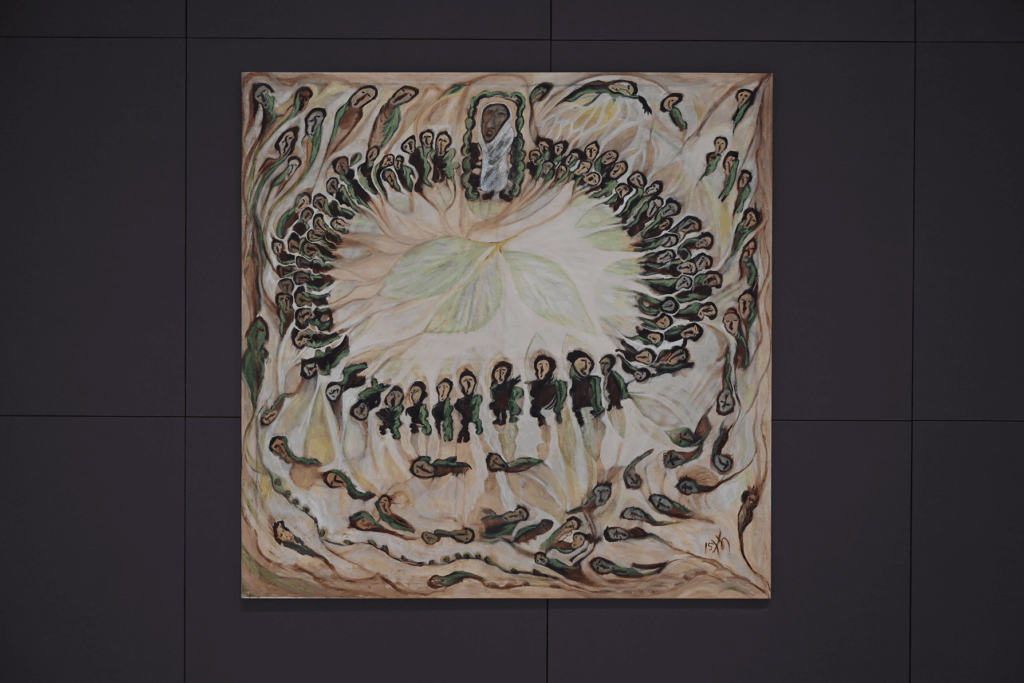
Procession (Zaar), 2015
Courtesy of DIRIYAH BIENNALE FOUNDATION
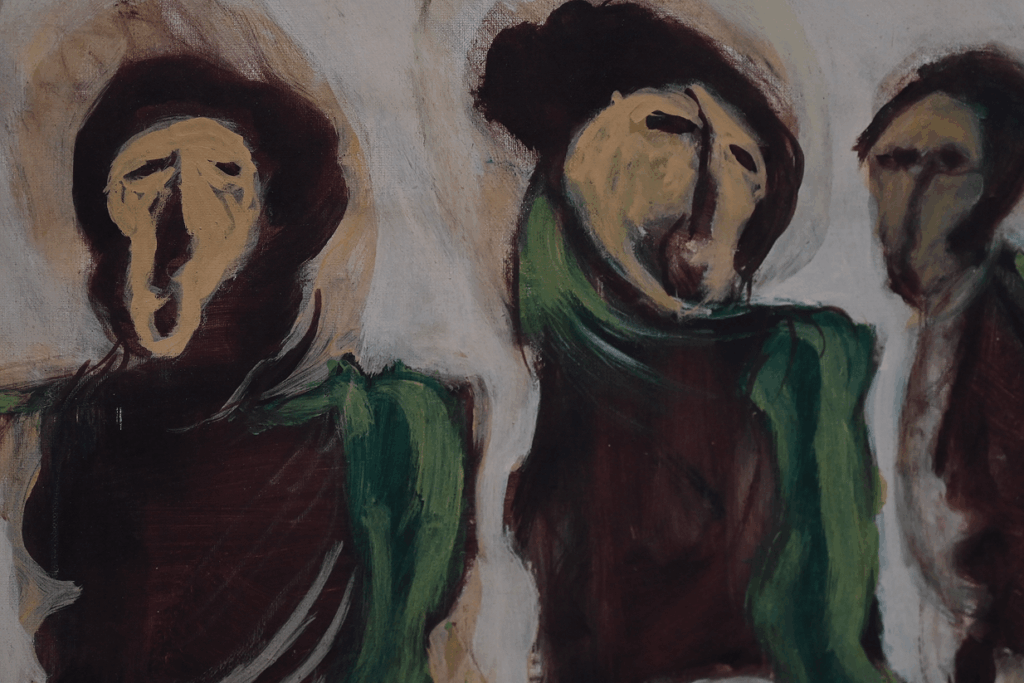
Procession (Zaar), 2015
Courtesy of DIRIYAH BIENNALE FOUNDATION
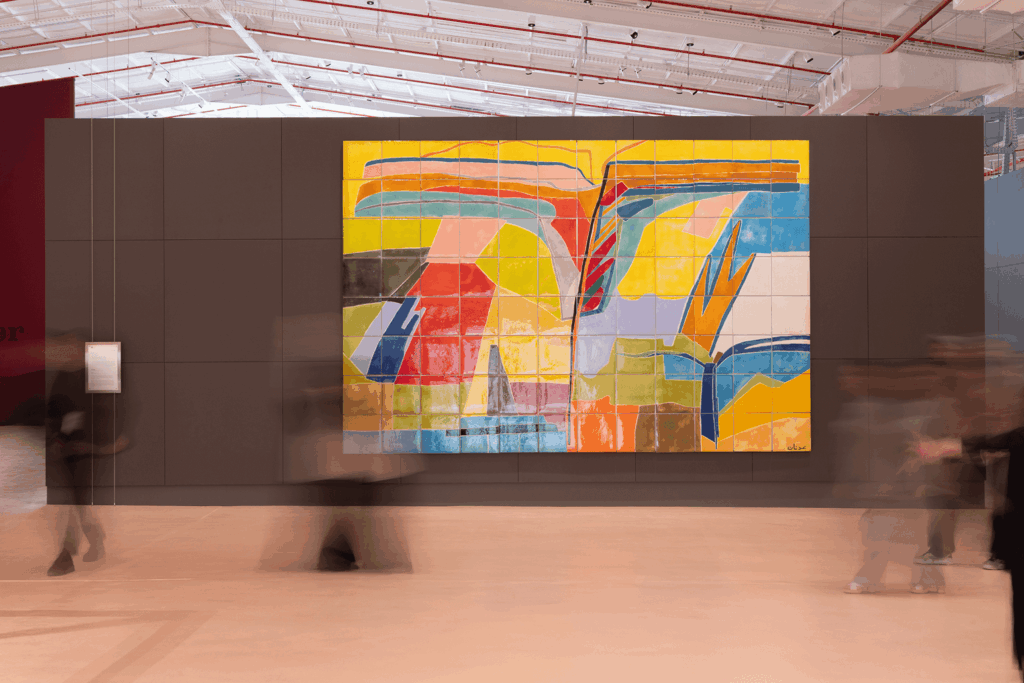
Untitled, 2020-2024
Photography by ALESSANDRO BRASILE, courtesy of the DIRIYAH BIENNALE FOUNDATION
Among the most impressive works of female artists that the exhibition puts together is a monumental mural composed of 96 ceramic tiles by the late Etel Adnan (1925, Beirut – 2021, Paris), whose impact attests to the full realisation of her artistic ambition. A celebrated polyglot poet who later in her career chose to “paint in Arabic,” Adnan forged, through bold sunlit colours and emphatic lines, a means of transcending language, understanding abstraction as the visual equivalent of poetic expression. Like her tapestries, the mural translates the intimacy of her paintings, drawings, and watercolours onto a monumental scale. Inspired by natural landscapes, these works distil vast emotional depth through an economy of means, revealing how simplicity, in Adnan’s practice, becomes a vehicle for profound resonance.
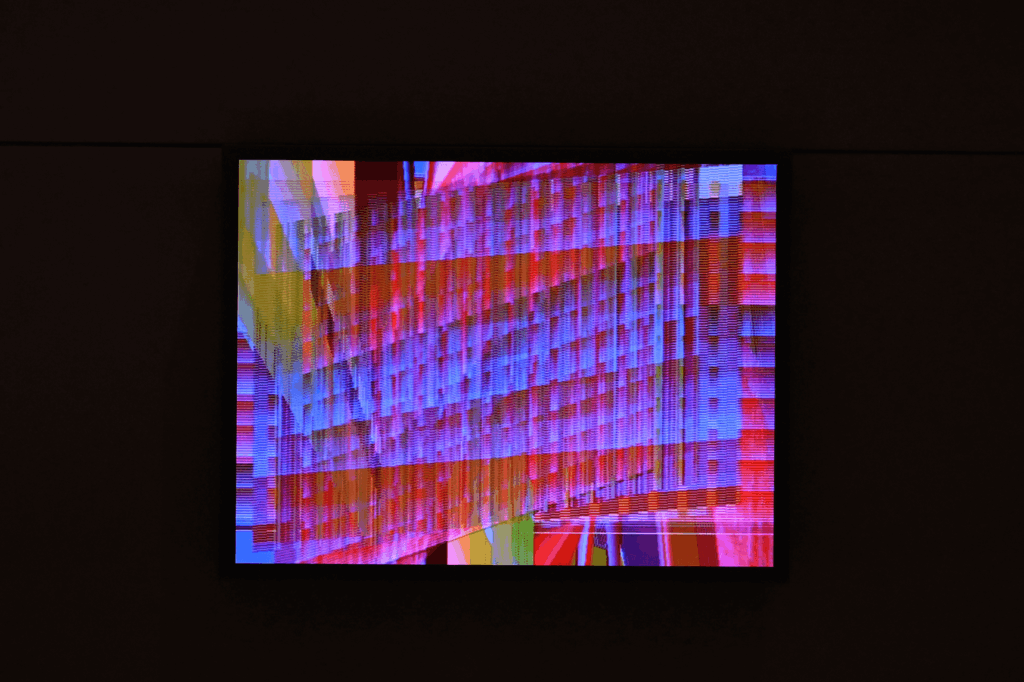
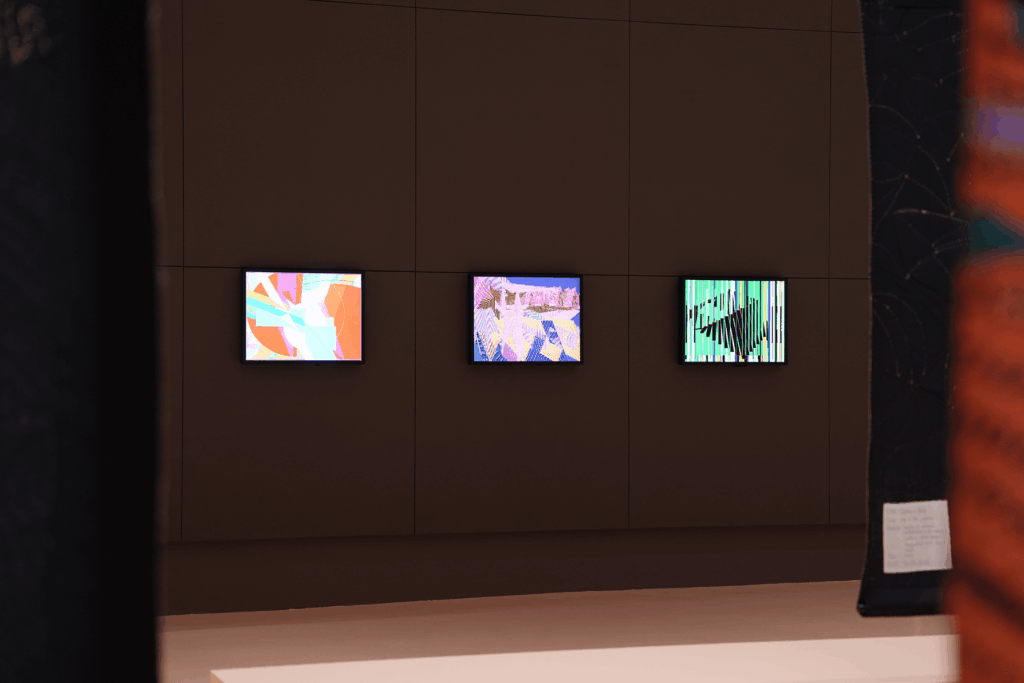
Also presented are works by the highly established Samia Halaby (b. 1936, Jerusalem, Palestine), a seminal figure of abstraction and a pioneer in the use of technology as an artistic medium. Her research into optical effects generated by abstract forms in motion materialises in hypnotic digital kinetic paintings (Bird Dog, 1987; Folding 10, 1987; Fold 2, 1988), that made of her a key figure in the history of Computer Art.
Kamala Ibrahim Ishag (b. 1937, Omdurman, Sudan), who lives and works in Sharjah, United Arab Emirates, was among the first female graduates of the College of Fine and Applied Arts in Khartoum, and a co-founder of the Crystalists (1976)—a conceptual movement that conceives the world as infinite, reality as a shifting field of transparent reflections, and pleasure and knowledge as tools to dissolve boundaries in pursuit of truth. Procession (Zaar) (2015) exemplifies her exploration of identity and women’s spirituality within Sudanese tradition, drawing on the ritual of reconciliation with spirits that allows women to express desire and seek healing. Arranged in a circular, bird’s-eye composition, her distorted female figures –rendered in a distinctive monochromatic sand palette—evoke a cyclical vision of life.
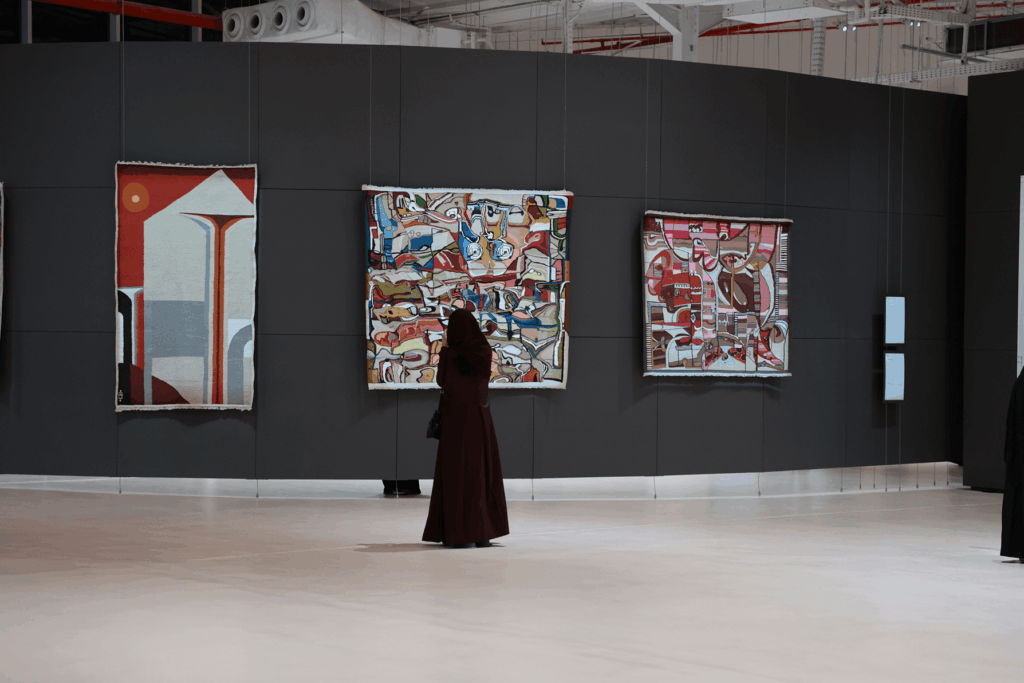
Nature and abstraction also dominate the work of Amina Saoudi Aït Khay (b. 1955, Casablanca, Morocco), who experiments with traditional Moroccan wool weaving—an ancestral female practice transmitted across generations—while radically renewing it through intuitive, hand-woven graphic designs.
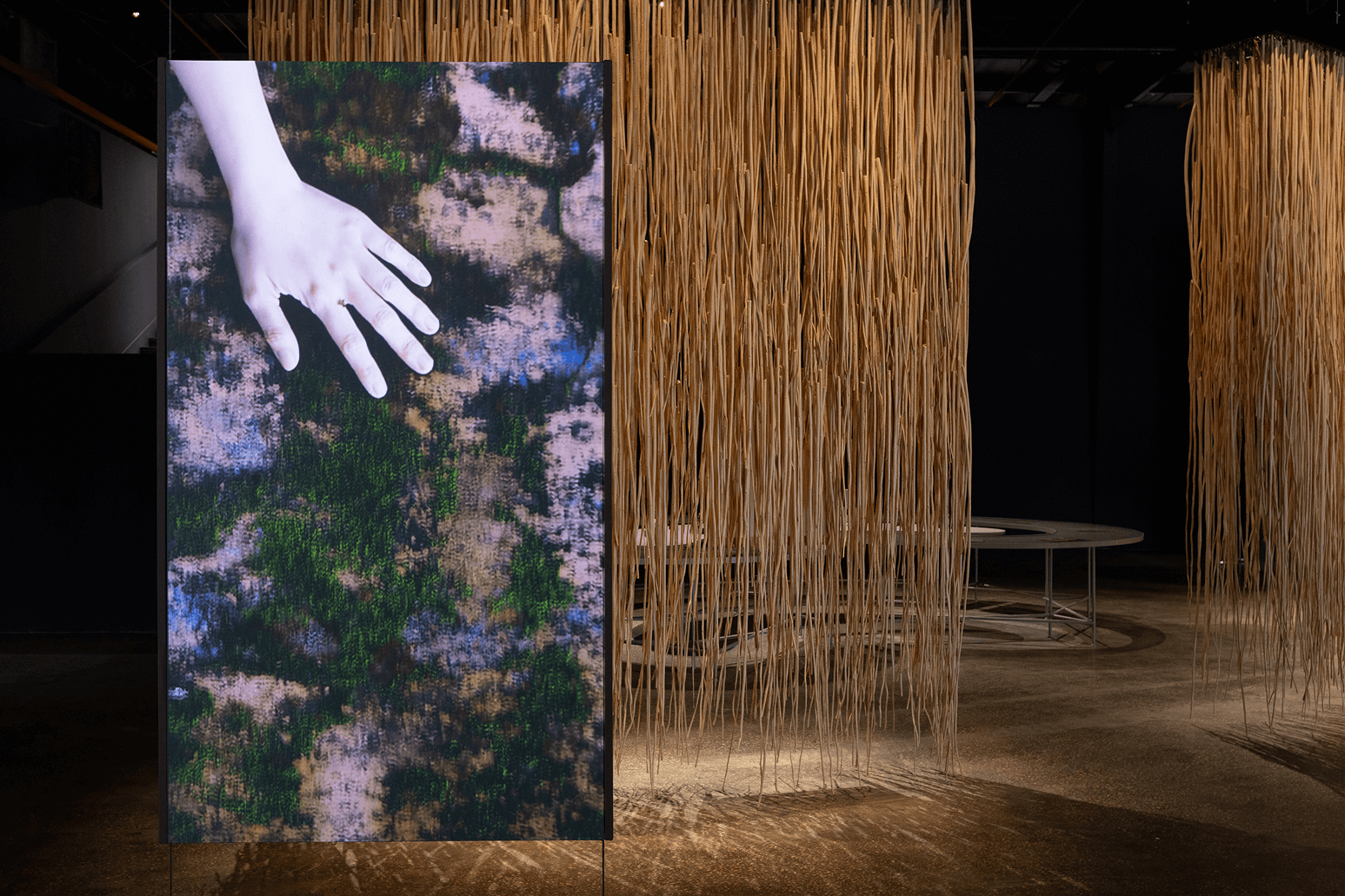
Thảo Nguyên Phan (b. 1987, Ho Chi Minh City, Vietnam) has produced a highly poetic five-screen film, Reincarnations of Shadows (2025), paying homage to the emblematic figure of Diêm Phùng Thị (1920–2002)—the first woman dentist in Vietnam, who later became a sculptor in Paris, for whom art became a refuge through which to process the pain of her country’s historical trauma.
The Run (colour video with sound, 2025) by Saudi artist Ahaad Alomoudi (b. 1991, Jeddah) is set in NEOM, the titanic and controversial futuristic city planned in Tabuk, northwest Saudi Arabia. The work follows a solitary woman running forward across an unreachable, immutable desert landscape, its stillness punctuated only by the rhythm of her own footsteps.
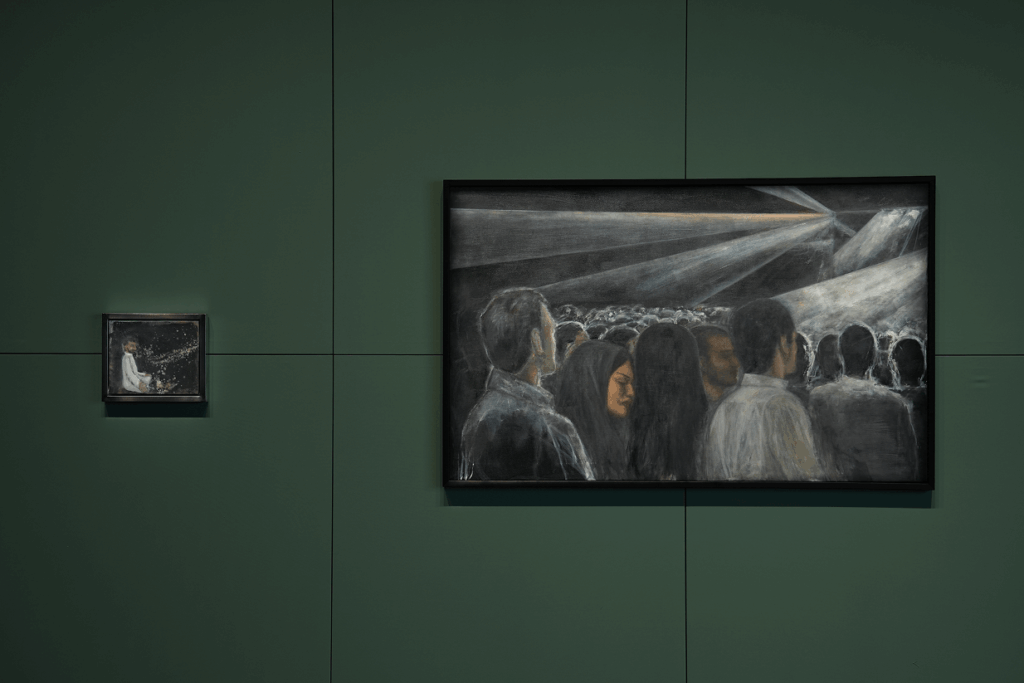
Lulua Alyahya (b. 1998, Washington), a Saudi artist living and working in Bahrain, confronts hegemonic masculinity by scrutinising the behavioural codes through which men occupy, regulate, and dominate social space. In Untitled (oil on canvas, 2026), she depicts a shared yet unequal experience of a music concert, foregrounding the fragile presence of a woman within a sphere of public entertainment that was, until recently, restricted. Amid a mass of masculine silhouettes, only her face fully emerges, turned inward, resistant to the collective momentum surrounding her, sharply articulating the tension between private interiority and public visibility.
It is striking to realise that the art world remains structurally male-dominated, a condition that reaches back to Antiquity. As early as the 1st century CE, Pliny the Elder, in Historia Naturalis (Book 35), recorded the names of five accomplished women painters, precisely because their presence was exceptional within a field already governed by male, highlighting both their talent and the conditions of exclusion under which they worked. The persistence of this imbalance across centuries suggests that the issue is not one of absence, but of visibility—of who is seen, recorded, transmitted, and legitimised.
The effort to foreground women artists today echoes the need to assert presence within a system structured to overlook it. What is at stake is the rewriting of art history itself—one that acknowledges women artists not as anomalies but as continuous agents in the production of culture.
To speak of gender today is a response to historical erasure and ongoing exclusion. We must pass through this necessary phase of naming, highlighting, and insisting, until we reach an ideal horizon in which gender no longer matters—where it is simply irrelevant to the recognition of artistic value. Until then, attention to gender remains a means of exposing structural imbalance in order to move beyond it.
It appears that women artists in the Arab region have come so far, especially considering that until only ten years ago Saudis were legally forbidden from making their own decisions. They now embrace their newly gained freedom with grace and conviction, a gentle and contagious energy emerging from their gaze, one marked by excitement and hope for what is to come.
Courtesy of DIRIYAH BIENNALE FOUNDATION
Courtesy of DIRIYAH BIENNALE FOUNDATION
Words: JAHEL SANZSALAZAR