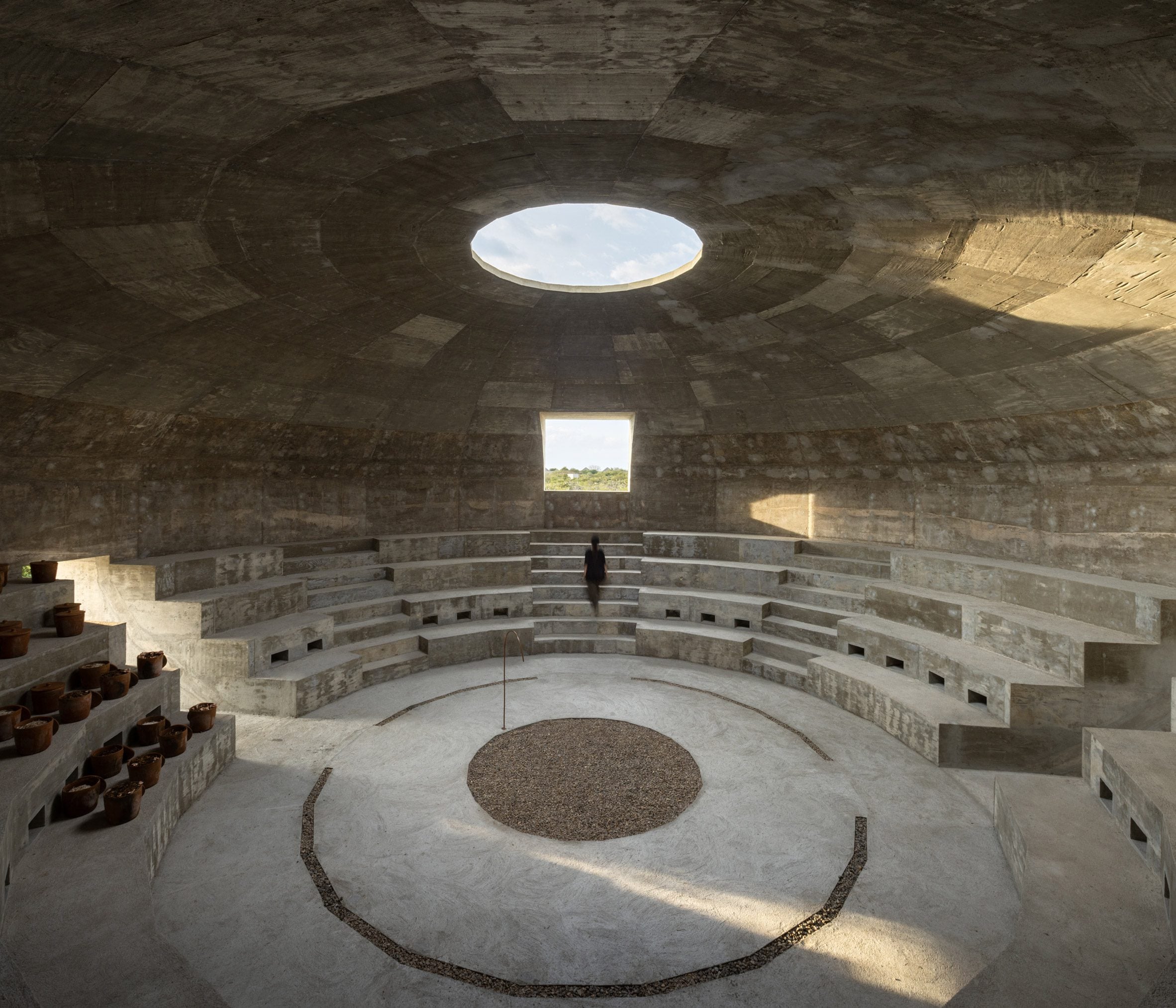
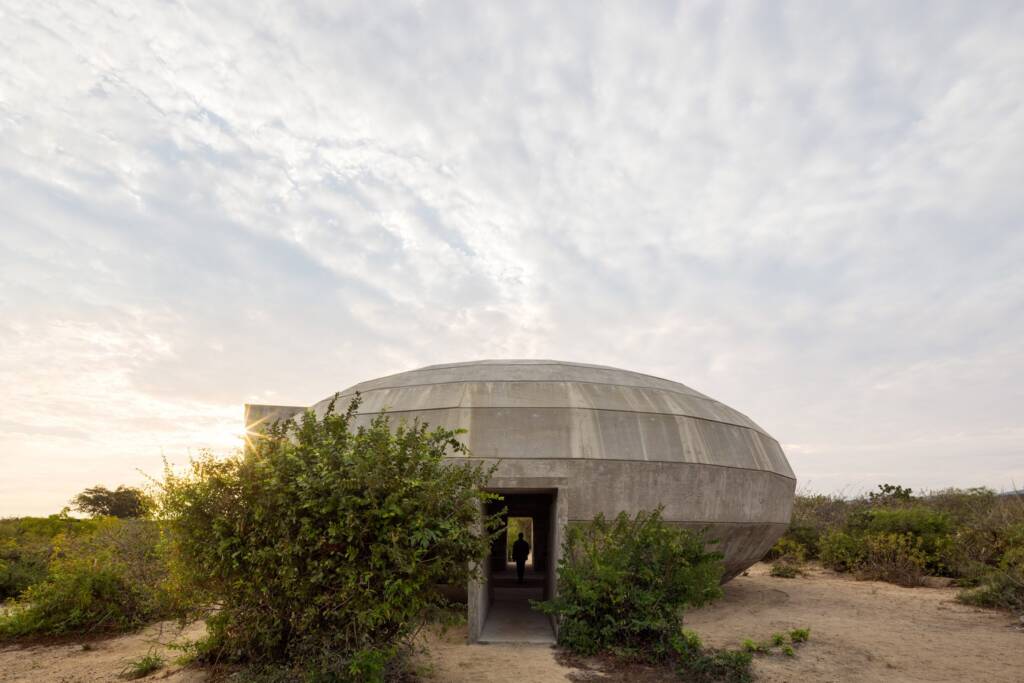
On the Pacific coast of Oaxaca, the newly completed Mushroom Pavilion showcases sustainable pavilion design on the campus of Fundación Casa Wabi. Designed by the New York office of OMA under the direction of architect Shohei Shigematsu, the 200-square-metre structure serves as both a mushroom cultivation facility and a communal gathering space.
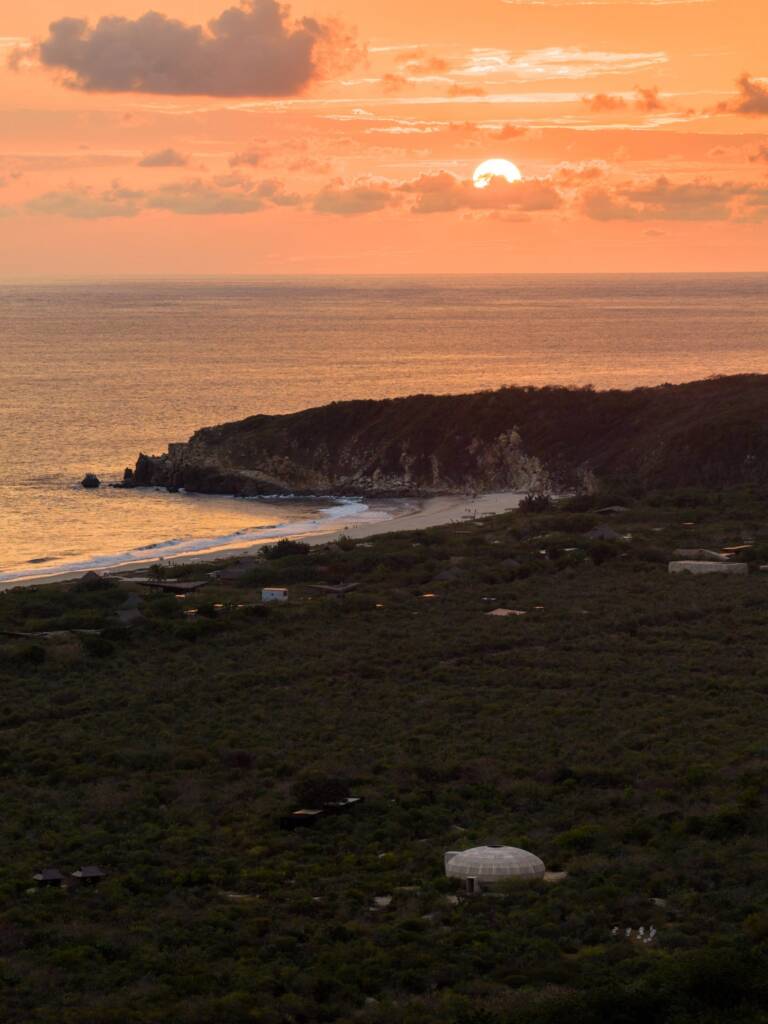
Situated north of Puerto Escondido, the pavilion adds to Casa Wabi’s existing architectural landscape, which includes a landmark building designed by Tadao Ando. Conceived as an ‘incubator of both food and community’, the project brings together agricultural production and cultural exchange.
Sustainable pavilion design inspired by cultivation
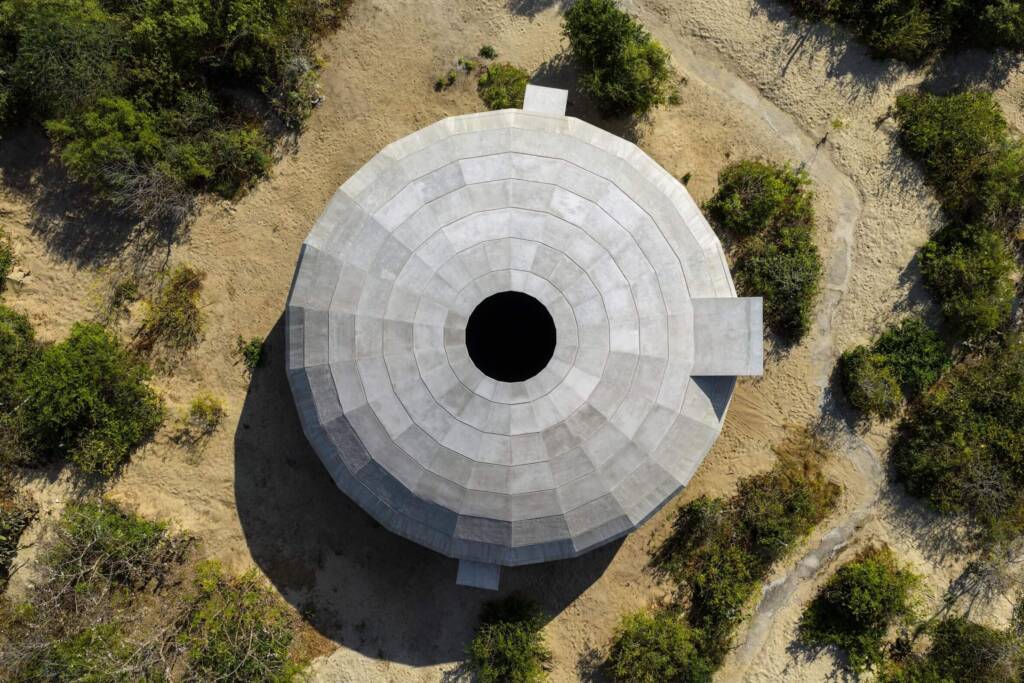
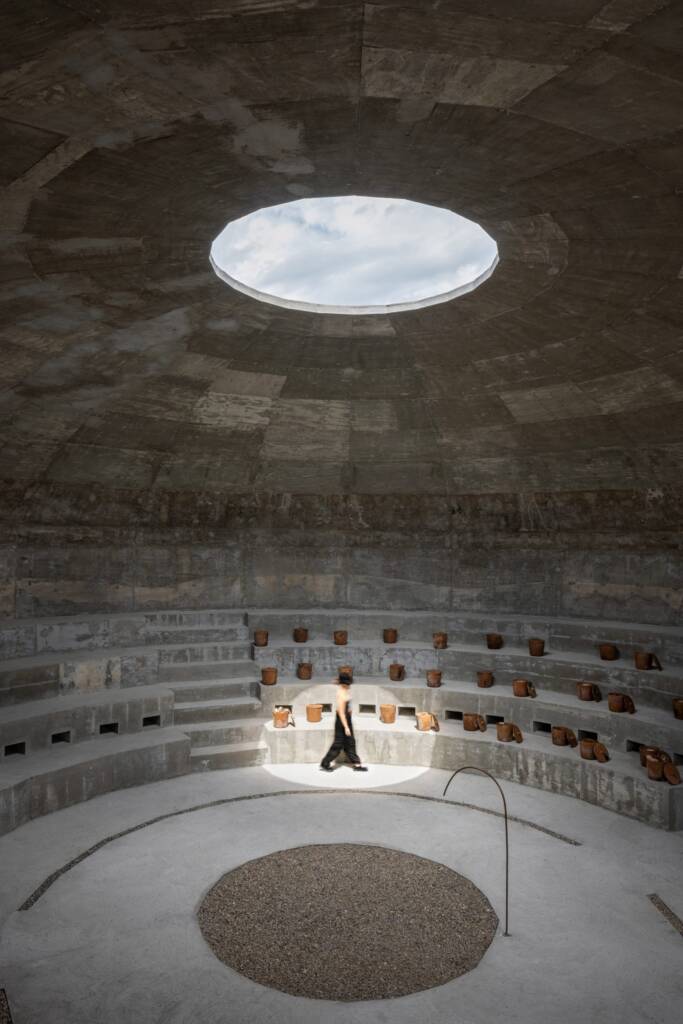
The Mushroom Pavilion takes the form of an ellipsoidal concrete dome organized around a central oculus that regulates light for the cultivation process while illuminating the interior gathering space. Radiating concrete panels define the structure, while openings along the base ensure natural ventilation and connect the interior environment to the surrounding coastal landscape.
Inside, the domed chamber is divided into three zones corresponding to different stages of mushroom production: fruiting, incubation and storage. Walkways frame these areas around a central communal space, allowing visitors to observe the entire process simultaneously. OMA describes this arrangement as a panopticon-like viewing experience that reveals cultivation as both a functional and educational activity.
Materiality also plays a crucial role in the pavilion’s sustainable pavilion design. The shell is constructed from poured-in-place concrete stamped with burlap, allowing the surface to absorb the region’s iron-rich water. Over time, this interaction will produce a natural patina, gradually transforming the pavilion’s appearance.
Despite its inward-focused program, the architecture maintains a dialogue with its surroundings. A staircase leads to a viewing platform that rises above the dome, offering sweeping vistas of the coastal terrain between the mountains and the Pacific Ocean. The pavilion’s base curves inward to minimize ground contact and protect the native guayacán trees growing on the site.
Founded by Mexican artist Bosco Sodi, Casa Wabi promotes dialogue between artists and local communities. With the addition of the Mushroom Pavilion, the campus gains a new space where food production, architecture and social exchange intersect—demonstrating how thoughtful design can nurture both ecological awareness and collective experience.
Photography by RAFAEL GAMO