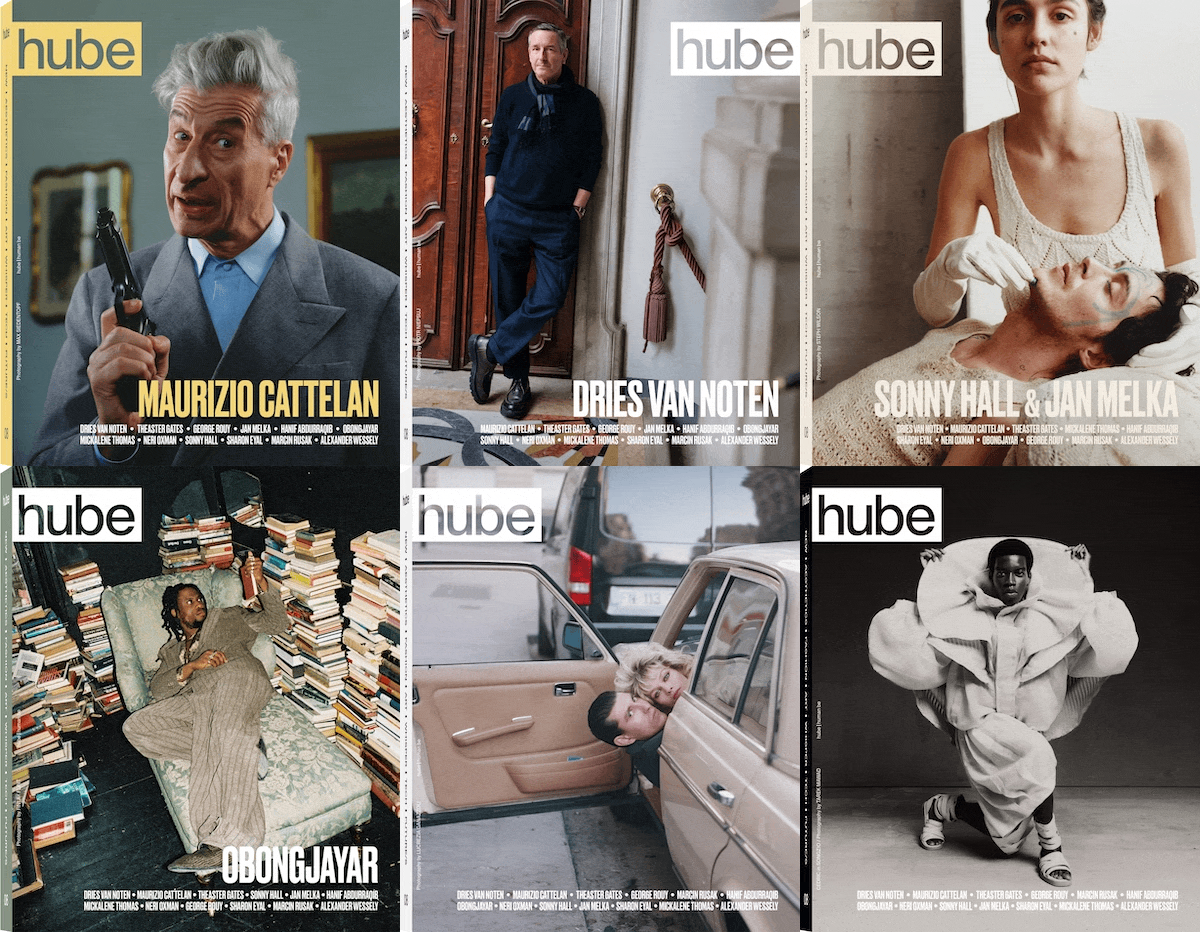
Iconoclast, provocateur, court jester of the contemporary art world—these are just a few of the ways people have described Maurizio Cattelan, the Italian artist whose slippery and satirical works have entertained, challenged, and moved audiences for more than 35 years. Not one for explaining himself—so much so that from 1997 to 2006 he hired someone to perform him at public appearances that ranged from lectures at Yale to interviews on Vatican radio—in conversation, Cattelan’s aphoristic responses feel not unlike the pithy one-liners his work delivers.
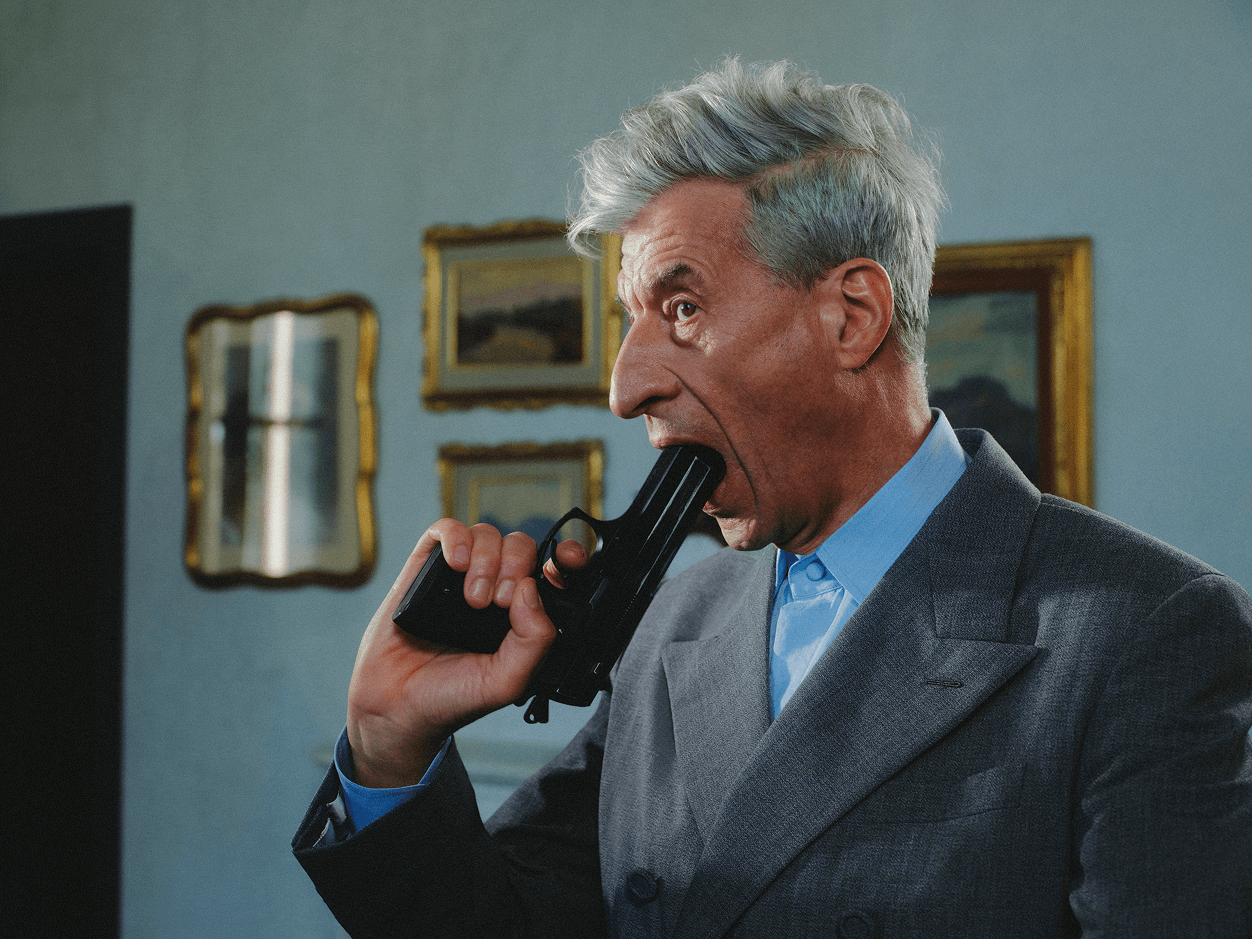
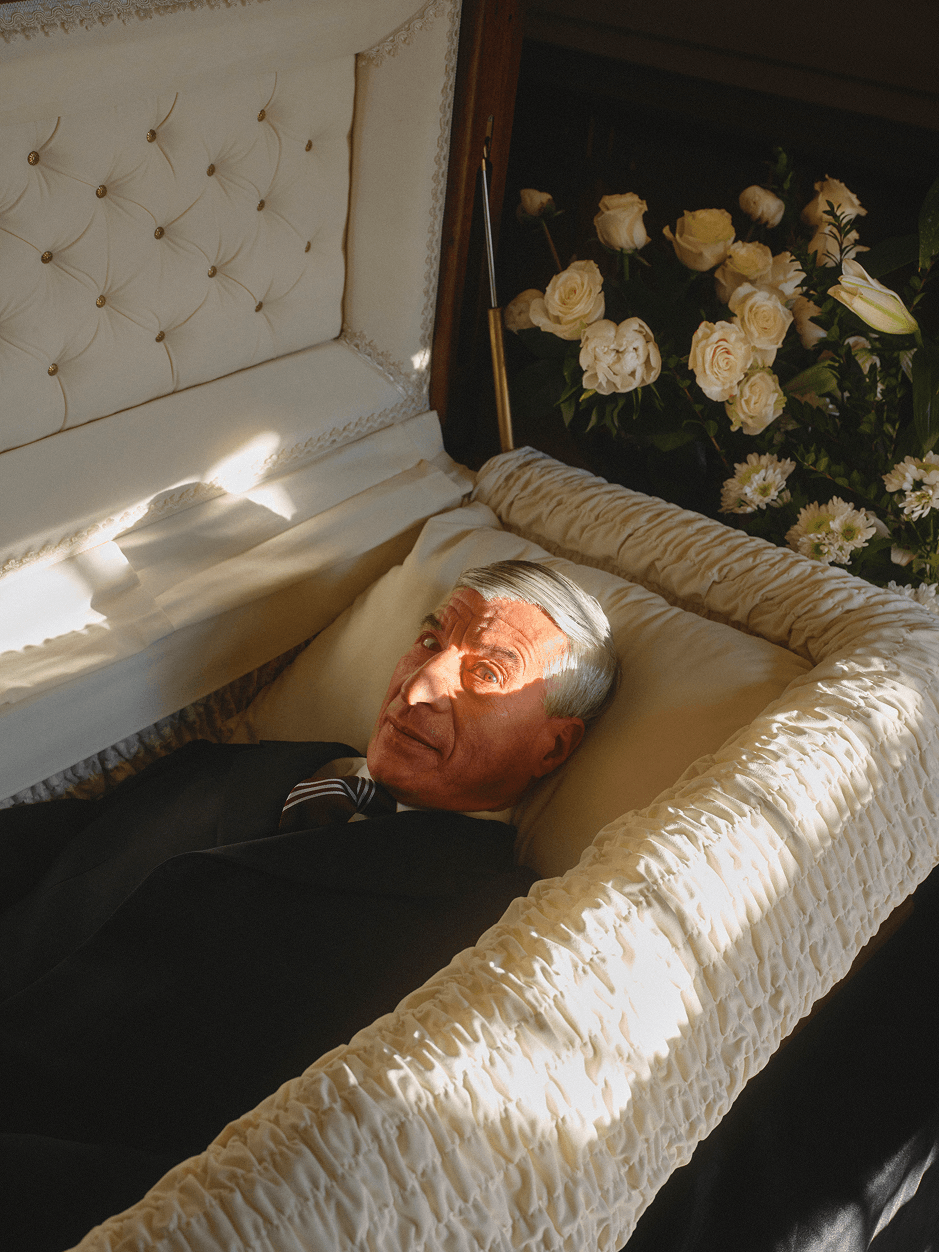
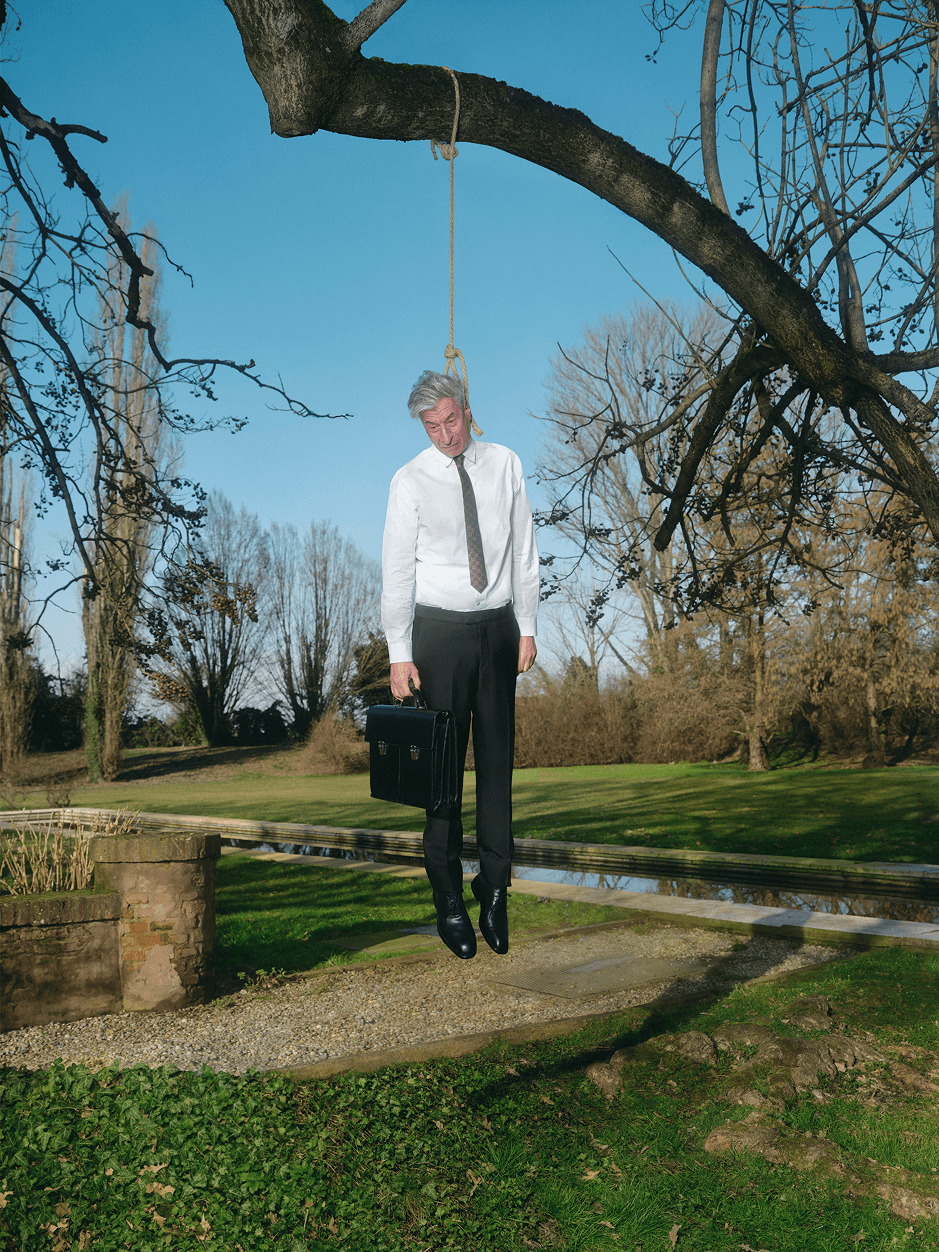
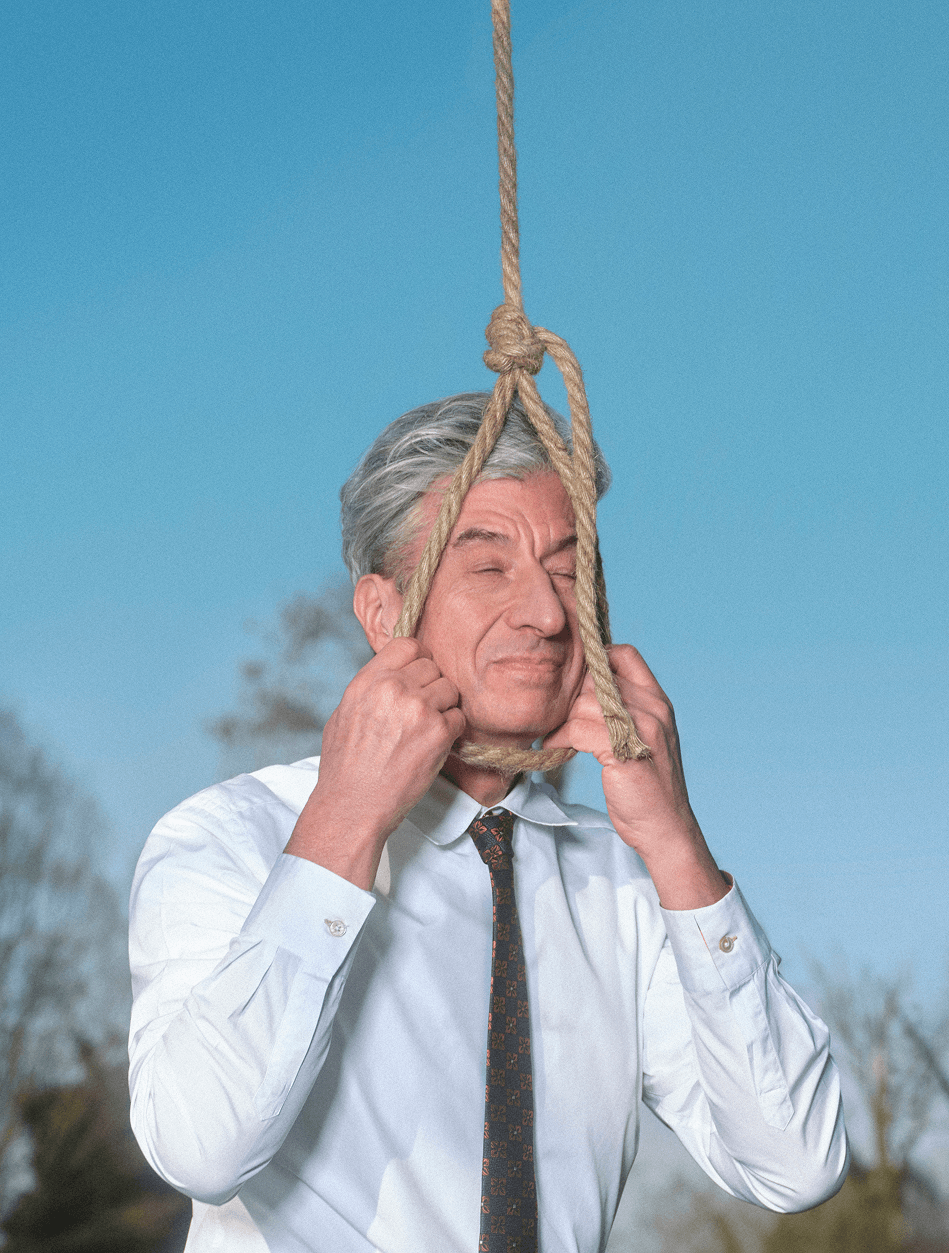
“In theory,” he tells hube, “anything can become art. In practice, not everything should—at least not immediately.” Few pieces illustrate this dynamic more clearly than Comedian (2019), a banana duct-taped to a wall, which sold for $6.2 million USD and was then promptly eaten. Cattelan uses humour to reflect on the art world, systems of power, and the transient nature of life. With these fields of interest in mind, we invited Max Siedentopf—an artist who plays with the absurd—to create a series of photographs to accompany this story. In them, Cattelan’s “death” arrives. It is mischief and mortality, side by side.
hube: Artistic revolutions often follow or unfold alongside political and technological revolutions. What do you think about the influence of today’s technological innovations on the artistic process?
Maurizio Cattelan: Technology doesn’t invent ideas, it mostly accelerates their consequences. Every new tool arrives with the promise of freedom, but it immediately brings along a new form of dependency. Artists rarely approach technology in a clean or efficient way. More often they misuse it, misunderstand it, or push it until something breaks. That moment of imbalance is usually where the work starts to take shape.
h: Many thinkers have grown disillusioned with human nature, concluding that our instincts cannot be overcome. Are concepts such as truth, ideals, or beauty capable of justifying humanity?
MC: Human nature becomes disappointing only if you expect some form of redemption. I don’t think art exists to justify humanity. At best, it keeps the question alive. Truth, ideals, and beauty are not solutions we reach once and for all; they are tensions we return to again and again because we don’t know how to live without them. Their strength lies in the fact that they never fully settle.