The long-awaited exhibition of Anselm Kiefer opens on April 29th, 2026 at the Hortensia Herrero Art Centre, marking the artist’s first major presentation in the city. Installed across six galleries of the former Valeriola Palace and on view through October, it offers a sustained encounter with one of contemporary art’s most commanding figures. Developed in close dialogue with Kiefer and drawn largely from the Hortensia Herrero Collection, the exhibition unfolds as a dense reflection on landscape, history, and myth.
Memory—personal and collective—threads through the works. Born in the final months of the Second World War, Kiefer has long grappled with Germany’s postwar consciousness, interlacing it with ancient cosmologies and literary echoes. Here, landscape carries psychological weight, while references to the Old and New Testaments, the Kabbalah, Nordic mythology and thought surface alongside meditations on destruction, renewal, and time.
Material as language: the works on view
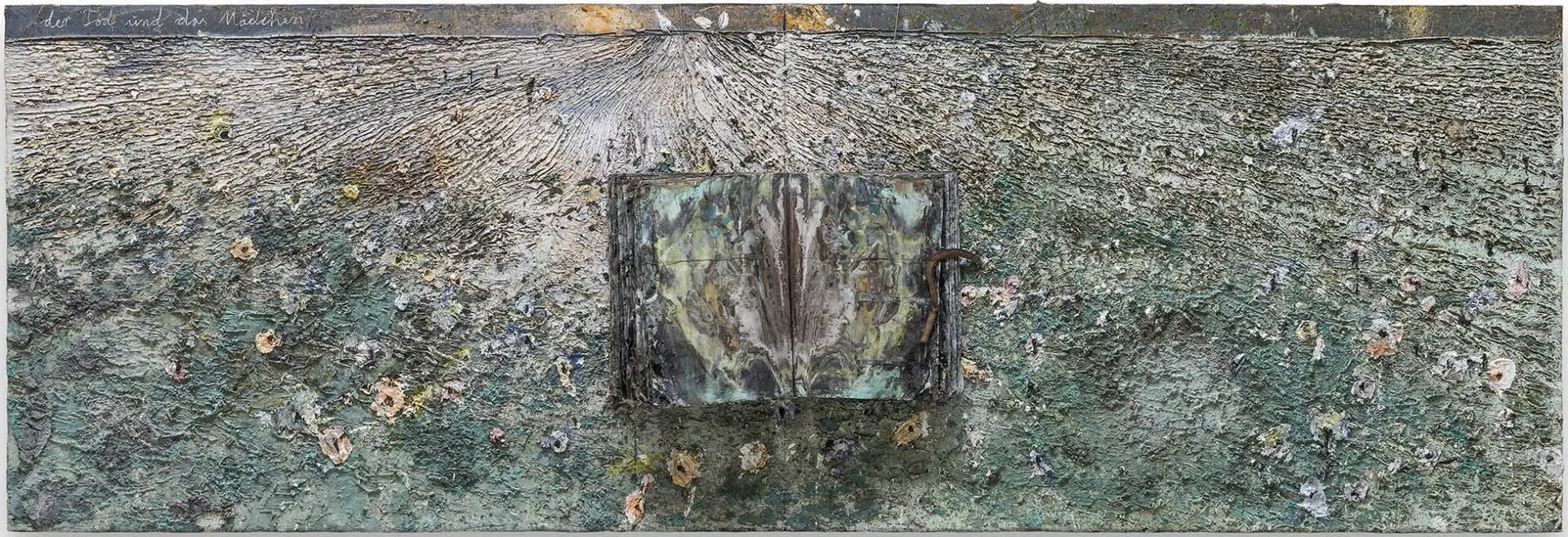
Material speaks with unusual force. Lead, ash, glass, fabric, and organic matter are layered into surfaces that feel both fragile and monumental. Works such as Böse Blumen (2012–2016) and Der Tod und das Mädchen (2018) incorporate his emblematic lead books, poised between knowledge and erasure. In Walhalla (2015–2017), molten lead spills across painted terrain, while Danaë—spanning over thirteen metres—interweaves the image of Berlin’s Tempelhof Airport with a mythic cascade of golden rain.
Kiefer moves freely between painting, sculpture, installation, and artist’s books, drawing on poets like Paul Celan and Charles Baudelaire, as well as a wide range of philosophical traditions. His works are built up, scraped back, and reworked, holding tension between ruin and renewal, presence and absence.
In Valencia, Kiefer’s work assumes an almost architectural presence—less an image than a terrain to be entered. It holds the weight of history while remaining open-ended, inviting reflection on memory, loss, and the persistence of imagination.
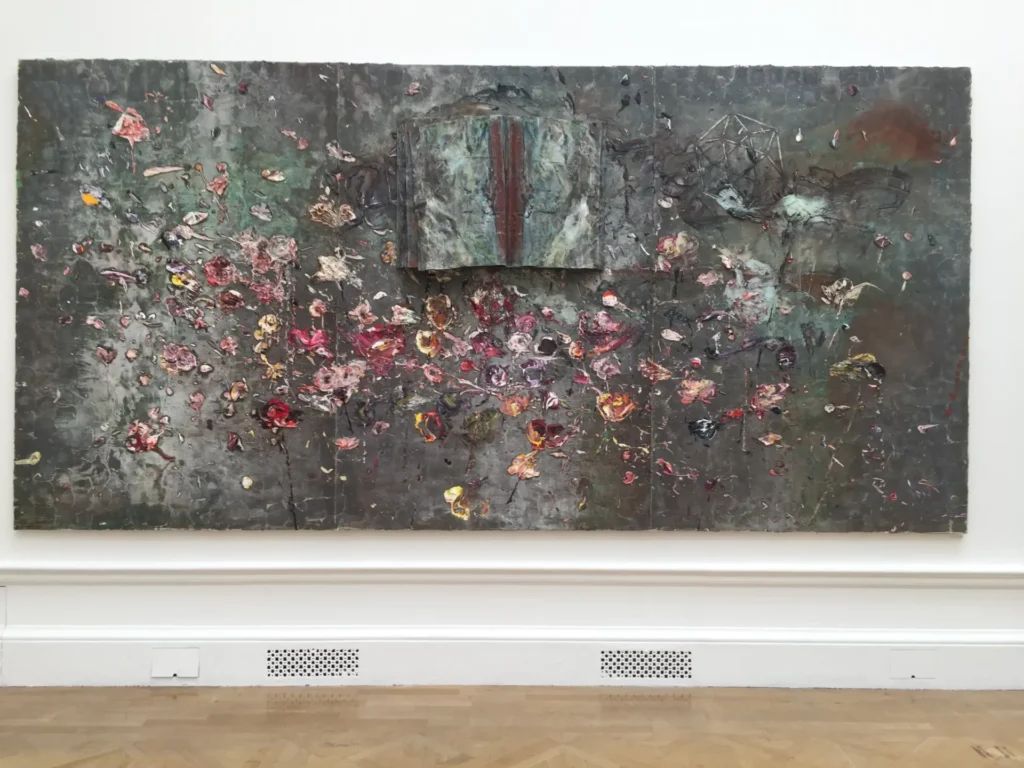
Böse Blumen (Evil Flowers), 2012-2016
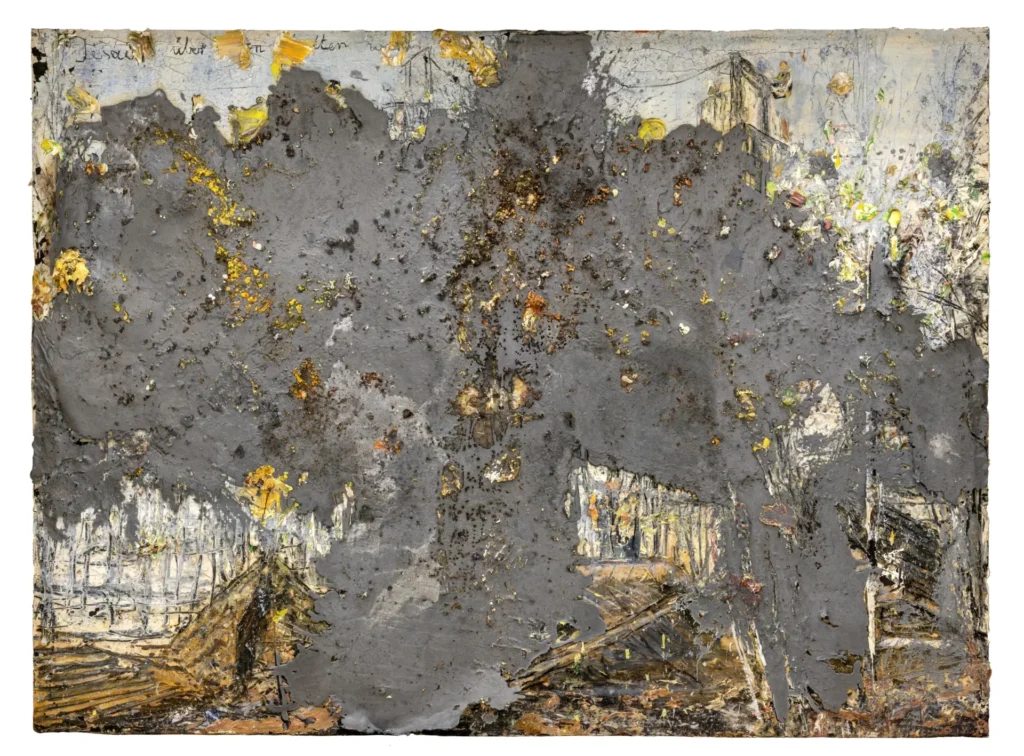
Walhalla, 2015-2017