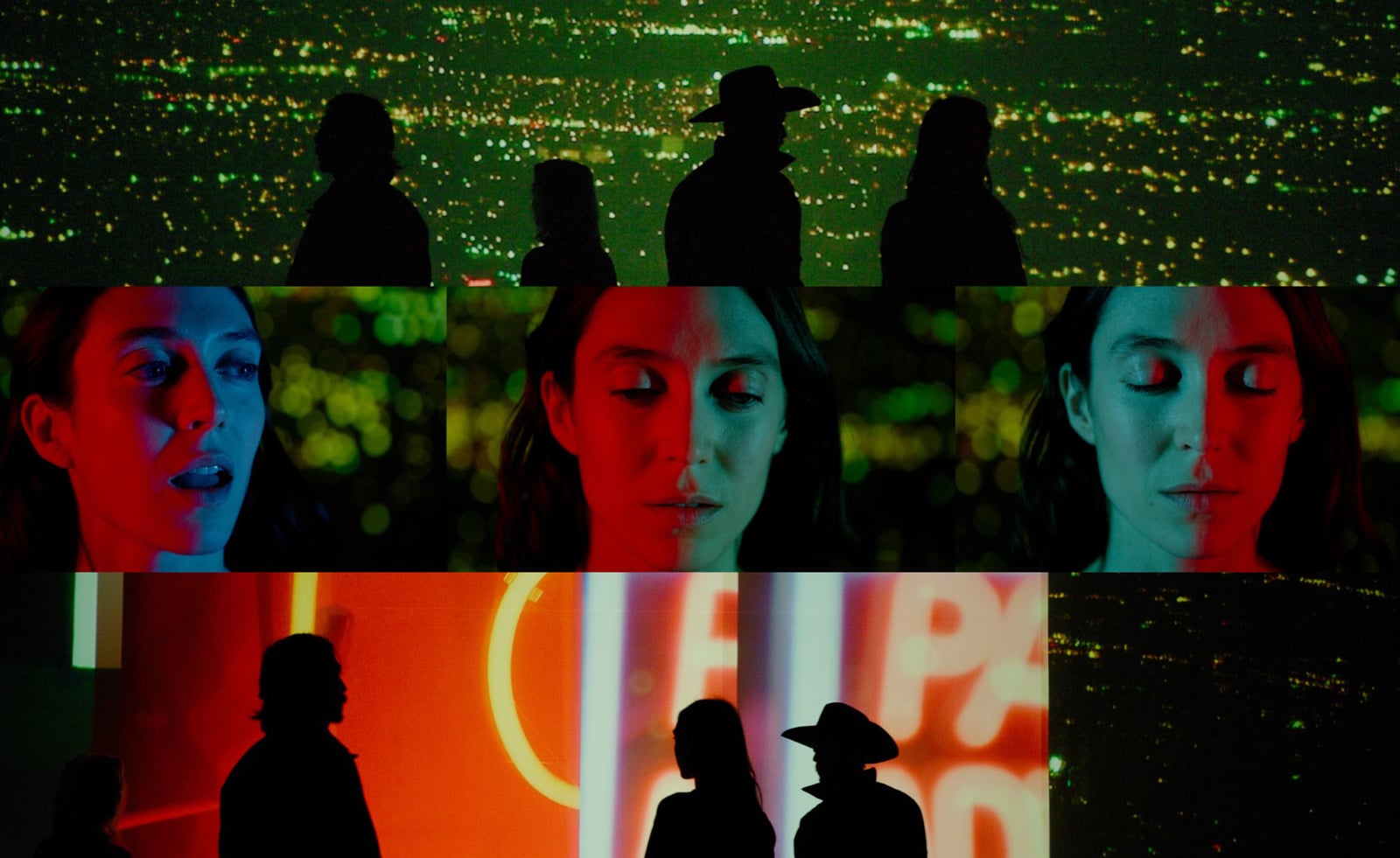
Doug Aitken’s Lightscape, premiering at The Shed from June 25th to September 13th, enters as a vast filmic environment where image, sound, and architecture converge into a contemporary mythology of motion. Across multiple screens and shifting sonic layers, it sketches a world in perpetual instability—where identity, terrain, and technology drift, collide, and briefly settle before dispersing again.
Cinema expanded into space
Rather than a conventional narrative, Doug Aitken constructs a seven-screen environment that pushes cinema into spatial experience. Characters traverse sharply contrasting worlds: arid deserts, mountainous expanses, robotic production sites, and digitally constructed environments that feel both intimate and estranged.
Figures including Natasha Lyonne appear in nocturnal cityscapes, while dancers and workers move through industrial and automated settings, their gestures calibrated to systems of speed, repetition, and control. These trajectories begin separately, then gradually echo one another, assembling a wider emotional geography that resists a single point of view.
The result is a portrait of contemporary America as a shifting field—unstable in structure, multiple in identity, and constantly in revision.
Modern mythology through fragments
In Lightscape, mythology is no longer inherited—it is assembled from fragments of contemporary life. Aitken builds a structure reminiscent of Robert Altman’s ensemble logic, where parallel stories exist without hierarchy or resolution.
Migrants crossing vast landscapes, bodies absorbed into automated systems, and solitary figures suspended in digital space share no direct narrative thread, yet resonate through recurring rhythms, mirrored movements, and overlapping soundscapes.
Myth here becomes something provisional: shaped in real time through lived experience rather than passed-down narrative.