Limbo Engawa by TAELON7. Photography by EDEM J. TAMAKLOE
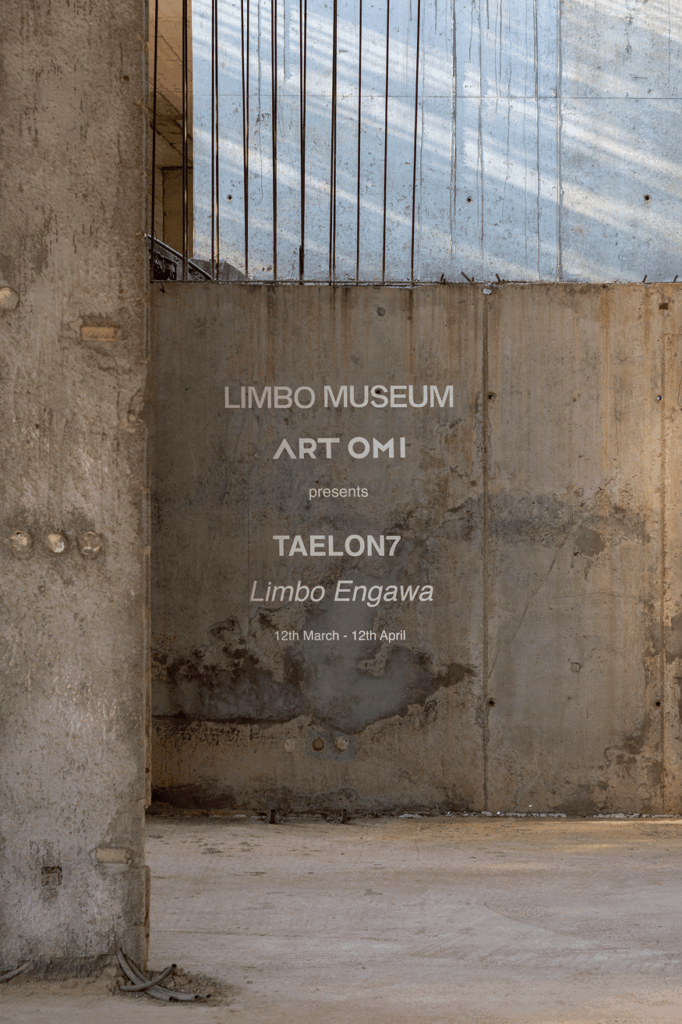
Dominique Petit-Frère rethinks the vision for African contemporary art

Dominique Petit Frere x hube
DOMINIQUE PETIT-FRÈRE
African contemporary art
Limbo museum
spatial ecology
institutional flexibility
Limbo Engawa by TAELON7
Photography by EDEM J. TAMAKLOE
African contemporary art
Limbo museum
spatial ecology
institutional flexibility
Limbo Engawa by TAELON7
Photography by EDEM J. TAMAKLOE
African contemporary art
Limbo museum
spatial ecology
institutional flexibility
REGINALD SYLVESTER II
The Other Side of Languish
Photography by EDEM J. TAMAKLOE

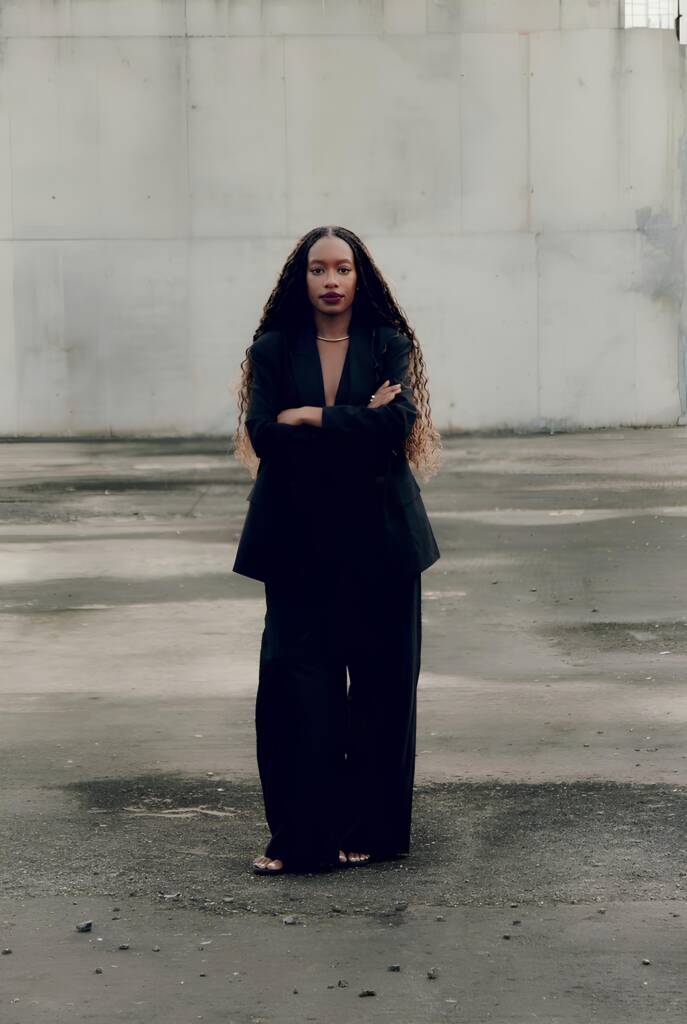
Dominique Petit-Frère is an architect, urbanist and creative strategist best known for reimagining unfinished or derelict buildings as vibrant public spaces.  With desire to contribute to socioeconomic progress across Africa, and questioning the dominant narratives around development, she founded Limbo Accra, a spatial design studio based in Ghana. 

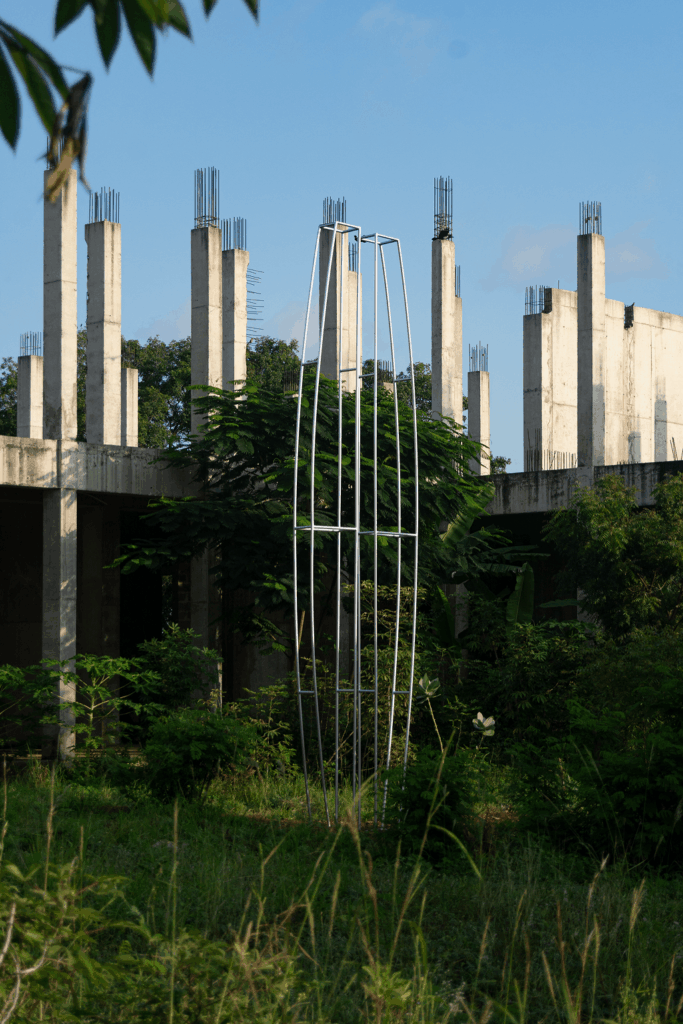
Co-founded in 2018 with Emil Grip, the studio treats unfinished concrete skeletons—often the result of real estate bubbles or financial instability—as sites of potential rather than failure. In 2024, as a continuation of this vision and housed within an unfinished building, Limbo Museum was founded. It serves as a dynamic platform for artistic experimentation and the challenging of established narratives. It acts as both a cultural project and a continuous act of questioning- one that seeks to reimagine how institutions can remain responsive, adaptive, and meaningfully rooted in their environments. In this interview, Ivona Mirkovic speaks with Petit-Frère, who reflects on the museum’s origins, its evolving program, and the core principles that guide her work.

Ivona Mirkovic: What inspired the creation of the Limbo Museum, and what were the challenges?

Dominique Petit-Frère:
Limbo Museum is an extension of Limbo Accra, an architectural practice I co-founded in 2018 with my partner. This practice began as a way for us to think critically about space, materiality, and the ways architecture can operate beyond building alone, as a social, cultural, and ecological framework. Over time, it became clear that many of the questions we were asking through architecture naturally expanded into broader conversations around art, public life, heritage, and knowledge production.

The Limbo Museum emerged from that expansion. It was less about creating another exhibition venue and more about building an institution that could hold interdisciplinary practices and create new relationships between architecture, contemporary art, craft, and research within an African context.

What inspired me most was the absence I kept encountering—not necessarily a lack of talent or cultural production, but a lack of spaces willing to operate with experimentation, ambiguity, and long-term thinking at their core. I wanted to create something that felt responsive to where we are, while still being in dialogue with broader global conversations.

The process of building Limbo has been as much about discovery as it has been about construction. One of the key challenges has been sustaining a structure that does not sit neatly within a single category, while still developing the operational clarity needed for it to function over time. Working independently has allowed us to move with freedom, responding directly to ideas, contexts, and urgencies as they emerge, while also requiring us to continuously build the frameworks that support that way of working—from infrastructure to funding to production models.

From the outset, we chose not to define Limbo as just a museum, residency, architecture lab, or cultural platform, but to allow it to exist across all of these simultaneously. Holding that openness while ensuring coherence and continuity is an ongoing negotiation, and one that shapes the rhythm of the institution itself. What has been most meaningful is that this complexity is not something to resolve, but something that keeps the work alive, adaptive, and in constant relation to its environment.
IM: What is the direction and aim behind the program?

DPF: The program at Limbo Museum is structured as an evolving research platform rather than a fixed exhibition calendar. It is grounded in three interconnected fields: contemporary art, architectural thinking, and design heritage. These are not treated as separate disciplines but as overlapping ways of understanding space, memory, and material culture.

The aim is to create conditions for long-term inquiry rather than short-term display. This means working closely with artists, architects, and artisans in ways that allow ideas to unfold over time. Residencies, site-based research, and material experimentation are central to this approach. At its core, the program is about process. It is about what happens before an object is finalized, and what remains active after it is shown.

IM: How do you hope it will affect and shape cultural narratives in the region and overall perception of African artists?

DPF: I am less interested in reshaping perception for its own sake and more interested in shifting the conditions under which work is encountered. African artistic production has always been complex, layered, and self-determined. The issue is not visibility, but framing. Too often, narratives are constructed externally and then projected inward. What we are trying to do is build a space where artists can operate on their own terms, with their own temporalities and references.

If Limbo contributes anything, I hope it is a recalibration of attention—a move away from extractive visibility toward deeper, slower forms of engagement that recognize the intellectual and material depth of practices on the continent.

IM: Challenging the traditional museum format, how do you hope this new practice will push the global conversation on the role of institutions?

DPF: Limbo Museum is not positioned as a rejection of the museum, but as a rethinking of its boundaries. Traditional institutions often rely on fixed categories, permanent collections, and linear narratives. What we are exploring is a more porous model. On a broader level, I hope this contributes to a conversation about institutional flexibility—that museums and cultural spaces do not need to be static to be serious, and that rigor can exist within openness and experimentation.

IM: Beyond Limbo, is there any other space where you could envision this practice taking place?

DPF: Yes, and in many ways Limbo already exists across multiple sites rather than a single fixed location. The practice is transferable because it is not dependent on a singular building. It can exist in temporary structures, in adaptive reuse projects, in rural contexts, or in collaboration with existing institutions willing to experiment with their formats. What matters is not the architecture alone, but the conditions of engagement it enables. The idea is to remain mobile in thinking, even when physically grounded in specific places like Accra.

African contemporary art
Limbo museum
spatial ecology
institutional flexibility
REGINALD SYLVESTER II
The Other Side of Languish
Photography by EDEM J. TAMAKLOE
African contemporary art
Limbo museum
spatial ecology
institutional flexibility
REGINALD SYLVESTER II
The Other Side of Languish
Photography by EDEM J. TAMAKLOE
African contemporary art
Limbo museum
spatial ecology
institutional flexibility
REGINALD SYLVESTER II
The Other Side of Languish
Photography by EDEM J. TAMAKLOE
African contemporary art
Limbo museum
spatial ecology
institutional flexibility
African contemporary art
Limbo museum
spatial ecology
institutional flexibility
Limbo Engawa by TAELON7
Photography by EDEM J. TAMAKLOE
African contemporary art
Limbo museum
spatial ecology
institutional flexibility
REGINALD SYLVESTER II
The Other Side of Languish
Photography by EDEM J. TAMAKLOE
African contemporary art
Limbo museum
spatial ecology
institutional flexibility
Limbo Engawa by TAELON7
Photography by EDEM J. TAMAKLOE

IM: It feels that sustainability and identity are at the core of your interest. What else matters to you? What are the main principles that your practice is based upon?

DPF: Sustainability and identity are part of the conversation, but I try not to approach them as fixed categories. What matters more to me is continuity—how knowledge, materials, and practices are carried forward and transformed over time.

There is also a strong interest in ecology, not only environmental but cultural and spatial ecology. How systems relate to one another, how materials circulate, and how histories remain embedded in the built environment. The practice is guided by a few core principles: attentiveness to context, respect for process, and an openness to incompleteness. We are not trying to finalize answers but to hold space for questions to remain active.

IM: Could you tell us more about the new architectural installation Limbo Engawa and what it represents for you?

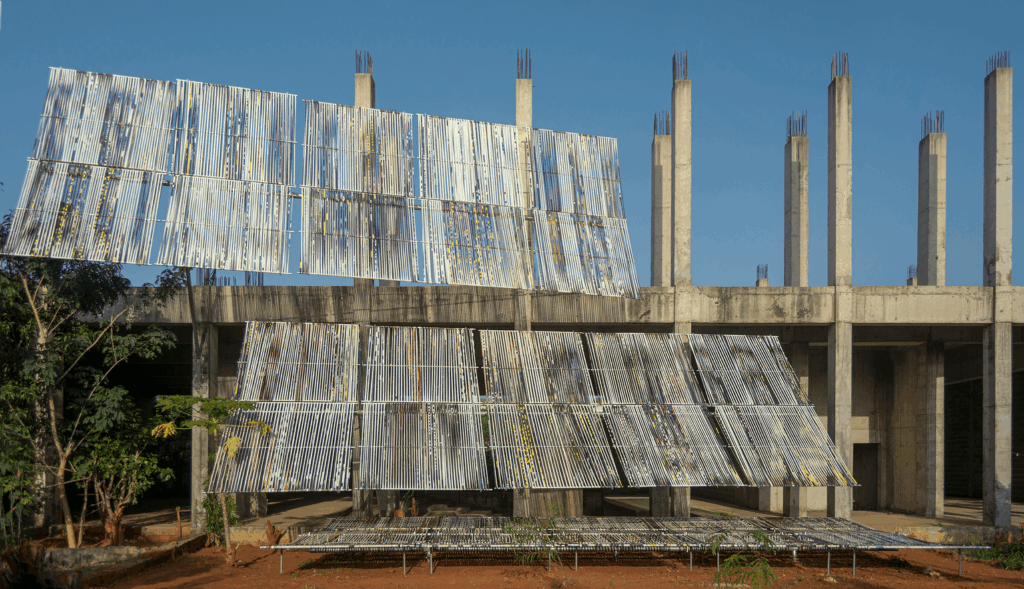
DPF: Limbo Engawa is the first commission of a new annual architectural commissioning program at Limbo Museum, developed in a spirit similar to the Serpentine Pavilion model. It marks the beginning of a dedicated platform for contemporary architectural experimentation on the continent.

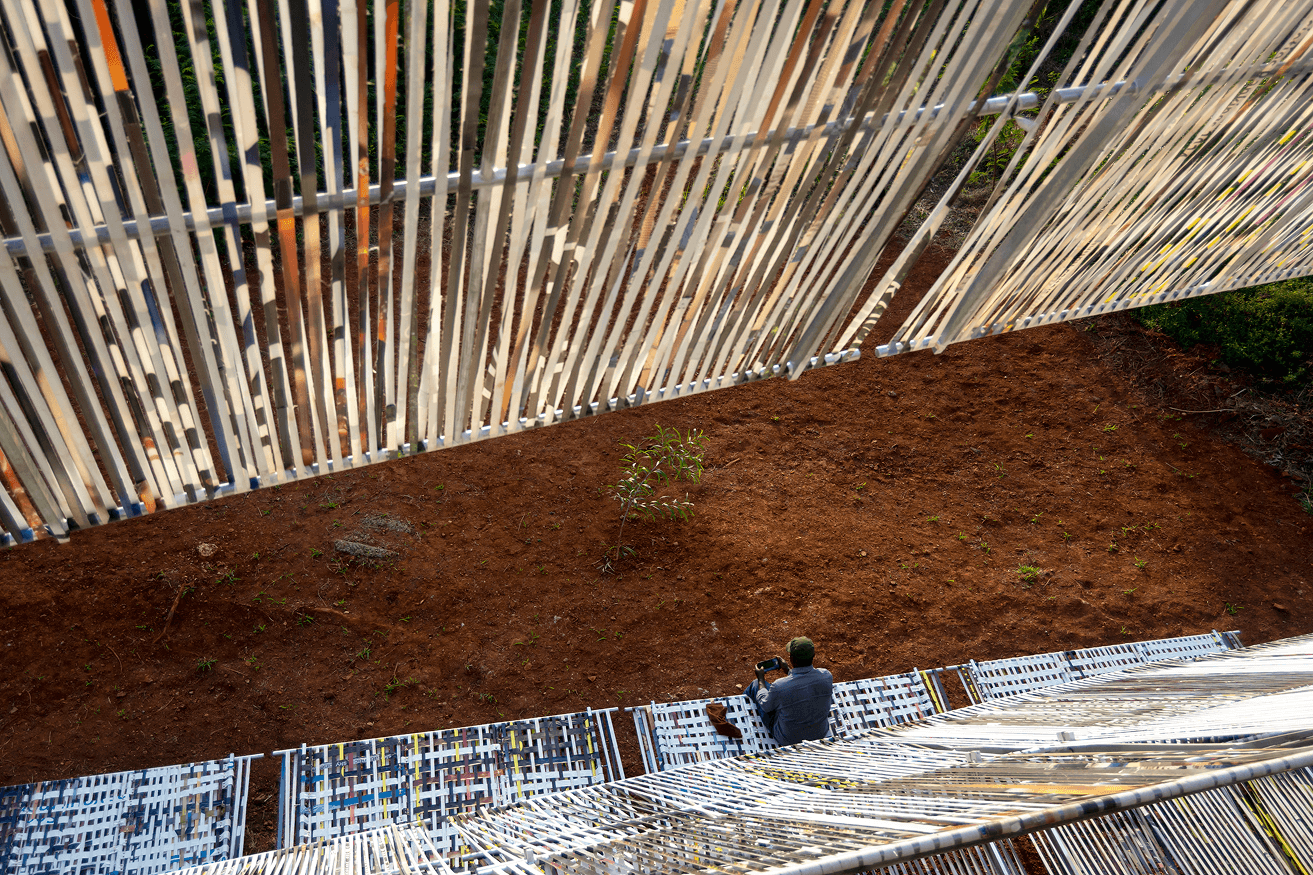
The installation is designed and constructed by the architecture studio TAELON7, led by Juergen Benson-Strohmayer. At its core, the work explores thresholds and transitional space. The concept of “engawa,” drawn from Japanese architecture and understood as a liminal zone between interior and exterior, became a way to think about how architecture can hold ambiguity, openness, and in-between conditions. Rather than functioning as a resolved object, the installation operates as a spatial pause, creating conditions for movement, reflection, and informal encounter. It exists neither fully inside nor outside, and resists being read as purely functional or purely symbolic. Constructed from a lightweight steel frame and woven salvaged billboard strips, the material language reinforces this idea of permeability, reuse, and layered presence.

IM: Limbo feels like a cultural statement, almost like a piece of art itself. How do you see it evolving?

DPF: I do not see Limbo as a finished identity. It is closer to an evolving framework that adapts to different questions and contexts over time. Going forward, I see it becoming more embedded in research and pedagogy, not just presentation; strengthening its role as a space for testing ideas rather than simply hosting outcomes.

At the same time, I hope it remains light enough to shift. To respond to different geographies, collaborators, and urgencies without becoming fixed in one form. The goal is not expansion for its own sake, but depth, and a continued openness to transformation.

African contemporary art
Limbo museum
spatial ecology
institutional flexibility
Limbo Engawa by TAELON7
Photography by EDEM J. TAMAKLOE
African contemporary art
Limbo museum
spatial ecology
institutional flexibility
Limbo Engawa by TAELON7
Photography by EDEM J. TAMAKLOE

Words: IVONA MIRKOVIC

ISSUE 8

issue no8

Discover the new issue — available now