Jacqueline Springer is the Curator of Africa & Diaspora: Performance and Lead Curator of The Music is Black: A British Story. Jacqueline has a background in print and broadcast music journalism and was an Adjunct Professor at Syracuse and Fordham Universities in London and a Visiting Lecturer at the University of Westminster. She co-founded the event curation duo Union Black, which focuses on the relationship between music, sartorial style, and cultural identities.
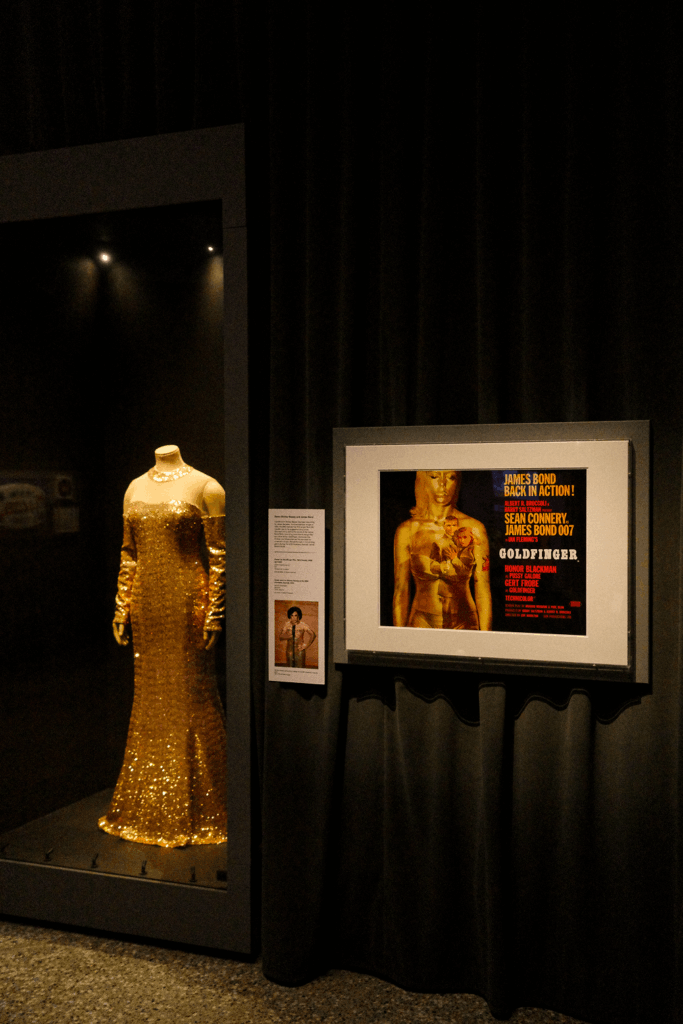
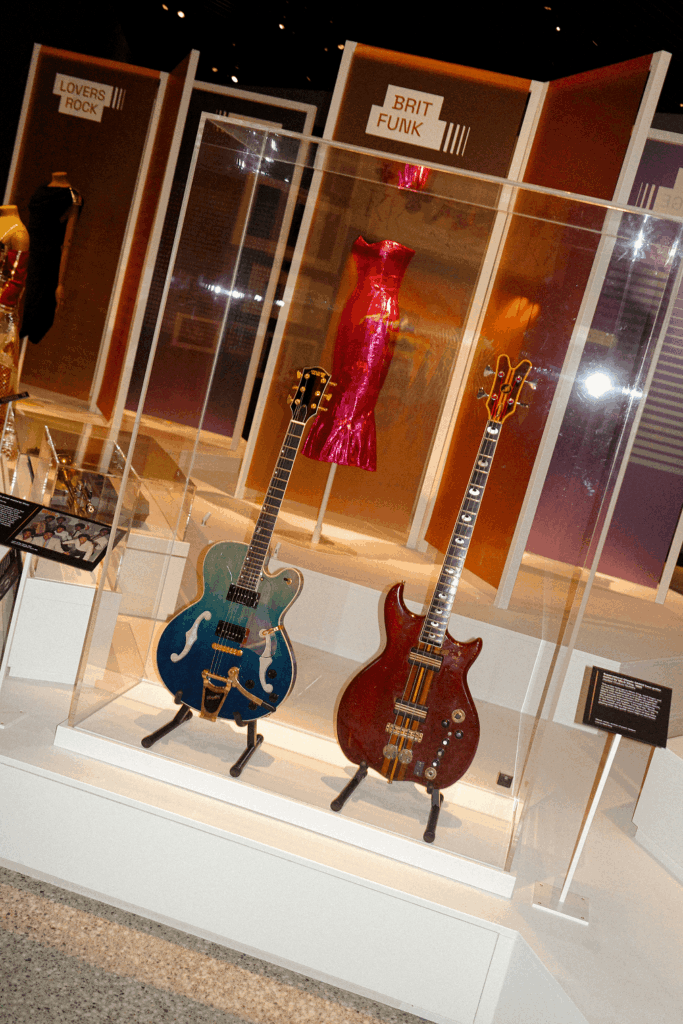
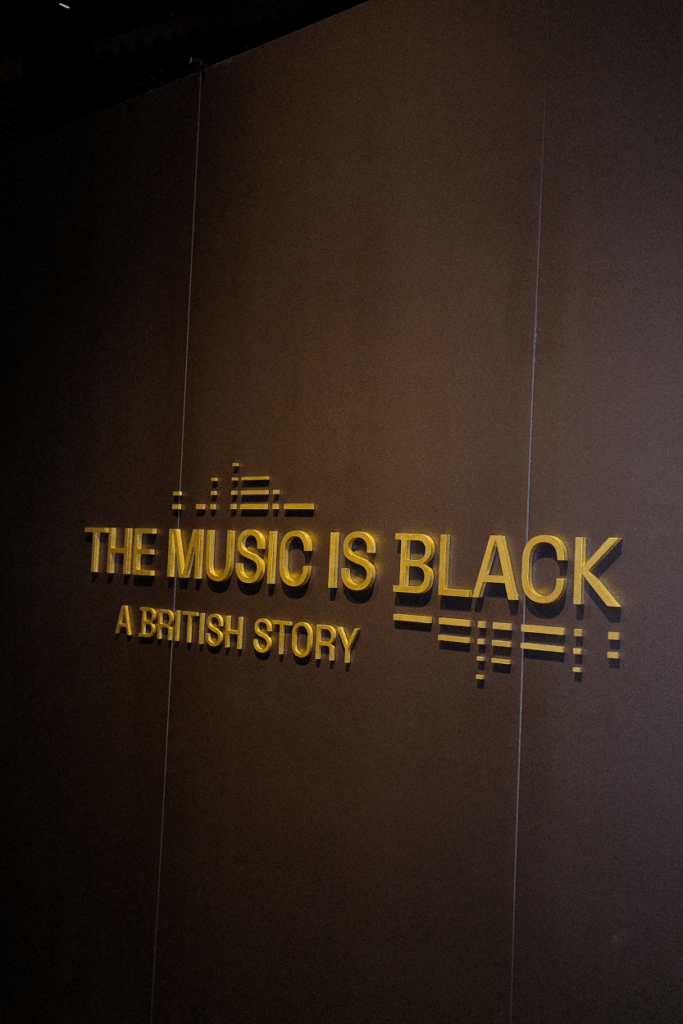
This April, the inaugural exhibition The Music is Black: A British Story opened at the new V&A East Museum. Curated by Springer, it delves into British domestic and international histories and the influence Black British identities, music, and cultures have relayed throughout the UK. The exhibition travels over 125 years in its narrative, from 1900 to 2025. Through art pieces, artifacts, fashion garments, and instruments, the exhibition identifies and explores eight core genres born in the UK from 1970 onward, created by British-born Black people and non-Black people inspired by African descendant musical forms and traditions. As the museum opens its doors, it offers a fresh opportunity to tell British history through a global lens, one that does not shy away from the harsher truths of Britain’s past and present. It encourages visitors of all identities to reflect on their role and responsibility, while celebrating the personhood, joy, and resistance of those who have risen through it.
Through legacy, acknowledgement, and a sharp editorial eye, Springer ushers in a new era with a fresh breath of hope, and a provocation to younger audiences to examine what they’re already engaged in. Hube spoke with Jacqueline Springer to discover more about uncovering musical and cultural connections, the challenges of presenting complex historical themes to the public, and the educational power of retrospective exhibitions.
hube: What kind of exhibitions do you think audiences are most drawn to, and why does The Music is Black: A British Story feel so timely?
Jacqueline Springer: Although we’re covering 125 years, we’re travelling into the contemporary time period. That excites people. They want to see how the recent memory is framed. You also want to know if they’re going to get your part right.
Music is a great social integrator and there is a real vindication in popular and contemporary music being recognised as an art form by an institution like the V&A. Added to that, [the music under focus] is homegrown and Black-centered and it rests against an expansive international story.
For those reasons, this exhibition feels highly anticipated. The exhibition bears a broad timeline that may also appeal to people… the narrative is not reduced to the last 20 years. There’s nothing wrong with the last 20 years [of musical output], but in adding another six decades unto that, you have content that somebody’s mother, father or even grandfather can also relate.
h: When working across such an expansive historical timeline, how do you approach the responsibility of representing that history with accuracy?
JS: I think anytime you’re dealing with history, you have an obligation to be correct.

Photography by LEWIS VORN



h: Could you tell us about your research process, and what you find most engaging about uncovering these musical and cultural connections?
JS: I taught at undergraduate level for 10 years and was a thesis supervisor before that. You don’t travel into history unless you enjoy it and are willing to do the work. Doing research is an absolute pleasure because all bets are off in terms of what you’re going to find. You combine both studious insight and instinct. You are allowed to travel emotively, but you remain factually grounded to be able to utilise it within contemporary music, go deeper and further, find those links, and then make a determination as to what object would best say this—keeping an awareness of how we are going to retain visitor anticipation for the 1970s, for acid jazz, for drum and bass. You might be digging deep into Brazilian Candomblé, but you still have to frame how it is relevant to samba, acid jazz, and Brit funk.
h: How do you balance presenting complex historical themes with ensuring that the exhibition remains engaging and accessible to visitors?
JS: The responsibility lies in creating a diligent working practice and building a literate exhibition that informs people without exhausting them—so they leave knowing more and appreciating Black British musicians and the non-Black British musicians who make music inspired by African traditions and techniques.
h: How did you determine where the exhibition’s narrative should begin, and why was that starting point significant to you?
JS: I was asked, ‘If you were invited, Jacqueline, to create an exhibition, what would it be on?’—and I answered, ‘Black music’. Then they asked, ‘What year would that begin?’—I said, ‘1900’. Why? Because that’s when mass media really gathers momentum. Cinema had already been invented and the printing press long before, but we had radio, we had immediacy, and then we also had television. We had different, new ways of disseminating identities, culture, and art faster than ever before. That’s fascinating to me. What elements of the established past about class, sexuality, and race are coming like luggage from the previous century—and into this new century.?
h: What role did archives—particularly those of the BBC—play in the research process behind this exhibition?
JS: We couldn’t do this exhibition without working with the BBC archive, and it had to be more than just the written material. There is no broadcaster like the BBC in terms of its longevity and its stake in British memory. I spent many happy days at the written archive finding minutes of meetings, including how John Reith, the first Director General of the BBC—saw music, utilised his authority and how that led to the standardisation of early BBC musical output.
h: With such a breadth of material available, how did you approach decisions around what to include and what to leave out?
JS: You have to make tight, strong decisions and pare it down. I’m not going to lie to you—the wider exhibition team had to work very hard with me to do it. I am a hoarder—if I had my way, that would look like brickwork, overwhelming and untidy. You have to work with colleagues who know the sector better, and do it without a feeling that you’ve abandoned responsibilities to the profundities of some of the subjects. You have to learn, and people have to maintain momentum and enthusiasm for the journey.
When I visited V&A Wedgwood, a site in Stoke-on-Trent where V&A’s collection is on display, I saw medallions on slavery and abolition. I saw the way they presented a letter from Olaudah Equiano to Josiah Wedgwood, an established, published Sierra Leonean former slave who had become an avid and active abolitionist in England. He feared being recaptured and resold into slavery, and he was asking Wedgwood for advice on how to prevent that on his travels to Bristol.
It was stultifying to find it there. I knew it was in the collection, but seeing it is a whole other thing. It’s in the exhibition now. Remember that Wedgwood is creating these works at a time he’s also selling sugar bowls to America—so we’re thinking about how to frame this. How do we still keep it? What’s happening with acid jazz later? What’s happening with drum and bass? What’s this got to do with MC Skibadee on Kool FM?
This is a big exhibition. Of course, Wedgwood and Olaudah were in correspondence long before our exhibition gets underway in 1900. But in framing this relationship in relation to Britain, enslavement, abolition, and personal and professional relationships… it has a bearing on what is to come later in the exhibition.
h: What do you hope visitors take away from the exhibition, both emotionally and intellectually?
JS: When you get that ‘wow’ moment when you research something—‘Oh my God, it makes sense’—that light bulb moment, when it crystallises so much, I would love that to happen across the exhibition. That could be looking at a guitar. We’ve got a beautiful photograph of a guitarist called Ernest Ranglin with this guitar —he’s with his nephew Gary Crosby, who is a leading educator, with the jazz and education company, Tomorrow’s Warriors. When you read the label and then hear the music on loop and it’s Ranglin’s actual fingers on those strings—maybe you’ve never known his name, but you know that song, My Boy Lollipop. From there, if this beautiful photograph cements Ernest Ranglin as a visual memory, that’s great because maybe on the way home you’re going to google Ernest and learn a lot more about him and the work Gary does today.
It travels deeply as well in the way in which so many musical genres fought against censorship and legislation. There’s legislation that travels from post-Napoleonic war to restrict begging and public performance, through dissent, it becomes the sus (also known as Stop and Search) laws. To travel through that and find an object in the collection, an etching of a street beggar, and then to align that to songs by Dizzee Rascal and Kano—it is a phenomenally gratifying element.
Sus, which has become racialised and invariably, but not solely, gendered, began as a class-ridden focused restriction. Race is often seen as a class of itself. You are already beneath making these observations, but making this complexity digestible is beautiful. If understanding is derived from this research, if it is absorbed, if you get it—that’s great.
Any exhibition is a retrospective. Even if it happened yesterday, it’s a retrospective about trying to, as I say, make such a journey digestible, literate, and exciting to visitors. That remains any curator’s challenge.

Photography by HENRY GOODFELLOW
