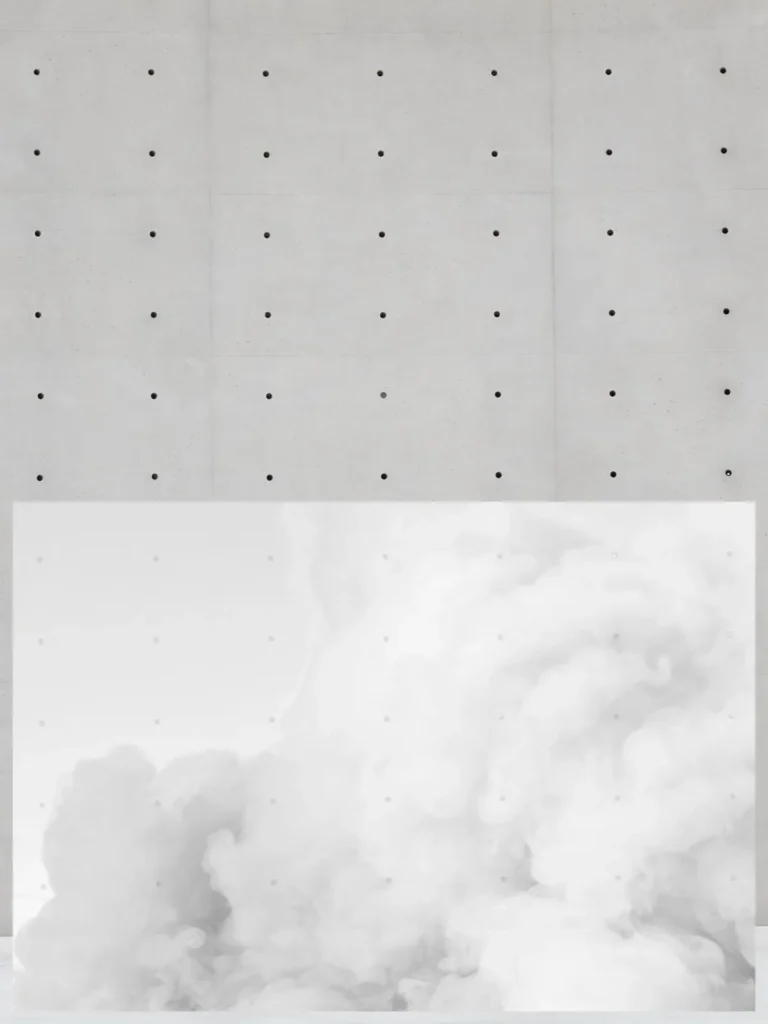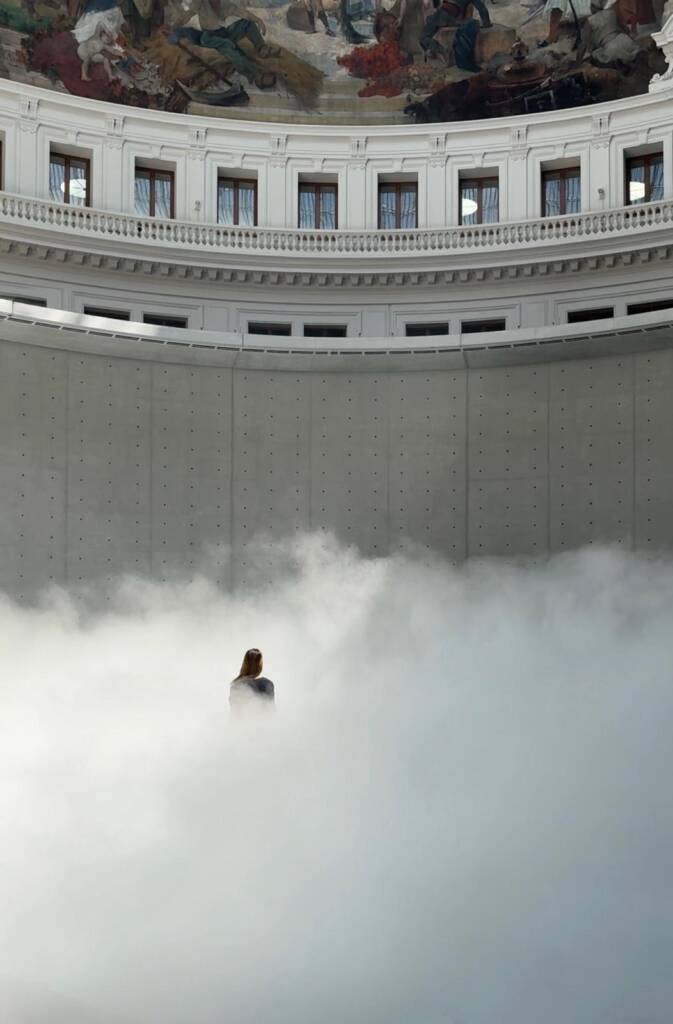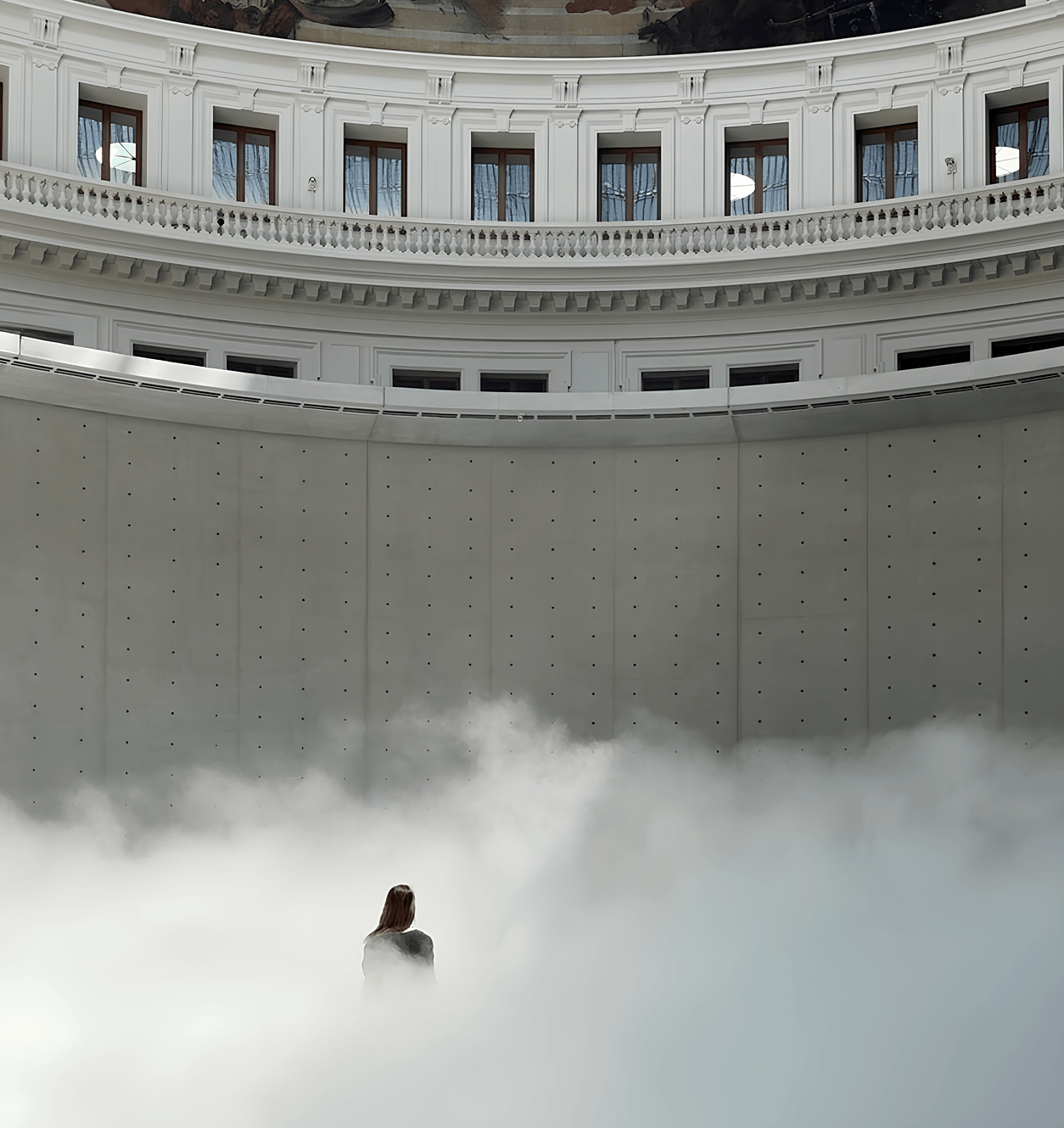
Japanese artist Fujiko Nakaya brings one of her most celebrated works to Paris with Cloud #07156, a monumental installation on view in the Rotunda of the Bourse de Commerce – Pinault Collection from June 4th to September 14th, 2026. Presented as part of Clair-obscur, the project fills the museum’s iconic central space with drifting vapour, light, and motion.
Widely regarded as the pioneer of fog sculpture, Nakaya has spent decades pushing sculpture beyond solid matter. With Cloud #07156, she works with an element that is both natural and meticulously engineered, inviting visitors to experience architecture through a constantly changing veil of mist.
A site-specific encounter between architecture and atmosphere
Installed within the Rotunda, the work enters into a striking dialogue with one of Paris’s most distinctive interiors. Dense clouds of white mist periodically sweep through the circular space, concealing and revealing architectural details as visitors navigate the shifting environment.
Unlike conventional sculpture, the work resists permanence. The fog drifts, thins, gathers, and disperses according to air currents, temperature, and human presence. The Rotunda becomes a landscape of fleeting contours where visibility itself becomes a material.
The art and technology behind the fog sculpture
For more than fifty years, Fujiko Nakaya has centred her practice on fog sculpture. Instead of depicting nature, she collaborates with it. Using high-pressure pumps and specially engineered nozzles, she releases microscopic droplets of pure water, creating clouds that mirror natural fog without chemical additives.
This approach began in 1969 when Nakaya partnered with engineer Thomas Mee to develop a system capable of generating large-scale clouds from water vapour. Their first project appeared at the Pepsi Pavilion during Expo ’70 in Osaka, launching a body of work that now spans nearly one hundred installations worldwide.
Nakaya often refers to her practice as a form of “negative sculpture,” revealing forces that typically remain unseen. Wind, humidity, body heat, and air circulation all leave their mark on the work, continually altering its appearance.