“Space is not the setting in which things are arranged, but the means whereby the position of things becomes possible.” The observation of the French philosopher Maurice Merleau-Ponty proves an engaging point of departure for Geestgrond, the major retrospective of British sculptor Antony Gormley at the Royal Museum of Fine Arts Antwerp. For more than four decades, Gormley has pursued one of the most sustained and rigorous investigations of the human condition in contemporary sculpture, repeatedly returning to the question of ‘what it means to inhabit a body in space?’ Yet Geestgrond, curated by Italian-American writer and art historian Carolyn Christov-Bakargiev, expands that enquiry beyond the limits of sculpture itself. Making this not merely a retrospective of objects, nor even of a distinguished artistic career. What emerges is an exhibition of the imagination, as an archaeology of thought, that traces the intellectual, philosophical, and material conditions from which the work itself has emerged. At its most ambitious, it asks how consciousness, matter, memory, and space can combine, transforming the museum of walls into an open site, where ideas acquire physical form and sculpture becomes a means of thinking through the world.
Having seen it, said it, and written it down, the exhibition’s title proves essential when feeling for the retrospective’s gravitas. A distinctly Dutch compound word, Geestgrond combines geest, meaning spirit, mind, intellect, or consciousness, with grond, which translates to ground, soil, or earth, as Christov-Bakargiev explains. The term resists precise translation, occupying a fertile territory between the physical and the metaphysical. It suggests a ground of thought, a terrain of consciousness, a place where awareness takes root in the material world. Yet the word is as evocative for its sound as for its meaning. Spoken aloud, Geestgrond resonates with a dense, guttural materiality, emerging from the intangible before yielding to the weight and gravity of the earth. Intended to encompass the spirit of Gormley’s work, the word echoes a central concern within Gormley’s practice, the persistent attempt to locate the immaterial within the material, and to understand the body not as a fixed assemblage of flesh and bone, but as the living threshold through which consciousness encounters the world.
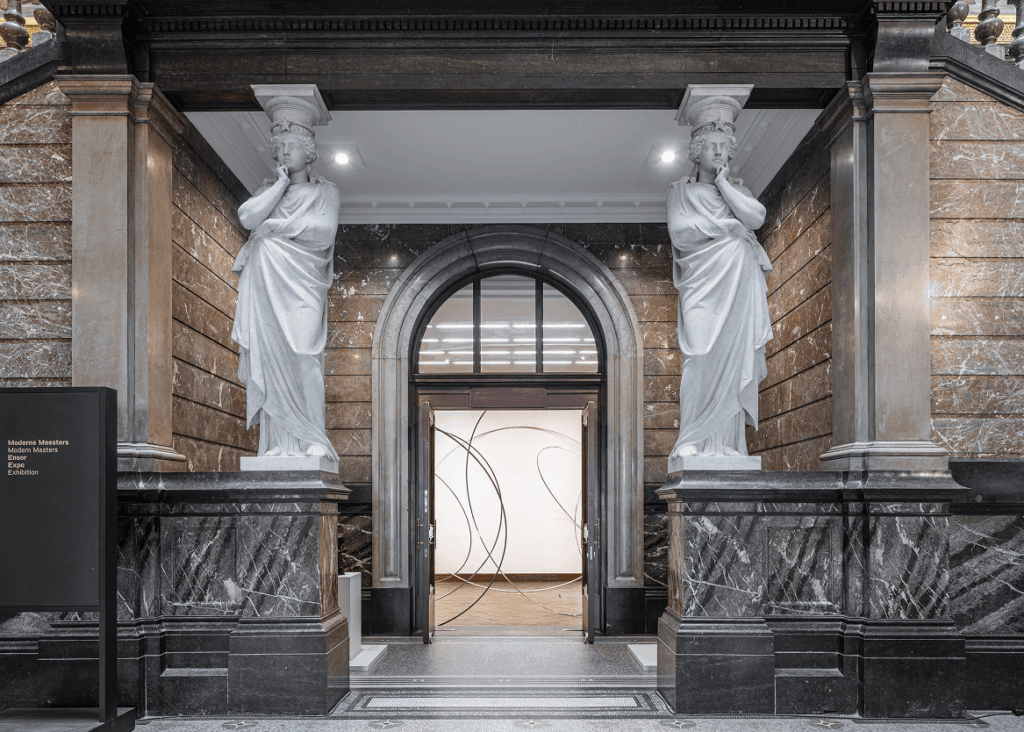
Orbit Field III, 2026, 37 rings of 23 mm square section aluminium tube and stainless steel spigots, dimensions variable
Photography by OAK TAYLOR-SMITH, courtesy of ROYAL MUSEUM OF FINE ARTS ANTWERP (KMSKA)
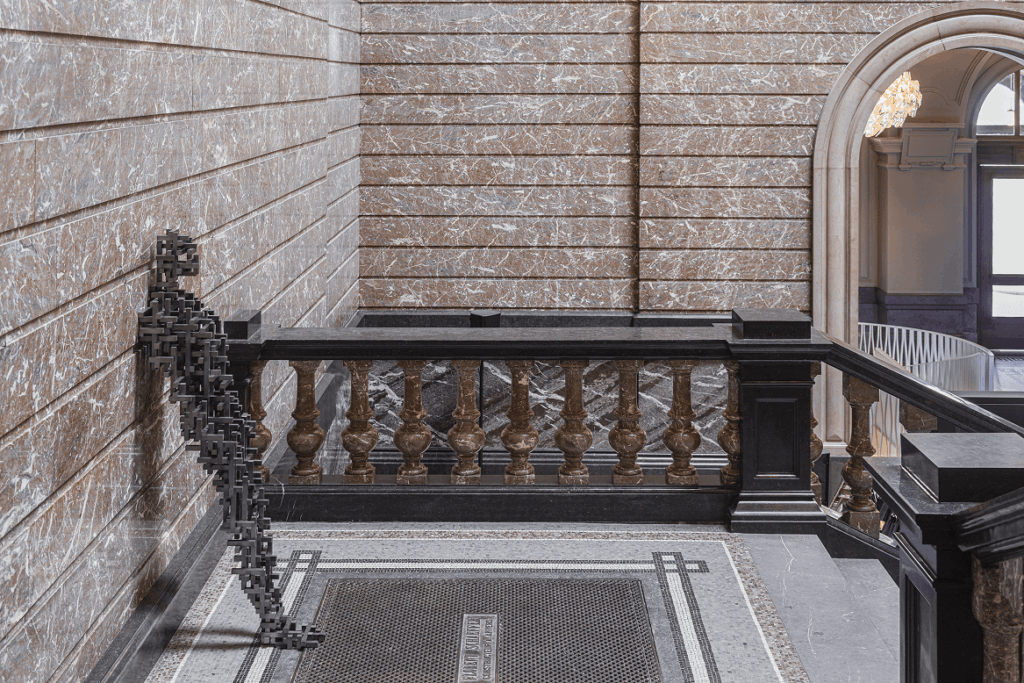
Brace, 2023, 20 mm square section mild steel bar, 176.6 × 48.3 × 76.5 cm.
Photography by OAK TAYLOR-SMITH, courtesy of ROYAL MUSEUM OF FINE ARTS ANTWERP (KMSKA)
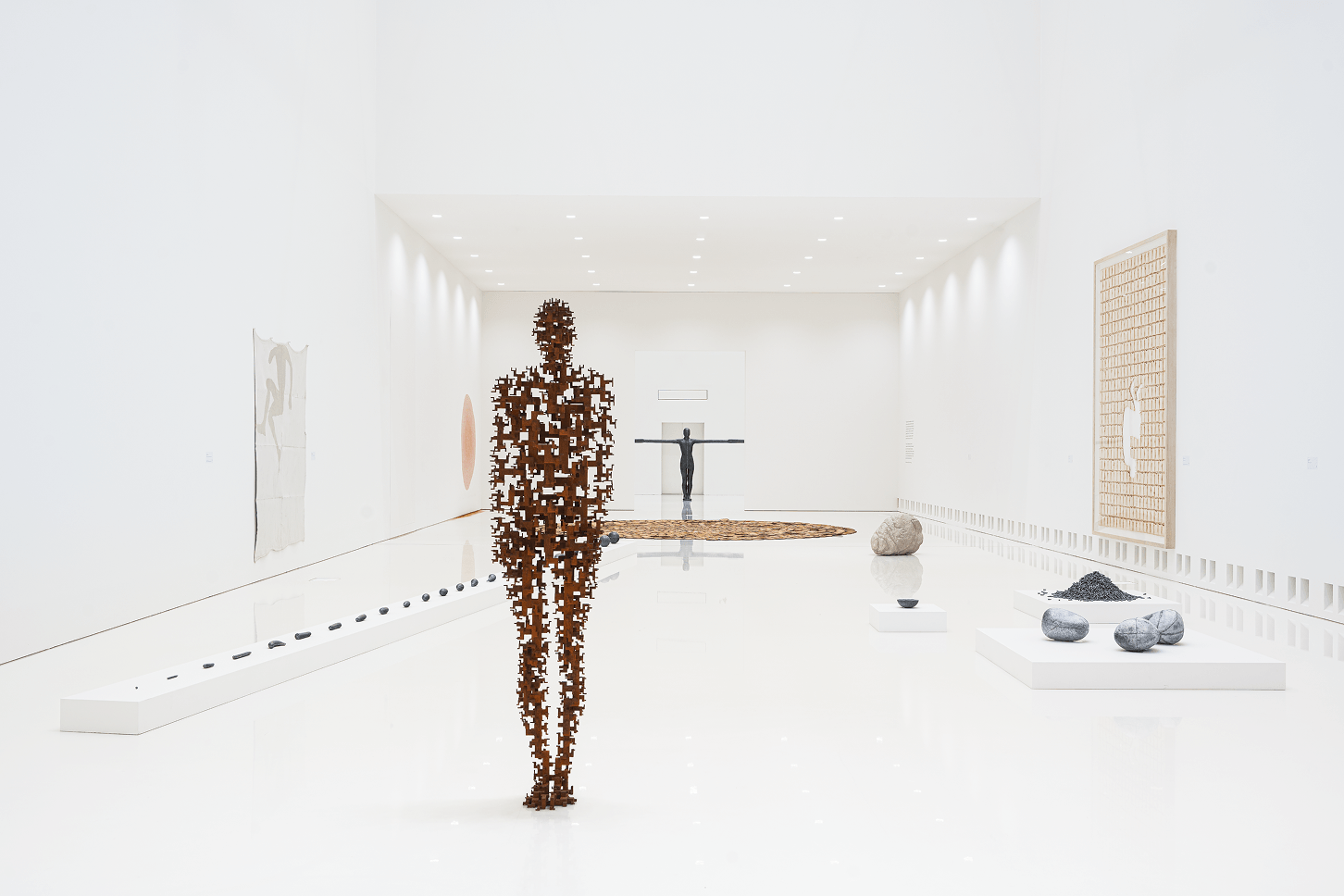
Exhibition entered, making one’s way beyond the substantially sized squiggle of Orbit Field III (2026), you arrive at the first of the exhibition rooms, in which Attend (2025), a rust-coloured cast-iron figure, stands erect. Facing the audience rather than turning away, the work establishes the body as both subject and measure, with a swell of earlier works behind it, including Blanket Drawing I (1983), that reads like a reversed Yves Klein action painting, where Gormley’s body has crudely been pinned to the face of the canvas and painted around, encasing it, and even earlier Flat Tree (1978), the rhythmic slicing of a vertical tree to have it appear horizontal, measuring the invisibility of time. As an introduction, it becomes clear that neither Gormley nor Christov-Bakargiev are interested in the reassuring chronology of a conventional retrospective. Rather than tracing a linear narrative of development, the exhibition unfolds as a field of relationships, where works from different periods coexist alongside books, photographs, archival materials, objects, and ideas. The galleries become less a survey of completed works than a landscape of interconnected ideas and philosophical thought. Admitting to having reconfigured the framework of the KMSKA galleries to accommodate the body as a blueprint for the exhibition’s layout, Christov-Bakargiev has positioned, where the cardium would reside, an intersection of rooms entitled The Heart. Part Wunderkammer, part intellectual self-portrait, the installation of vitrines, volumes of books selected by the artist, photographs, source materials, studio objects, drawings, as fragments of the intellectual world that has nourished Gormley’s thinking. The installation does not explain the sculptures; instead, it reveals the conditions from which they emerge.
Reflecting on her invitation to curate the exhibition, Christov-Bakargiev remarked, “I had never worked with Gormley before, but I accepted gladly because I thought it would be a way of bringing into the centre field of our discussions, through making exhibitions, these issues. That’s why I did it. And The Heart is a kind of counter-dataset. When I say it’s a dataset, people immediately understand, but normally, datasets are made by many people… The data in The Heart comes from one body, one life, one experience.” A significant idea that positions her approach against the increasingly abstract logic of contemporary information systems. Where they derive their value from scale, of aggregate images, sounds, words, and behavioural patterns collected from countless individuals. But a dataset of a single life is something to be imagined, as it occupies a different territory entirely. Rather than reducing a life to searchable information, The Heart assembles forms of embodied knowledge that resist computation, and what we are given is not a database of information, but a map of consciousness. What Christov-Bakargiev reveals ultimately is that artistic practice extends far beyond the finished artwork. Museums traditionally display the products of artistic thought while concealing the processes that produce them. Here, the opposite occurs. Books, photographs, objects, references, and archival traces are granted a status equal to the sculptures themselves.
The exhibition goes beyond merely a presentation of artworks, to exposure the intellectual and material terrain from which those artworks arise. As one moves not simply from material sculpture to material sculpture, but through the conditions of their becoming. To which Christov-Bakargiev introduces her own intellectual energy, with an architected choice of erudite quotations, that become the backdrop to Gormley’s sculptures, effectively interrupting their silence, intentionally not artist or artwork texts, these passages puncture the exhibition’s bubble, with a mindful narrative made up of words of the weight and significance of Gormley’s sculptures. And if the artist’s works seize the laboratory-like spaces, the passages reward their original authors with a permanence in a worldly space, which, like Gormley’s sculptures, goes far beyond the museum walls.
The selection of texts is revealing. The humanism of American poet and essayist Walt Whitman appears on the first wall upon entering the galleries, with the celebrated lines from Leaves of Grass (1855): “I celebrate myself, and sing myself … for every atom belonging to me as good belongs to you.” The quotation resonates profoundly in and of itself, but also with Gormley’s lifelong understanding of the body not as a private possession but as a shared human condition. Throughout his career, he has used himself not as autobiography but as a universal measure, a means through which the audience might recognise themselves. Whitman’s vision of individual existence as part of a larger continuum finds a sculptural analogue throughout the exhibition. Still further into the mind and membrane of the exhibition, the temper intensifies with the presence of German philosophers Max Horkheimer and Theodor W. Adorno, whose wording from their 1944 publication Dialect of Enlightenment, “not only is domination paid for with the alienation of men from the objects dominated; with the objectification of mind, the very relations of men, even those of each individual to himself, were bewitched. The individual is reduced to the nodal point of the conventional reactions and functions objectively expected of him. Animism had endowed things with souls; industrialism makes souls into things,” warns against industrialisation and the loss of self, as a darker register to the exhibition. Their reflections on domination, alienation, and objectification cast a productive shadow across Gormley’s work. The body that appears throughout these galleries is never merely a site of freedom or transcendence; it is also vulnerable, exposed to systems of control, measurement, and abstraction. The tension between embodied experience and the forces that seek to reduce it becomes one of the exhibition’s recurring undercurrents. Behind these references, one senses the continuing influence of German essayist and critic Walter Benjamin, whose fascination with fragments, collections, archives, and constellations seems woven into the exhibition’s very structure. The books, photographs, objects, quotations, and sculptures do not explain one another; instead, they generate meaning through proximity and association. The exhibition becomes Benjaminian in spirit, assembling knowledge not through linear narrative but through a field of connections in which unexpected relationships emerge.
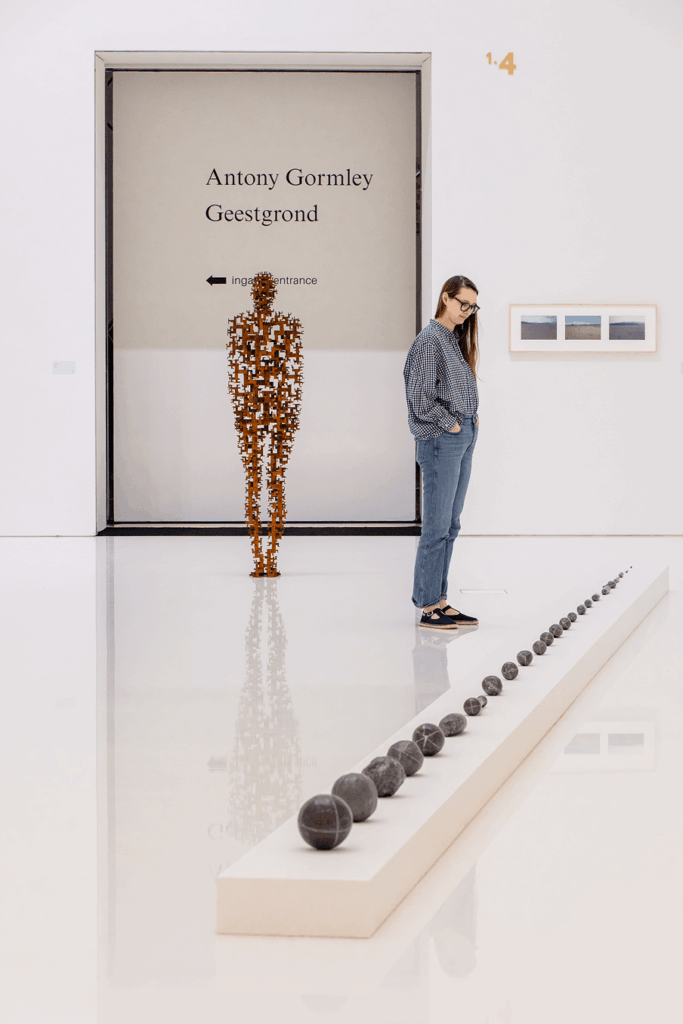
Attend, 2025, cast iron, 191.6 x 49 x 33.1 cm; Natural Selection, 1981, lead tools, fruits, weapons, vegetables and objects, 1196 x 15 x 15 cm; and Rearranged Desert, 1979, three photographic reproductions of an action performed in the Mojave Desert, USA
Photography by SANNE DE BLOCK, courtesy of ROYAL MUSEUM OF FINE ARTS ANTWERP (KMSKA)
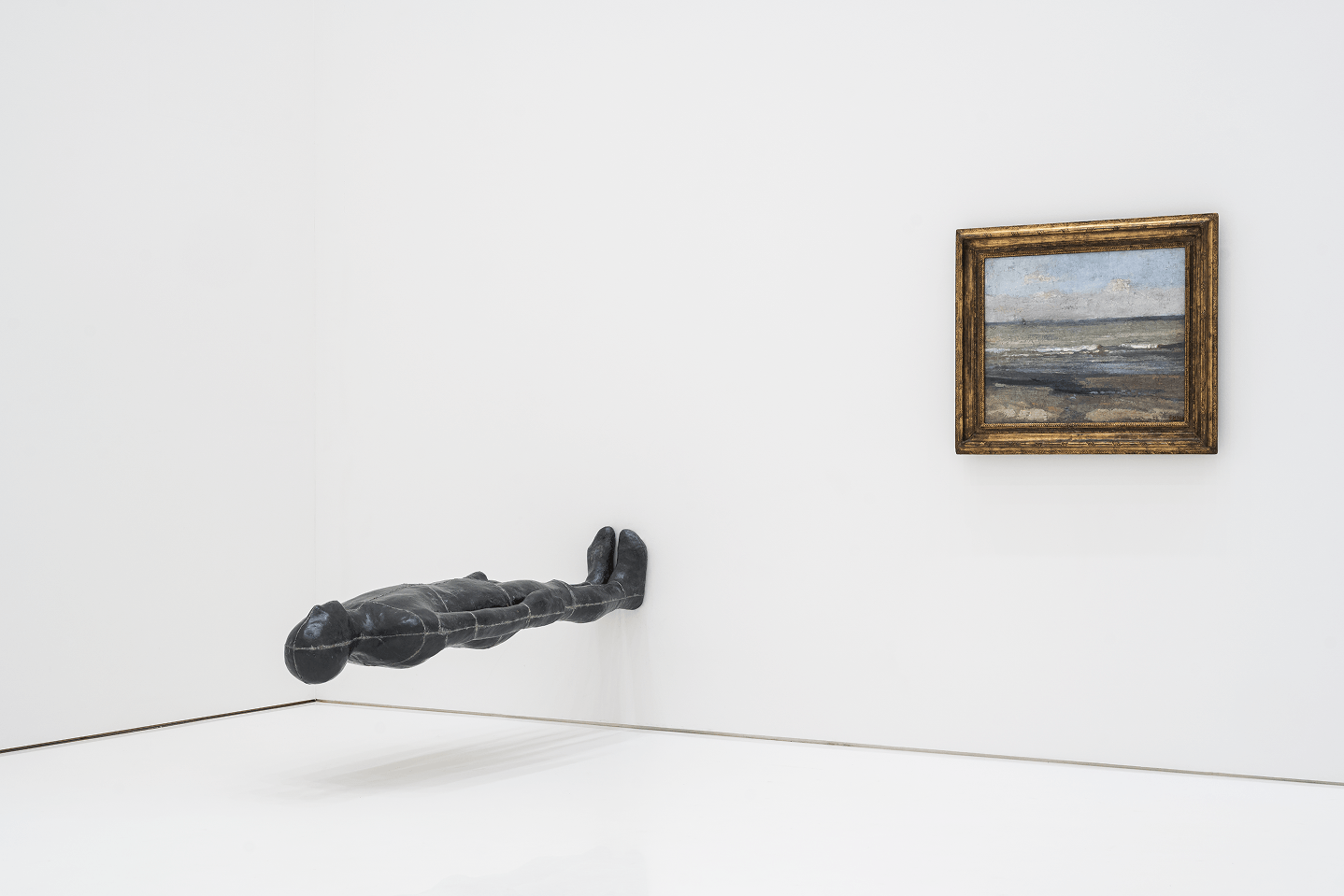
Edge, 1985, lead, fibreglass, plaster and air, 25 × 58 × 195 cm, and James Ensor, Grey Seascape, 1880, oil on canvas, 59 × 74 cm.
Photography by OAK TAYLOR-SMITH, courtesy of ROYAL MUSEUM OF FINE ARTS ANTWERP (KMSKA)
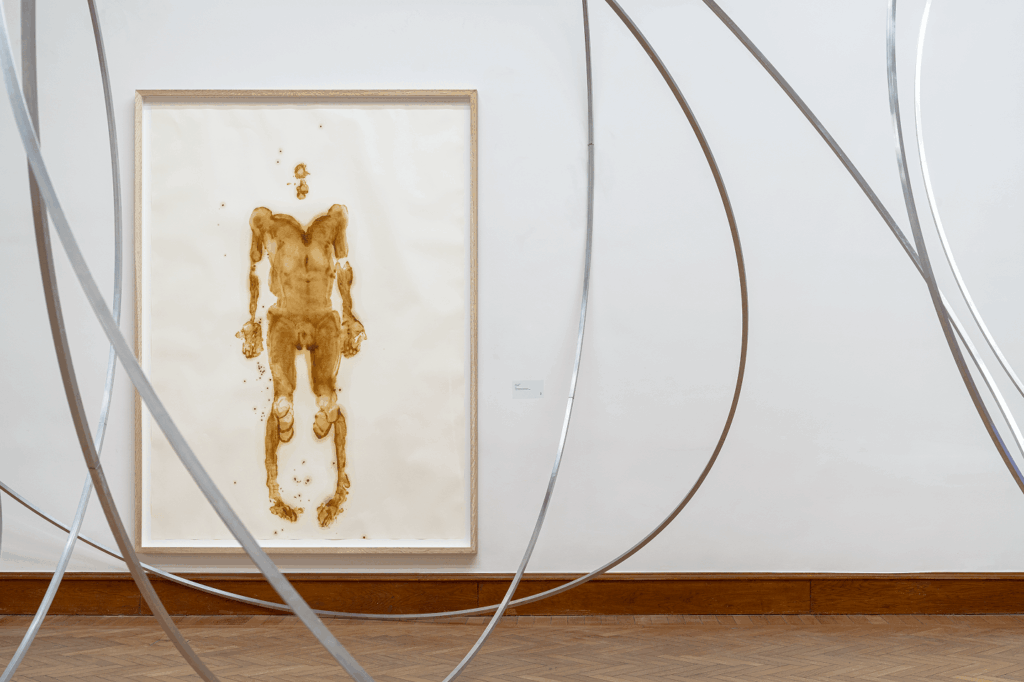
Ground, 2025, crude oil, linseed oil and petroleum jelly on paper, 240 × 173 cm, and Orbit Field III, 2026 (detail), 37 rings of 23 mm square section aluminium tube and stainless steel spigots, dimensions variable.
Photography by OAK TAYLOR-SMITH, courtesy of ROYAL MUSEUM OF FINE ARTS ANTWERP (KMSKA)
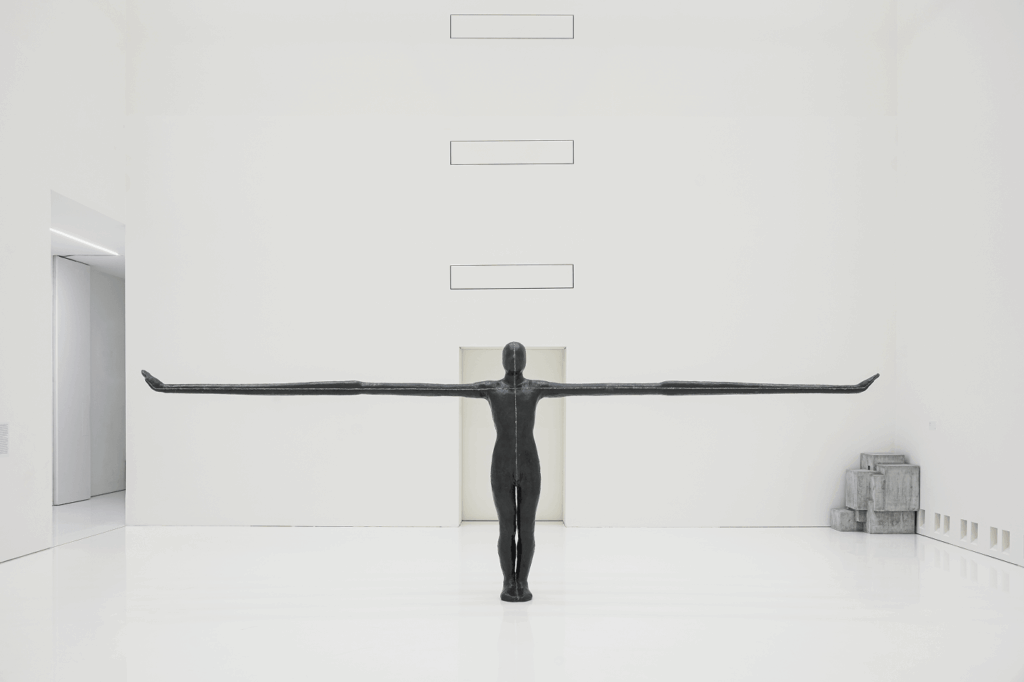
Field, 1984–85, lead, fibreglass, plaster and air, 196 × 551 × 42 cm, and Corner II, 2022, concrete, 90 × 68 × 80.5 cm.
Photography by OAK TAYLOR-SMITH, courtesy of ROYAL MUSEUM OF FINE ARTS ANTWERP (KMSKA)
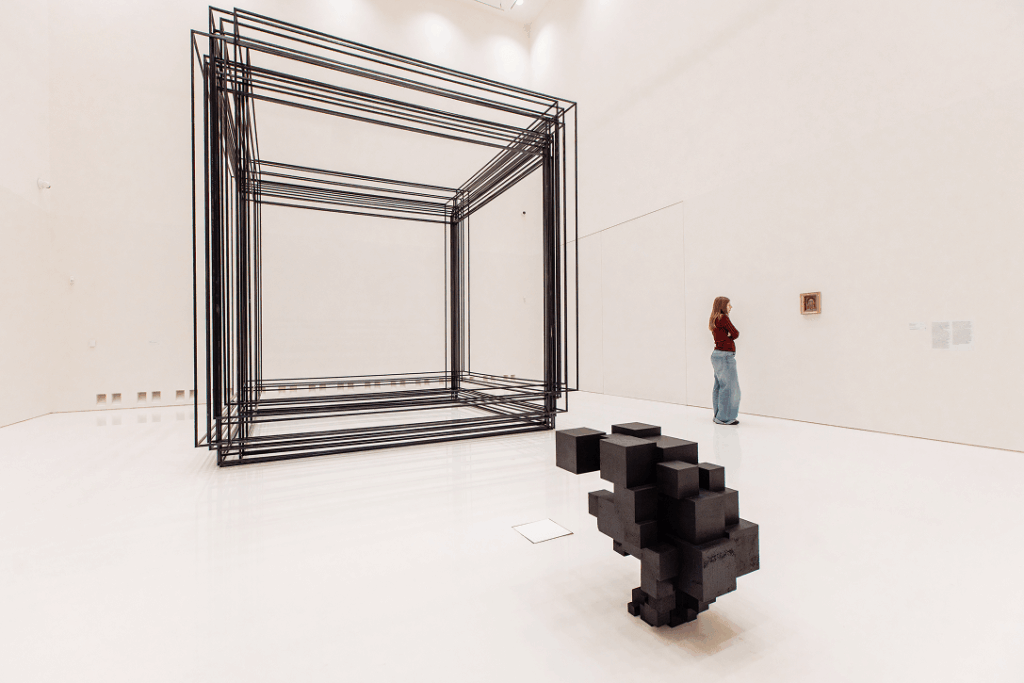
Form IV, 2014, cast iron, 73 × 55.5 × 65.5 cm, James Ensor, Man of Sorrows, 1891, oil on panel, 20 × 15.5 × 0.6 cm, and Murmur, 2014, 20 mmsquare section, stained stainless-steel tube and plastic spigots, 420.5 × 430 × 411 cm.
Photography by SANNE DE BLOCK, courtesy of ROYAL MUSEUM OF FINE ARTS ANTWERP (KMSKA)
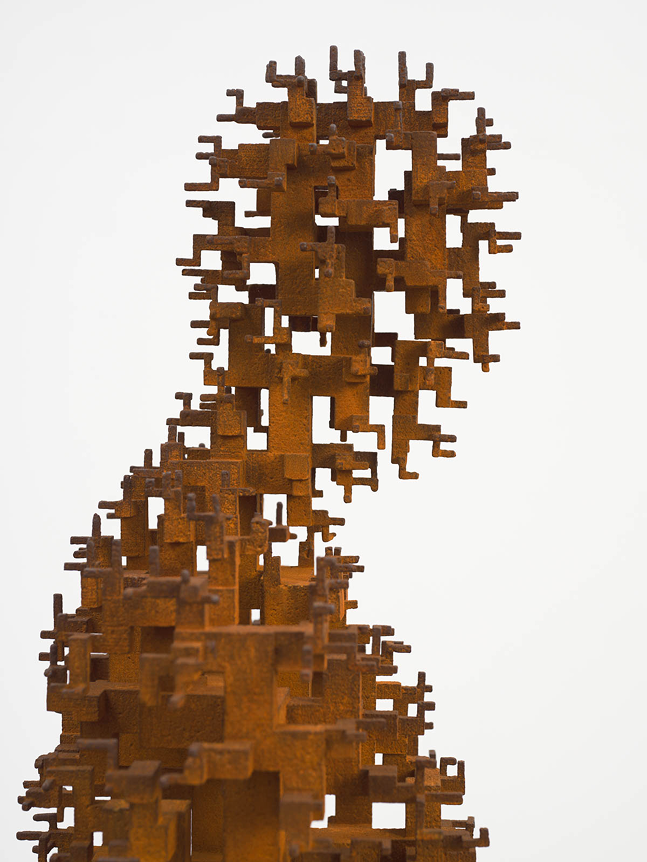
Attend, 2025 (detail), cast iron, 191.6 x 49 x 33.1 cm.
Photography by STEPHEN WHITE & CO, © ANTONY GORMLEY
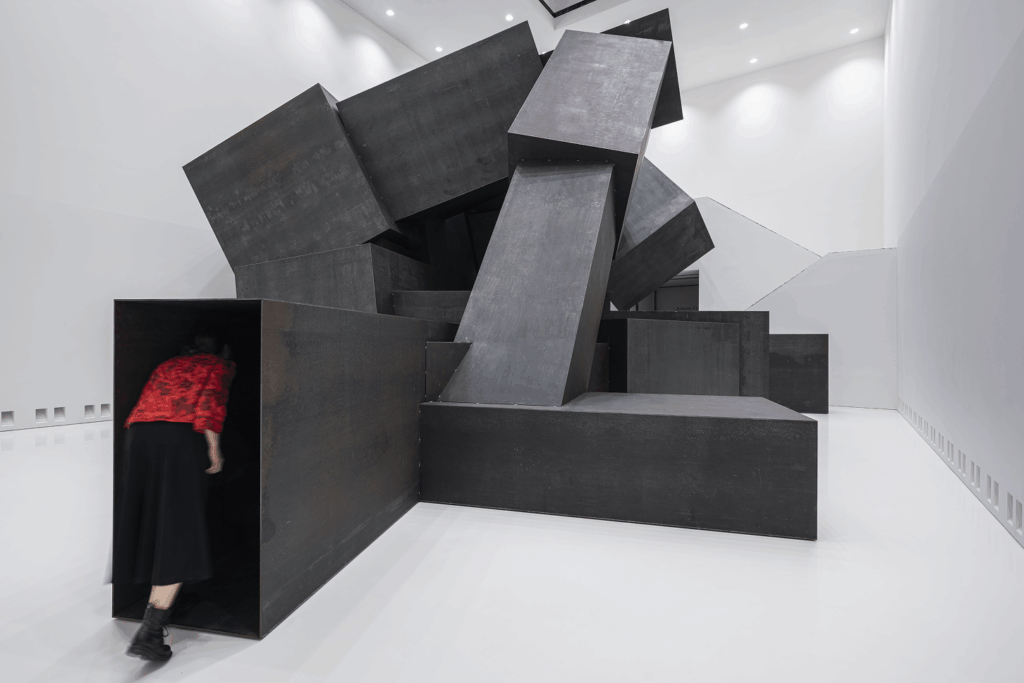
Cave, 2019, 8 mm weathering steel, 732 × 1411 × 1137 cm.
Photography by OAK TAYLOR-SMITH, courtesy of ROYAL MUSEUM OF FINE ARTS ANTWERP (KMSKA)
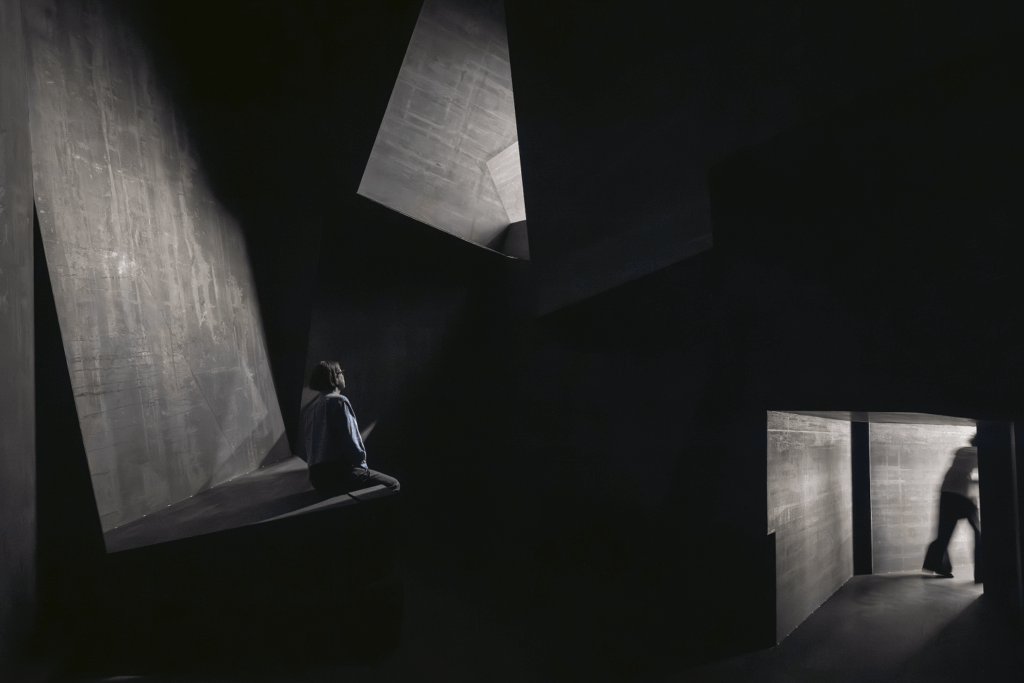
Cave, 2019, 8 mm weathering steel, 732 × 1411 × 1137 cm.
Photography by OAK TAYLOR-SMITH, courtesy of ROYAL MUSEUM OF FINE ARTS ANTWERP (KMSKA)
Equally resonant is the presence of Austrian turn-of-the-century writer Rainer Maria Rilke, whose poetry repeatedly explored the relationship between inner experience and external form. Rilke understood objects as repositories of attention and memory, vessels capable of holding human consciousness. His sensibility feels remarkably close to Gormley’s own. Like Rilke’s poems, Gormley’s sculptures often seem less concerned with representation than with presence itself. They are forms through which invisible states of awareness become momentarily tangible.
What emerges from these curatorial decisions is the sense that Geestgrond is operating on three interconnected levels simultaneously. There is, first, the exhibition of sculptures themselves, Gormley’s lifelong investigation into the body and its relation to space. To which are added the collected books and studio materials that reveal the intellectual and material conditions from which the work emerges, and then there is Christov-Bakargiev’s exhibition of ideas, assembled through quotations, literary voices, and philosophical references, and as impressive as the carefully chosen works from KMSKA’s own collection, which carry an independent strength that nourishes Gormley’s work. Together, they transform the retrospective into something considerably more ambitious than a survey of artistic achievements. It becomes a portrait of the artist as thinker, reader, collector, observer, and maker, revealing the intellectual ecology from which the work emerges. Yet the exhibition’s intellectual richness would mean little were the sculptures unable to sustain it; fortunately, his works are consistently compelling. One of the most striking aspects of Geestgrond is the extraordinary breadth of Gormley’s formal language. Massive iron bodies occupy space with a near-geological gravity. Elsewhere, delicate linear constructions dissolve volume into drawing, allowing sculpture to approach the condition of thought itself. Certain works seem anchored to the earth by their sheer density, while others hover between materiality and disappearance. Throughout, scale is deployed not as spectacle but as a means of recalibrating bodily awareness. For Gormley, the human figure has never been an image to be represented but a condition to be investigated. The sculptures do not ask to be admired from a distance; they need to be encountered physically. Measuring the viewer as much as the viewer measures them. Whether constructed from cast iron, steel, or open frameworks, they function as propositions rather than portraits. Each work poses questions of presence and absence, consciousness and perception, mass and the vessel as void. Perhaps the greatest achievement of the exhibition lies in its treatment of space as an active medium. Gormley’s true subject has never been the body alone but the relationship between body and environment. His sculptures repeatedly activate the invisible territory around them, making his audience aware not only of mass and volume but also of atmosphere and emptiness. Space becomes palpable, and the void between objects is as significant as the forms themselves.
Here, the affinity between artist and curator becomes particularly evident. If Gormley’s practice can be understood as an investigation of embodied space, Christov-Bakargiev emerges as a champion of conceptual space, extending his enquiry beyond matter and into the realm of ideas. Her approach demonstrates a remarkable sensitivity to intervals, rhythms, pauses, and sightlines. Individual works are given the space necessary to exist. Ideas are transported between galleries. Meaning emerges through relationships rather than assertions, as the architecture of KMSKA becomes an active participant in the exhibition’s unfolding. Indeed, what Christov-Bakargiev demonstrates throughout is that the artwork is never entirely contained within the object itself, but that it also resides in the books that shaped it, the thoughts that have informed it, the words that accompany it, and the space through which it is encountered.
Leaving Geestgrond, having negotiated a way through Cave (2019) to be returned full circle to Orbit Field III (2026), what stays with you is not any one sculpture, but a heightened awareness of oneself. The exhibition succeeds because it understands that Gormley’s project has never been simply about making objects, but of creating conditions for reflection on what it means to exist. Through Christov-Bakargiev’s expansive curatorial vision, the retrospective merits greater congratulations than just a successful survey of a distinguished career. It becomes an inquiry into the relationship between matter and mind, object and experience, of the body of the artist and the audience. Gormley’s practice has been described by his gallerist Xavier Hufkens as “diffused, extended and absorbed into the very structure and logic of a gallery or museum.” The artist’s work resists its temporary place in space, but enters and occupies it across galleries, thresholds, rooftops, and into collections. And for Hufkens, the exhibition “does not begin at the gallery door, nor does it end within it.” That sense of being and belonging to a space and time captures the unique achievement of Geestgrond, the meeting of a sculptor who sees the world through the body, with a curator who measures it through associations and archives. The result is more than retrospective, beyond recalling the artist’s achievements, of offering ‘a life’ his as one’s own, as a space and place for profound engagement. As context, with such significance placed on the currency of conceptualism and the visual abrasiveness of abstraction, few artists have devoted themselves so consistently to understanding the human body as a site of awareness, whilst even fewer curators have successfully revealed the intellectual terrain from which that inquiry emerges. Together, Gormley and Christov-Bakargiev have created an exhibition that is not only about sculpture, but also about the possibility of being present in the world. In that sense, it is among the most intellectually generous, spatially sophisticated, and philosophically rewarding exhibitions of our time.
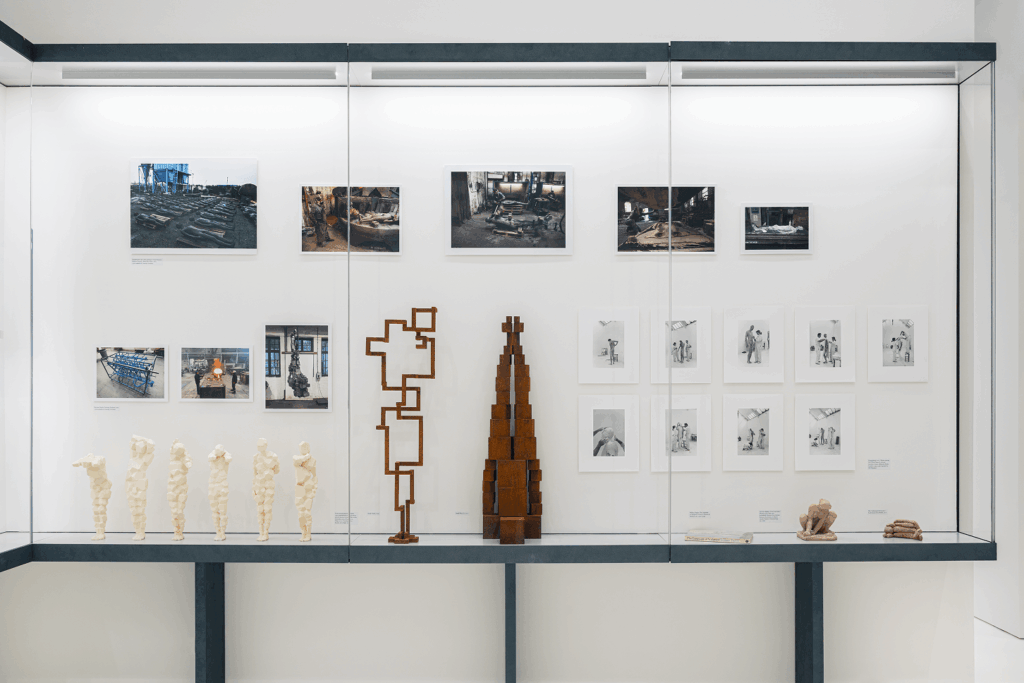
Photography by OAK TAYLOR-SMITH, courtesy of ROYAL MUSEUM OF FINE ARTS ANTWERP (KMSKA)
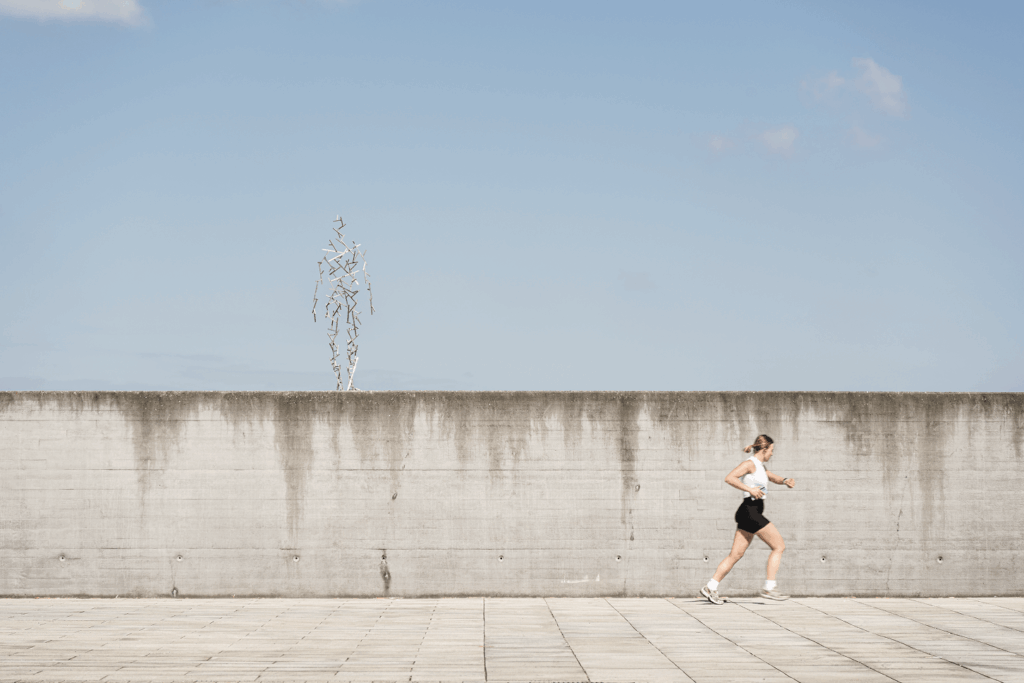
Domain XCIX, 2025, 10 mm square section stainless steel bar, 188.5 × 68.2 × 36.6 cm. Photography by OAK TAYLOR-SMITH, courtesy of ROYAL MUSEUM OF FINE ARTS ANTWERP (KMSKA)
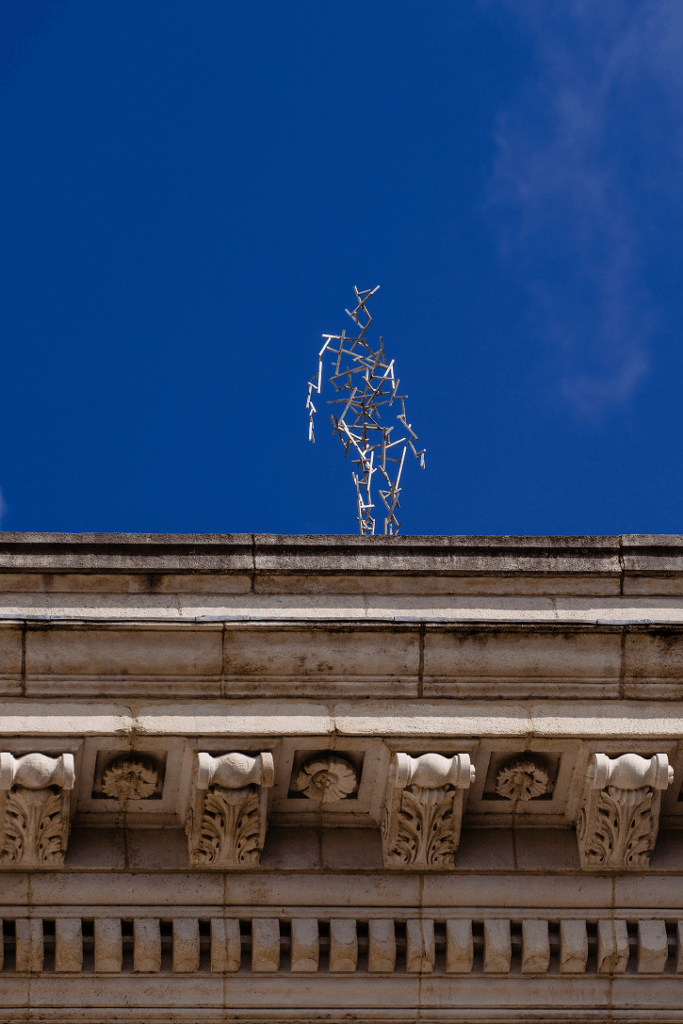
Domain XCVII, 2025, 10 mm square section stainless steel bar, 188.5 × 66.9 × 36.3 cm. Photography by SANNE DE BLOCK, courtesy of ROYAL MUSEUM OF FINE ARTS ANTWERP (KMSKA)
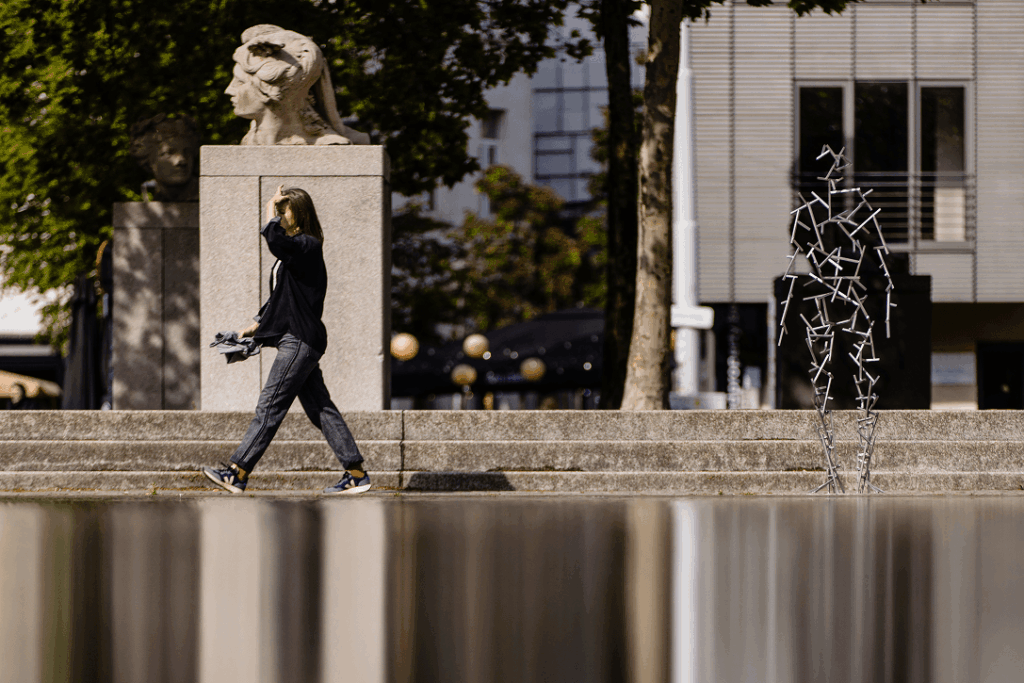
Domain CI, 2025, 10 mm square section stainless steel bar, 186.2 × 69.2 × 29.5 cm. Photography by SANNE DE BLOCK, courtesy of ROYAL MUSEUM OF FINE ARTS ANTWERP (KMSKA)
Words: RAJESH PUNJ