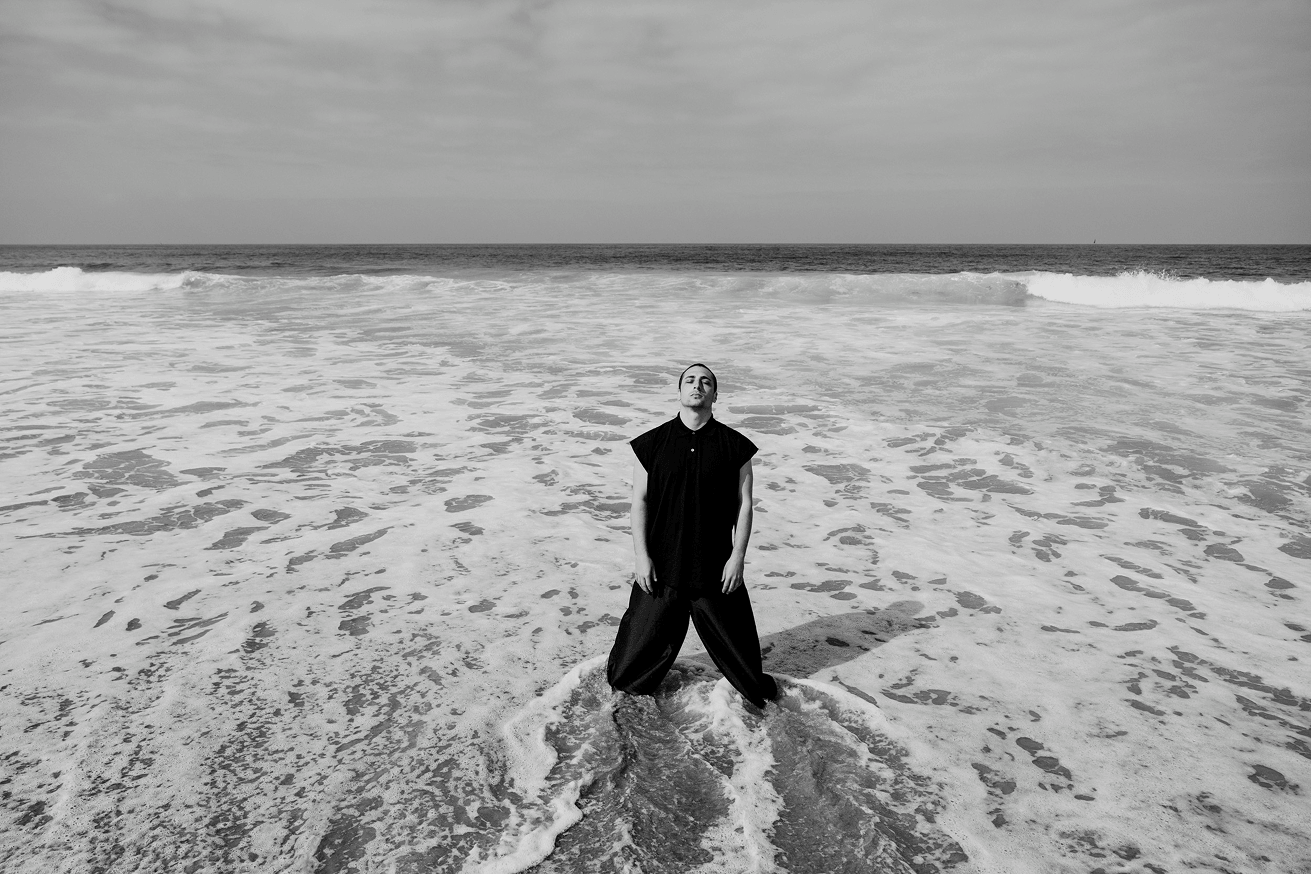
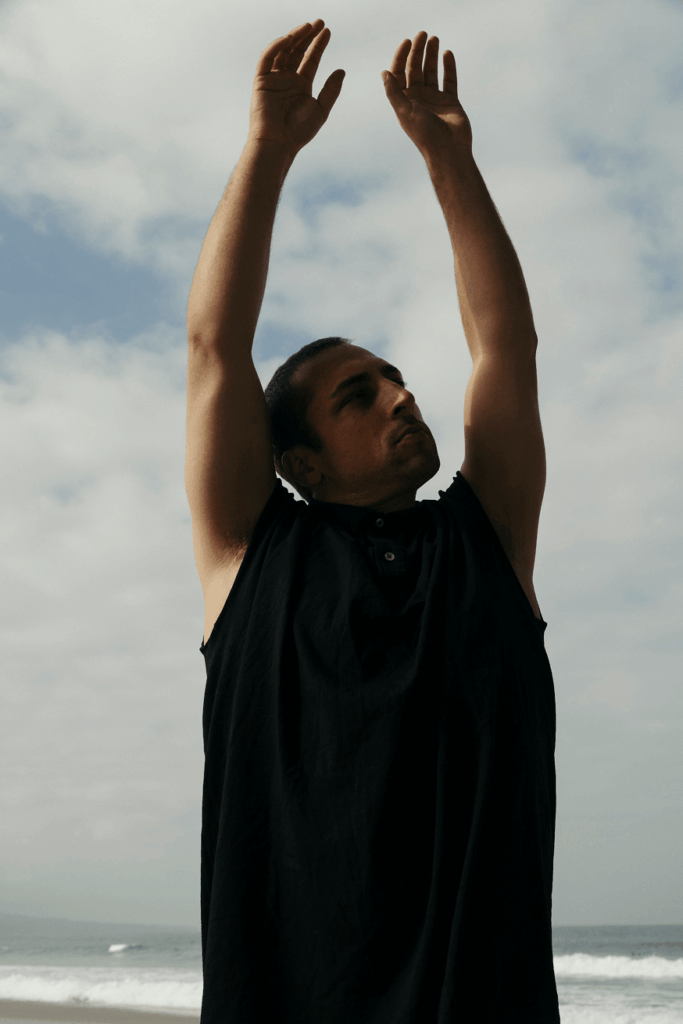
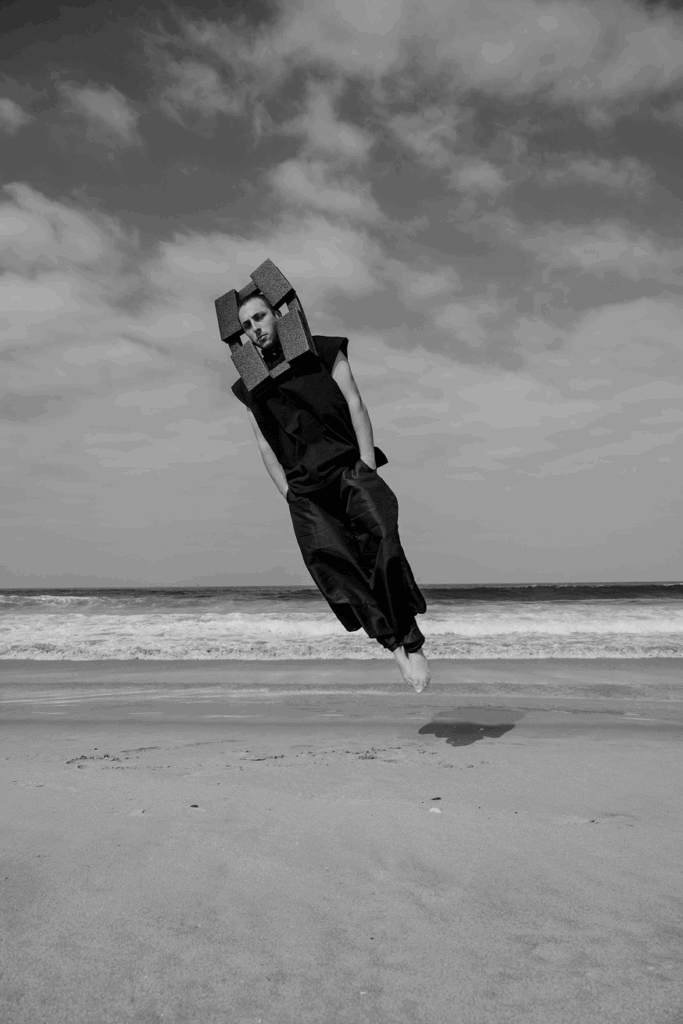
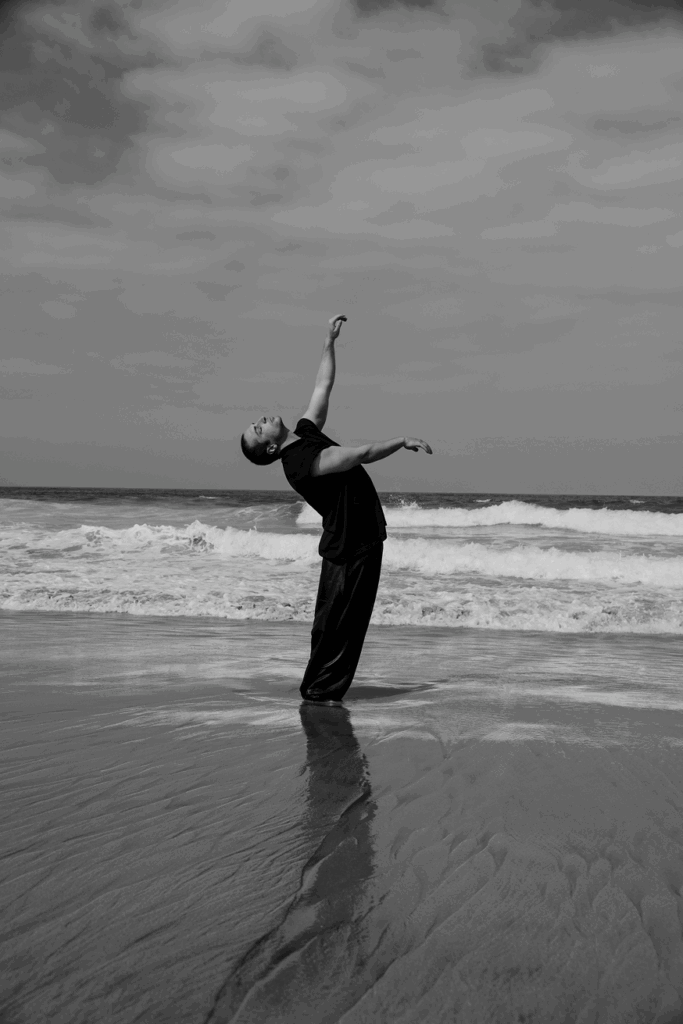


Jacob Jonas is a choreographer whose journey began with street performance and evolved into fostering interdisciplinary practices that lie between dance, film, fashion, and design. His work moves beyond tradition and transforms public spaces, architectural landmarks, and digital platforms into living stages for the body. Through collaborations with artists including Elton John, Rosalía, and SZA, Jonas has brought his distinctive approach to music tours, videos, and brand campaigns.
Jacob Jonas The Company, his LA-based creative nonprofit, enriches this path, uniting contributors from diverse backgrounds. Together, they create unconventional works and hybrid experiences that make contemporary dance more visible and resonant. Another key project is Films.Dance, the initiative he launched during the pandemic to sustain and expand the dance community when live performance halted.
In his work, Jonas often explores profound themes of trauma, resilience, and collective humanity. They echo throughout his memoir Cemented Beauty, which traces his battle with cancer and reframes illness as a meditation on healing, beauty, and aliveness. In this conversation with hube, Jacob Jonas opens up about the inspirations, collaborations, and philosophies that continue to shape his career.
hube: Your work often dissolves boundaries between dance, film, fashion, and design. What draws you to these interdisciplinary collaborations, and how do they expand what dance can communicate beyond traditional performance spaces?
Jacob Jonas: What draws me to these forms of collaboration is the belief that we can reach new environments and audiences to make dance more visible and accessible. The ability to collaborate and have dialogue with makers from different mediums and fields allows for responses that foster new perspectives and ideas that would not exist with dance alone.
h: How do environments and architecture influence your choreography, and in what ways does the body, in turn, reanimate or challenge static structures?
JJ: One of my biggest inspirations is Vidal Sassoon, a hair stylist. His approach was minimalism. Through curve and line, he used geometric and architectural techniques to create natural movement. Rumor has it that he spent a lot of time at Getty Center, designed by Richard Meier, admiring straight edges, curves, and the way sunlight responded to the space. Personally, I see the body as an architectural sculpture. The work I do is a somatic response to the spine and its coexistence with nature, moving in and through shape and emotion to respond to its environment.
h: You’ve choreographed for high-profile music tours and videos with artists such as Elton John, Rosalía, and SZA. Were there any collaborations that felt especially creatively challenging or emotionally resonant to you, and why?
JJ: Each opportunity holds a different brief, a way to approach culture, scale, and friction through a new lens. I often meet artists at a point where they are releasing something new or are under pressure. That pressure extends to management, the label, and the entire creative team. It is partly art, but also transaction. One of the lessons I’ve learned is the difference between adaptation and submission. I enjoy finding and offering my voice within a large pool of ideas and adapting it to the needs of the project. More than any individual in popular culture, I find being in and surrendering to nature to be the most challenging and emotionally resonant.
h: One of your projects, Films.Dance, unites hundreds of artists through thoughtful short films. What was the original vision for this initiative, and how has it evolved as a way to make dance more accessible while preserving its artistic depth?
JJ: Films.Dance was a response to the pandemic. I was always motivated to host community initiatives with the goal that all ships rise. We had done that through projects like #camerasanddancers, uniting museums, photographers, architects, and dance organizations, as well as through a dance festival on the Santa Monica Pier, inviting audiences to see emerging work. When Covid hit, we maintained relationships with many artists and organizations in dance. One of the questions was how do we keep the art form alive while the curtain is down. With our background in production, we initially set out to produce 15 original films. To date, we have made 45 films and are on track to produce another 10 this year. The evolution has been remarkable—connecting more deeply with an international web of artists and seeing how they collaborate, respond to the times, and tell new stories. Each film always starts with a conversation to see what inspires the artists involved.
h: Many of your works explore trauma and resilience. How do personal and collective experiences of pain inspire your creative practice?
JJ: There is a deeper connective tissue within us all that allows us to mirror one another and see our humanity. I’m learning that the more I open up and am unapologetic about these feelings and themes, the more honest dialogue can occur with an artist, a collaborator, and an audience. This authenticity is what I am seeking in life and work. Organizing pain and trauma allows me to heal, so I look to creating work to do just that.


h: Cemented Beauty, your memoir on battling cancer, documents transforming an experience of illness into a meditation on beauty, healing, and aliveness. What role did the act of creating this book play in your own recovery, and how does it connect to a broader philosophy of art as testimony?
JJ: Art is a documentation of our lives, of our times, and of one another. I was inspired to make this book because I first witnessed close friends of mine who passed from illness author similar projects. When I was diagnosed, I reached out to the mother of one of these friends, and she encouraged me to document everything and hopefully share it one day, because you never know who it will inspire. The role it played was giving me a dedicated residency of time within my battle to sit with and record my feelings and perspective in order to understand what was happening. Looking back now, so much of what I went through has already faded, so having this project means a lot and connects me to others who have experienced similar suffering.
h: Your practice also emphasizes social relevance and community engagement. How do you weave these values into your artistic work?
JJ: The process and result of authoring work is a selfish practice for me. Producing larger initiatives with a mission to bring people together is where community engagement occurs. I also think there is a subconscious awareness that the work we do, if created from the heart and aware of the time, is by nature socially relevant.
h: In an era when digital platforms can both democratize and dilute artistic experience, what responsibilities or opportunities do you see for choreographers and directors in shaping how audiences encounter movement and the body?
JJ: Our deepest brilliance and humanity will always be shaped through the exchange of honest relationships and the processes behind the work we do. The only responsibility I believe we have is to continue to push boundaries and not allow the evolution of the world to hinder the complexities of who we are and what we need to say. Or to ever let the marketplace or popularity of capitalism guide us away from taking risks and working with rigor and discipline.
h: Looking at the intersection of various mediums in your career, how do you envision the future of multidisciplinary creative practice? Are there particular cultural or technological shifts you find especially promising or concerning?
JJ: To me it’s simple: just strive to make good work and stay inquisitive. That’s my goal. In doing so, I attract myself toward other like-minded artists, thinkers, and scientists who also continue questioning the world around us. Through collaboration and conversation in the process, both sides are challenged and, as a result, walk away with new learnings and perspectives. The greatest concern I see is the continued diminishment of the arts sector within larger society, making it more difficult for artists to engage in practice and build sustainable funding models and infrastructure to sustain the work.
h: If you could share one essential insight about the human condition that your work has consistently returned to, what would it be?
JJ: Release. We are holding on to too much. Dance and storytelling have allowed me to move through what is being stored and release it. In doing so, it creates space for healthier conversations and a way to proceed.
Photographer & Director: DJENEBA ADUAYOM
Director of Photography: HENRY YIN
Art Direction: EMMA ROSENZWEIG-BOCK
