Salome Asega art and technology New Museum expansion

Good Mischief: Salome Asega on reimagining museums and cultural production

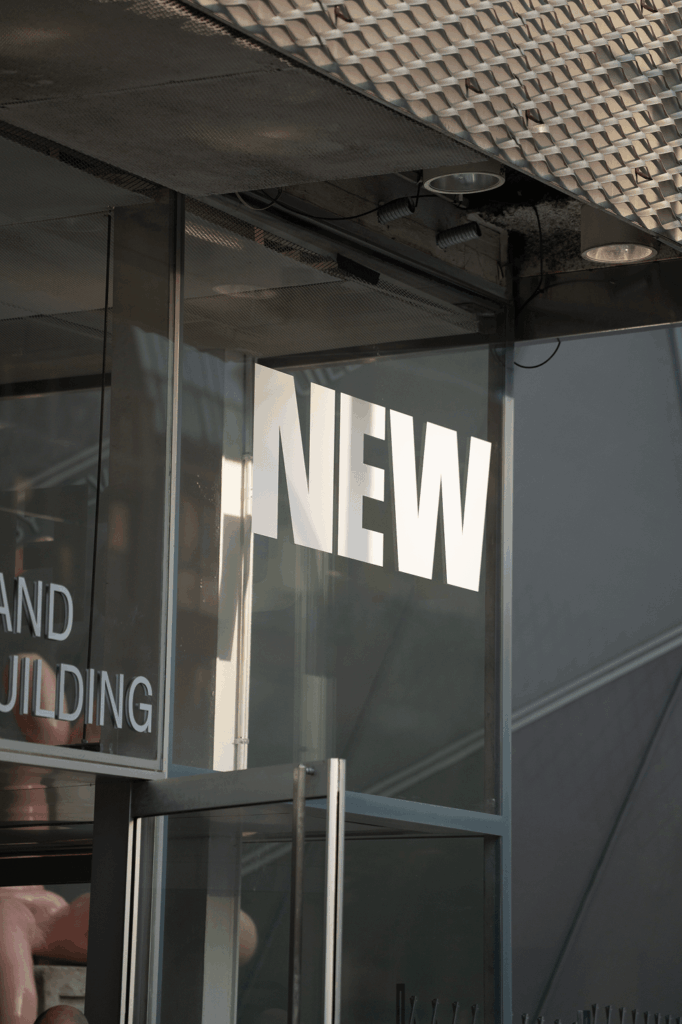
Contemporary art just got a new home in New York’s Lower East Side. After the New Museum expansion, the iconic geometric Bowery building has just reopened, bringing a new chapter for the institution originally founded in 1977. This major two-year project is marked by Tschabalala Self’s facade sculpture, Art Lovers—a site-specific aluminum piece exploring connection and romance.

At the forefront of this next chapter is Salome Asega, the museum’s Deputy Director of Strategy and Innovation and the leader of the cultural incubator NEW INC. By fostering the intersection of art and technology, Asega is helping shape the future of museums. For her, ensuring the next generation of interdisciplinary creators has a platform is critical. In this interview, she speaks with hube about the evolution of NEW INC, the museum’s community footprint, and how a little “good mischief” might be exactly what the art world needs.

hube: You grew up in Las Vegas, Nevada—a city shaped by spectacle. Do you feel that it has had any influence on how you approach cultural production in your work?

Salome Asega: There’s something deeply optimistic about Las Vegas. It’s a place where impossible things are constantly being constructed and made real. I think the city’s ambition and willingness to experiment have stayed with me. It’s a place that takes the role of play seriously and encourages good mischief in civic planning. Vegas is often reduced to mere spectacle, but underneath that surface is an incredibly sophisticated system of labor, technology, architecture, and social design. I think that shaped the way I approach cultural production today: glitz and glamour serve as a hook that allows an infrastructure of play and gathering to take hold.

h: Where does your research process begin? For young artists looking to deepen their own inquiries, what are your recommended entry points?

SA: My research process usually begins with conversation and observation, then moves online, extending into books, film, and other media. My notes app is sacred—it’s a messy place only I can make sense of. I know a research thread is serious when it moves from my phone to my desktop.

For young artists, it’s important to treat research as nonlinear, and build a relationship with the world rather than simply gather information. With NEW INC, we think about research expansively. It is living and creative here. Pay attention to public space, online communities, oral traditions, community archives, nightlife, mutual aid networks, non-human species, gaming environments, and all the informal places where culture is actually evolving.

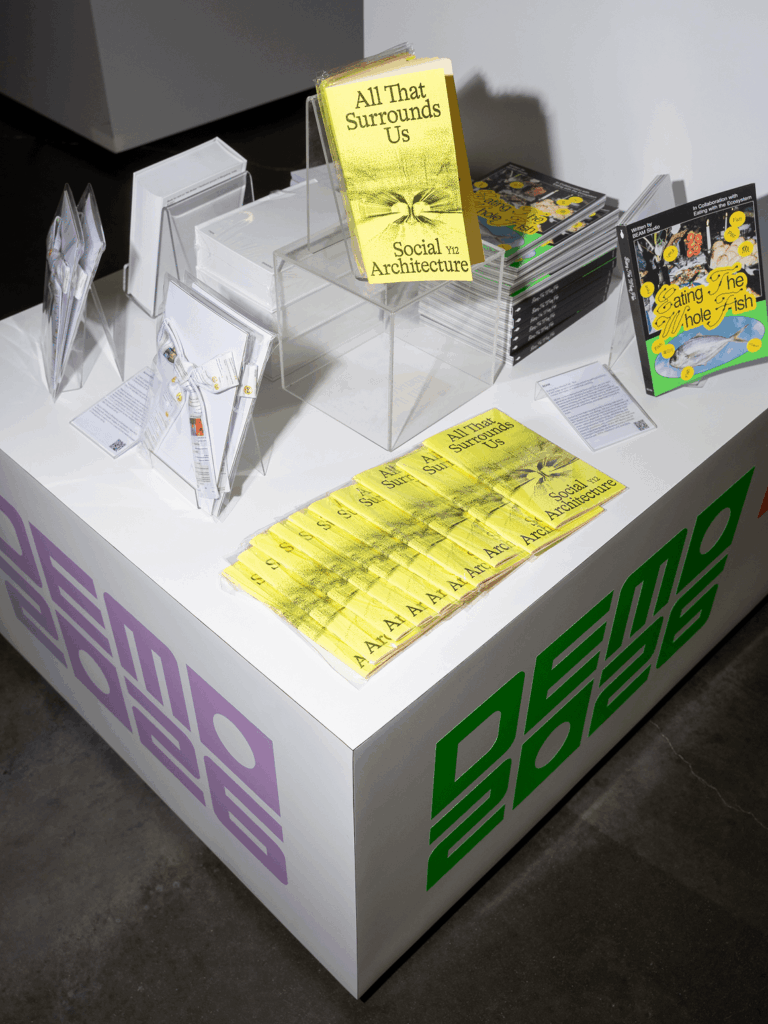
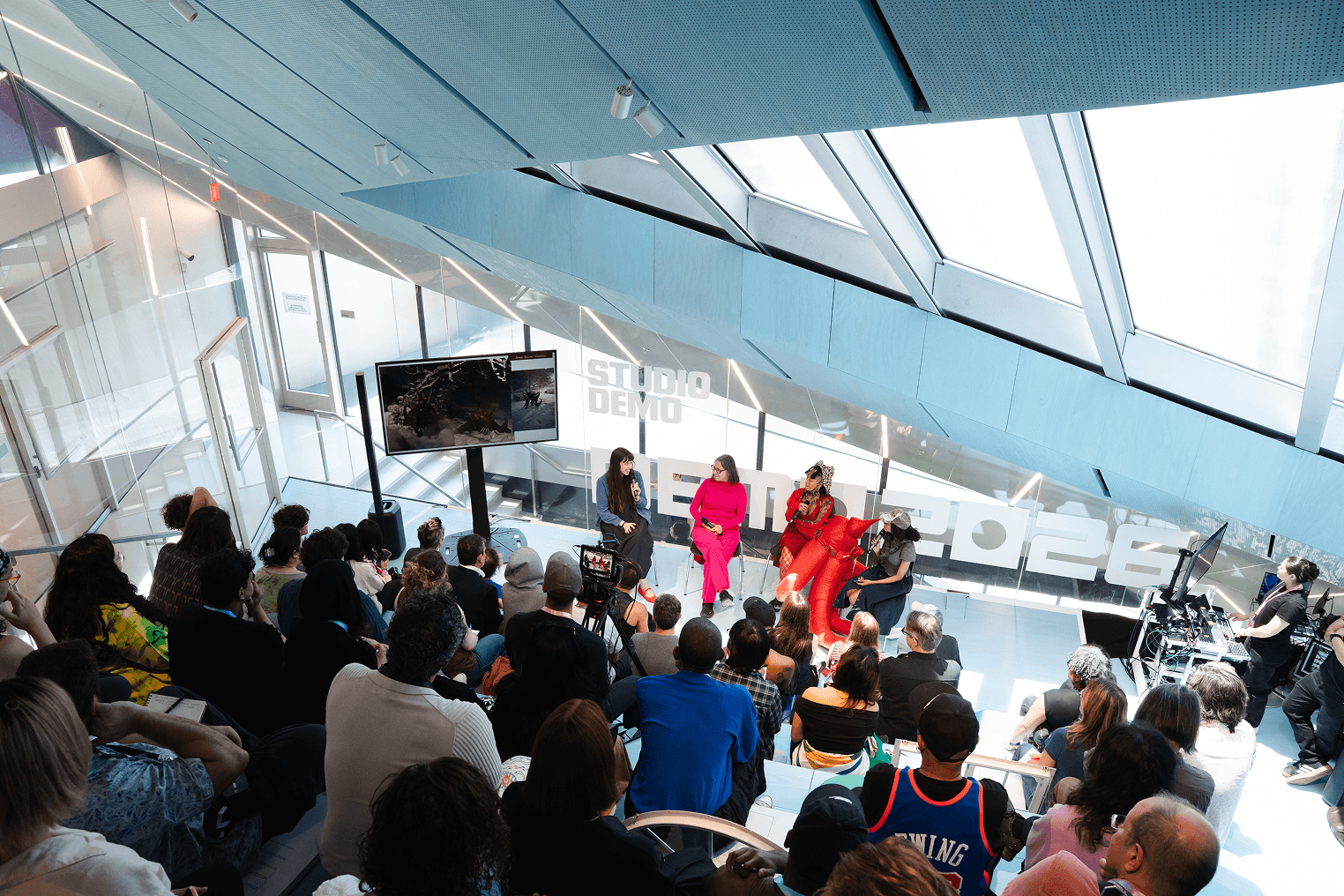
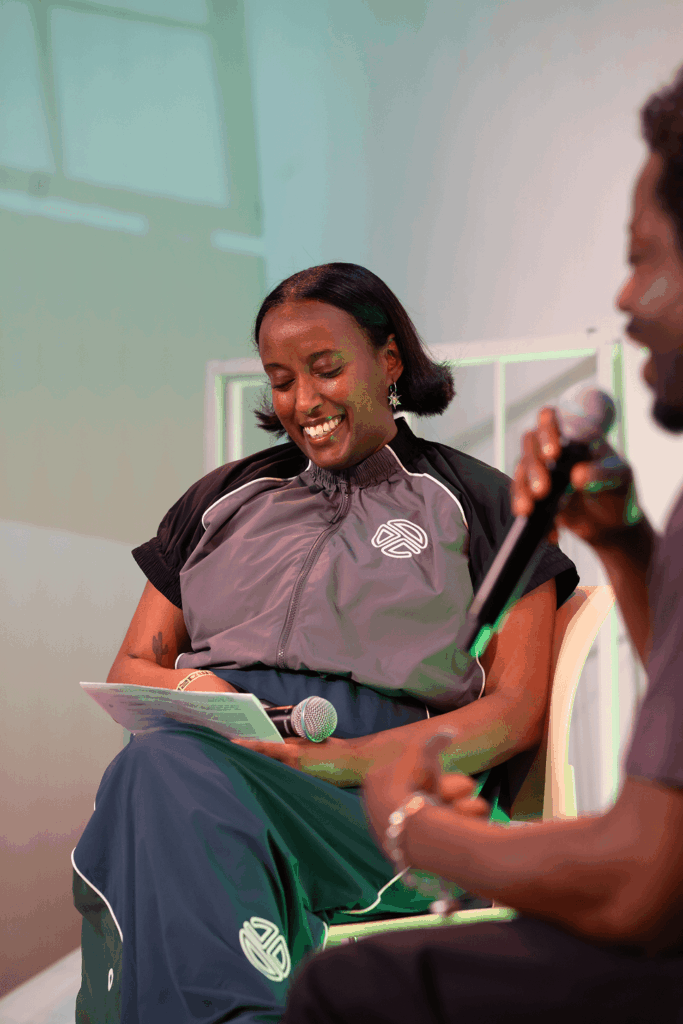
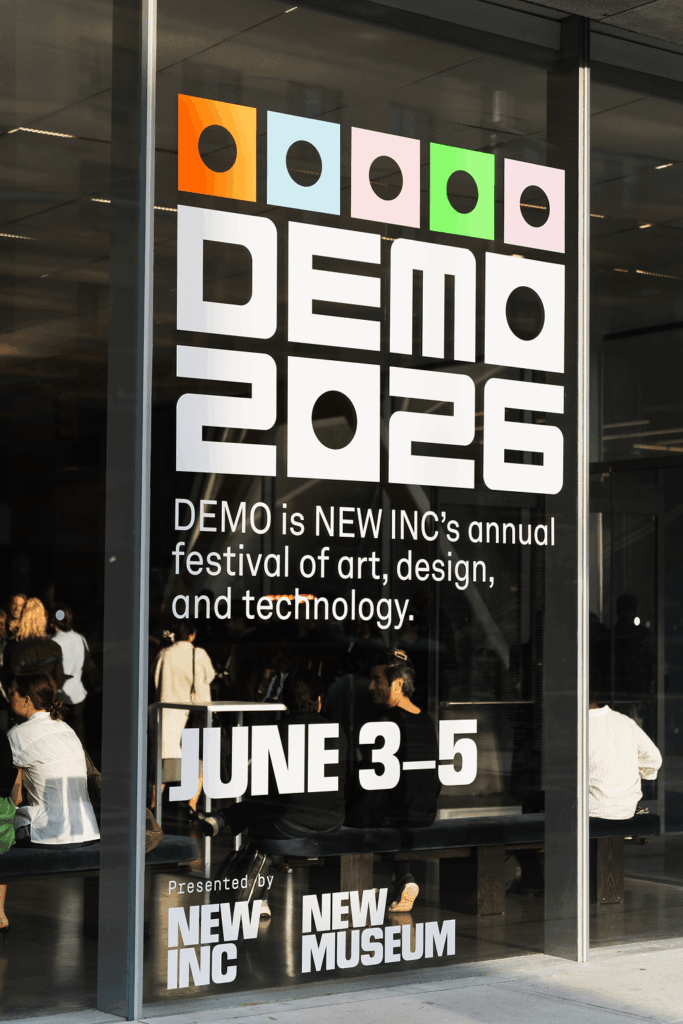
One of the things I appreciate about NEW INC is that it creates proximity between disciplines that don’t normally engage with one another. An artist might be in conversation with an architect, a creative technologist, a filmmaker, or a social entrepreneur. That cross-pollination is incredibly important right now because many of the compounding social, technological, and climate challenges artists are responding to cannot be understood through a single lens. Our festival DEMO2026 is being shaped in that same spirit. We want it to feel like a living research environment where audiences can encounter emerging ideas, practices, and forms of collaboration in real time.
Salome Asega
art and technology
New Museum expansion
Salome Asega
art and technology
New Museum expansion
Salome Asega
art and technology
New Museum expansion
Salome Asega
art and technology
New Museum expansion
Salome Asega
art and technology
New Museum expansion
Salome Asega
art and technology
New Museum expansion
Salome Asega
art and technology
New Museum expansion

h: Over the past five years, how have you seen the New York art and tech ecosystems shift?

SA: The biggest shift has been from optimism to consequence. Just twelve to fifteen years ago, many conversations around technology in the arts were framed around experimentation for its own sake. Today, artists are far more directly confronting the social, environmental, political, and economic implications of technology.

The local ecosystem has become much more expansive and decentralized. A few years ago, there were only a handful of anchor organizations supporting art and technology practices in a sustained way. Now there’s a much wider landscape emerging at many different scales, which I find incredibly hopeful. You see all the New York City universities investing seriously in nurturing emerging interdisciplinary talent. Flagship programs like Collider at Lincoln Center create visibility and infrastructure for ambitious performance and technology experimentation. Spaces like Onassis ONX, founded through a partnership between the Onassis Foundation and the New Museum, support artists working critically and creatively with emerging technologies. And we also have artist-run initiatives like School for Poetic Computation, which have been essential in building community, access, and alternative models of learning.

Beyond that, there are countless smaller and underground spaces forming outside traditional institutional structures. I see this all as a sign of maturation and possibility. The field is becoming more values-driven, more community-oriented, and more artist-led. That creates the conditions for much more meaningful and imaginative work moving forward. The expanded New Museum arrives at a really important moment in that regard. The new building creates more room for gathering, collaboration, experimentation, and public engagement across disciplines. Having a permanent, expanded home for NEW INC inside the museum signals a long-term investment in artists who are actively shaping the future of culture.

h: Where do you see the relationship between the artist and the institution heading, and what is one thing you wish you could change about that dynamic?

SA: Institutions have an exciting opportunity to evolve into stewards, collaborators, and long-term partners to artists. Artists are building entire worlds around their practices: communities, platforms, pedagogies, research initiatives, social spaces, and economic experiments. The most impactful institutions will be those that recognize and actively support broader forms of cultural infrastructure. That’s part of what makes NEW INC so important. It recognizes that artists and creative practitioners need ongoing support structures. And I have an incredible team eager to model and test what a more porous, artist-centered institution could look like.

h: How do you approach building programs or platforms that genuinely support artists, rather than simply presenting them?

SA: For the NEW INC team, program design circles a few questions. What conditions actually allow artists to take risks? To trust each other? To trust us? What conditions get artists out of their comfort zones? And when they do it, what conditions affirm soft landings for artists when they take big leaps and fail? What conditions encourage us to stay in the game?

h: When scouting talent for NEW INC, what specific qualities or directions in a creative’s practice draw you in?

SA: We’re drawn to artists and creative practitioners who ask ambitious questions about the world rather than simply respond to trends. Often, that means people working across disciplines or inventing new frameworks. We also look for those who have a growth mindset and are willing to be vulnerable in expressing their needs to achieve their ambitious goals. Another quality we value is generosity. The NEW INC cohort runs on a generous and radical spirit of reciprocity. Our members understand that cultural production is relational. They create ecosystems around their work and contribute meaningfully to the communities they’re part of.

h: Are there particular conversations, communities, or references—inside or outside the art world—that are currently informing your thinking?

SA: With the museum’s expanded building, I’m thinking about our role in the Lower East Side and how we can spotlight the richness of our neighborhood. In the LES, culture doesn’t exist in silos. It’s one big soup. The museum can be a space where visual art intersects with design, technology, performance, music, and other cultural forms creating more expansive ways for audiences to engage.

h: In a moment where many institutions are re-evaluating their role, what responsibilities do you think they should be taking on today?

SA: Institutions have a responsibility not only to define a new set of values, but to actively prototype them. That means taking risks with programming, operating structures, and funding models—and treating those experiments as part of the public-facing work rather than something that happens behind the scenes. When institutions learn in public, they help expand the field’s collective imagination. I’m interested in how institutions can be more transparent about what’s working and what isn’t. We often hear about transformation in abstract terms, but less often about the messy reality of iteration. I’d love to see a wider culture of shared learning across the ecosystem, so that artists, smaller organizations, emerging leaders, and peer institutions can understand not just the successes, but the constraints and tradeoffs involved.

h: Looking ahead, what feels most important for you to build in the next chapter of your work?

SA: Parties! I want the museum to be your first stop during the night. Remember what I said about good mischief.

Salome Asega
art and technology
New Museum expansion
Salome Asega
art and technology
New Museum expansion
Salome Asega
art and technology
New Museum expansion
Salome Asega
art and technology
New Museum expansion
Salome Asega
art and technology
New Museum expansion
Salome Asega
art and technology
New Museum expansion

NEW INC’s DEMO2026 at the New Museum

Photography by LIAM MCGURL

Words: JULIA SILVERBERG

ISSUE 8

issue no8

Discover the new issue — available now