Leo Orta material ecology biomorphic sculptures
LEO ORTA at the SICILY ART RESIDENCY, Etna Volcano. Photography by LORENZO ARRIGONI

Listening to matter: Leo Orta on weaving memory, place, and the living world

Leo Orta
material ecology
biomorphic sculptures
LEO ORTA
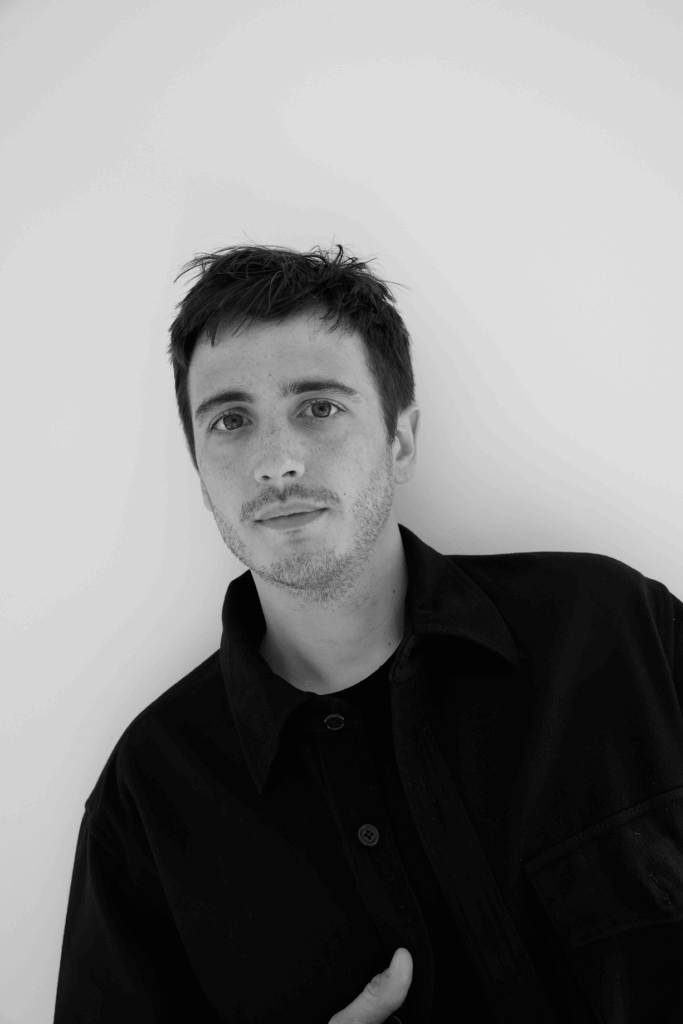
Photography by AXEL AUREJAC
Leo Orta
material ecology
biomorphic sculptures
LEO ORTA
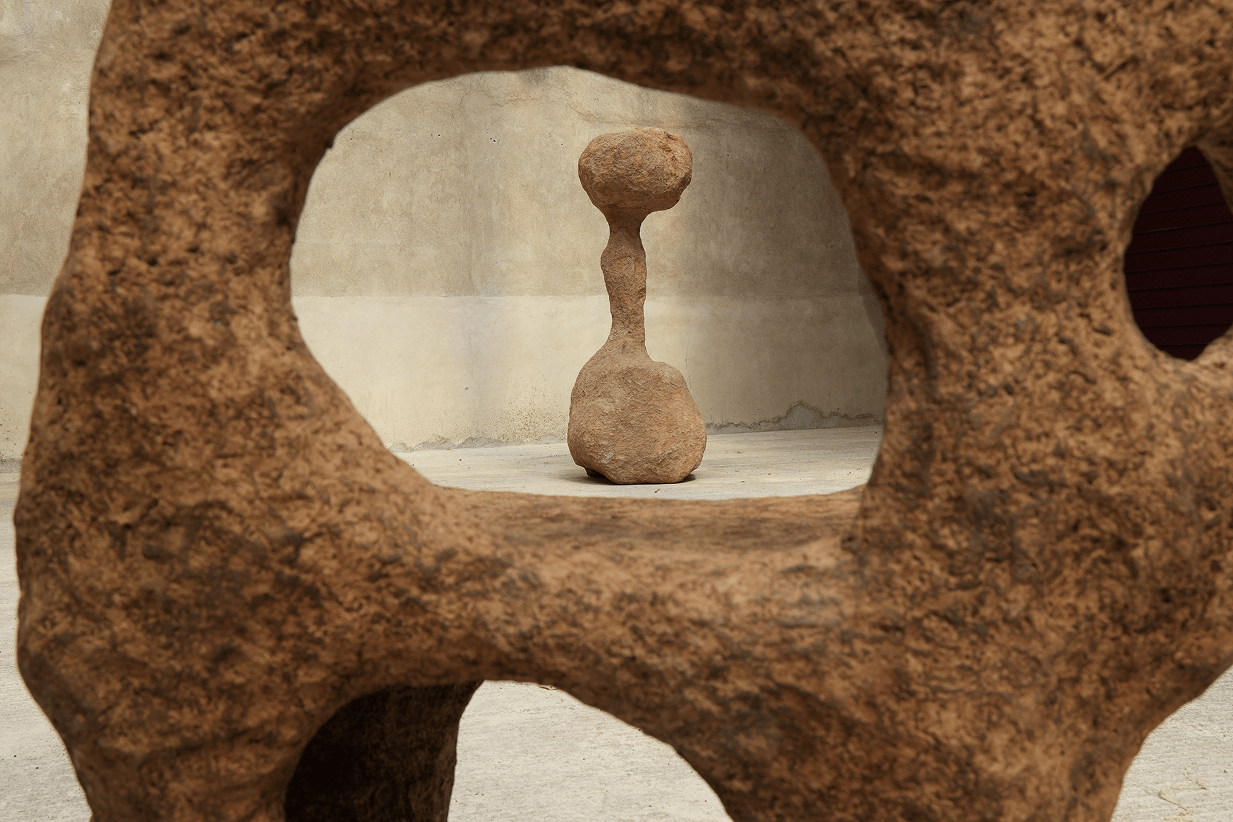
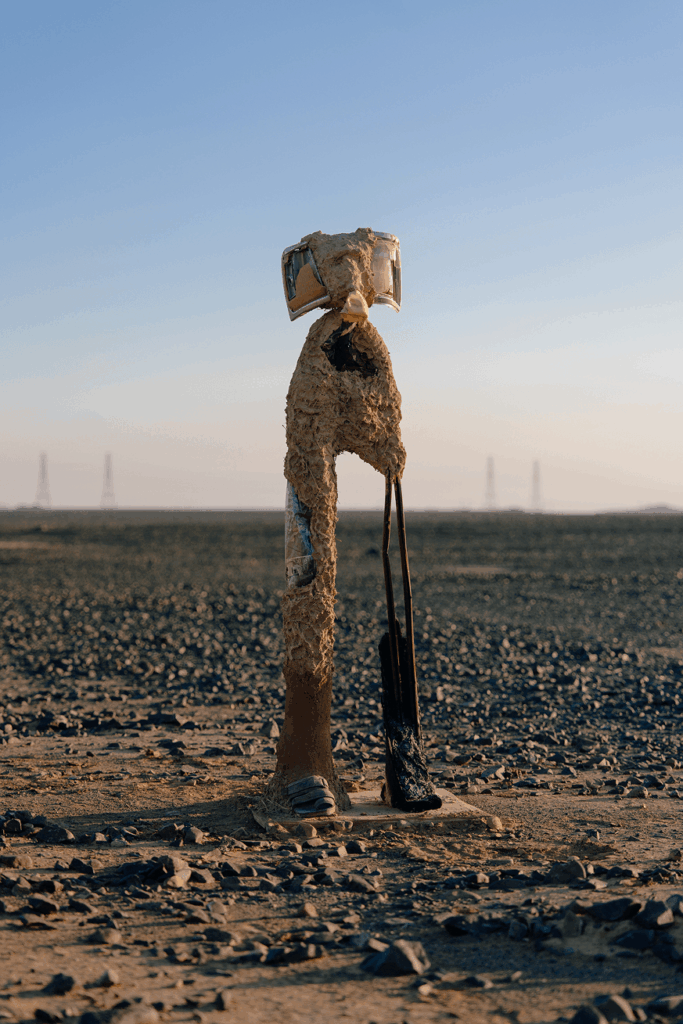
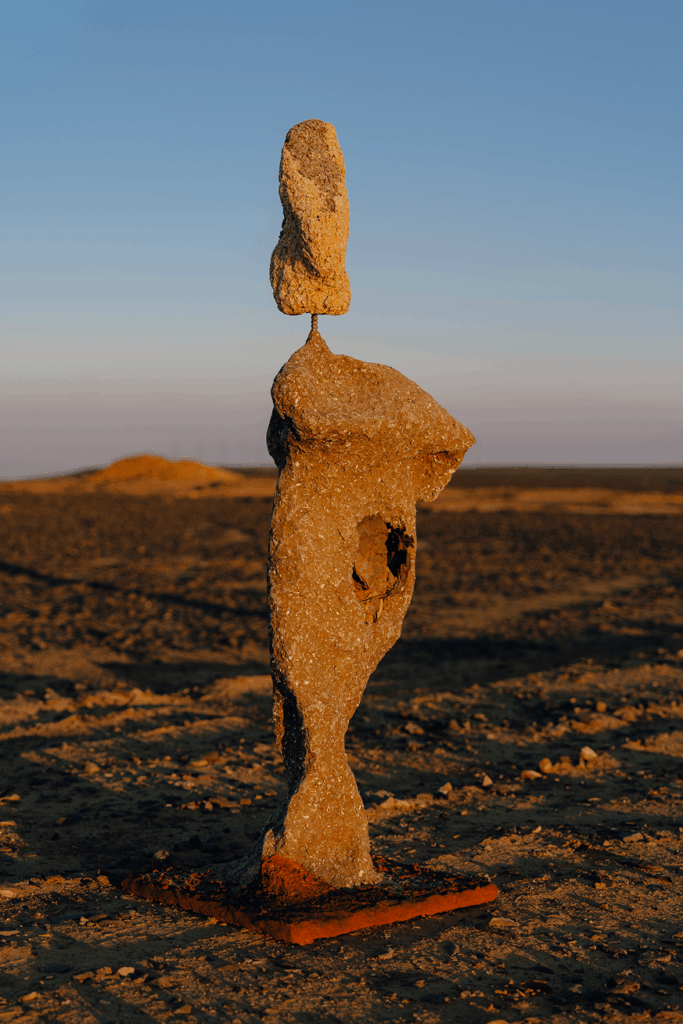
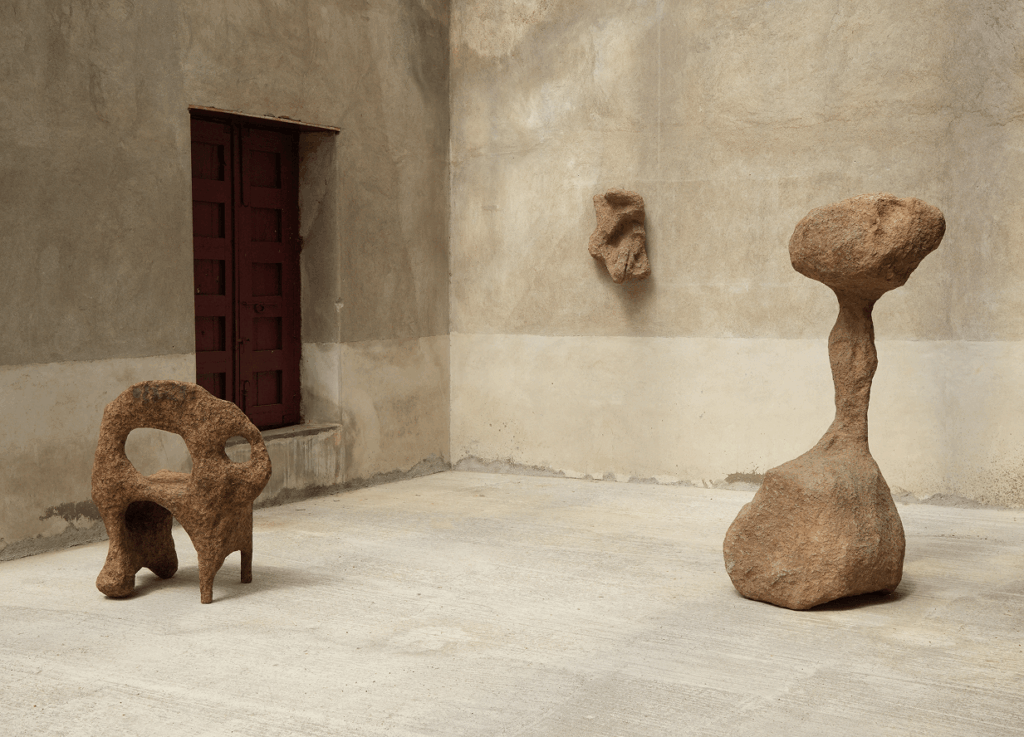
Peculiar Erosion
Courtesy of ALULA DESIGN RESIDENCY
Leo Orta
material ecology
biomorphic sculptures
Leo Orta
material ecology
biomorphic sculptures
LEO ORTA
SICILY ART RESIDENCY, Etna Volcano
Photography by LORENZO ARRIGONI

Leo Orta is an artist whose sculptural work explores the intersection of material ecology, cultural memory, and the living world. He has built a practice that traces the hidden life cycles of matter—industrial waste, vernacular fibers, geological memory—transforming them into hybrid entities that hover between creature and terrain.

Orta’s sculptures often emerge from deep site-specific research and slow, embodied processes. From an old paper mill in the countryside outside Paris, he moves between scrapyards and flax fields, desert residencies and Camargue wetlands, allowing place and matter to dictate form. The resulting works are neither purely figurative nor abstract; these biomorphic sculptures seem to have emerged from the earth itself, carrying traces of their origins in their patina, weave, or eroded surface. His works remind the viewer of material ecology, offering a patient, attentive reweaving of our frayed relationship with the living world.

hube: What first sparked this fascination with the hidden life cycles of materials and consumer culture?

Leo Orta: It started when I was studying at the Design Academy Eindhoven. I found out about their system for trading metal junk—one could sell or buy by weight and preciousness of metals, and it wasn’t limited to raw metal but included home appliances and electronic goods. I was fascinated by their ability to decompose and sort every component of consumer goods and industries. It was a paradise of materials for me. The scrap yards were definitely what helped me compose and understand my first works related to objects and consumption. It’s from these places that works like Liondogs or Electric Chairs were born, letting me reintegrate those materials into a new cycle and bring more awareness to waste.

h: How did the shift to more organic, vernacular processes emerge in your practice?

LO: The shift came from my decision to settle my studio in an old paper mill in the countryside, 60 km outside Paris. As I was previously scouting supplies around Eindhoven, I needed to find new suppliers around the small town of Boissy-le-Châtel where I’m based now. Over time, I realised I was more attracted to local producers than to hardware stores. It turned out that just across the river there was a flax and linen farmer, and it was the start of my quest of how to build locally.

After some time thinking about how I could work with linen, I was invited to a residency in the desert of AlUla. I was overstimulated by the idea of getting out into a new environment. Today, I see my work getting inspired by new environments, whether in the desert, on a volcano, or in a lagoon; I seek those places for what they offer culturally, spiritually, or with what the earth has to offer. From there, I discover crafts or stories that help build new techniques or objects connected to territories.

Today, the discourse has changed. We are far more aware of the limited resources we have and how they circulate from one continent to another, and I lean on sourcing and producing close to where I work. This is my part of being conscious about our ecological crisis—wanting to go closer to a vernacular mentality where everything feels connected to the soil and the Earth.

h: What draws you to these “primitive” or site-specific substances?

LO: It is almost as if I’m aiming to raise souls out of the sculptures. I want them alive, connected to the environment where they are built. Before making, I explore as a loner, wander around, collect dust, and document things that spark my emotions. Later I translate it into abstract, biomorphic works. A little bump in a shape suddenly becomes a camel or a horse leg. An abandoned sandal references the trace of a person.

h: How do these hybrid beings reflect our troubled relationship with the living world?

LO: I delved into fears built through subconscious memories, created by stories and images from a younger age. From very young, we are taught to fear bats through anime and cartoon iconography, and so subconsciously we enter a state of fear facing these animals. The same way we build a collective memory to fear spiders.

I wanted to reconstruct this inner trauma by placing the viewer facing these beings, whether on a one-to-one scale or on an elevated perception where they take the scale of divine Renaissance characters. In this show, beings like Bewildered Owl take a size worthy of respect, where we as humans are placed on a lower scale, shifting perceptions of domination.

It was important for me to see the bats flying over my nights like companions, not enemies. Because at the end of the day, even if we live and perceive differently, we are still cohabiting and surviving on this planet.

h: What did this immersion teach you about weaving as an act of binding memory and place?

LO: My immersion in the Camargue was a journey into historical artefacts and customs, learning about the birds of the region and watching the flamingos in their environment. I was inspired by how fishermen create ingenious wicker shapes to fish with. It pushed me to switch view from the trap to the nest, curious how birds also build nests from branches, leaves, and sometimes saliva. I started thinking that if they use their beak to create complex habitats, I could use the idea of a nest to diffuse light, making objects where cocoons filter the shade through our interiors.

h: How has this project shifted your sense of the designer’s role?

LO: I was curious why wicker is so commonly used in making baskets. From my few months of learning how to weave and manipulate the fibre, I entered this project with a sense of naivety. I knew that if I had been told how the material had to be used, I would have been limited to certain shapes and ideas. I assembled a team for three months where we self-taught several techniques from tutorials, then dived into the wild ideas. Forced to find solutions to reach certain shapes, we developed moulds, frames, and steaming machines to overcome our constraints. This is our way of bringing these fibres into our contemporary world: shifting from unwanted elderly chairs into something that feels alive again.

h: What other upcoming projects are calling to you?

LO: One project that will soon emerge is the urge to create a garden where materials can flourish. I dream of cultivating fibres used directly in my works, the way you pick vegetables in a kitchen garden, collected from the field and trees, from which I could weave. I also intend to keep every bit of waste from the materials I use and crush it into composites. I recently bought a small hammer mill used for flour or corn to compose dust, and I will repurpose it into new materials and textures. I’m also exploring outdoor objects that feel like they belong to their environment—sculptures or furniture inhabiting gardens, courtyards, or forests as their own “folie.” I’m diving into spaces for the mind to dream, to enter romanticism.

Leo Orta
material ecology
biomorphic sculptures
LEO ORTA
Installation view of solo show Terra Etna, SARP GALLERY 2025
Photography by LORENZO ARRIGONI
Leo Orta
material ecology
biomorphic sculptures
LEO ORTA
SICILY ART RESIDENCY, Etna Volcano
Photography by LORENZO ARRIGONI
Leo Orta
material ecology
biomorphic sculptures
LEO ORTA
Bat sculpt, 2025
Leo Orta
material ecology
biomorphic sculptures
LEO ORTA
Peculiar Erosion
Courtesy of ALULA DESIGN RESIDENCY
‘Electric Wave chair 1
LEO ORTA
Electric Wave chair
Bel Animal2 EC12 1
LEO ORTA
Bel Animal
Leo Orta
material ecology
biomorphic sculptures
LEO ORTA
Peculiar Erosion
Courtesy of ALULA DESIGN RESIDENCY
Leo Orta
material ecology
biomorphic sculptures
LEO ORTA
Peculiar Erosion
Courtesy of ALULA DESIGN RESIDENCY
Leo Orta
material ecology
biomorphic sculptures
Design Miami 2024 2 1 1
DESIGN MIAMI 2024 – ROOM57 GALLERY
Design Miami 2024 3
DESIGN MIAMI 2024 – ROOM57 GALLERY
Leo Orta
material ecology
biomorphic sculptures
LEO ORTA
Lion Dog “A”, 2019 
Photography by RONALD SMITS
Leo Orta
material ecology
biomorphic sculptures
LEO ORTA
Lion Dog “A”, details, 2019 
Photography by RONALD SMITS
Leo Orta
material ecology
biomorphic sculptures

h: How do cultural hybridity and travel inform how you interpret “home” and belonging?

LO: I often think of travel like learning a new recipe. You don’t simply collect ingredients; you first understand why they grow there, how they’re cultivated, prepared, and shared, and what they mean to the people who use them. It’s the same with materials and craftsmanship.

I’m more interested in how a place builds, cultivates, or repairs than in how it looks. How mud-brick architecture is maintained in Saudi Arabia, how flax is processed near my studio, or how wicker has been woven for generations in the Camargue tells me much more about a culture than its monuments. These gestures carry histories and ways of living often invisible at first glance. Rather than borrowing an aesthetic, I try to understand its logic. Each project becomes a dialogue that lets the work feel rooted rather than transplanted.

h: What role do fieldwork and slow learning play in keeping your practice human?

LO: Digital tools have become part of my practice. I use VR sculpting, rendering, or 3D printing to visualise ideas and communicate with engineers or craftspeople. But they can’t replace what happens when you spend time in a place or work directly with a material.

Before making, I wander, observe, collect, visit workshops, and speak with local makers. Those encounters shape the project far more than a screen could. The same goes for materials: you only understand them by touching them, testing their limits, sometimes failing with them. I leave room for improvisation, where the material becomes part of the conversation and pushes the work somewhere unexpected. Technology helps me communicate ideas, but it’s the relationship with people, places, and materials that keeps the work alive. I often ask people to question the process behind the object in front of them: melting metal, injecting plastics for a micro part, flying parts over continents.

h: What memories from your past shape what you create today?

LO: I often think of when my dad taught my brother and me to build maquettes for our toys to live in. Playing with textures and colours to replicate environments, then seeing those giant decors of Lord of the Rings scenes at the Warhammer stores.

h: What does it mean to truly listen and let it alter your path?

LO: It’s a conversation without words, feeling the right intuition.

h: What invisible threads connect your personal mythology to the larger human story?

LO: Many of my works begin with something personal, but I hope they stay open enough for others to recognise part of themselves in them. Phoenix, for example, came from a period of burnout and healing, but fragility, transformation, and renewal are experiences we all encounter. More broadly, I’m interested in the invisible relationships connecting us to the living world. Many of my sculptures exist between human, animal, and landscape because I don’t see these as separate entities. They are hybrid beings reflecting our contradictions and our desire to reconnect with something larger than ourselves. Perhaps the thread connecting everything is transformation: taking what has been forgotten, discarded, or feared, and letting it become alive again.

Leo Orta
material ecology
biomorphic sculptures
LEO ORTA
SICILY ART RESIDENCY, Etna Volcano
Photography by LORENZO ARRIGONI
Leo Orta
material ecology
biomorphic sculptures
Leo Orta
material ecology
biomorphic sculptures
Leo Orta
material ecology
biomorphic sculptures
LEO ORTA
Peculiar Erosion
Courtesy of ALULA DESIGN RESIDENCY
Leo Orta
material ecology
biomorphic sculptures
LEO ORTA
Photography by AXEL AUREJAC

Special thanks to TALOME

ISSUE 8

issue no8

Discover the new issue — available now