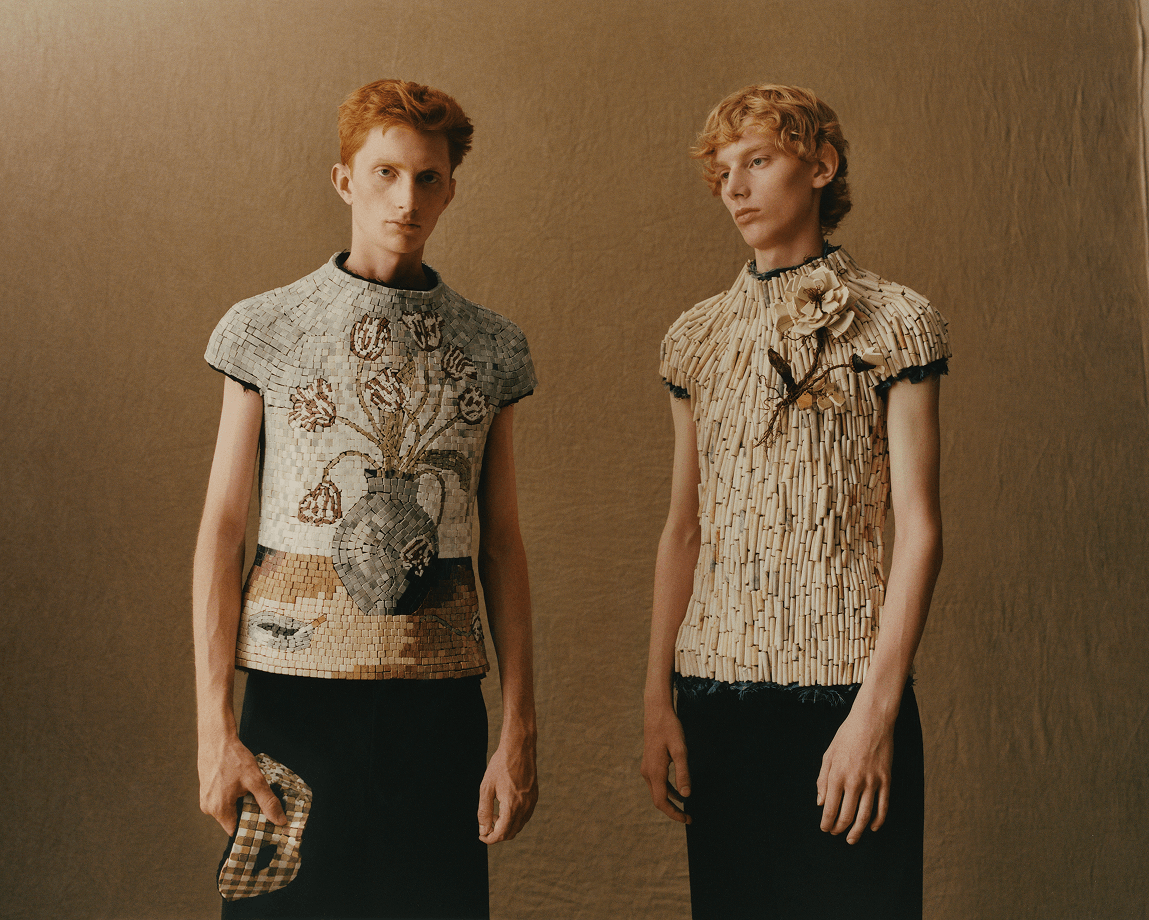
Daniel del Valle calls himself an artist rather than a designer. Thevxlley—his central project, and the one everything else grows out of—is not a fashion label so much as a container broad enough to hold sculpture, performance, clothing, or whatever a given idea turns out to require. Almost entirely self-taught, del Valle has shown his work across Europe and built the whole practice around the botanical: plants, flowers, and the uneasy arrangement between what people do to the natural world and how stubbornly it carries on regardless. An emerging fashion designer and one of nine finalists for the 2026 LVMH Prize, to be decided in Paris in September, he continues to prioritize emotional connection over prescribed meaning.
The Narcissist, del Valle’s first solo project and the result of three years’ work, was presented during London Fashion Week in February. Porcelain vases were rebuilt as bodices; cropped knits were bound with branches or opened into bouquets; a ceramic T-shirt was assembled as a mosaic of tulips in bloom, becoming a wearable sculpture; a hand-painted dress carried ornate orbs that pushed it into three dimensions. Where flowers were not built into the garments themselves, they were strapped to the heels, shedding petals as the models walked.
hube: Nature appears throughout your work with both immense force and remarkable delicacy—as a source of life, but also as something fragile, transient, and constantly evolving. What is your relationship with nature today, and what continues to move or fascinate you most deeply about it?
Daniel del Valle: Nature, for me, is a form of meditation. It’s where I reconnect with something timeless, a place where everything feels quieter, slower, and more grounded. Whenever I’m surrounded by nature, I feel a sense of peace that’s difficult to find anywhere else.
What fascinates me most is the way plants exist. Their way of living is so different from humans and animals that it sometimes almost feels alien. The way they adapt, transform, and respond to their environment without questioning is incredibly inspiring to me. I’m also deeply fascinated by the relationship between humans and plants. It’s a connection that has become a real obsession, one that I keep returning to through my work in many different ways.
I could go on forever answering this question.
h: You sometimes describe Thevxlley as a garden rather than a brand. What can a garden “offer” that a brand never could?
DdV: It’s not limited to fashion. Garments are only one part of it. In my garden I can grow furniture, objects, films, books, installations… whatever feels fascinating to me at that moment.
Calling it a garden also removes the pressure of fitting into one category. It gives me the freedom to let ideas grow organically, instead of forcing them into a business model.
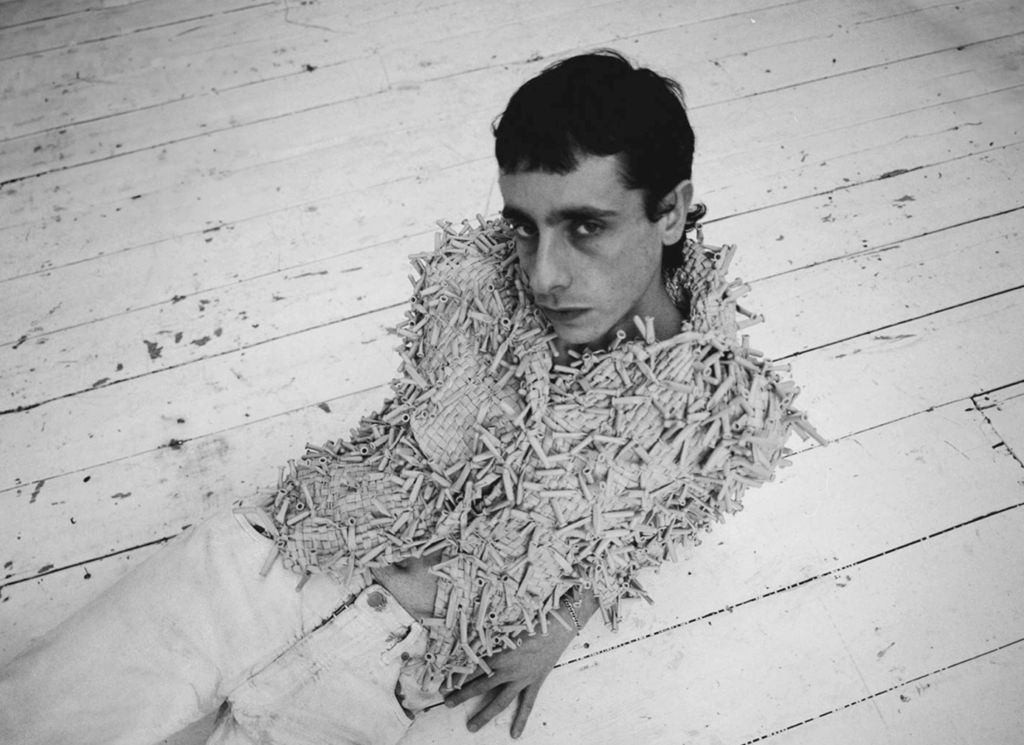
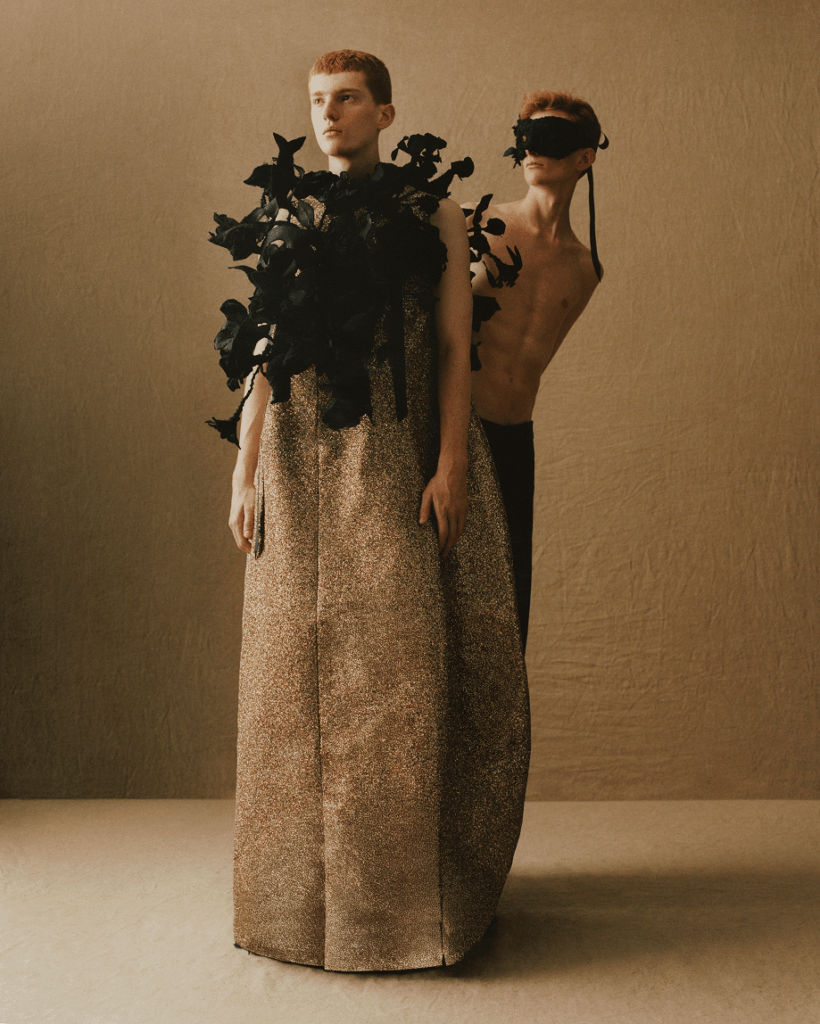
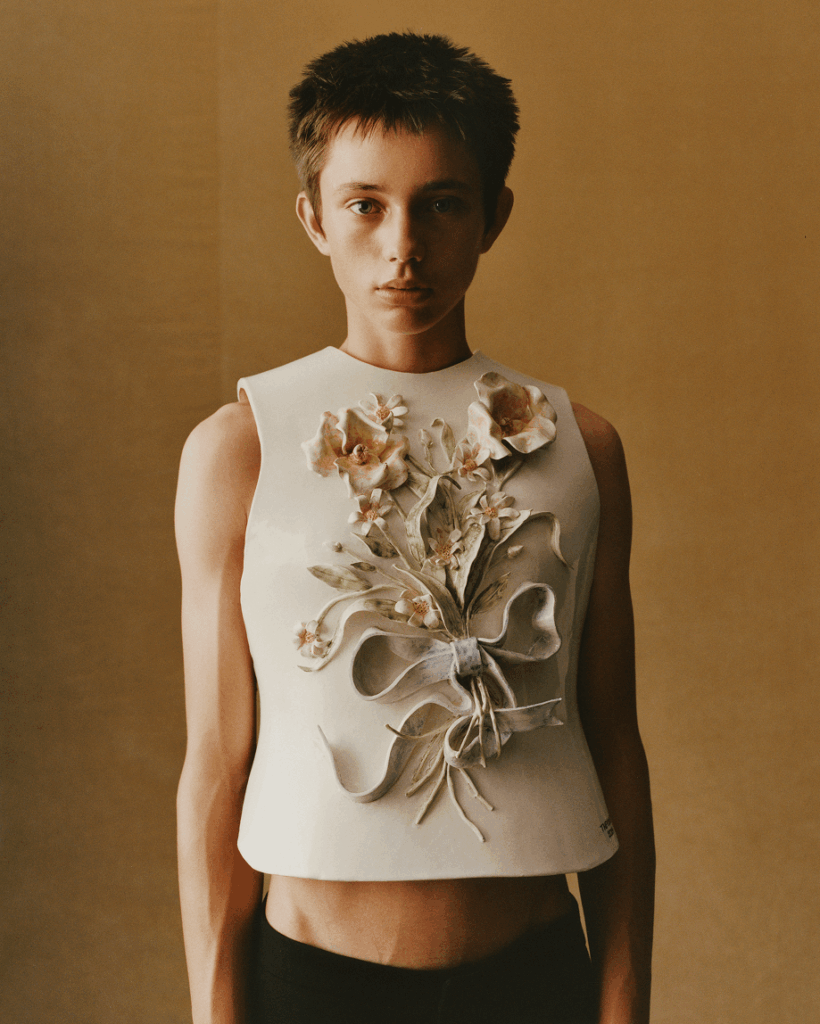


h: The Narcissist carries a profound sense of vulnerability—one that feels connected not only to the fragility of nature, but also to the emotional process of becoming: becoming an artist, a creator, a person. Looking back on your early creative years, what sustained you through periods of uncertainty or self-doubt?
DdV: I’ve never put too much pressure on myself. What I’ve always loved most is the process itself—creating, experimenting, and discovering something I didn’t know before. That excitement has always been stronger than any self-doubt.
Of course there are moments of uncertainty, but I’ve never seen them as something negative. They’re just part of making things. As long as I remain curious, I know I’m moving in the right direction.
h: Spain and London carry very different relationships to craft, beauty, and tradition. Do you feel your work exists somewhere between those two cultural mentalities, or in opposition to both?
DdV: Spain and London complement each other because they each give me something the other can’t. Spain is part of who I am. The culture, the craftsmanship, and the appreciation for beauty are deeply rooted in me. I find inspiration everywhere when I’m there, from traditional techniques to everyday life. London, on the other hand, constantly challenges me. It gives me a more contemporary perspective and pushes me to think differently and decontextualise my inspirations.
h: You have described yourself as largely self-taught. Many traditional crafts were originally passed down through families rather than institutions. In your opinion, what are the advantages of learning through curiosity and obsession rather than through formal institutions?
DdV: I’ve always been driven by curiosity more than by structure. I have so many different interests, and the way I learn is usually very spontaneous. When I become obsessed with a material or a technique, I can’t stop researching it until I understand it. But I also need to experience it with my own hands. That’s how I really learn. I think obsession can be an incredible teacher because it comes from genuine fascination rather than obligation.
h: As a finalist for the 2026 LVMH Prize—a platform that celebrates designers with distinctive creative visions—how did the experience challenge or surprise you? Beyond the recognition, what did it reveal about you as both a designer and a person navigating growth and ambition?
DdV: Being part of the LVMH Prize was an incredible experience, because it allowed me to meet really interesting people and also share my work with an incredible audience. It reminded me that staying true to myself has value, even if it doesn’t always follow the expected path. It also made me realise how much I still want to learn and how excited I am by what’s ahead. I don’t see it as arriving somewhere; I see it as the beginning of a much bigger journey.
h: Craft traditionally asks, “How well is this made?” while contemporary art often asks, “What does this mean?” Which questions interest you the most these days?
DdV: For me it’s: how does it make you feel? One of my favourite parts of creating is hearing what people see in it. Sometimes a piece reminds someone of a memory or an experience that has absolutely nothing to do with my original inspiration, and I love that.
Once the work leaves my hands, it starts having its own life. I find that much more interesting than trying to control its meaning.
h: Imagine you could gather any 3 people—past or present—for a dinner conversation. Who would you invite?
DdV: Martin Margiela, Tiny Tim, and Charles Darwin.
h: Many traditional crafts emerged to solve practical problems, while art values ideas over function. Is your practice trying to reconcile these two positions, or move beyond them?
DdV: I don’t really separate them. I think craft and art naturally coexist. For me, the technique is there to support the idea, but the idea also gives meaning to the technique. Neither one is more important than the other. I’m interested in making objects that people can grow a connection with, not just objects with a practical purpose.
h: How would you describe the future in three words?
DdV: I don’t know.


All images courtesy of THEVXLLEY
