The latest Anselm Kiefer exhibition, Nymphäum, is on view at Thaddaeus Ropac Paris Pantin from April 25th to October 25th, 2026. Featuring a new body of monumental paintings and collages, the exhibition examines the enduring relationship between mythology, nature, and material transformation. Through richly layered surfaces and symbolic imagery, Kiefer reflects on humanity’s enduring connection to the natural world.
Metamorphosis in art: nymphs become symbols of nature and memory
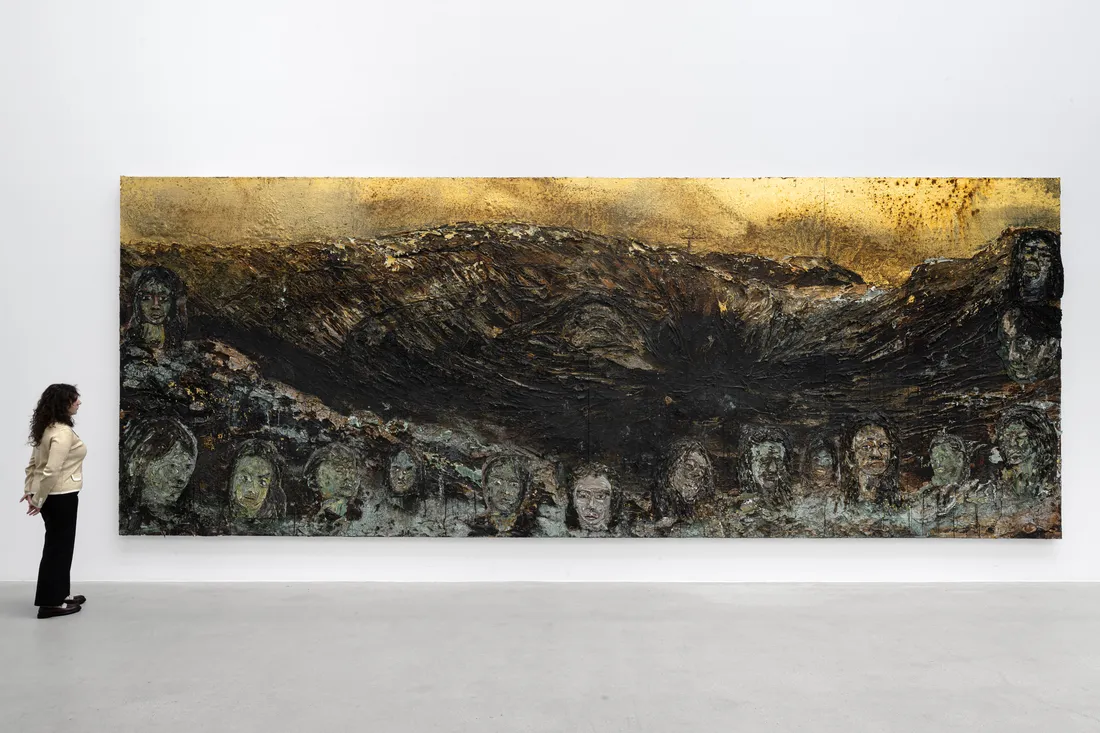
Metamorphosis in art runs through Nymphäum, embodied by nymphs drawn from classical mythology. Works including Thetis (2022–25), Nikaia (2025), and Actaea (2021–25) depict aquatic figures dissolving into rivers and dark waters, dissolving the boundary between body and landscape. In Daphne (2025), the river nymph emerges from the laurel tree of Ovid’s Metamorphoses, while Carya (2025) reveals a face emerging from walnut leaves, evoking nature’s perpetual cycle of change.
These ancient myths become reflections on renewal, memory, and nature’s enduring rhythms, suggesting the landscape itself holds the traces of history.
Material transformation shapes Kiefer’s monumental paintings
The exhibition highlights Kiefer’s singular approach to painting, where materials carry as much meaning as imagery. Thick layers of oil, acrylic, shellac, chalk, straw, charcoal, collaged canvas, and gold leaf create richly textured surfaces marked by the passage of time.
A standout element is the jade-green sediment of electrolysis, used to evoke foliage and water while alluding to alchemical transformation. As Kiefer has remarked, “Alchemy is a symbol for the artist… you have to destroy and then recreate.”
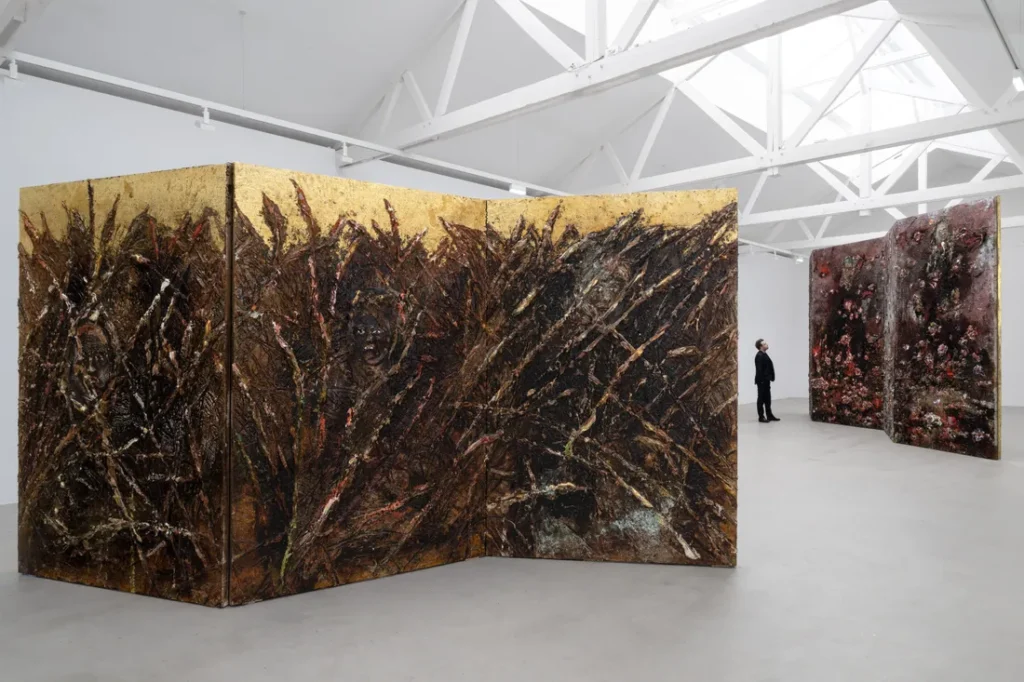
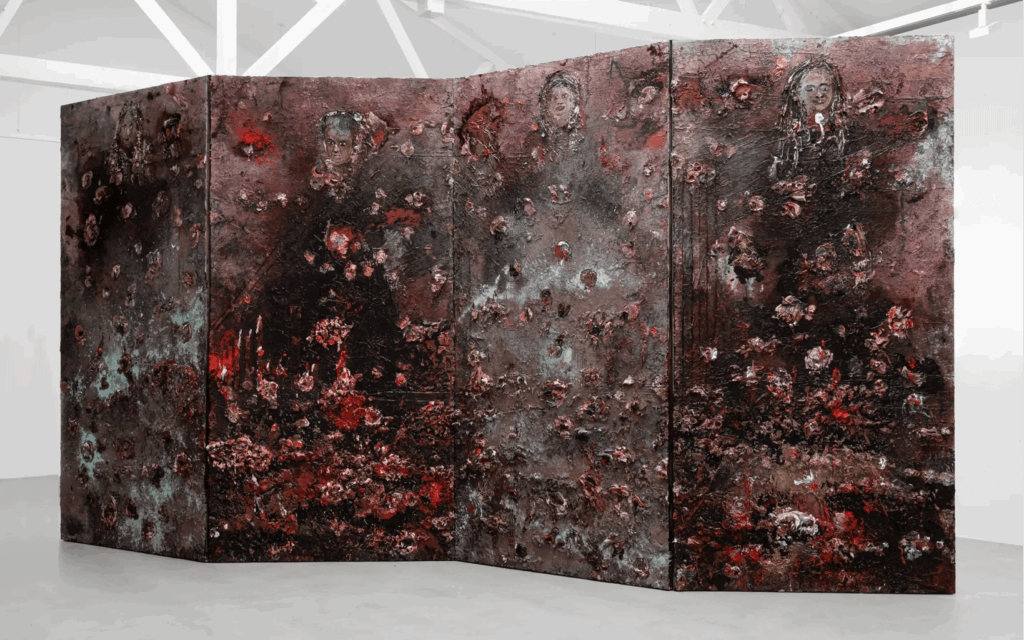
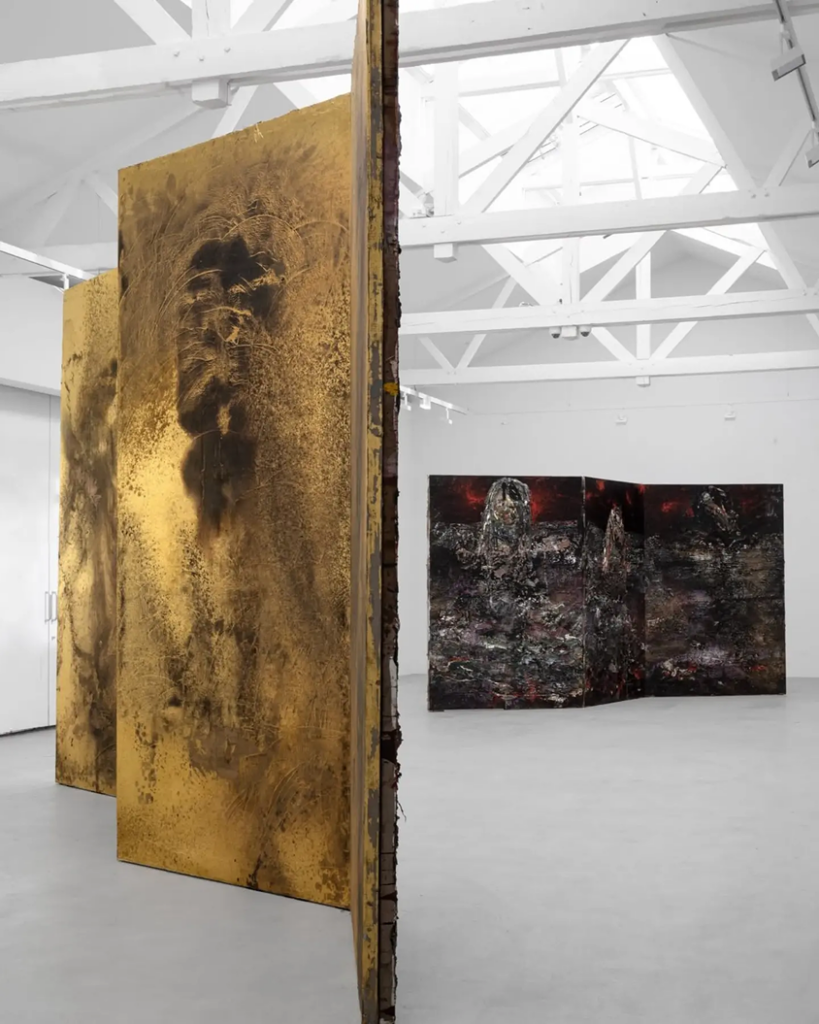
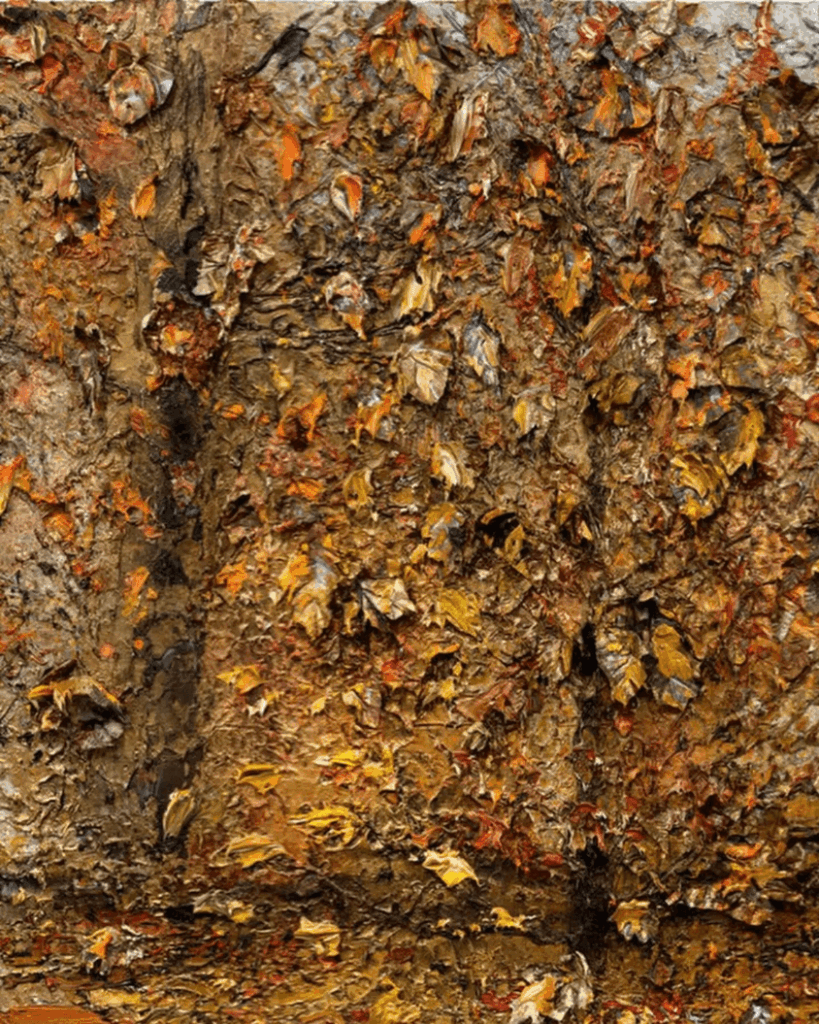
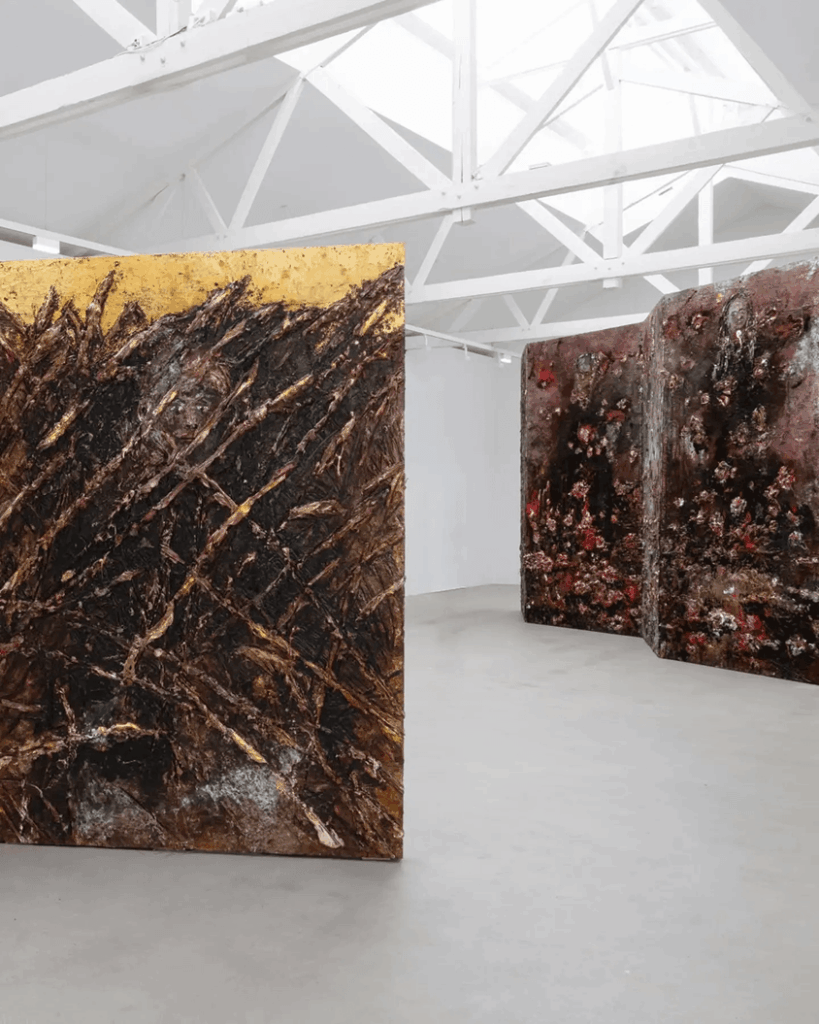
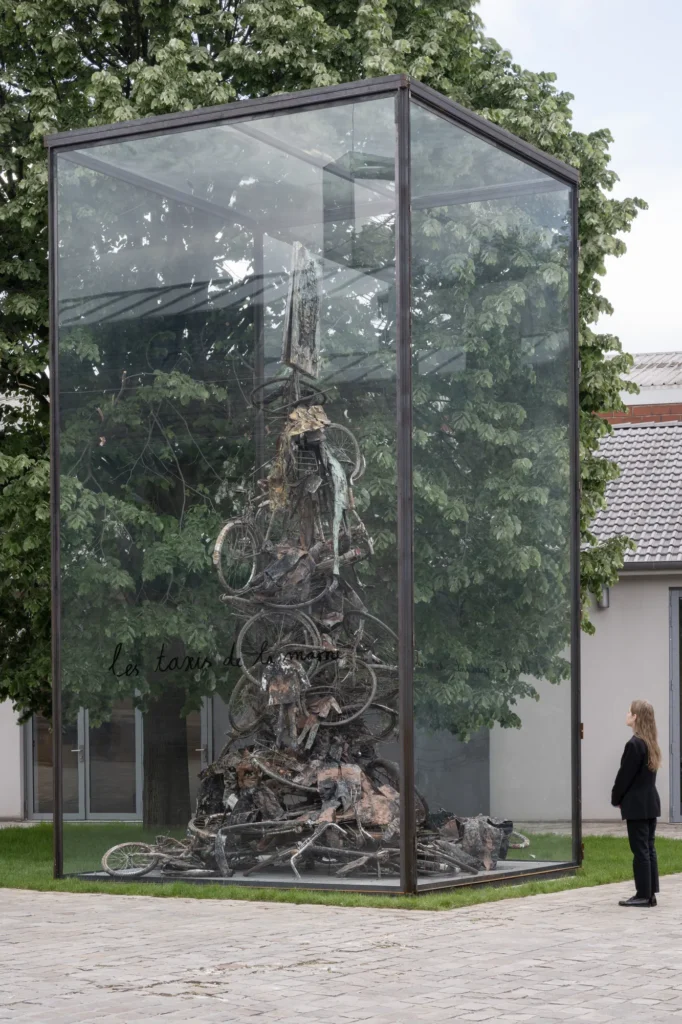
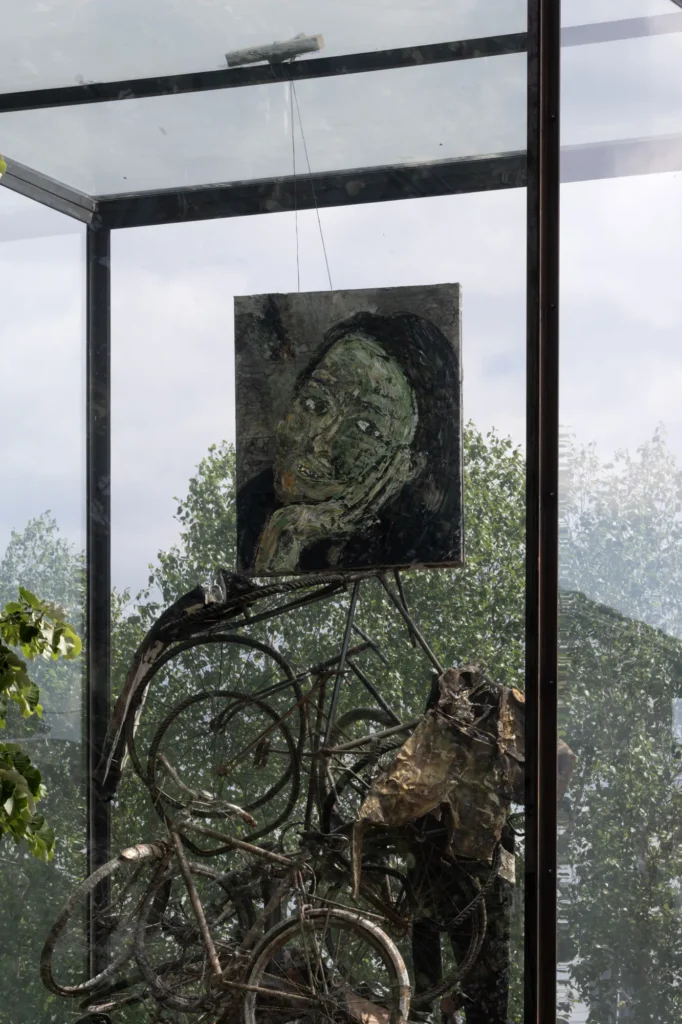
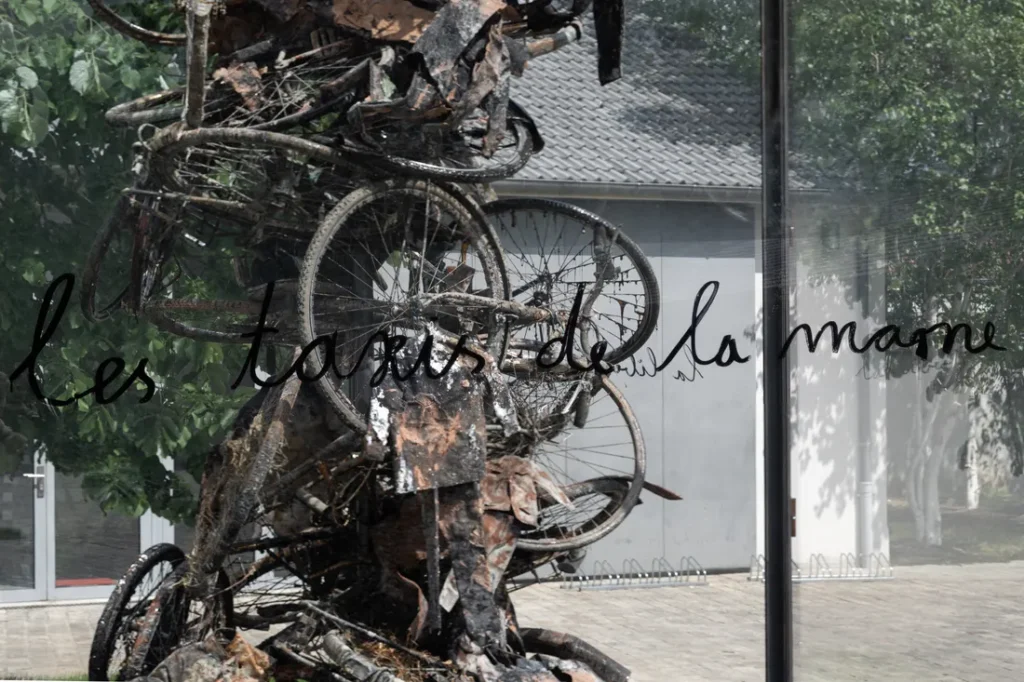
Anselm Kiefer, Nymphäum, installation views, THADDAEUS ROPAC PARIS PANTIN, 2026
Photography by PIERRE TANGUY