Jwan Yosef’s paintings dwell in the charged space between presence and absence. Much of his work is decided by where the edge falls; the source material is more often found than staged, and the finished canvases seldom tell you who anyone is. Born in Syria, raised in Sweden, trained in Stockholm and London, and now working in Los Angeles, Yosef has spent nearly twenty years building a body of work that is unusually self-consistent: the same preoccupations resurface—closeness, wanting, exposure, the way paint behaves when it is asked to stand in for skin—and each new group of pictures tests them again rather than replacing them.
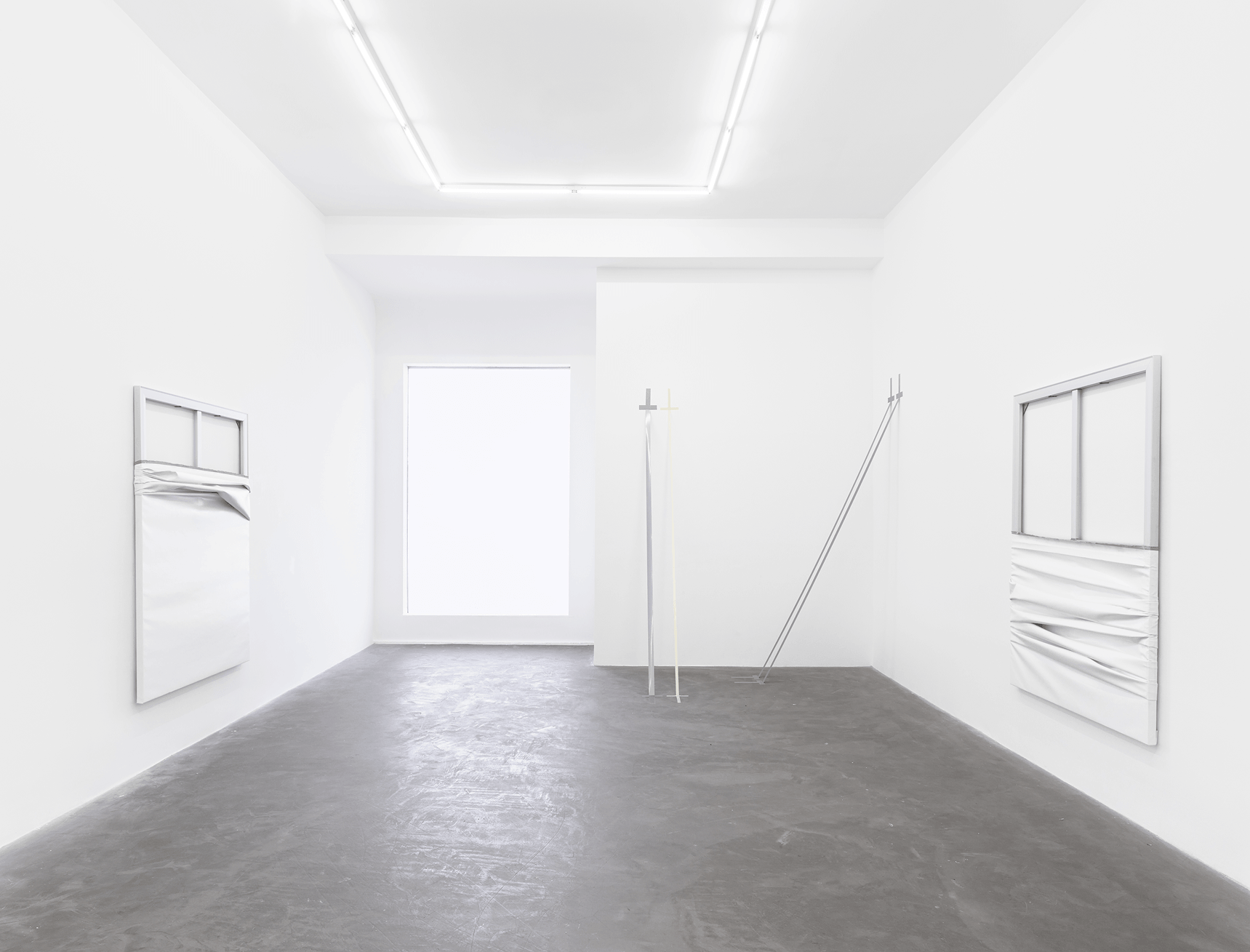
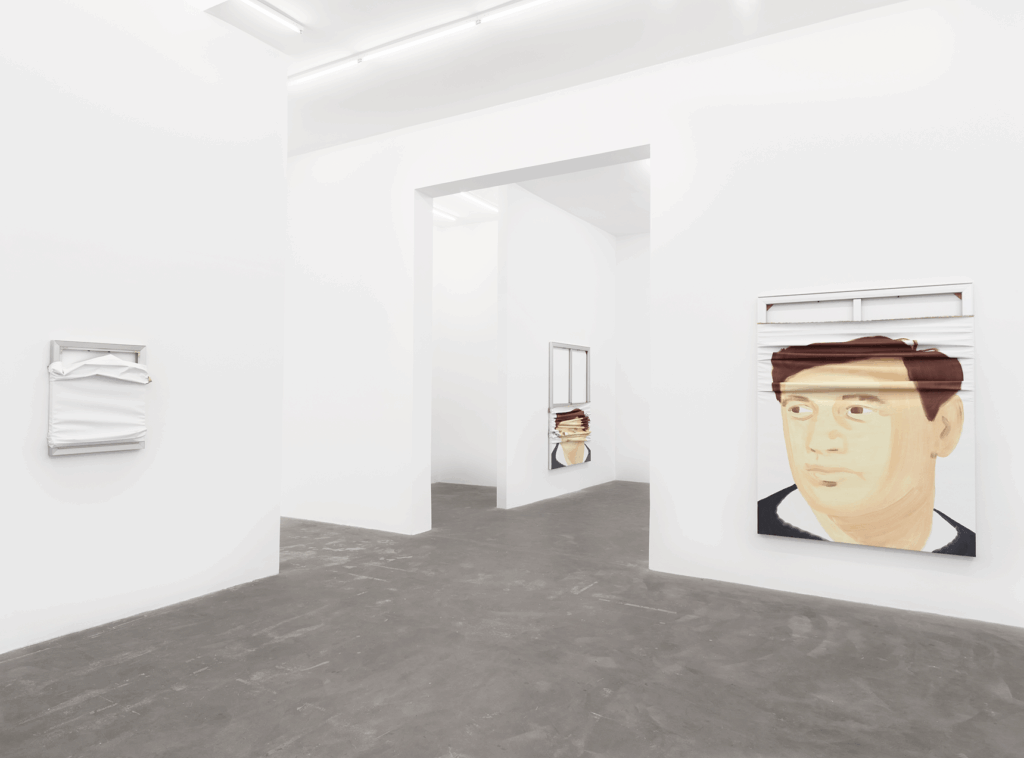
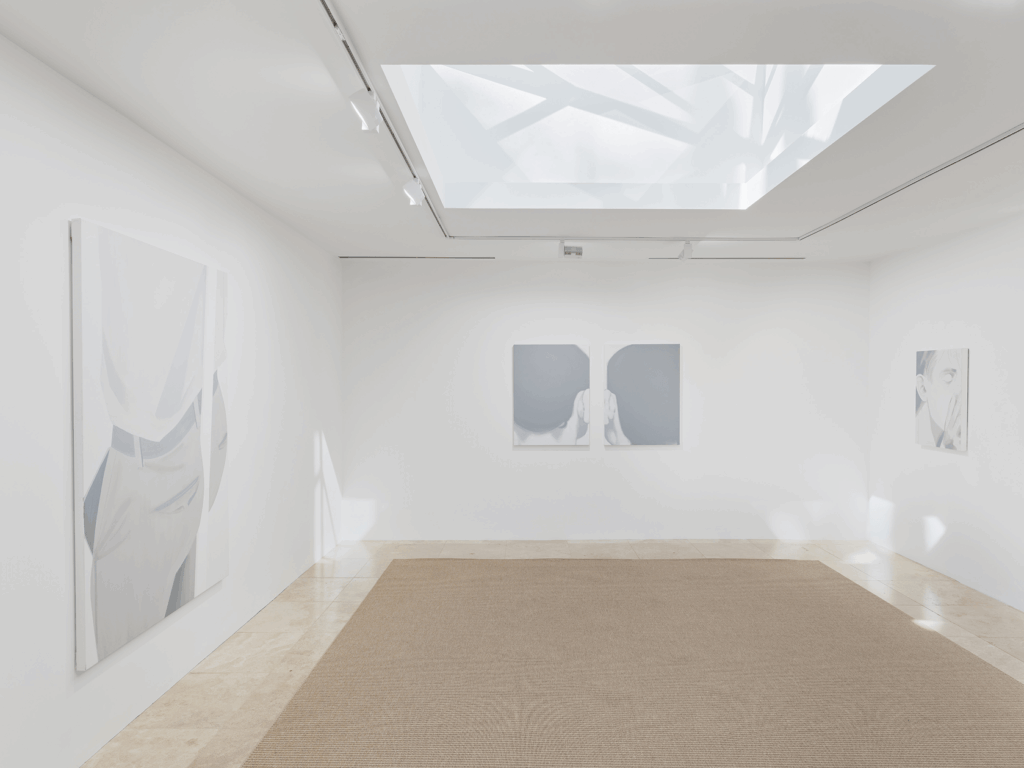
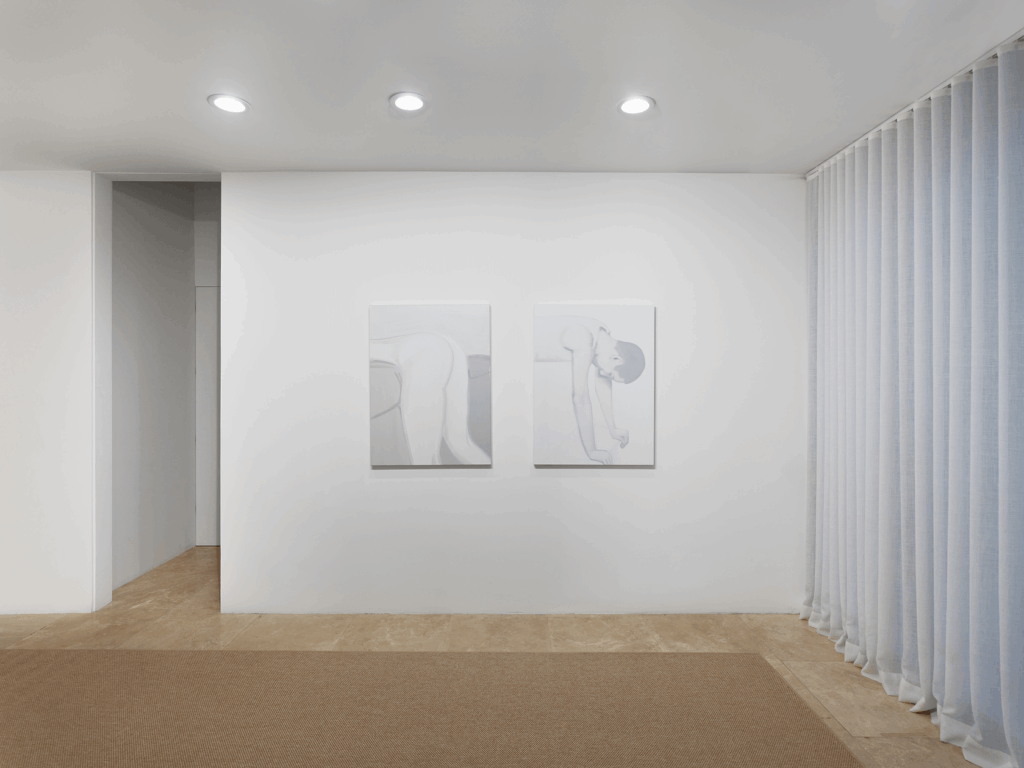
Intimacies, published by Baron Books in 2025, was his first monograph, and pointedly not a career survey. It draws on three bodies of work—Touch, Object, and Brush—sorted by preoccupation rather than by date. Object is where the painting stops behaving like a painting: canvases worked loose over their stretchers until they carry themselves as things rather than images. The solo exhibition TOUCH took the same questions off the page and into a room. Yosef is pushing further off the wall now, toward furniture and whole environments, while returning to intimate scales and to the reversed oil-on-plexiglass experiments of his early years. What persists is the inquiry he keeps returning to: how we touch, how we desire, how we remember, and how we connect.
hube: Your work often operates in a space of suggestion rather than explicitness—cropped bodies, subtle tensions, and what is left unseen. What draws you to this kind of language?
Jwan Yosef: I’ve always been more interested in what remains unresolved than in what is immediately legible. Suggestion creates room for the viewer to participate—to project, remember, desire, or even misunderstand. That ambiguity mirrors how intimacy actually functions. We rarely experience one another in complete clarity; we encounter fragments, gestures, glances, absences.
Cropping the body also shifts it away from portraiture and toward something more universal. A shoulder, a mouth, a hand—they stop belonging to one individual and begin carrying broader emotional and psychological weight. For me, what remains outside the frame is often as important as what is visible.
h: Themes of intimacy, desire, vulnerability, and queer sexuality recur throughout your paintings. How do you see these elements intersecting with broader questions of human connection in your art?
JY: While my perspective is inevitably informed by my experience as a queer man, I’ve never wanted the work to function as autobiography alone. Desire is one of the most fundamental human experiences—it shapes how we relate to others, to ourselves, and even to memory.
I’m interested in intimacy as a condition rather than an identity. The paintings ask what it means to be close to another person, to long for connection, to experience tenderness alongside uncertainty. Queerness enters the work not as a subject to illustrate but as a way of understanding the fluidity of bodies, relationships, and desire.
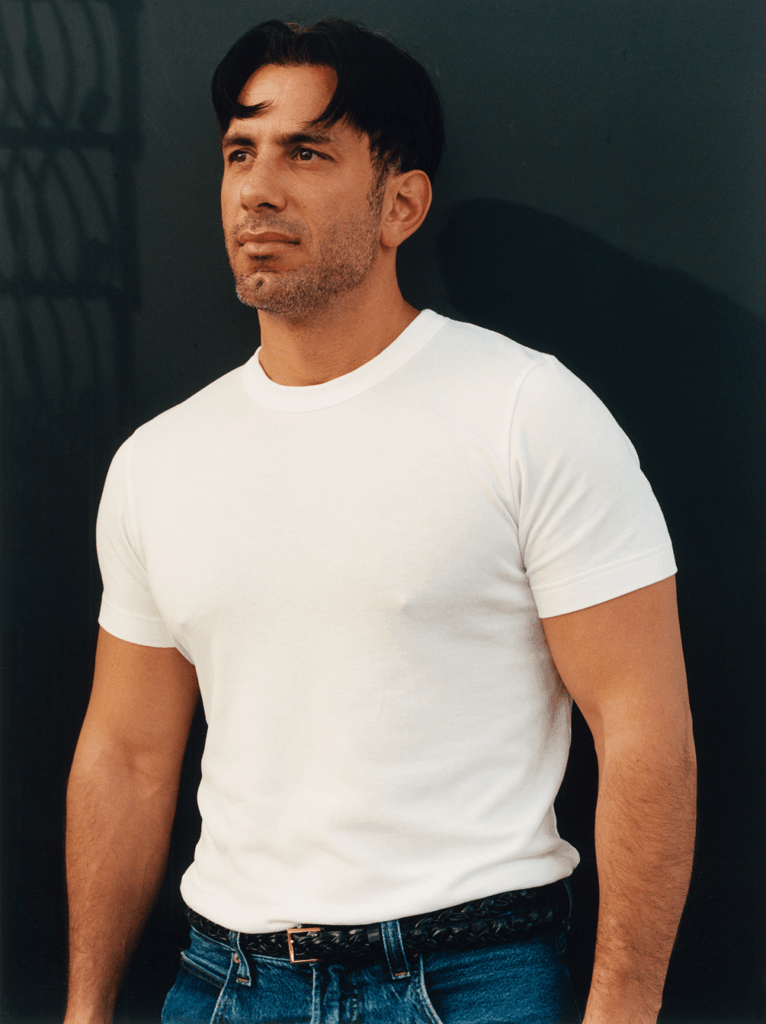
Photography by CAM LINDFORS
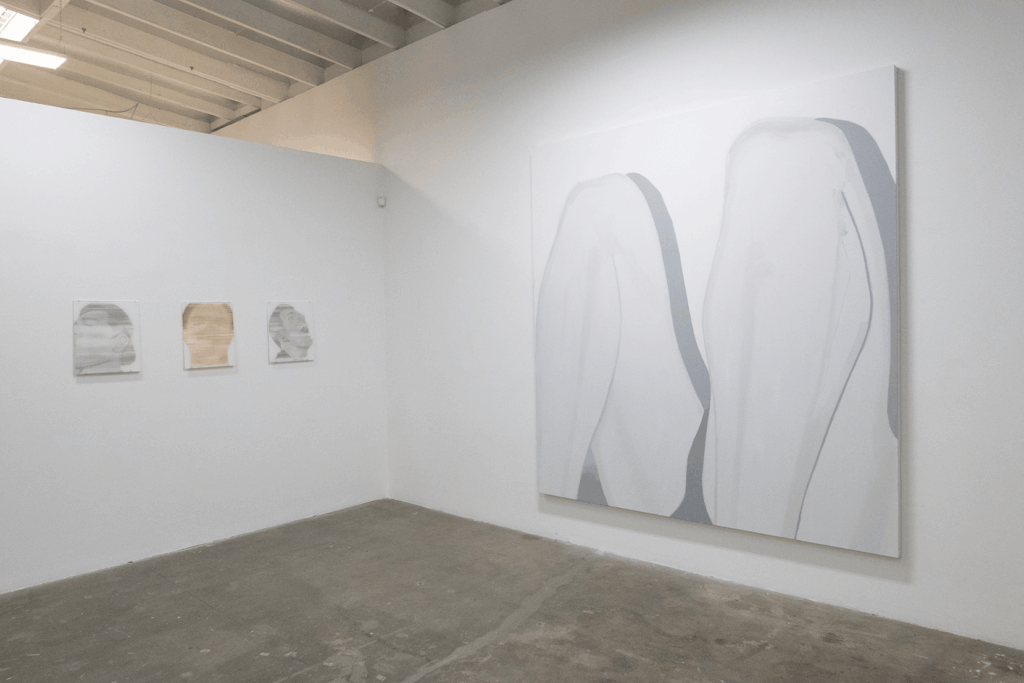
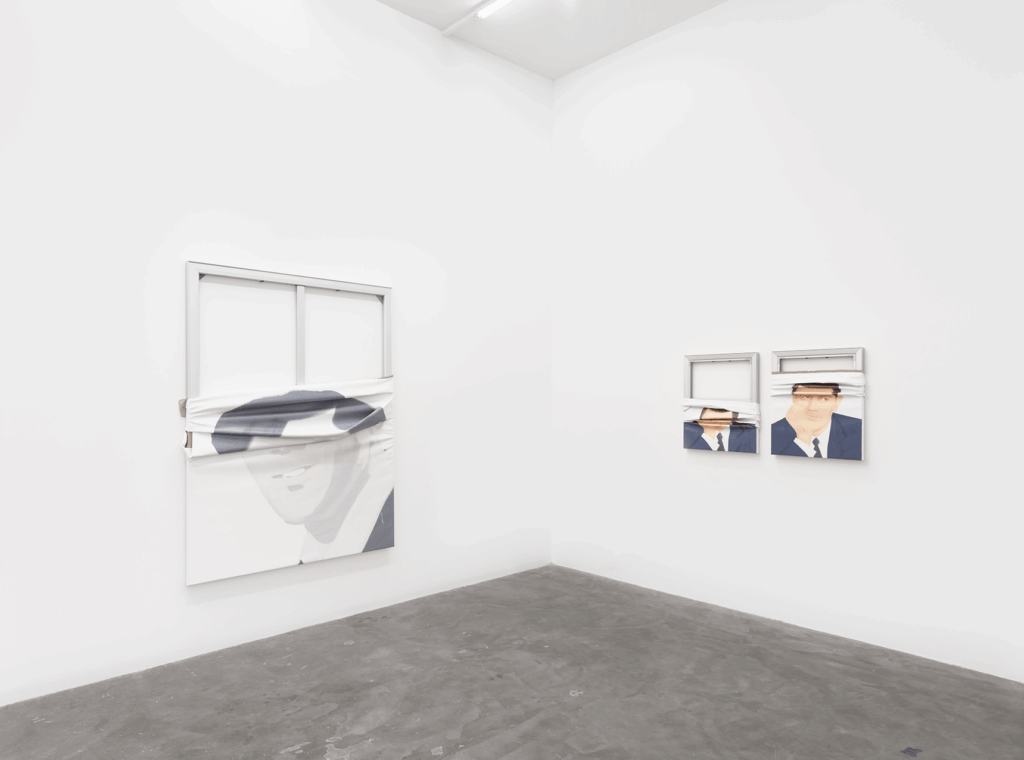
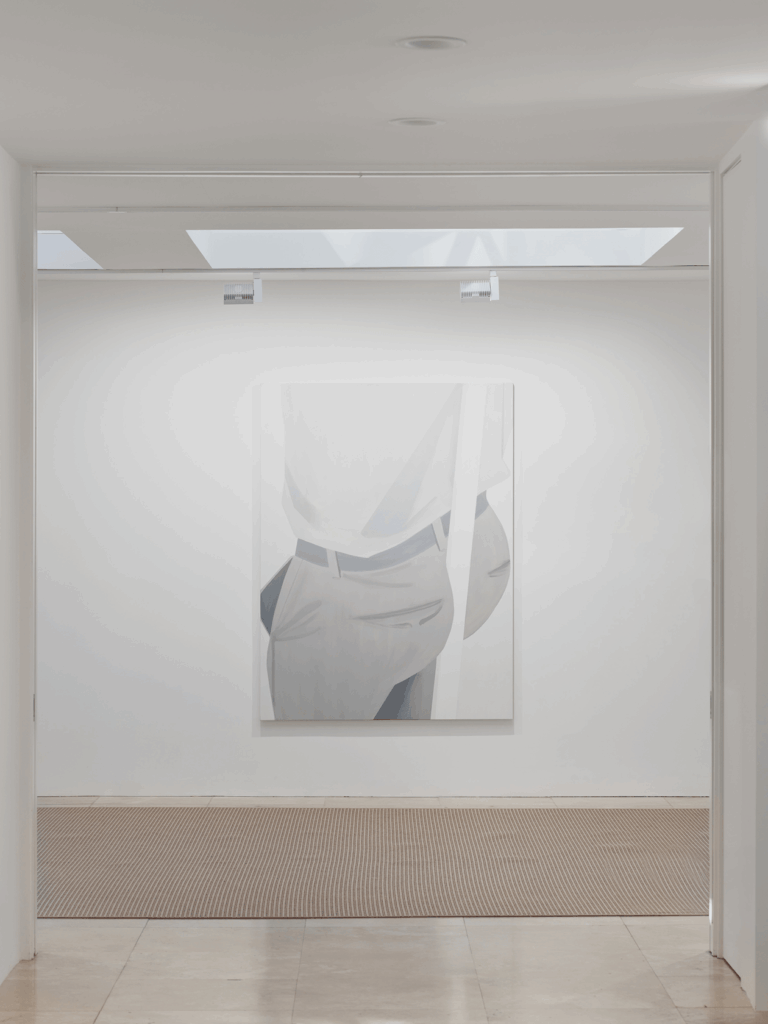
h: Many of your pieces draw from found imagery or self-portraiture, playing with abstraction of body parts in unexpected ways. What does the process of transforming the personal or everyday into something seductive or contemplative look like for you?
JY: The source image is rarely the destination. It’s simply the beginning of a conversation. I’m constantly removing information rather than adding it—cropping, enlarging, abstracting, allowing paint itself to dictate where the image wants to go. Through that process, the personal becomes less documentary and more emotional. A self-portrait stops being about me and becomes a study of presence, vulnerability, or touch. I’m interested in how painting can transform something familiar into something that feels almost remembered rather than observed.
h: Looking back over nearly two decades of work, what evolving threads or obsessions do you see in your oeuvre, and how have they shifted as you’ve moved between cities and life stages?
JY: Certain obsessions have remained remarkably consistent: intimacy, materiality, concealment, and the body as both subject and object. What’s changed is perhaps my relationship to certainty. Earlier works often searched for identity; more recent works are comfortable inhabiting ambiguity. Moving between Syria, Sweden, London, and Los Angeles has reinforced the idea that identity is never fixed. Home becomes something you carry rather than somewhere you arrive. That sense of in-betweenness continues to shape how I think about painting.
h: Your first major monograph, Intimacies, gathers selections from across your career, organized around themes like Object and Touch. What prompted this project, and what did the curatorial process reveal to you about your own body of work?
JY: The book gave me something artists rarely allow themselves: distance. When you’re making work, you’re always looking toward the next painting. The monograph asked me to look backward instead. Organizing the works thematically rather than chronologically revealed conversations between paintings that were made years apart.
It made me realize that I’ve been asking variations of the same questions for a long time—about touch, desire, material transformation, and the emotional life of objects. The vocabulary evolves, but the inquiry remains remarkably consistent.
h: You recently had a solo exhibition, named TOUCH. How did it dialogue with or extend the ideas crystallized in Intimacies? What new explorations of tactility or proximity were you pursuing?
JY: TOUCH felt less like a conclusion and more like the next chapter. If Intimacies reflected on the work I’d made, TOUCH asked what still remained unresolved. I became increasingly interested in painting as a physical event—not simply representing touch but embodying it through surface, gesture, texture, and scale. The exhibition explored how closeness can exist without contact, and how distance can sometimes heighten intimacy rather than diminish it.
h: Beyond painting, you’ve mentioned exploring other forms and branches of your practice. What other mediums are you excited about right now?
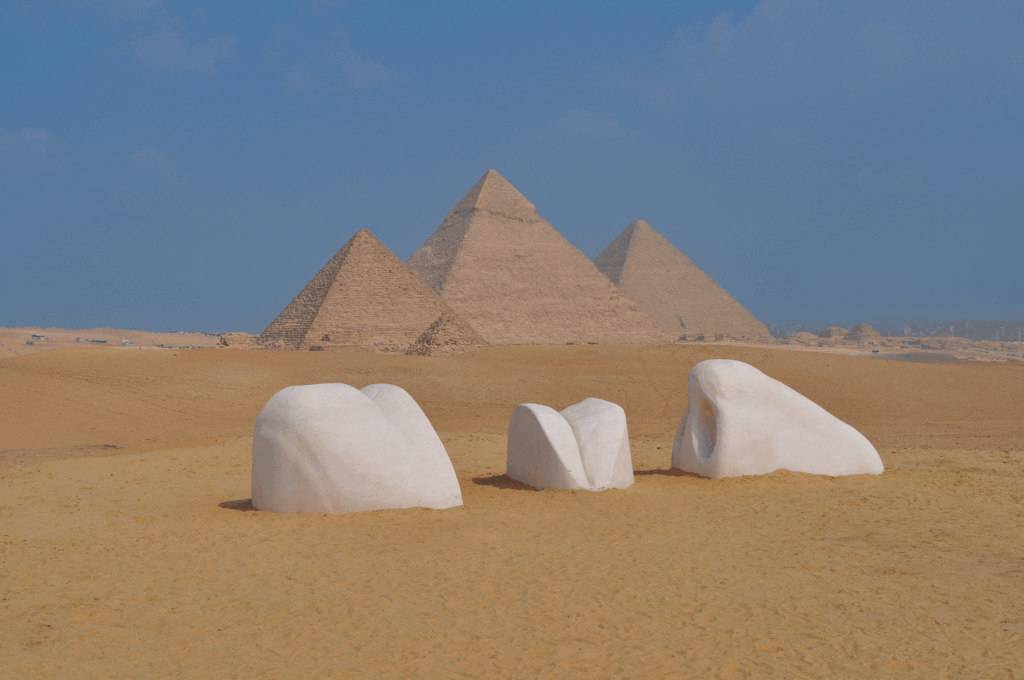
JY: I’ve become increasingly interested in sculpture, architecture, furniture, textiles, and objects that occupy everyday space. I’m fascinated by the idea that art doesn’t need to remain confined to the wall. I’m interested in creating environments where painting expands into lived experience—spaces where people physically move through ideas of intimacy and materiality rather than simply observing them. Different mediums ask different questions, and I enjoy allowing each material to suggest its own possibilities.
h: Navigating public visibility alongside an introspective artistic practice must present unique challenges and opportunities. How do you protect your inner world while sharing your work?
JY: I’ve learned that visibility and intimacy aren’t the same thing. People may recognize aspects of my public life, but the studio remains a private space where the work develops slowly and without performance. I try to protect that pace. Not everything needs to be shared in real time.
The paintings often reveal more about me than I could articulate in conversation, but they do so on their own terms. That distinction feels important.
h: As someone who has lived across cultures and continents—from Syria to Sweden, London, and now Los Angeles—how has place informed your sense of belonging or outsider perspective?
JY: Moving between cultures teaches you that belonging is something negotiated rather than inherited. I’ve often existed between languages, traditions, and identities, and over time I’ve come to value that position. Being slightly outside allows you to observe cultural assumptions that others may take for granted. Rather than searching for one fixed identity, I’ve become interested in hybridity—in the richness that comes from occupying several worlds at once.
h: What artists, thinkers, or cultural traditions—historical or contemporary—have most profoundly shaped your approach to beauty and desire?
JY: Beauty has always interested me most when it contains contradiction. I’m drawn to artists who balance sensuality with restraint, where desire exists alongside ambiguity. Renaissance painting, classical sculpture, queer visual culture, cinema, photography, and contemporary fashion have all informed my visual language in different ways. Rather than quoting specific references, I’m interested in absorbing them until they become part of my own vocabulary.
h: Looking at the cultural landscape today, what conversations around identity, intimacy, or queerness do you feel are most urgent or underexplored, and how might art contribute?
JY: I think we’re living in a time where visibility has increased enormously, but genuine intimacy hasn’t necessarily followed. I’m interested in moving beyond representation toward emotional complexity. Queerness shouldn’t only be discussed in terms of politics or identity; it also offers rich ways of thinking about tenderness, kinship, beauty, family, and vulnerability.
Art can’t always solve these questions, but it can create spaces where complexity is allowed to exist without immediate resolution.
h: With Intimacies as a milestone but explicitly “not the last” one, what are you most excited to create or share in the coming chapters of your life and work?
JY: I’m interested in working at more intimate scales. I want to make works that are more of a one-on-one conversation than a larger-than-life occupation of a room. I’m going back to my earlier plexiglass series, which I want to explore and develop more intricately—a series of portraits that blurs the line between what appears digital and what is man-made.
Also, I hope to build a body of work that moves fluidly between contemporary art, design, and culture while remaining rooted in the same questions that have always driven me: how we touch, how we desire, how we remember, and how we connect.
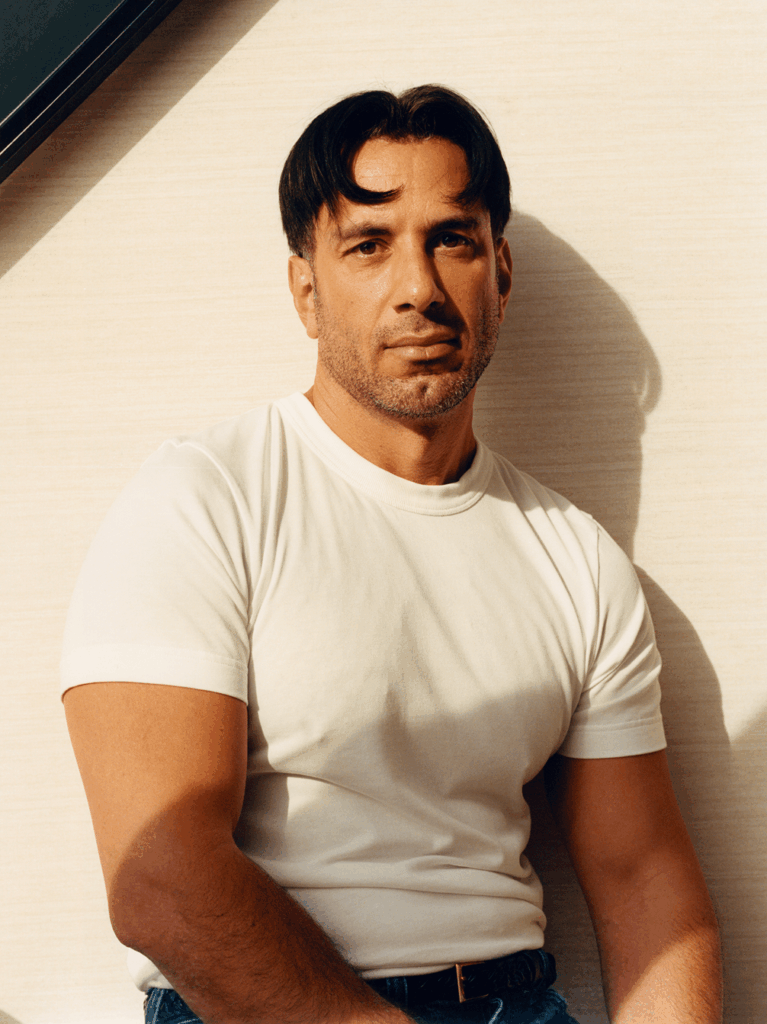
Photography by CAM LINDFORS
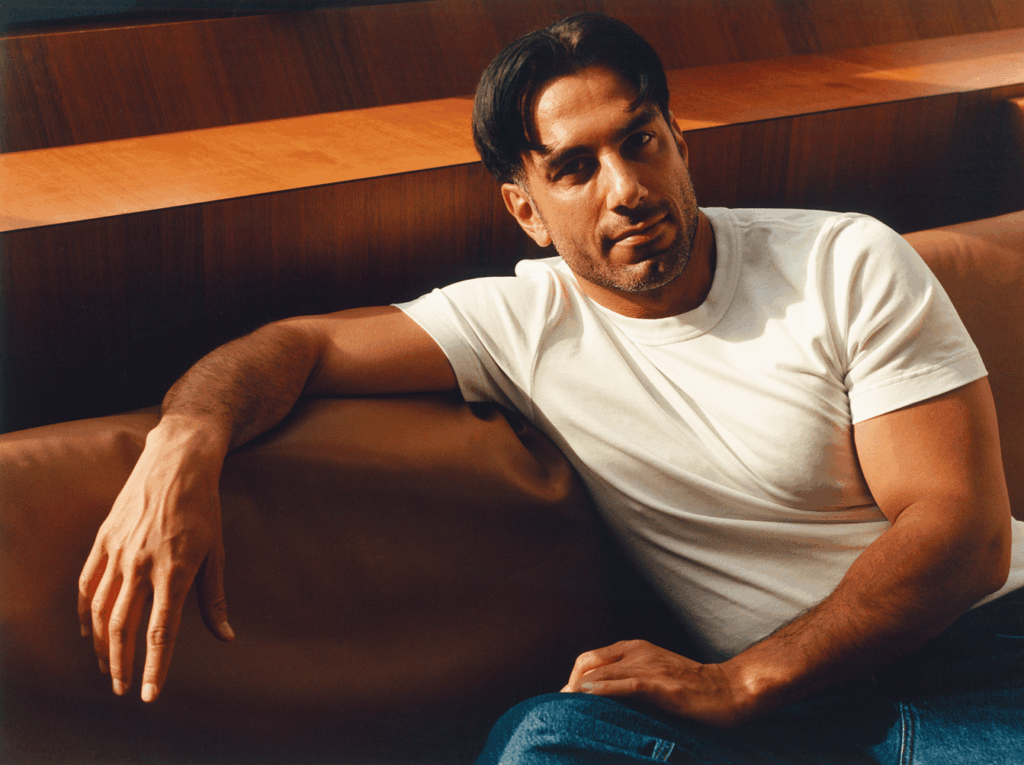
Photography by CAM LINDFORS
Special thanks to TALOME