
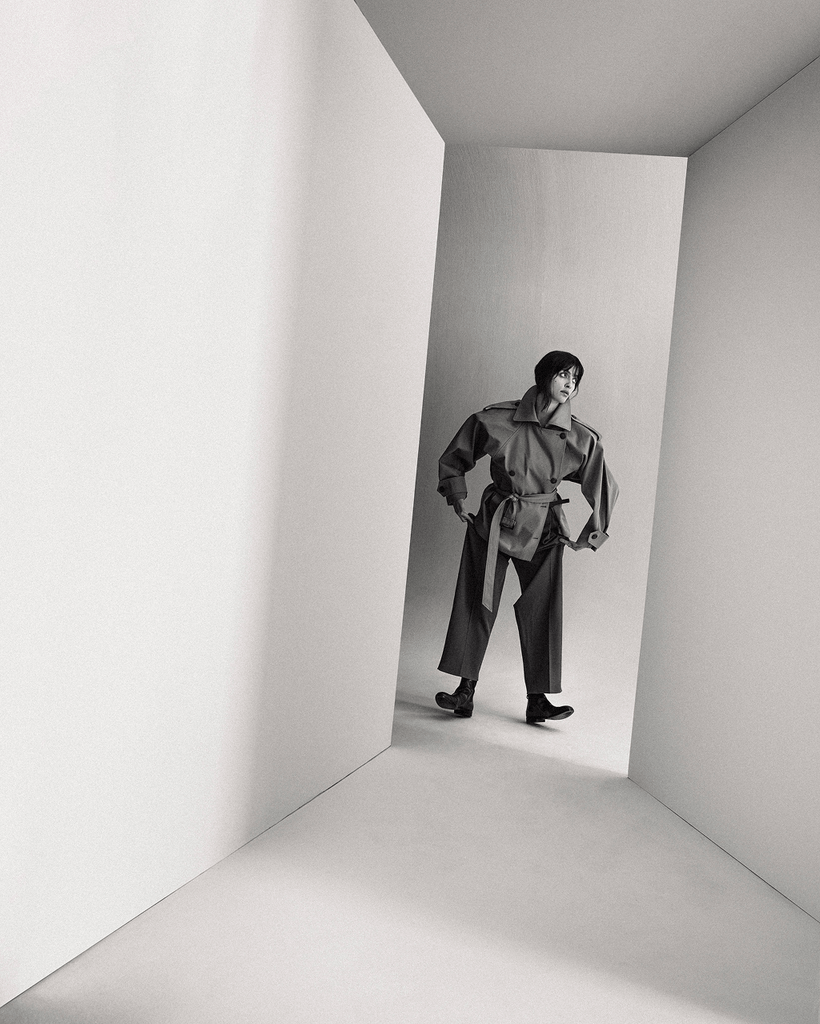
Noga Erez makes music that sounds like a signal under interference: arrangements glitch and rhythms stutter, love songs curdle and warnings parade as jokes. Together with her longtime collaborator and life partner, Ori Rousso, Erez has developed a singular and evolving sonic language across three genre-bending records. The first, Off the Radar (2017), all clatter and confrontation. Erez has said she made the album in part to explain that being from a place doesn’t mean she represents that place or its politics. Her second album, KIDS (2021), loosened things up, pairing the satirical with the serious and energetic electronic layers with a more playful, pop-forward sound. Her most recent release, THE VANDALIST (2024), widened the scope once more, bringing in collaborators Robbie Williams and Flyana Boss, alongside a documentary crew that followed the record as it was made. The resulting film, NOGA (2026), premiered at Tribeca earlier this year, just months after Erez made her Coachella debut. We sat down with the musician, who has long resisted attempts to categorise her sound, to discuss art, life, and the boundaries she defiantly kicks against.
hube: It is often said that to speak two languages is to carry two souls. How do you experience your own cultural identity?
Noga Erez: It feels less like carrying two distinct souls and more like a permanent state of jet lag, even when I haven’t travelled anywhere. Writing and thinking in English gives me this useful, slightly clinical distance from my own feelings—it’s like a mask that lets me say things I’d never have the guts to say in Hebrew. Hebrew is too close to the bone; it’s loud, it’s immediate, it’s stressful, andit’s home. So I constantly bounce between the two: English is the armour, and Hebrew is the raw nerve underneath.