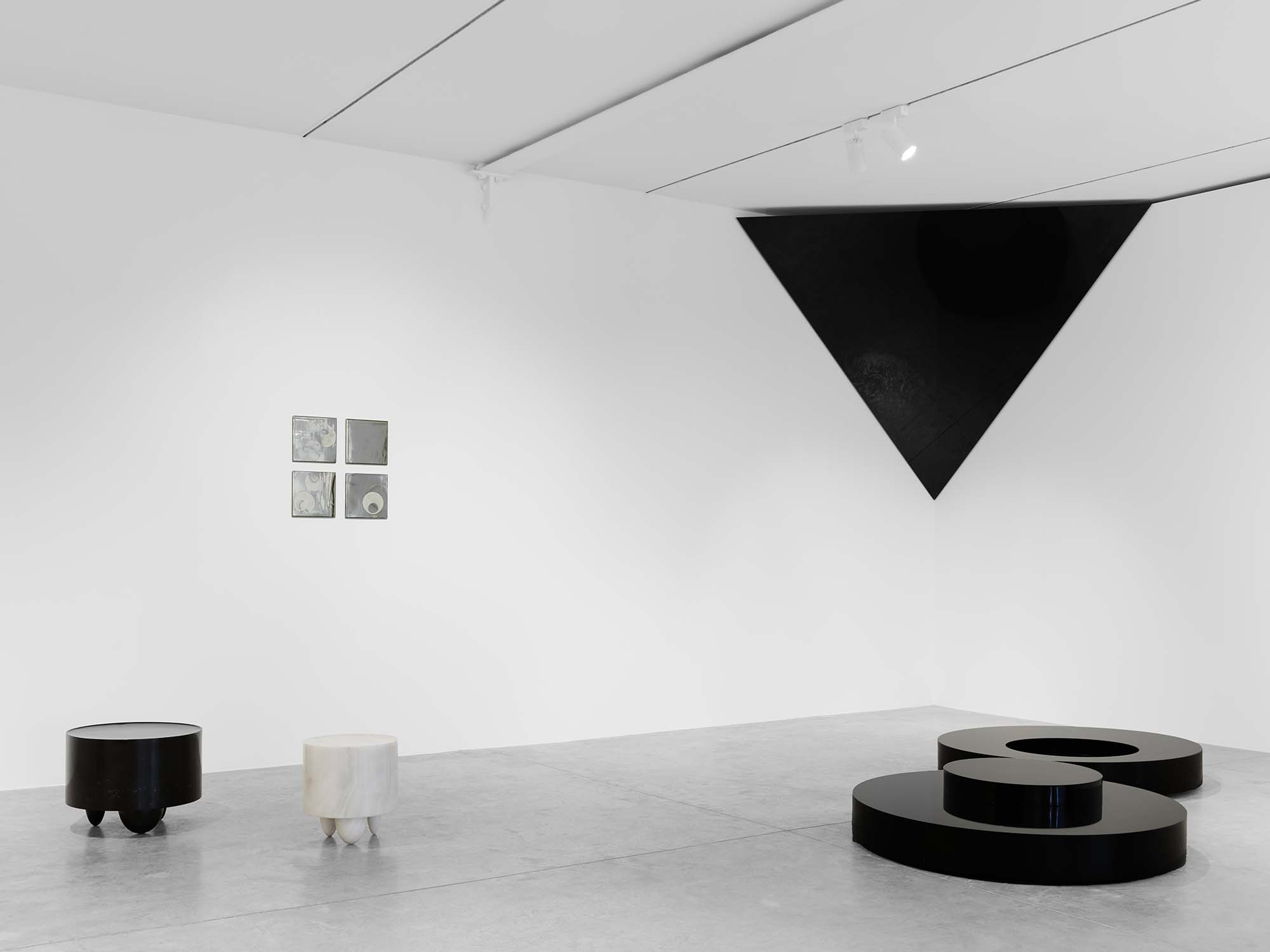
Friedman Benda in New York unveils Who Owns Geometry Anyway?, the first exhibition by Adam Pendleton with the gallery, on view through December 19th, 2025. Opening at a time when the artist is receiving increased institutional recognition, the exhibition introduces a new chapter in his ongoing exploration of form. It sees him expand his artistic vocabulary to encompass functional objects, while maintaining the conceptual significance that is central to his work. The use of stone, wood and precisely shaped volumes places the exhibition at the intersection of art, design and contemporary sculpture.
Reframing space through contemporary sculpture
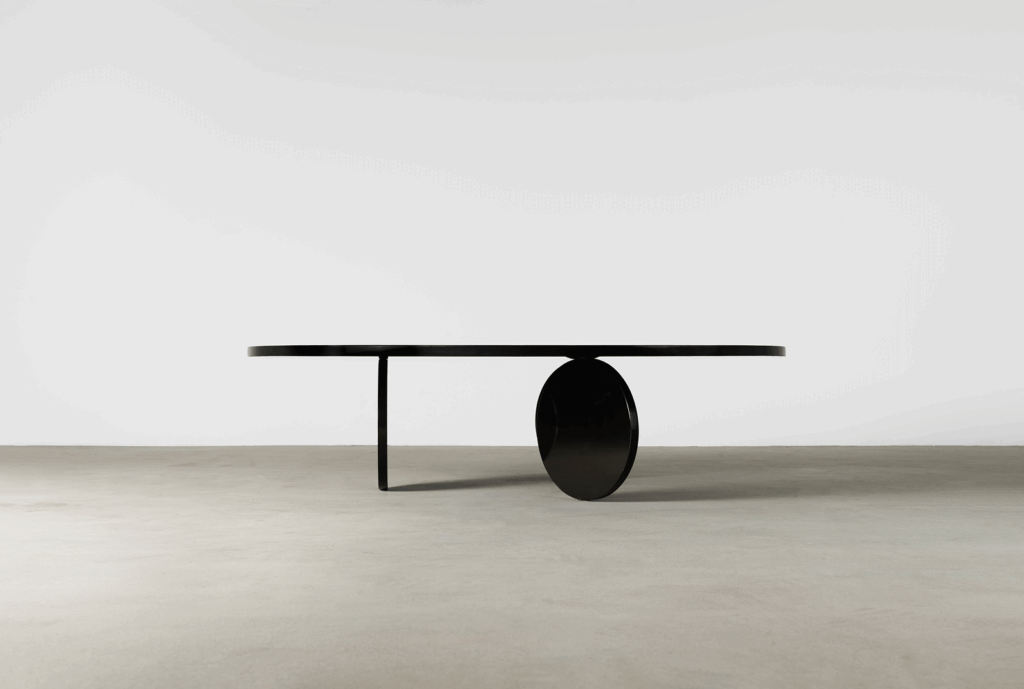
Known for his ability to fold expressionistic gesture, minimal precision, and conceptual rigor into a single work, Pendleton now directs this sensibility toward sculptural furniture. The exhibition gathers polished marble, onyx, granite, and carved wood pieces, each defined by clean geometry and finely worked detailing.
The gallery’s architecture is incorporated into the installation. Pendleton’s wall interventions — matte black and glossy white triangles painted directly onto the space — act as spatial anchors, creating an environment in which his sculptural forms interact with shifting light, surface and shadow. Ceramic paintings punctuate the installation, extending his visual vocabulary into new material registers.
A moment of artistic expansion
This exhibition comes at a pivotal point in Pendleton’s career. His major retrospective, Adam Pendleton: Love, Queen is currently on display at the Hirshhorn Museum in Washington, D.C., and MoMA has recently acquired all 35 pieces from his landmark exhibition, Who Is Queen? At Friedman Benda, Pendleton continues to explore how forms translate across media — painting into photography, sculpture into design — without losing their intellectual intensity.
Who Owns Geometry Anyway? ultimately asks viewers to reconsider how objects occupy space, how they communicate, and what happens when the boundaries between sculpture and design become fluid. In Pendleton’s hands, geometry is never static; it is a living language—precise, intuitive, and continually reshaped.
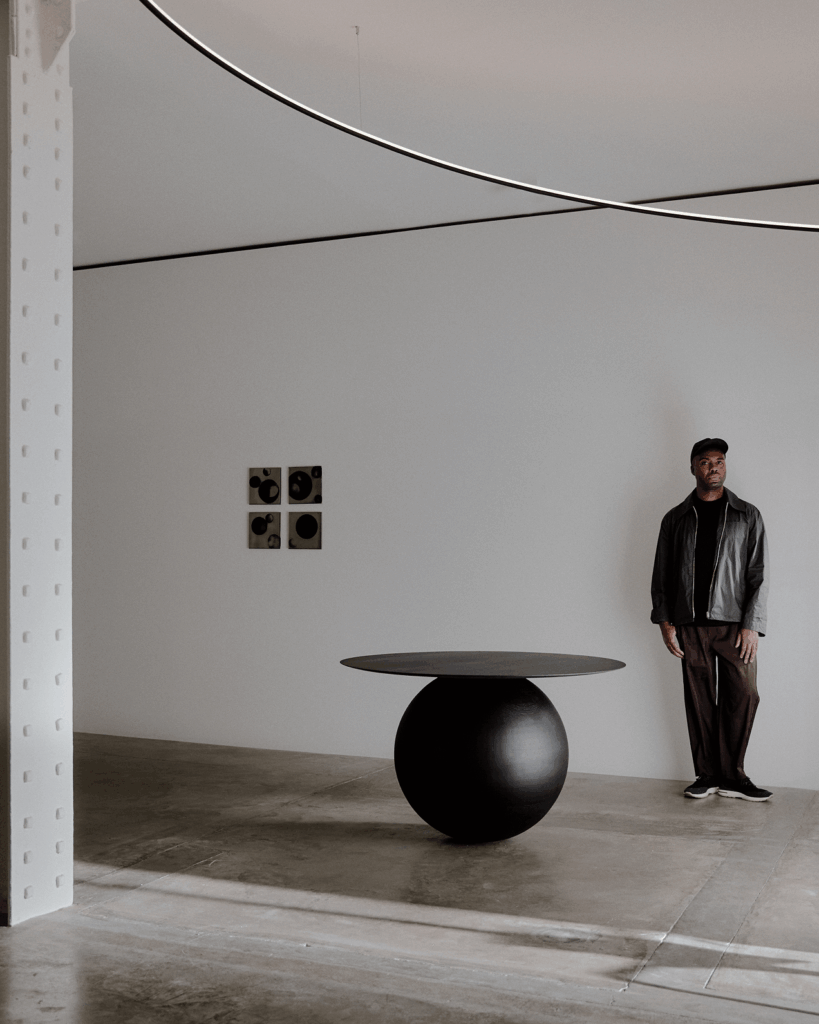
Photography by WILLIAM JESS LAIRD
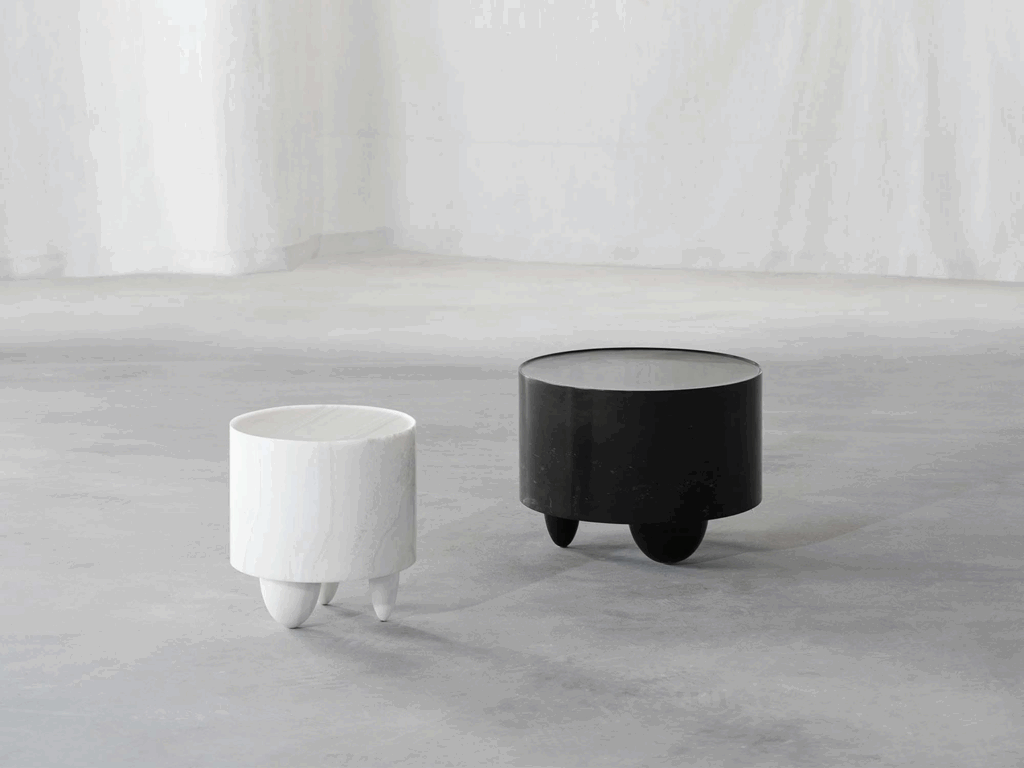
Photography by LUIS DIAZ DIAZ
Photography by IZZY LEUNG
Special thanks to IC INSIGHT COMMUNICATIONS