Carlo Mazzoni independent media publishing industry sustainable publishing
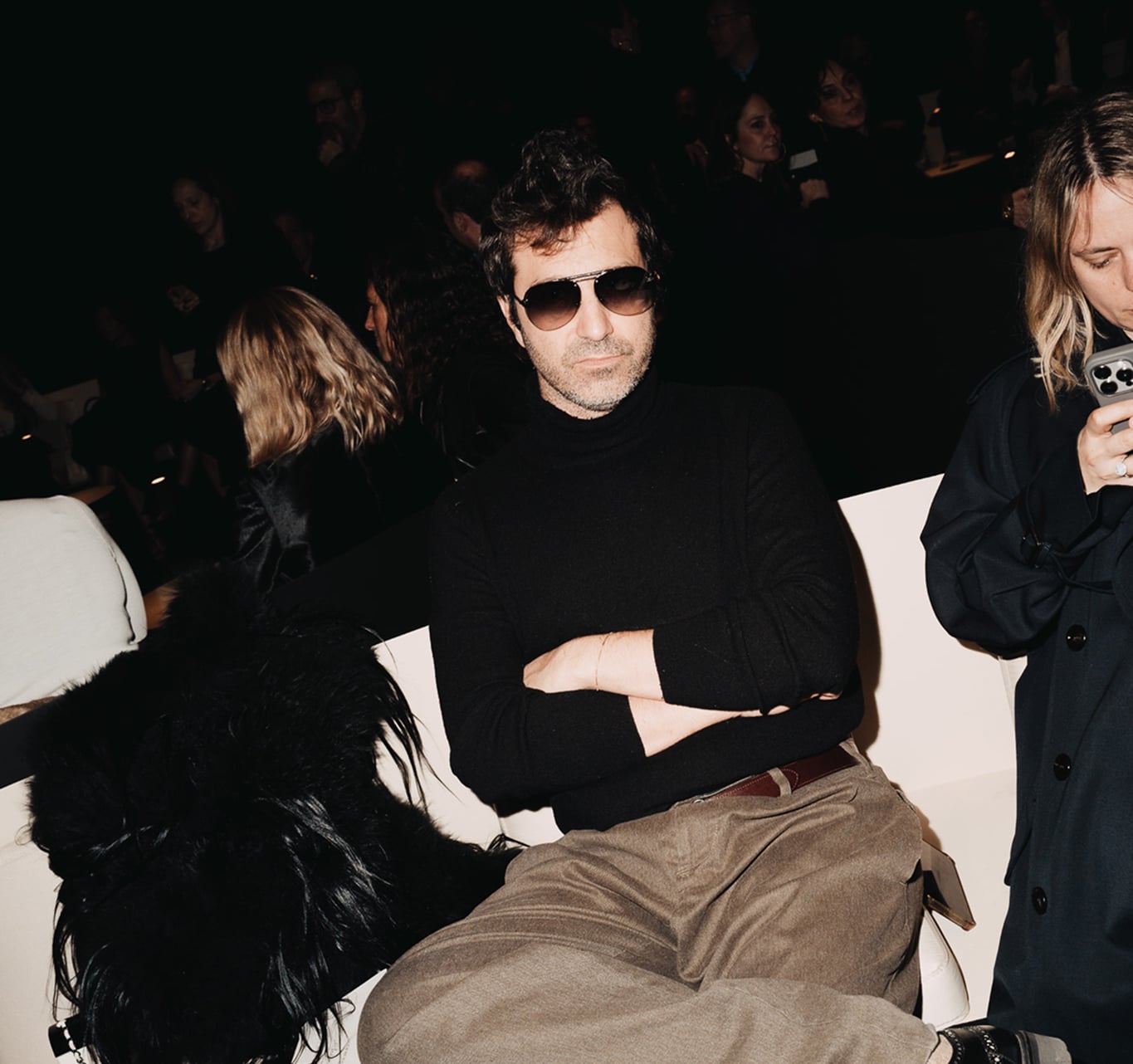
CARLO MAZZONI. Photography by FELIPE FANGUEIRO

Carlo Mazzoni: Building a New Culture of Sustainable Publishing

Carlo Mazzoni is an Italian journalist, editor-entrepreneur, and a leading voice in redefining sustainable publishing within the worlds of media, fashion, and design. Trained in Medicine and Surgery at the University of Milan and in piano at the Conservatorio di Alessandria, he later channelled that same precision and lyricism into writing.

Mazzoni’s debut novel, Postromantici, established him as a perceptive chronicler of contemporary sentiment, followed by two more works—Disordine and Due Amici. Named among Milan’s most influential cultural figures by Corriere della Sera, Mazzoni went on to serve as Editor-in-Chief of L’Officiel Italia.

In 2014, he founded Lampoon Magazine, a biannual print and digital platform dedicated to sustainability, craftsmanship, and creative responsibility. As the publication declares, “sustainability is the only form of contemporary culture.” Under his direction, Lampoon has evolved into not only a space for examining how we create and consume art and design—exploring the ethics and accountability of creators—but also a forum for innovation and environmental awareness that bridges culture and conscience.

For hube, Carlo Mazzoni sat down with our Editor-in-Chief, Sasha Kovaleva, to share his thoughts on the responsibilities of independent media, the meaning of sustainability, and the stories that matter most.

Sasha Kovaleva: You have a remarkably unconventional professional background—medicine, music, literature. What kinds of skills or mindsets would you advise the younger generation to cultivate if they wish to follow a similar path in independent publishing?

Carlo Mazzoni: I cannot be a good reference for this, since I studied dentistry. I don’t think there’s a specific professional path to becoming a creative figure in the publishing industry. However, if I had a background in economics, literature, or philosophy, it might have helped me a bit more today. That said, coming from a scientific field has helped me a lot. What you study—more than the actual skills or knowledge it gives you—matters because it shapes your way of thinking, it gives you a method.

In Italy, when we were kids, we were forced—and we didn’t like it at all—to study Latin. We had many hours of it. Some of my friends today say, “My son is lucky not to study Latin anymore,” as many schools have removed it from the curriculum. But I would say that Latin helped me a lot in building, in strengthening my mindset, my method—the process I still rely on today, which comes largely from the logic I learned as a child.

As you grow up, I believe what truly matters today is curiosity. You need to be curious. You need to seek knowledge everywhere. You have to read a lot—even if you think your field is only about images, photography, or styling. A strong cultural background is what will give you an advantage over others. Read literature, read whatever you can. You need to read a lot to keep your mind sharp, focused, and responsive to every input you receive.

SK: Could you take me back to the very beginning of Lampoon? What motivated you to create a magazine at that moment, and what gaps did you feel existed in the cultural landscape that Lampoon could fill?

CM: Before editing Lampoon, I was the Editor-in-Chief of L’Officiel Italia. That’s really where my path in publishing began. When I was twenty-five, I worked in a small editorial studio—we could call it a very indie, niche publishing house. Our mission, our core business at the time, was branded books. We collaborated with brands on their own publications—house magazines, catalogues, and everything a major company might produce to stay in touch with its clients and audience. That was the true beginning.

Then, when I was twenty-eight, I received an offer from a collaborator—someone who would later become my business partner—to join the editorial team of a magazine called Tar, which no longer exists. After that, I was approached by a founder connected to the Jalou Group, who invited me to launch the Italian edition of L’Officiel. While working there, I realised that what I truly wanted was to create something much more independent, much more niche—so I decided to start my own title, one that I envisioned as completely autonomous and uncompromisingly distinctive.

When we started, in 2015, the world was completely different. The industry was driven by aesthetics—the glamour, the excess, the styling, all those dazzling images and layers of fashion that demanded attention. Today, the landscape has changed entirely. I would say the COVID crisis transformed not only the real world, but also ours. From that point until now, Lampoon has evolved profoundly. It began as a glossy, glamorous publication—and today, it has become a much rougher, more tactile title. We even use the word roughness a lot these days.

I like Lampoon to be seen as a kind of aircraft magazine—a publication that moves through ideas and perspectives, searching for sustainability above all else. Lampoon today is, quite literally, subtitled “a cultural magazine about sustainability.” I believe that sustainability is the only possible approach for contemporary culture.

I don’t think today you can define yourself simply by being creative, or by believing you have a vision. That’s not enough anymore. You need a commitment—to the community, to the world—and a message to share. The entire publishing industry must understand that we need meaning, we need intention. We can even be a bit political—not in the traditional sense of parties, ministers, or revolutions, but in the original Greek sense of polis: the city, the community. In that way, publishing today must be political—it must engage with the collective life of our time.
Carlo Mazzoni
independent media
publishing industry
sustainable publishing
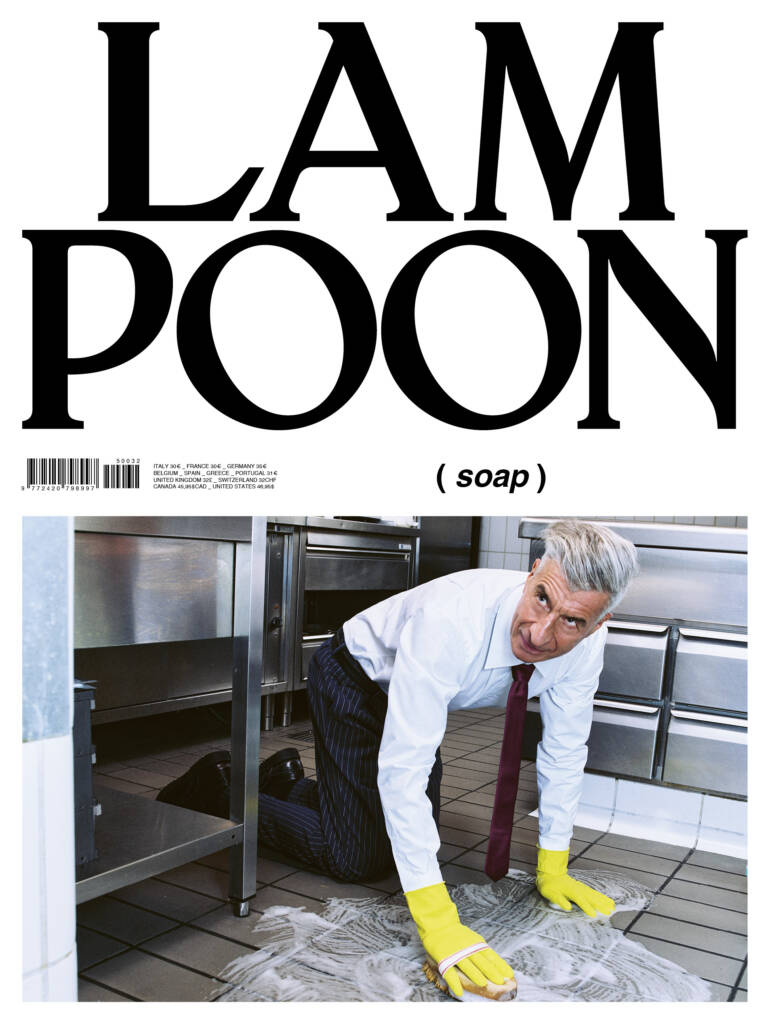
Lampoon magazine, issue number 32
MAURIZIO CATTELAN
Photography by ALBERTO ZANETTI
Styled by LORETO MANCINI
Carlo Mazzoni
independent media
publishing industry
sustainable publishing
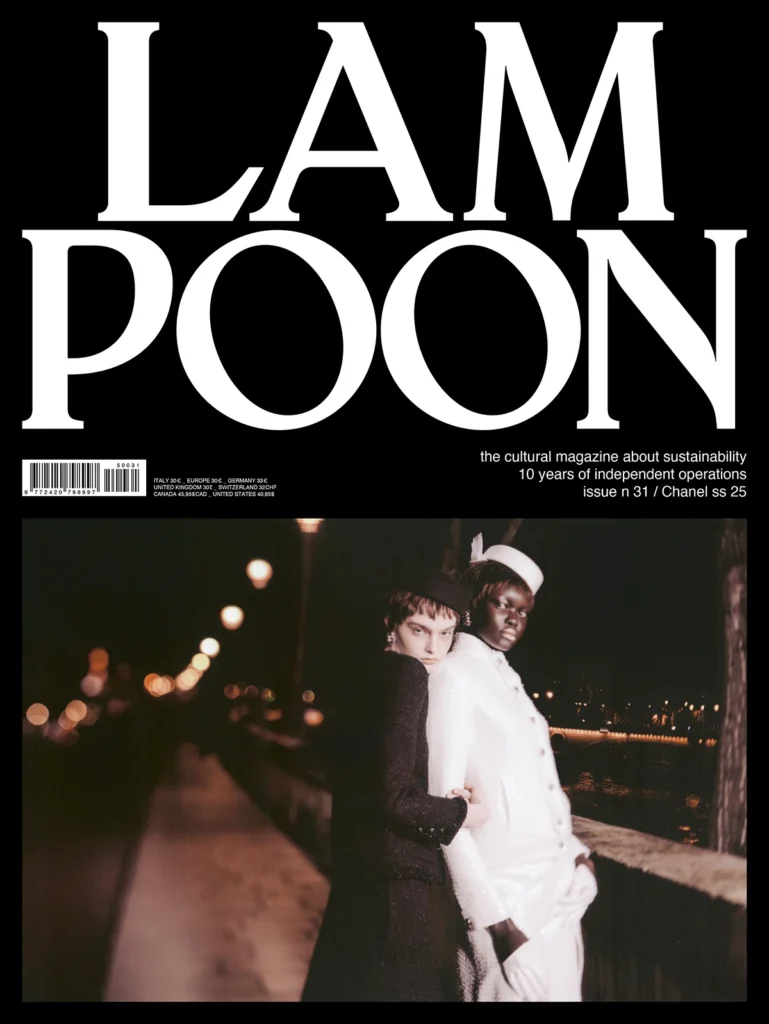
Lampoon magazine, issue number 31
Energia Nostalgia
Photography by ALESSIA GUNAWAN
Styled by GLEN MBAN
Carlo Mazzoni
independent media
publishing industry
sustainable publishing
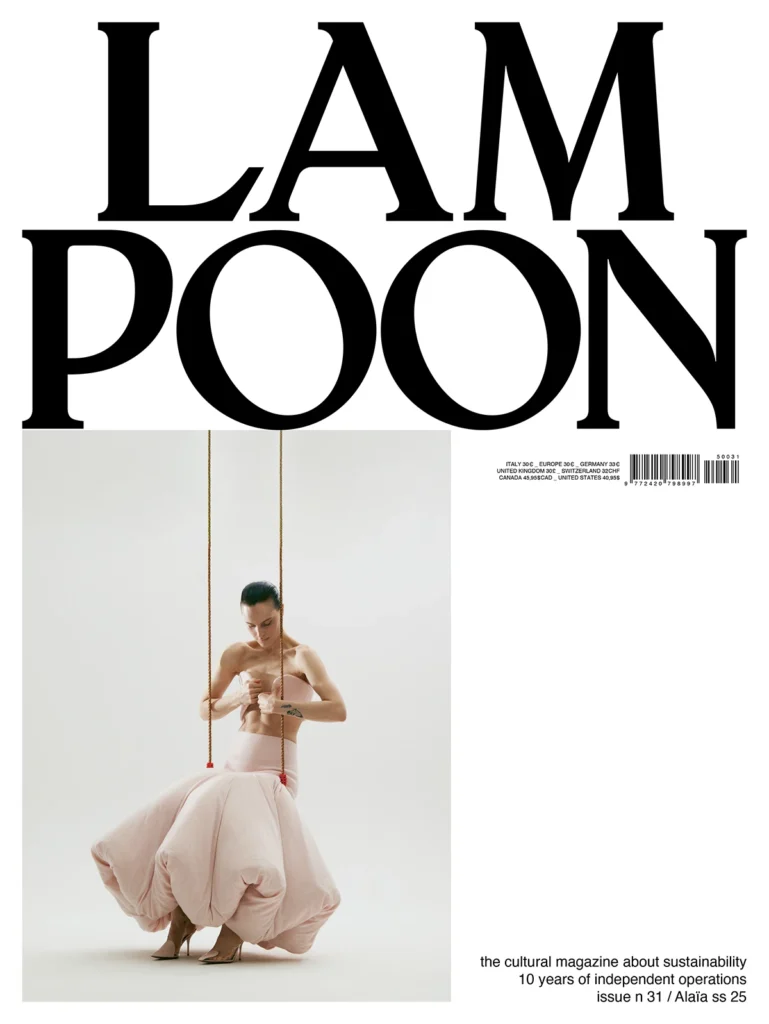
Lampoon magazine, issue number 31
Like it ever Mattered
Photography by BORIS OVINI
Styled by NIKI PAULS
Carlo Mazzoni
independent media
publishing industry
sustainable publishing
Lampoon magazine, issue number 31
Colliding with the Walls
Photography by REBEKAH CAMPBELL
Styled by CECE LIU
Carlo Mazzoni
independent media
publishing industry
sustainable publishing
Lampoon magazine, issue number 32
The Soap Which Wanted To Be The Sun
Photography by OLIVIER ZAHM
Styled by BARBARA ANTHOFER

SK: What excites and frustrates you the most about working in independent media today? 

CM: I don’t know if it’s exciting anymore—because it’s tough. Yet, at the end of the story, I would still say—and I will always say—that it’s the most challenging and the most fulfilling job a human being can have. Editing a magazine, being an editor, a journalist, a writer—working to discover something worth sharing with others—is a commitment that brings both pride and deep satisfaction.

What excites me today about my work is the confidence that I still have in understanding what’s happening right now. I have a sense of the times—of how time is moving. I feel that I am in this time, truly living in the moment we’re all living through. I’m not trying to chase the future or do something before others do it. At the same time, we’re not attached to what things used to be—we try to stay present, to exist in what’s happening now.

Today, I can still do my job, and I still love it—because I feel that I understand the time I’m living in.

SK: Are there any artists or thinkers—past or present who have profoundly shaped the way you approach your work?

CM: When I was just starting out and wanted to be part of this world, my greatest inspiration, above anyone else, was Franca Sozzani, the former Editor-in-Chief of Vogue Italia. She’s no longer with us, but she was a woman who truly shaped the industry—a remarkable master. Even today, she’s still present in my mind, in the way I work. I always say that she remains an incredibly strong reference for everyone.

More recently, another major reference for me would be Olivier Zahm, for what he has done with Purple. Purple has been publishing for more than thirty years now, while Lampoon has only ten—so we’re still young compared to such a legendary title. Even though I don’t know them personally, I’d say the same about Marco Antonio and Jefferson Hack—people I deeply admire and look up to in what I do.

I wouldn’t say the same about Anna Wintour. If I may be honest, she’s not someone I particularly admire.

SK: Is sustainability a trend, a moral imperative, or a philosophical lens for rethinking how we live and consume?

CM: Sustainability must be understood as a philosophical topic. When you talk about sustainability, it means human commitment and human respect; you talk about living in a community. This thing, political—the way I was using that word—means sustainability. Today, you cannot be contemporary if you are not considering the sustainable topic. In this sense of the word, I would say that sustainability is a philosophical matter.

Going instead, more pragmatic, sustainability is also about pragmatic and precise procedures, like stopping using black, stopping using plastic, avoiding wearing black clothes, even if we like wearing black clothes, stopping eating or decreasing the consumption of red meat. Dismiss the synthetic fibres in the clothing you are buying. Today, sustainability is something that has to be about your daily life.

SK: Could there be a way for fashion to remain both democratic and aspirational, or are these concepts fundamentally in tension?

CM: It’s not easy to put this briefly, but fashion has to be both. Ten years ago, it needed to be more democratic. Today, it needs to reclaim the kind of aspiration that once drove it. Right now, fashion is missing a bit of that aspirational power it used to have. So, I would say that the key today—because, of course, it’s all about balance—is that fashion must be both democratic and bold, and aspirational. At the moment, though, that balance isn’t quite there. We’re missing a part of the aspirational side.

SK: What makes a collaboration between media and fashion brands successful, and conversely, what makes it fail? Is it a matter of mismatched values, creative egos, or something more systemic?

CM: A collaboration between a media outlet and a brand is successful first and foremost when there is mutual respect. By that, of course, people usually mean that a brand, even if it’s paying or financing through advertising, must be respected by the publication. That’s a given. But at the same time, the publication also has to respect the brand. When this balance is understood and maintained, a collaboration can truly succeed.

The key point, however, is that a publication must be willing to say no to brands it doesn’t feel aligned with. The big problem in today’s publishing industry—where every title and media outlet needs revenue—is that many say yes to every proposal that lands on their desk. That’s not good. A media outlet today must have the confidence to refuse anything that doesn’t fit within its editorial direction.

SK: Do you have a favorite Lampoon cover? What makes it memorable?

CM: It’s always the latest one. Always the latest—for the same reason I mentioned before: I want to live fully in the time I’m living. So, it was the last one—or perhaps, even better, the next one.

SK: Looking at the arc of Lampoon’s history, what kind of legacy would you like the magazine to leave for the next generation of independent publishers and cultural thinkers?

CM: I hope that people will understand that Lampoon has a proper message, and that the entire publishing industry has to be committed and has to be entitled to a precise message. I was having this conversation on the last issue with Dom [Domenico Kang], who is the editor-in-chief of Pap Magazine, and he was the one who talked to me about a political approach to the publishing industry. He was the one who was sharing with me the thoughts that I was giving you before, about the word political understood in the ancient Greek attitude and meaning.

What I see here today, and in the future, is that if you want to work in the publishing industry, you need to forget that being creative is good enough. It’s not about being creative; it’s not about having a vision; it’s not about having taste.

It’s not about having a good network. It’s nothing. It’s not about any of that. What does it mean—being or wanting to be part of the publishing industry? You are part of the publishing industry when you have a story to tell, when you have a message to bring. This is what makes you part of the publishing industry today. Instead, what I see here around, with all the submissions that we receive for Lampoon, is that they come to us just because they think it’s cool. They believe they have a good vision, they have good aesthetics, but it’s not that. You need to come with a story; you need to come with something that you want to share and you want to tell. It’s not only about how cool you are, or how cool the photographer you want to work with is, or you as a photographer. It’s not enough to say how good that image is—it’s not the point anymore. Believe me, a lot of the people who are approaching us are still there thinking that it’s good enough to be creative, to be provocative, to be with a new idea, with a fresh approach. Nothing like that.

SK: Human existence is shaped by history, culture, ideology, nationality, tradition, and society—factors that can limit personal freedom. Do you think creativity is the only way to remain free?

CM: Yes—and creativity doesn’t mean creativity on social media. 

SK: How would you describe the future in five words?

CM: Two words come to mind at the same time: diversity and uniqueness. Because nothing is truly diverse and nothing is entirely unique—yet at the same time, everything is diverse, and everything is unique. These two words, diversity and uniqueness, will define the future. Sustainability is at the center of everything, and it is the future.

What will the future be? The future is about sincerity. I’ll say it again: roughness. When I say rough, I mean that Lampoon is a rough magazine. Today, even an image or a photograph doesn’t need post-production. We don’t need Photoshop; we need analogue film. We need everything to be completely sincere, honest, raw, and unpolished—just as it exists in the real world. No constructions, no artificiality.

What I hope for the future is that people will be completely confident in who they are. The best side of the future, I believe, will be people feeling truly confident—in front of the mirror, in front of others, in public, in every situation. When you are confident, you don’t need social media.

Speaking of which, I have to say, social media today is one of the greatest enemies of society and humanity. I see people who think that everything is only contemporary if it’s digital, if it’s tied to social media. Culturally, social media is devastating. In the real world, plastic might be the worst thing that has happened to us, but in the cultural sphere, social media is the disaster. Our minds, our attention—I see us slowing down, hypnotized by the endless feed, by the scrolling, by this constant updating. It is one of the most dangerous habits we’ve ever developed.

Carlo Mazzoni
independent media
publishing industry
sustainable publishing
Lampoon magazine, issue number 31
Head over Heels
Photography by DEXTER LANDER
Styled by SVEN GEX
Carlo Mazzoni
independent media
publishing industry
sustainable publishing
Lampoon magazine, issue number 31
MATHIS CHEVALIER
Photography by BYRON SPENCER
Styled by ANDREA COLACE
Carlo Mazzoni
independent media
publishing industry
sustainable publishing
Lampoon magazine, issue number 31
ISABELLE ALBUQUERQUE
Photography by OLIVIA MALONE
Carlo Mazzoni
independent media
publishing industry
sustainable publishing
Lampoon magazine, issue number 32
EXERCISE N 11
BORN IN THE MUD
Photography by SOFIA ALAZRAKI
Carlo Mazzoni
independent media
publishing industry
sustainable publishing
Lampoon magazine, issue number 32
UNFOLD
Photography by NAGUEL RIVERO
Styled by SVEN GEX

ISSUE 7

The new edition is here