Cecilia Vicuña returns to the Castello di Rivoli Museo d’Arte Contemporanea with El glaciar ido (The Vanished Glacier/Il ghiacciaio scomparso), which will be on display in the Manica Lunga until September 20th, 2026. This is her first solo museum exhibition in Italy and brings together monumental installations, poetry, videos and collaborative works reflecting on climate, memory and indigenous knowledge.
Cecilia Vicuña revives the Ancient quipu
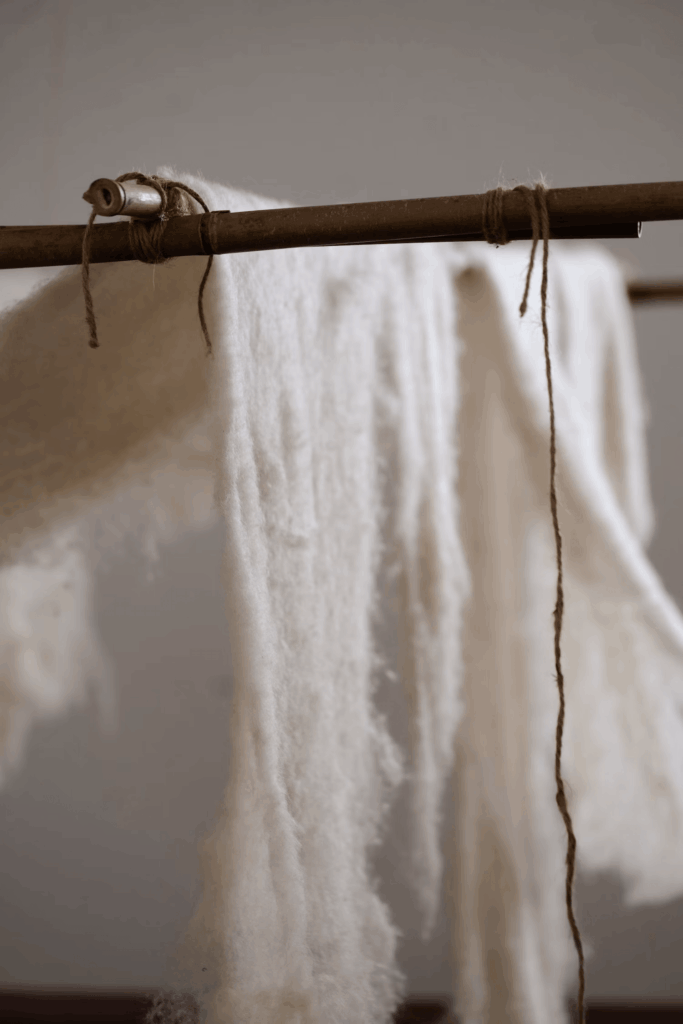
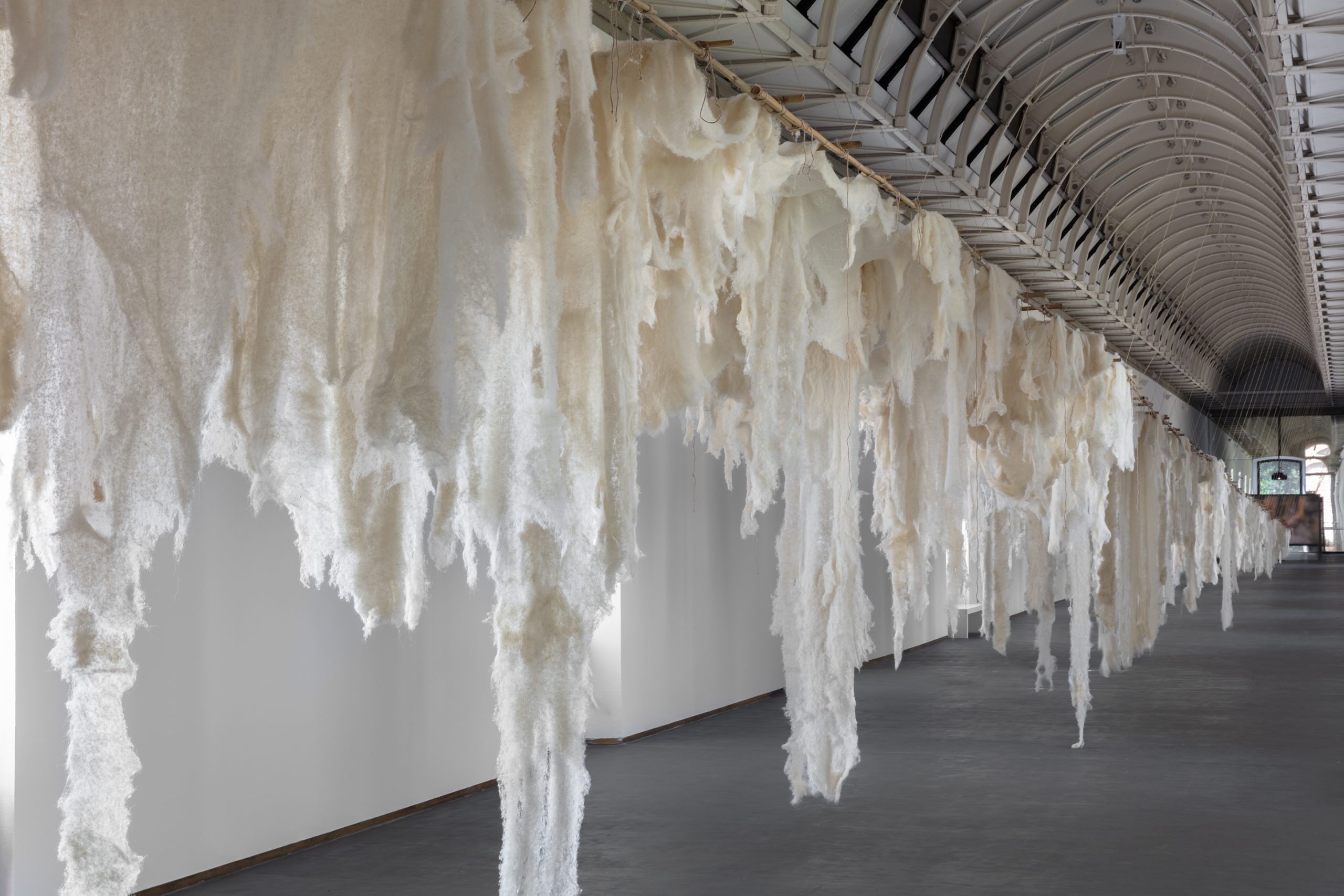
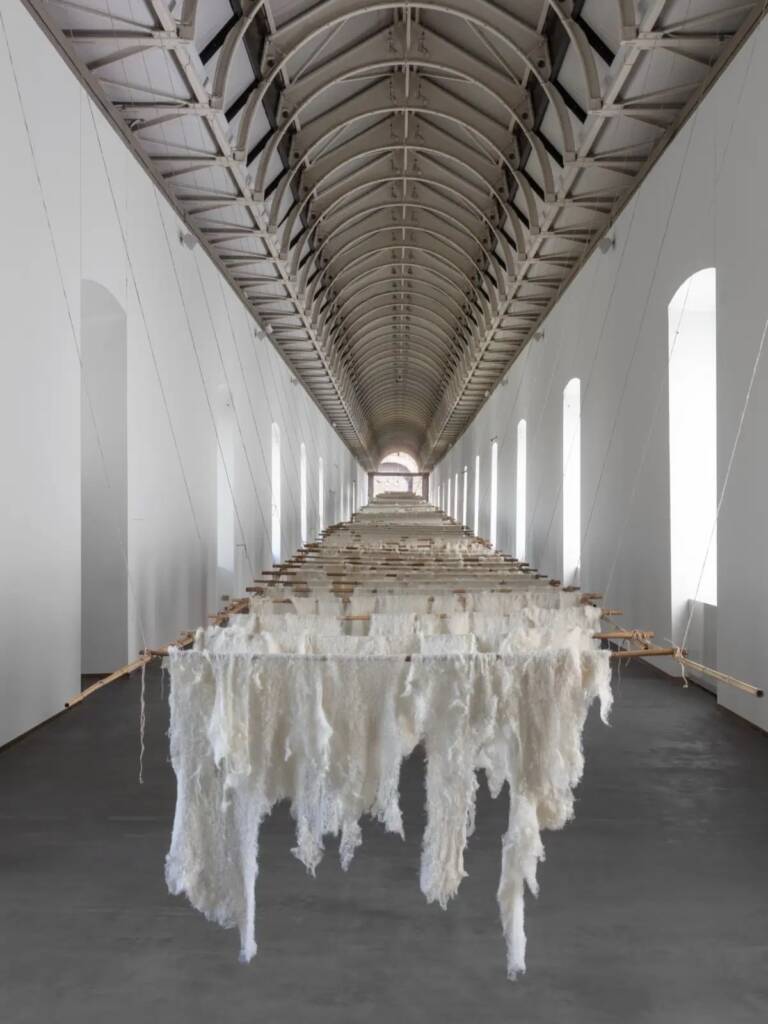
The exhibition centres on a newly commissioned installation created for the museum’s elongated gallery. Suspended overhead, a monumental horizontal quipu reinterprets the Andean system of knotted cords as a powerful reflection on environmental loss.
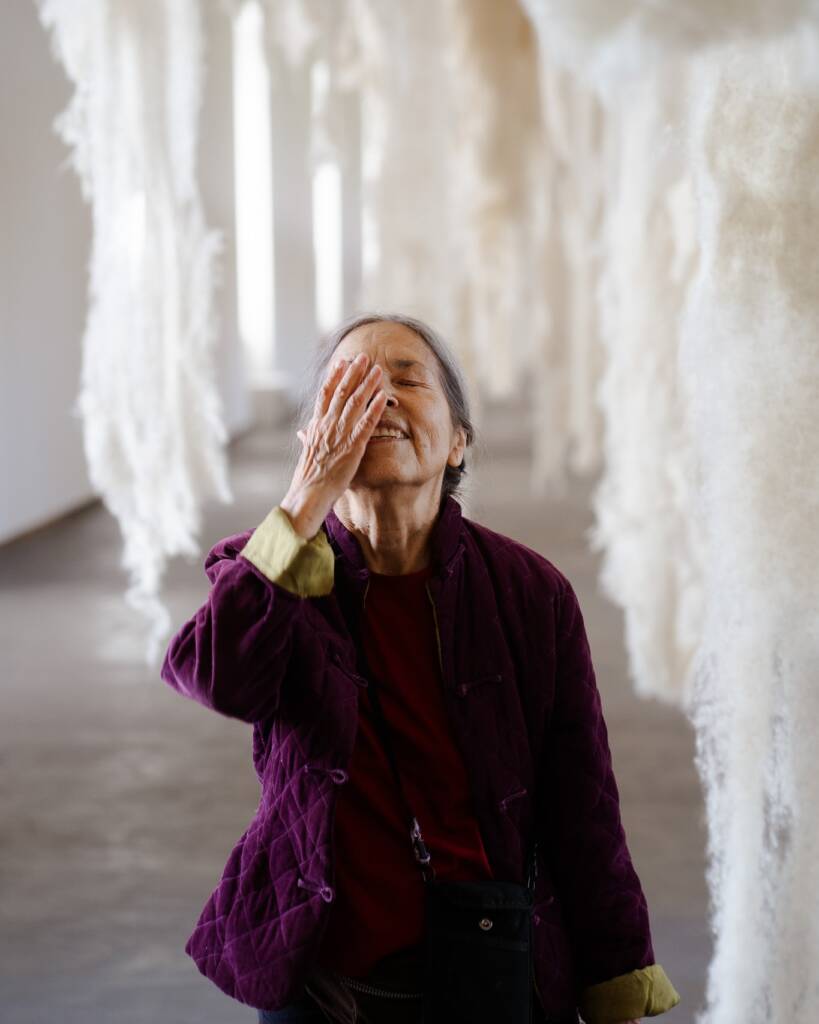
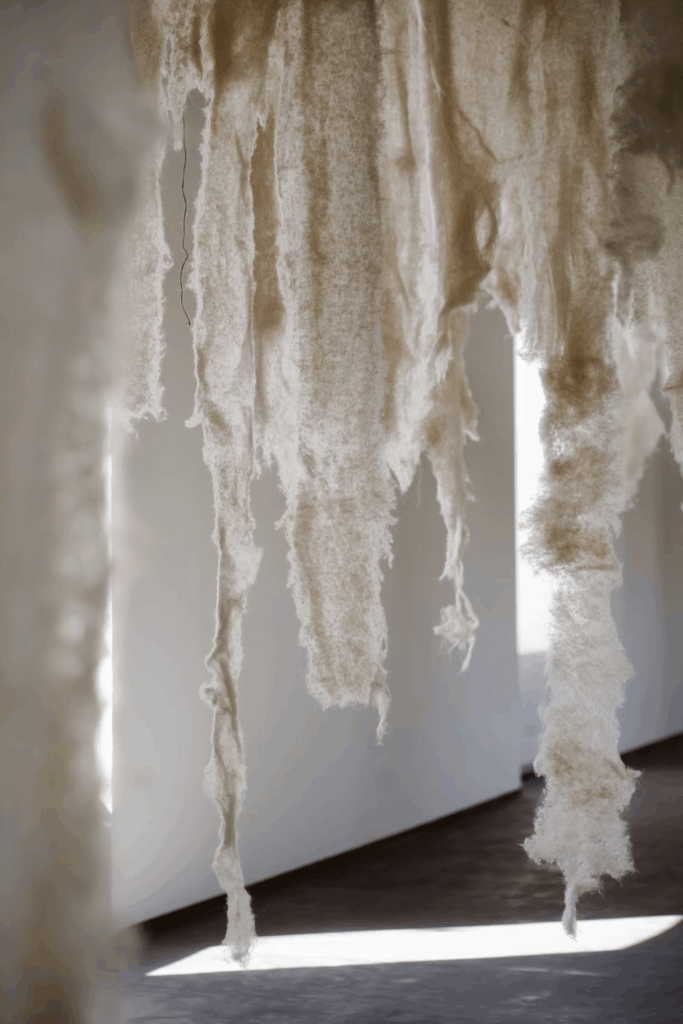
Made from raw, unspun wool, the work evokes glaciers, rivers, wind, and flowing water while recalling the ice fields that once shaped the Valle di Susa. Visitors move beneath its cascading strands, experiencing a landscape where nature, history, and memory remain closely entwined.
Material, poetry, and decolonial practices
For more than five decades, Vicuña has explored decolonial ideas through ephemeral materials, found objects, and collective gestures. El glaciar ido expands this approach with videos, songs, performances, and newly commissioned wall poems that deepen the dialogue between language, landscape, and ecological awareness. A forthcoming publication further examines her long-standing engagement with glaciers and environmental change.
Community participation is woven into the project. During its development, local residents joined walks along the Dora Riparia River and the Avigliana Lakes, gathering natural materials later incorporated into an outdoor installation created with students from the Accademia Albertina di Belle Arti in Turin.
Curated by Marcella Beccaria, the exhibition also reflects on cultural and political loss. Vicuña’s knotless quipu becomes a poignant symbol of disappearing glaciers, fading memory, and lives erased under Chile’s dictatorship, binding environmental fragility to human history through sculpture, poetry, and shared experience.
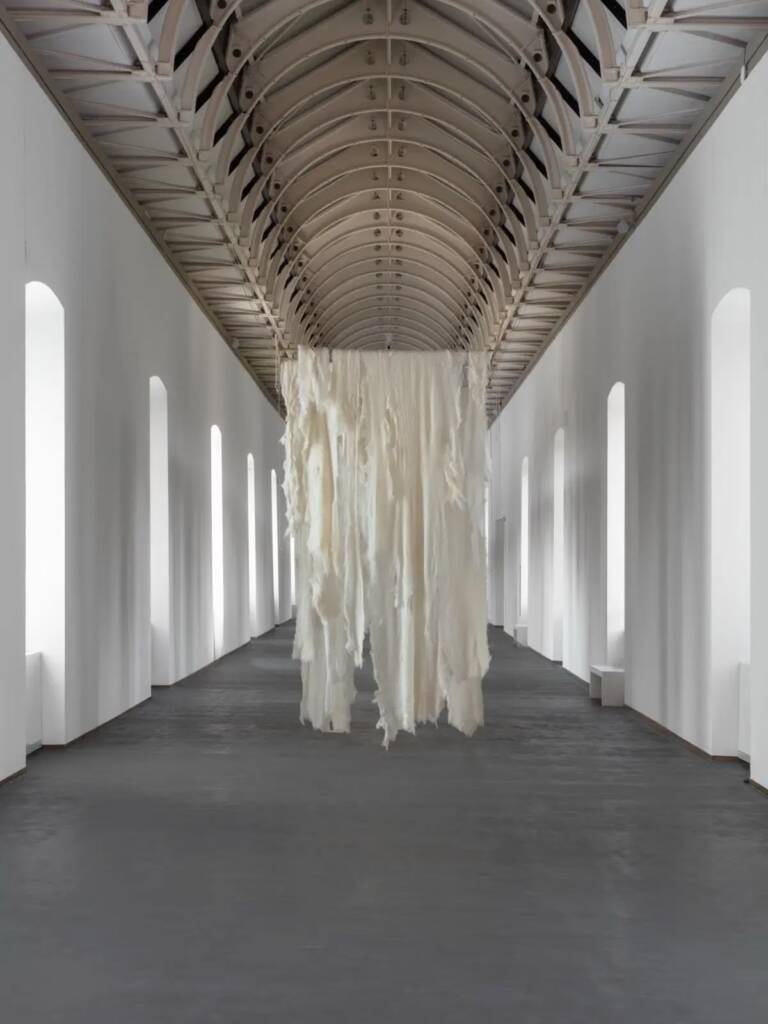
Photography by SEBASTIANO PELLION DI PERSANO
Courtesy of CECILIA VICUÑA, by SIAE
Courtesy of CECILIA VICUÑA, by SIAE
Photography by SEBASTIANO PELLION DI PERSANO
Courtesy of CECILIA VICUÑA, by SIAE
Photography by SEBASTIANO PELLION DI PERSANO
Courtesy of CECILIA VICUÑA, by SIAE