0xDEAFBEEF Art Basel generative art AI and art
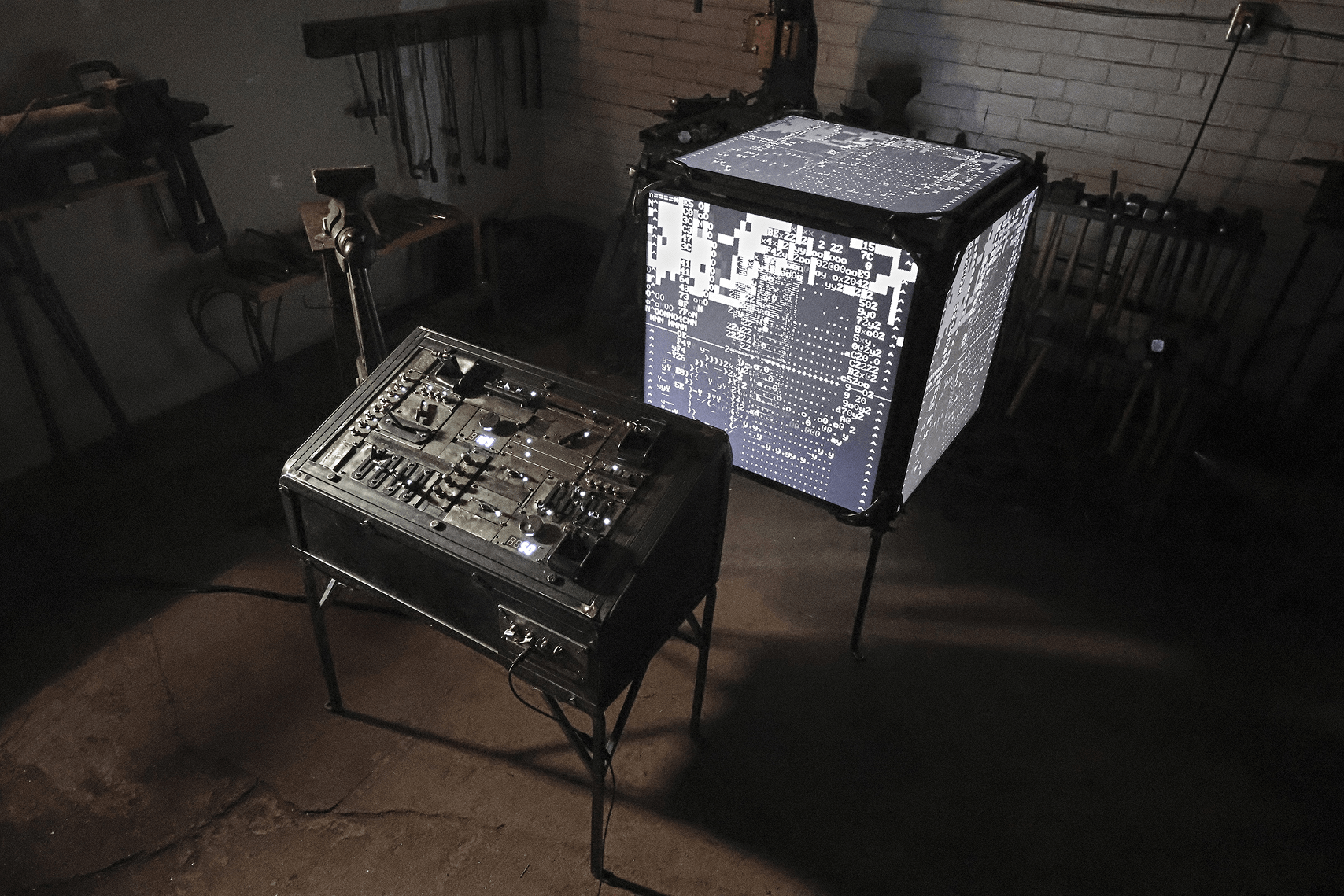
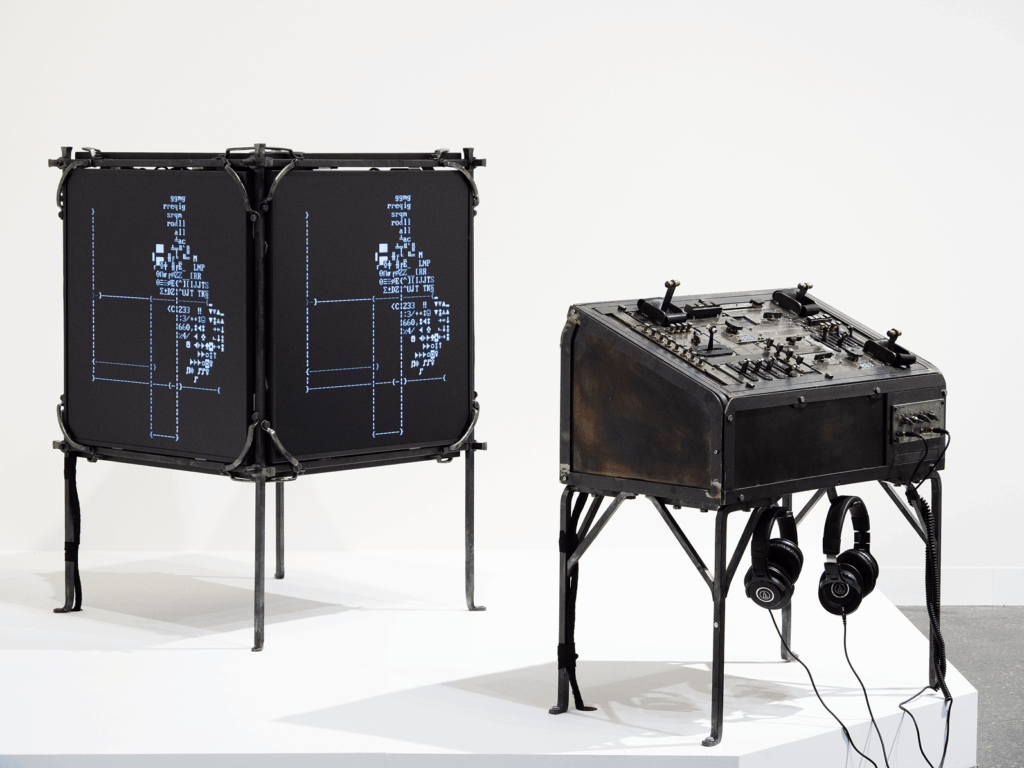
0XDEAFBEEF, ‘Glitchbox,’ 2021-25, Forged iron, electronics, generative code. Courtesy of 0xDEAFBEEF and ASPREY STUDIO

Connecting code and metal: a conversation with 0xDEAFBEEF

0xDEAFBEEF is an artist whose work connects two seemingly distant worlds: the precision of code and the raw physicality of metalworking. Based in Toronto, the artist-engineer, musician, and blacksmith has spent over two decades weaving together code, sound, and metal. His practice draws from a minimalist ethos, rooted in low-level programming and traditional craftsmanship, reflecting a thoughtful engagement with the material and immaterial forces shaping our era.

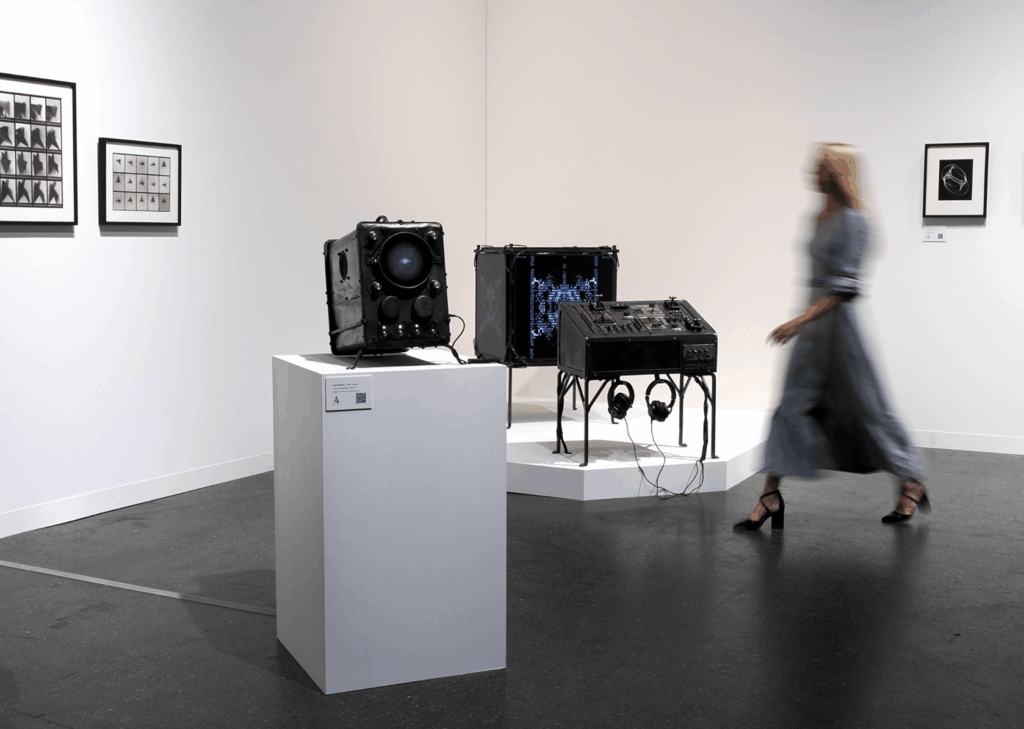
This summer, Asprey Studio presented his solo show Matter and Signal at Art Basel in Basel, in the Zero 10 section. Featuring generative audiovisual pieces paired with hand-forged iron sculptures, it highlights the mindful dialogue between traditional craftsmanship and contemporary digital practice. 0xDEAFBEEF’s work acknowledges the history of electronic art, referencing other artists such as Ben Laposky and Mary Ellen Bute. hube spoke with 0xDEAFBEEF about the philosophy of his work, recurring themes in his practice, and the evolving relationship between AI and art.

hube: Looking back, whose influence do you still recognise most clearly in your practice today?

0xDEAFBEEF: I might struggle to say how exactly they influence my current practice, but there are some people that have had a strong influence at various times in my life: Arthur Ganson, a kinetic sculptor; Max Matthews, computer music pioneer; Samuel Yellin, a craftsman; Frank Zappa, composer and misfit; and Jan Svankmajer, a filmmaker and writer.

h: Your work often relies on very minimal tools. What draws you to this kind of reduction, and how does limitation actually open up more creative space for you?

0xDEAFBEEF: I write low-level code to produce sound and animation. I also work metal as a blacksmith. It may seem strange, but there are parallels between these two practices. The motivation in both stems from a desire to reclaim agency in a world of accelerating technological change. I believe craft takes on special meaning in an age of generative media. There is power in knowing what to do with your hands. I don’t know if it opens up more creative space, but manual skill gives one a sense of position in the world. That alone can be freeing.

h: Asprey Studio is presenting your solo show Matter and Signal at Art Basel in the Zero 10 section. What does the title represent in this body of work, and how does it capture the interplay between physical materiality and digital information in your practice?

0xDEAFBEEF: These are themes that I keep coming back to. I see a longstanding tension between information and material embodiment: in Plato’s ideal forms, in the first wave of cybernetics that privileged information as pure and decontextualized, in the digital culture of the 90s with mind uploading and virtual worlds, and now with AI. On the other side is phenomenology and observing how much embodied, situated experience remains stubbornly important to us, despite every technological advancement.
0xDEAFBEEF
Art Basel
generative art
AI and art
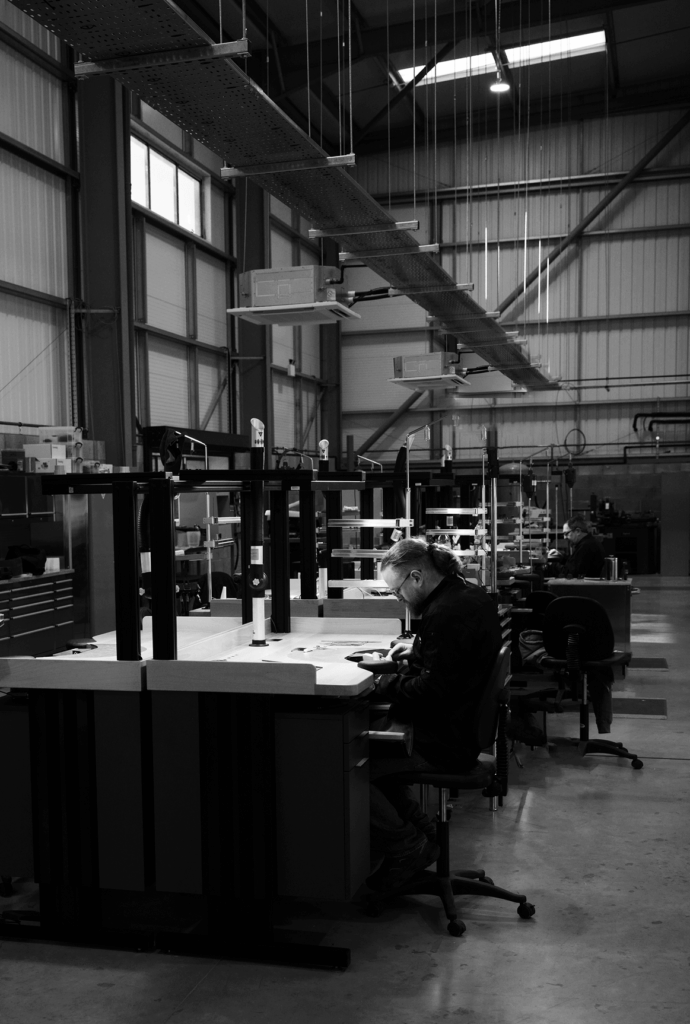
ASPREY STUDIO ATELIER in Kent, England, UK, 2026
0xDEAFBEEF
Art Basel
generative art
AI and art
0xDEAFBEEF
Art Basel
generative art
AI and art
0xDEAFBEEF
Art Basel
generative art
AI and art
0xDEAFBEEF
Art Basel
generative art
AI and art
0xDEAFBEEF
Synth Poem: Oscilloscope, 2021-26, Forged iron, electronics, generative code
Courtesy of 0xDEAFBEEF and ASPREY STUDIO
0xDEAFBEEF
Art Basel
generative art
AI and art
0xDEAFBEEF
Chronophotograph #226, 2023, Platinum-Palladium photographic print
Courtesy of 0xDEAFBEEF and ASPREY STUDIO
0xDEAFBEEF
Art Basel
generative art
AI and art
ASPREY STUDIO ATELIER in Kent, England, UK, 2026

h: Matter and Signal is described as a new generative digital and physical project. Can you walk us through how the sculptural, handcrafted elements dialogue with the generative code and on-chain components in this series?

0xDEAFBEEF: I’m showing a variety of works, both existing and new, that involve forged iron and time-based systems whose behavior is mediated by blockchain rules. I’ll focus on one.

Synth Poems (2021) were originally a collection of 128 unique digital audiovisual works, procedurally generated by C code stored on a blockchain. They recall analog sound synthesis and a sound-driven oscilloscope visualization as an intentional reference to early electronic art.

The promise and fears of technologies have always galvanized the human imagination. The concept was for the original purely digital system to cross over into a physical embodiment; one that brings to life the ethereal qualities of electricity and radio communication. Synth Poem Oscilloscopes (2026) are handcrafted, interactive audiovisual sculptures that reference vintage oscilloscopes and their early creative use in art and experimental film by artists like Ben Laposky and Mary Ellen Bute.

h: This presentation marks your debut with Asprey Studio at Art Basel. How did this partnership come about, and in what ways does working with a studio renowned for precious metal craftsmanship align with—or expand—your own blacksmithing background?

0xDEAFBEEF: Asprey Studio and I have both been active in many of the same digital art communities. They have established a strong track record of presenting artists at Art Basel, from Miami to Hong Kong. They are both a gallery and a working atelier based in Kent, UK, where master silversmiths and digital artists work under the same roof.

The collaboration felt natural because we share a deep interest in how traditional techniques can engage with new technologies. Craft is not just about handmade objects; it’s about collective knowledge and cultural history. The history of metalsmithing institutions in the UK is especially rich, and it’s something I’d like to learn more about. The Arts and Crafts movement originated in London as a response to the Industrial Revolution, and some of the questions it raised about the relationship between technology, labour, and creativity feel relevant today as we navigate another period of profound technological change.

h: How do you see Matter and Signal contributing to conversations about the future of hybrid art-making, especially in a major institutional fair setting like Art Basel?

0xDEAFBEEF: Ideally, we can reconsider why it’s even thought of as “hybrid,” or why there is a special category of distinction for “digital art.” Artists have always used—and will always use—the materials and technologies that exist around them.

h: You’ve participated in major exhibitions, including a collaboration with LACMA. How have these institutional contexts influenced the evolution of your practice or audience reach?

0xDEAFBEEF: The influence has been positive. I’m privileged to have this opportunity, and that’s challenged me to bring my very best. Working with LACMA allowed me to research the history of photography, which resulted in Chronophotographs (2023), a collection of generative images inspired by Eadweard Muybridge and examining how photography and blockchain are both time-based records seen as sources of “truth,” and the limits therein.

Glitchbox (2021–2025) was purpose-built for the Toledo Museum of Art exhibition Infinite Images: The Art of Algorithms. There were many design challenges that don’t often come up in purely digital works. Making a weird machine that people will touch in a museum setting requires attention to safety, physical accessibility, and durability. Those aspects were very challenging and influenced my work and my thinking. If purely digital works get to sidestep these concerns, we must ask what else gets left behind in the virtual.

PAYPHONE #20 From the Forge, Feral sounds transform Silence, 2024
Online exhibition SOUND MACHINES, 2024, curated by MOMA

h: Generative art often raises questions about randomness versus control. Where do you position your work on that spectrum, and what role does true emergence play in your generative systems?

0xDEAFBEEF: The substantive information-theoretic work was already done in the 60s by artists like Vera Molnar and Frieder Nake, influenced by philosopher Max Bense. Today, I see the “order vs chaos” theme in generative art as a narrow formalism and a reductive trope.

All human actions are a combination of intent and circumstance. Serendipity has always played a role in art and science. Artists’ processes have long been exploratory, iterative, creating a series of variations. You can do that with paint, and you can do it with machines. I don’t think anyone is surprised anymore that you can run a program to generate a random image or sound. Generative AI and prompting have commoditized it.

Some of my work is admittedly formalist. But what I think is far more interesting, and what I strive for, is to plug generative systems into wider networks of meaning. What is their historical context? What is their relationship to the current social, economic, and technological systems that shape everything about our lives?

h: How has the broader cultural and technological landscape—like shifts in digital consumption and AI—changed the way you approach creating work that feels timeless yet of its moment?

0xDEAFBEEF: From the start, the 0xDEAFBEEF project was an attempt to find an anchor amidst accelerating technological change. The biggest way that AI has changed my work is in its context. It means something different now. It’s not a John Henry story, and it’s not a value judgement, but it is a choice. I like to work with metal, and I like to write code. I want to have those experiences. Whether some other person or machine can do it faster or better doesn’t really matter.

h: If your body of work could be experienced as one overarching “piece,” what story or sensation would you hope it leaves with viewers about technology, humanity, creativity, and time?

0xDEAFBEEF: I feel that in my overarching practice, I keep circling back to themes of time, permanence, and the duality of real and virtual. It’s really just a document of how one person has negotiated a fraught relationship with the changing technologies of their time. I try to bring to bear all my skills and experience in code, sound and craft as a unique site for exploration and reflection.

0xDEAFBEEF
Art Basel
generative art
AI and art
0xDEAFBEEF
Hashmarks, 2023, Digital artwork
Courtesy of 0xDEAFBEEF and ASPREY STUDIO
0xDEAFBEEF
Art Basel
generative art
AI and art
DEAFBEEF
Synth Poem #13, 2021, Digital artwork
Courtesy of 0xDEAFBEEF and ASPREY STUDIO
0xDEAFBEEF
Art Basel
generative art
AI and art
0xDEAFBEEF
Chronophotograph #266, 2023, Platinum-Palladium photographic print
Courtesy of 0xDEAFBEEF and ASPREY STUDIO
0xDEAFBEEF
Art Basel
generative art
AI and art
BEN LAPOSKY
Oscillon 42, 1953, Photograph, Vintage silver gelatin print
Courtesy of 0xDEAFBEEF and ASPREY STUDIO
0xDEAFBEEF
Art Basel
generative art
AI and art
BEN LAPOSKY
Oscillon 16, 1953, Photograph, Vintage silver gelatin print
Courtesy of 0xDEAFBEEF and ASPREY STUDIO

Special thanks to ATELIER PUBLIC RELATIONS

ISSUE 8

issue no8

Discover the new issue — available now