This winter, Cooper Hewitt Smithsonian Design Museum strikes a resonant chord with Art of Noise, a sweeping exhibition tracing the history of music through the lens of design. On view from February 13th through August 16th, 2026, the show—organized by San Francisco Museum of Modern Art and adapted for its East Coast presentation—brings together more than 300 works that explore how visual culture, product innovation, and sound installation have shaped the way we listen.
Spanning the museum’s third-floor galleries and extending into immersive environments on the first floor, Art of Noise is both a historical survey and a sensory experience. From psychedelic posters to pioneering hi-fi systems, the exhibition reveals how design transforms sound into something we see, touch, and remember.
Experience music reimagined through the lens of graphic design
The first major section is devoted to graphic design and its powerful dialogue with music. Album covers, concert posters, and flyers demonstrate how typography, color, and composition become inseparable from sound itself.
Highlights include posters by Milton Glaser, Victor Moscoso, Bonnie MacLean, and Takenobu Igarashi, alongside dozens of psychedelic works from 1960s and 1970s San Francisco. For its New York presentation, Cooper Hewitt integrates material from the city’s folk, disco, salsa, punk, new wave, and hip-hop scenes—movements that shaped not only a soundtrack but a visual identity.
Album covers by Reid Miles for Blue Note Records, Izzy Sanabria’s vibrant salsa graphics, and the bold work of Tibor Kalman and Maira Kalman for Talking Heads and David Byrne illustrate how three distinct New York design voices captured the spirit of their genres. Together, these works demonstrate how graphic design amplifies music long before the first note is heard.
Music technology and innovative product design
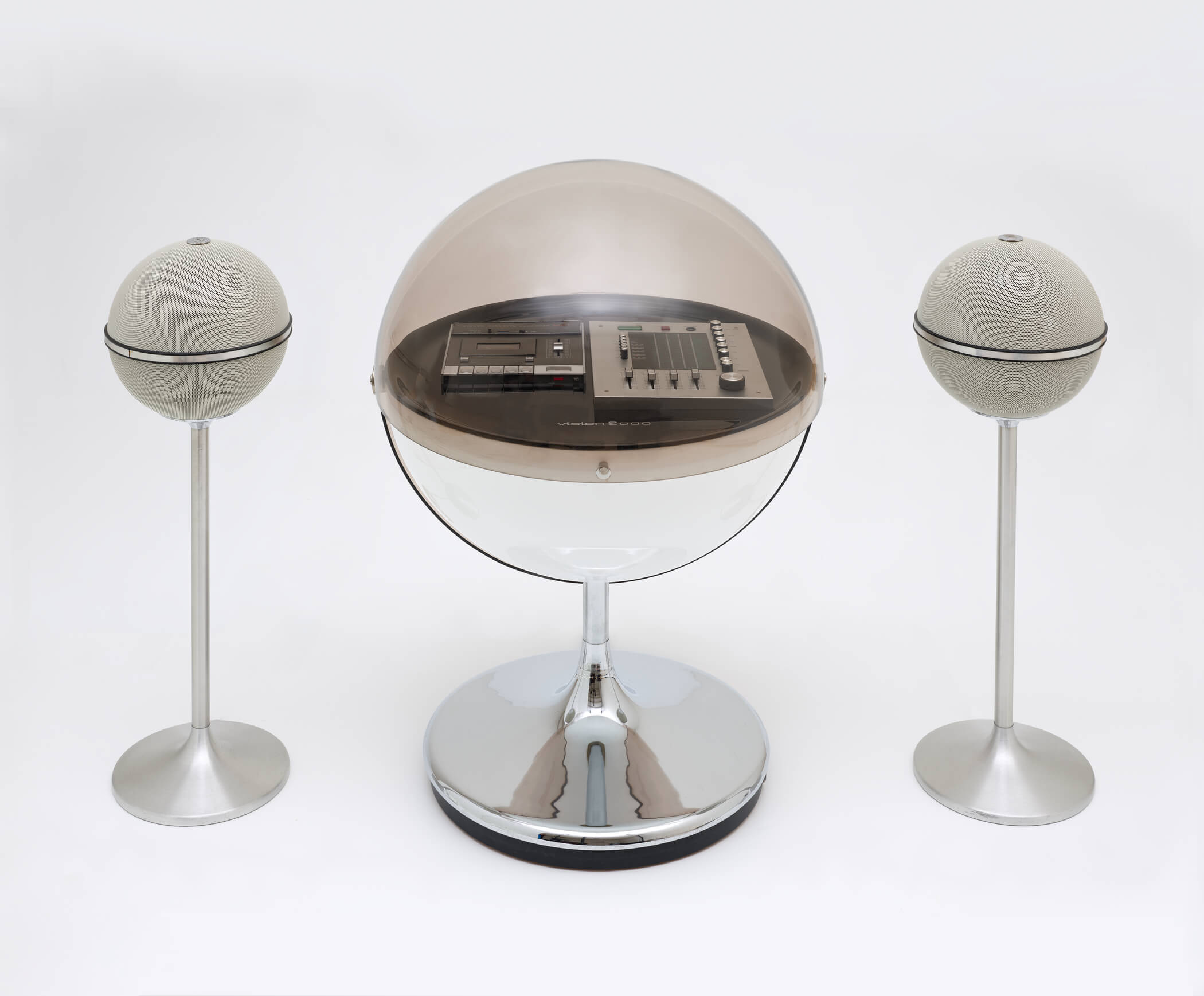
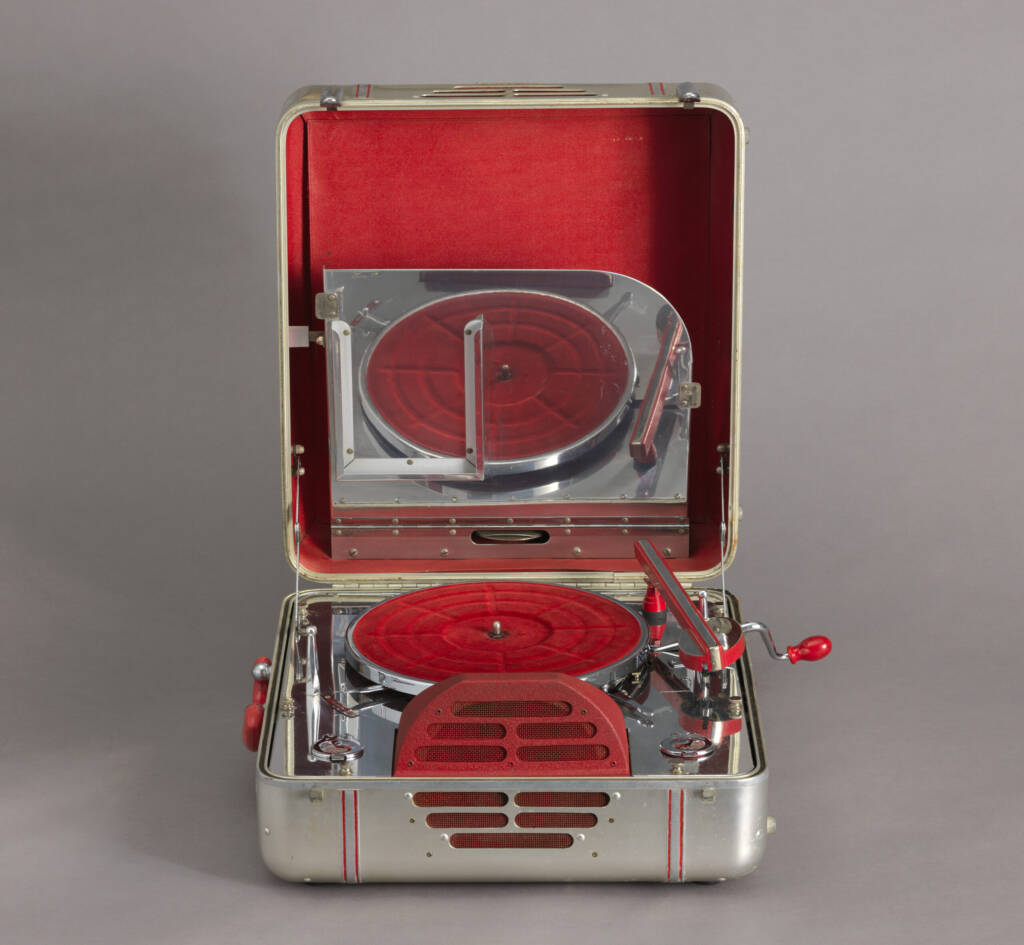
Another section examines the evolution of music technology—from early phonographs to digital streaming devices—mapping how product design has continuously reshaped our relationship to sound.
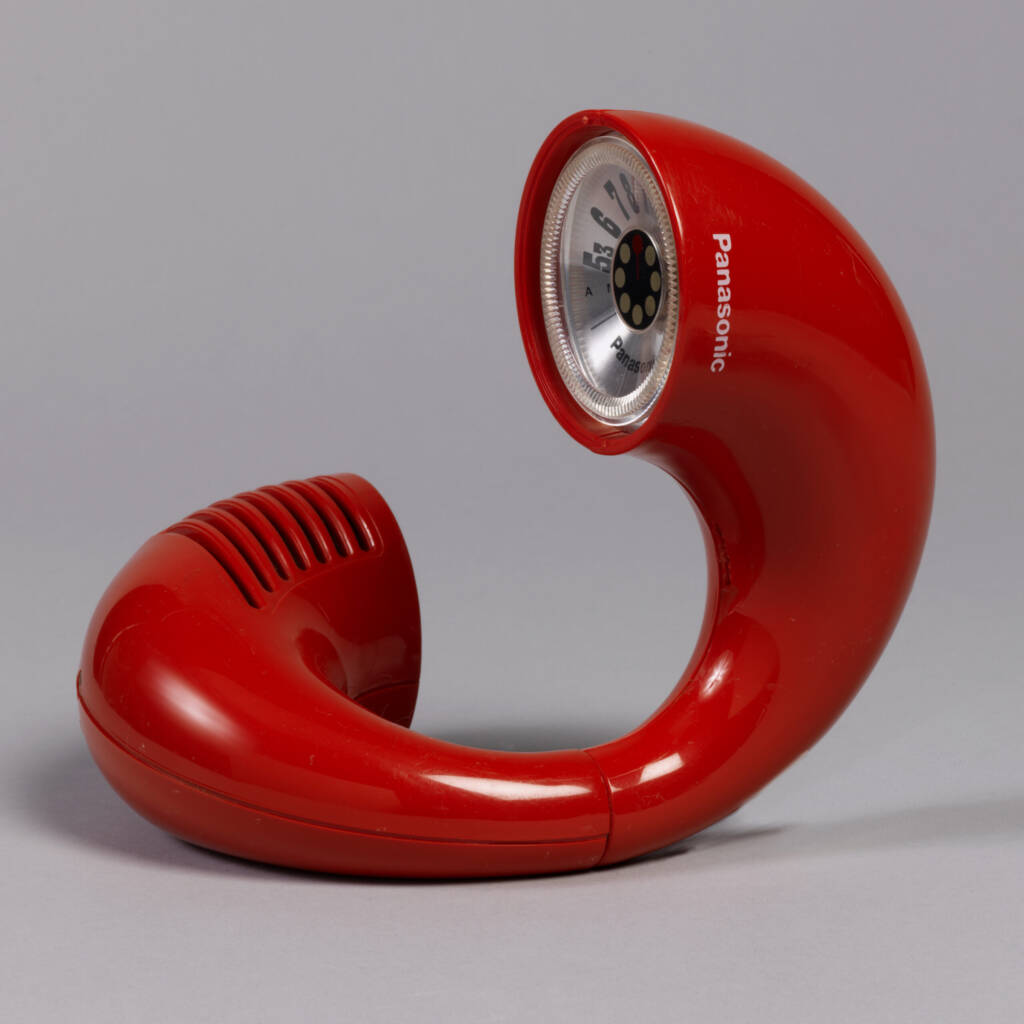
On display are jukeboxes, radios, boomboxes, turntables, speakers, and headphones dating from the early 1900s to 2023. Visitors can trace the development of playback through transistor radios, hi-fi systems by Dieter Rams and Achille Castiglioni, and milestones such as the Sony Walkman and Apple iPod.
Experimental designs further challenge conventional listening experiences, including Ron Arad’s Concrete Stereo and Mathieu Lehanneur’s sculptural music player Power of Love. A standout feature is the choral sound installation by Stockholm-based studio teenage engineering—a group of sonic sculptures programmed to “sing” together, each with its own distinct vocal personality.
Listening Room by Devon Turnbull
At the heart of the exhibition is a monumental sound installation by Devon Turnbull, presented for the first time in the museum’s Carnegie Library. Titled HiFi Pursuit Listening Room Dream No. 3, the large-scale, handmade audio system is a continuation of Turnbull’s celebrated listening room series.
Known under the pseudonym OJAS, Turnbull has spent over two decades refining high-fidelity systems that envelop the listener in richly textured sound. At Cooper Hewitt, the listening room will be activated daily with curated sonic experiences, live operator sessions, and genre-specific playlists led by collectors, archivists, and musicians from New York and beyond. The result is not merely an exhibition component but a sanctuary for deep listening.
Exhibition design by teenage engineering
The exhibition environment itself is designed in collaboration with teenage engineering, whose groundbreaking speakers and synthesizers have garnered an international following. Visitors encounter an interactive seating landscape equipped with custom audio devices that allow them to explore curated playlists spanning genres and eras, with a special focus on New York’s diverse musical heritage.
By merging historic artifacts with contemporary interventions, Art of Noise demonstrates how design shapes every dimension of our musical experience—how and where we listen, how music is visually communicated, and how sound becomes embedded in memory. At Cooper Hewitt, the history of music unfolds not as a static archive, but as a living, resonant dialogue between object, image, and sound.
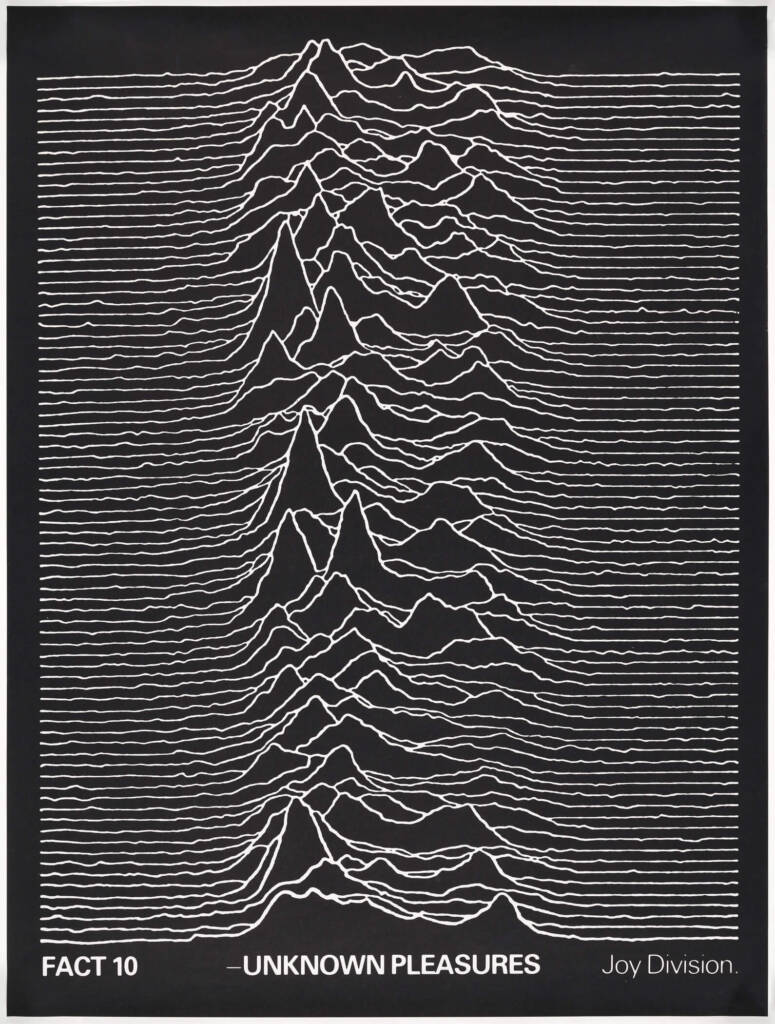
Unknown Pleasures. Poster. 1979. Designed by FACTORY RECORDS after PETER SAVILLE. SAN FRANCISCO MUSEUM OF MODERN ART, purchase through a gift of JENNY EMERSON and ACCESSIONS COMMITTEE FUND; © PETER SAVILLE; photography by TENARI TUATAGALOA
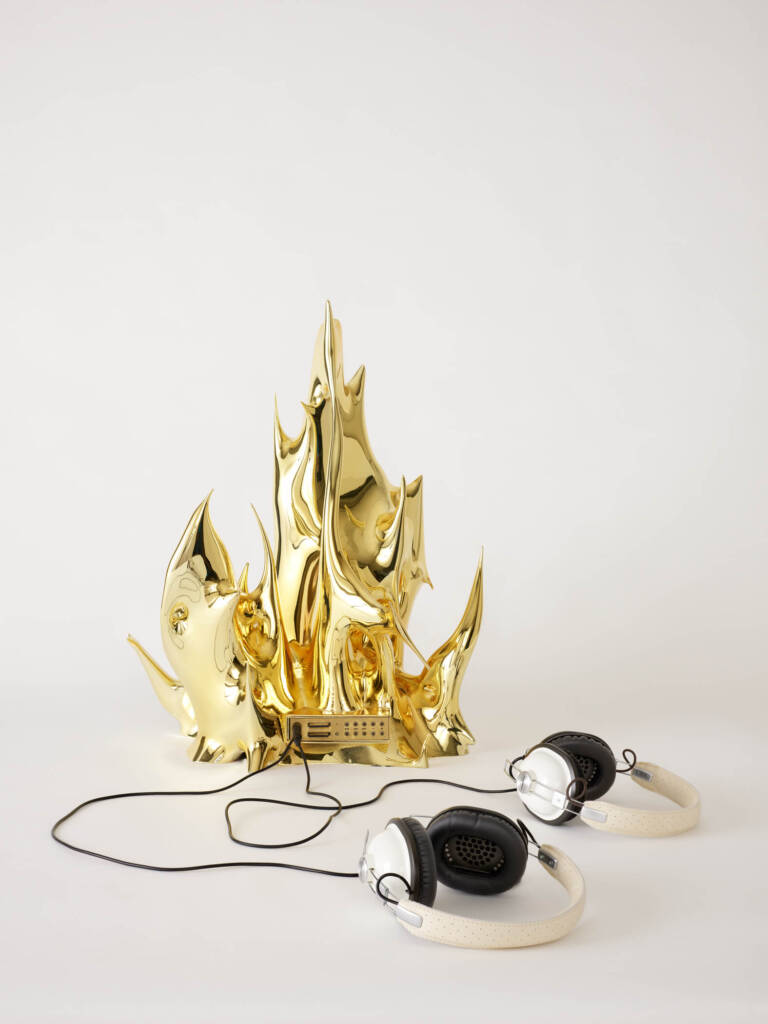
Power of Love, 2009; SAN FRANCISCO MUSEUM OF MODERN ART, Accessions Committee fund purchase;
Courtesy of MATHIEU LEHANNEUR; photography by DON ROSS
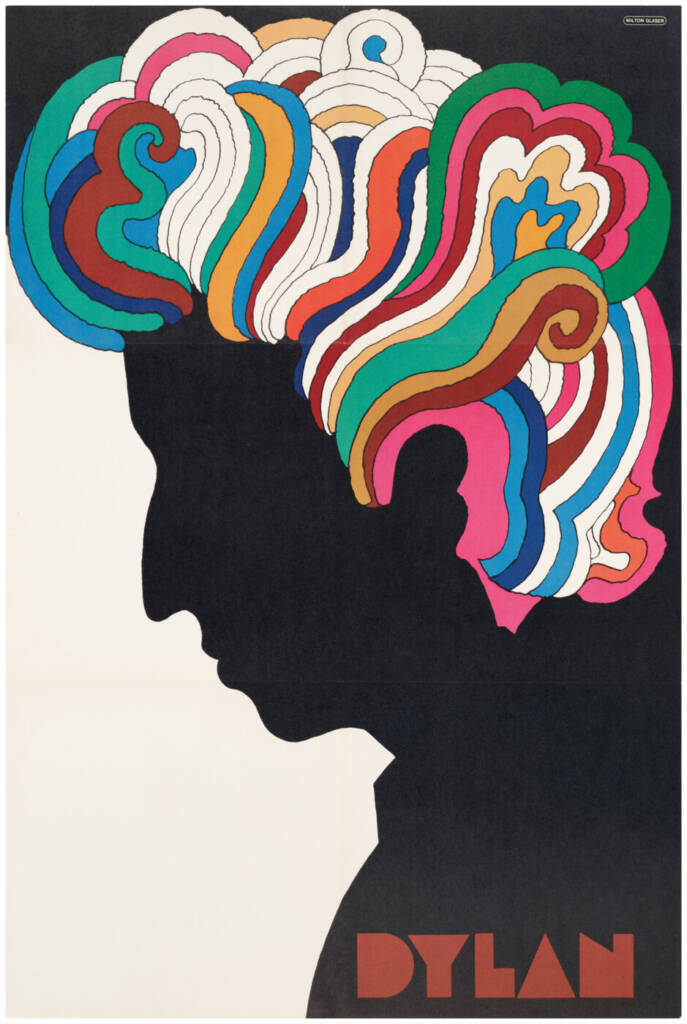
Dylan Poster, 1967, SAN FRANCISCO MUSEUM OF MODERN ART, gift of the designer; © MILTON GLASER, permission of the estate of MILTON GLASER; photography by TENARI TUATAGALOA
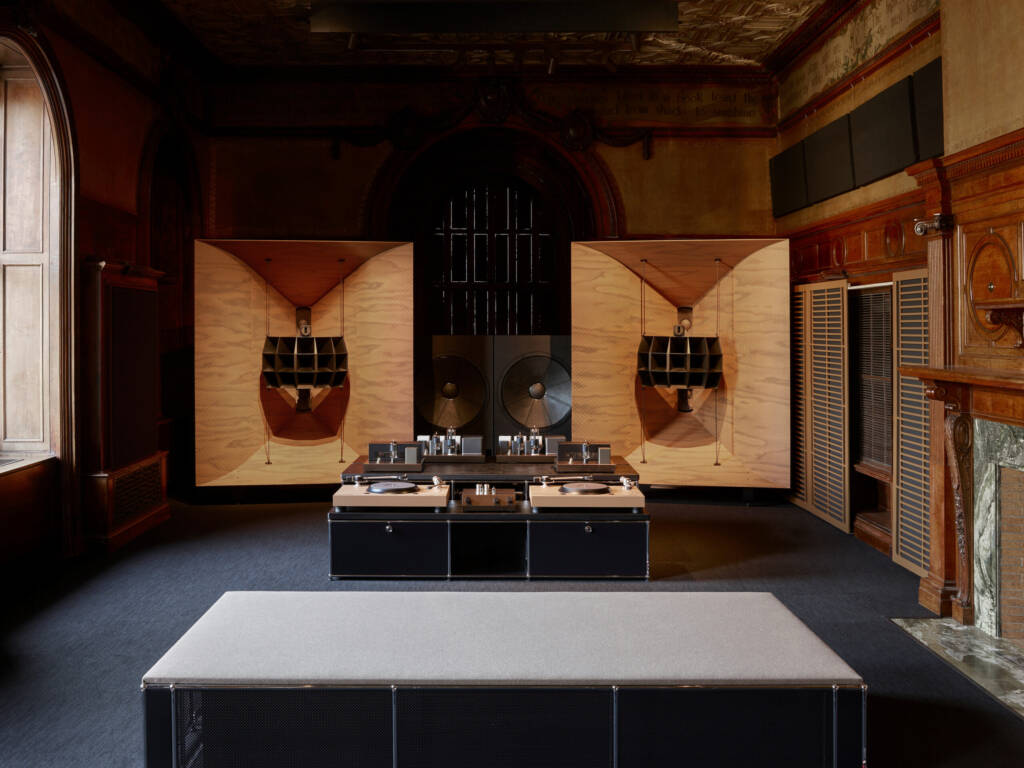
HiFi Pursuit Listening Room Dream No. 3, COOPER HEWITT, SMITHSONIAN DESIGN MUSEUM, 2025
Courtesy of DEVON TURNBULL/LISSON GALLERY; photography by MARK WALDHAUSER