During Venice Biennale 2026, Anish Kapoor will present an ambitious solo exhibition at Palazzo Manfrin in Cannaregio, on view from May 5th to August 9th, 2026. Staged in the historic 16th-century Venetian landmark, the show unfolds alongside the 61st International Art Exhibition of Venice Biennale and marks only the second time the palazzo opens its doors to the public.
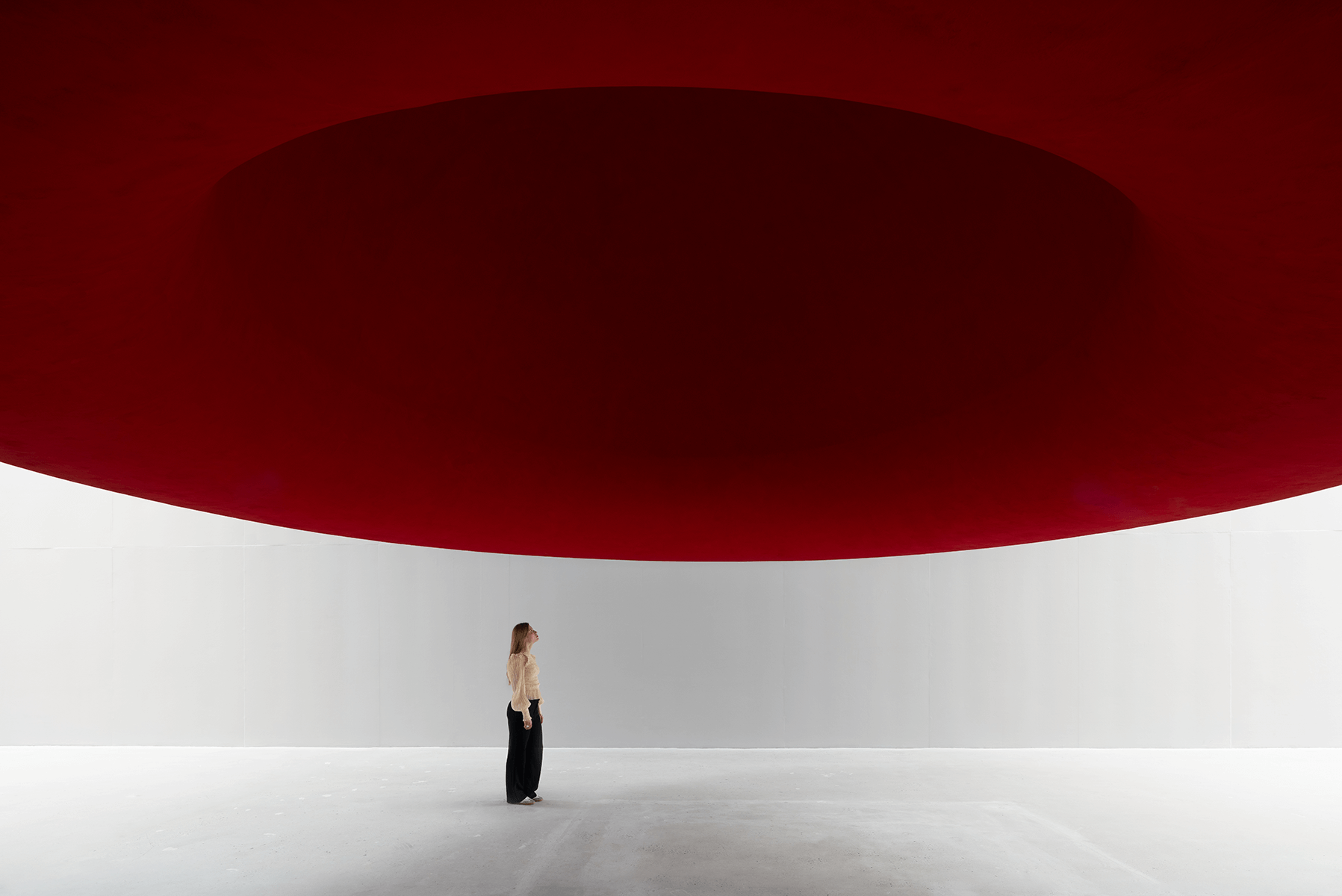
Bringing together large-scale installations, architectural models, and mirror-polished stainless-steel sculptures spanning five decades, the exhibition offers a rare insight into Kapoor’s sculptural thinking at architectural scale. It traces the evolution of works that hover between object and environment—between abyss and sublime.
At its core, the project examines Kapoor’s long-standing fascination with space as a material. Monumental pieces such as At the Edge of the World (1998) and Descent into Limbo (1992) will be presented alongside 50 to 70 architectural models, revealing how sketchbooks and studio experiments generate some of his most ambitious works. Realised projects—including Ark Nova (2013), the world’s first inflatable concert hall, and the Monte Sant’Angelo Metro Station in Naples—sit in dialogue with speculative proposals that remain, for now, unrealised.
Among the new works is an immersive architectural environment composed of silicone and paint—a room-sized intervention that reflects Kapoor’s current painting practice. As the artist tells The Art Newspaper, “For a long time I’d been thinking of my work as potential architecture. I’ve always been convinced by the idea that to create new art you have to create new space.” The exhibition at Palazzo Manfrin becomes precisely that: a meditation on space as both physical and psychological terrain.
Rather than offering a retrospective in the traditional sense, the exhibition opens up the artist’s process—foregrounding experimentation, unrealised ideas, and the poetic tension between sculpture and architecture. During Venice Biennale 2026, Palazzo Manfrin becomes not only a setting for Kapoor’s work, but a stage for his enduring question: how can art create entirely new space for thought and perception?