
Antoine Maisondieu Christian Astuguevieille perfumery perfume craftsmanship
Photography by JAMIE HAWKESWORTH. Creative Direction by RONNIE COOKE NEWHOUSE and KARL BOLANDER

Crafting ‘To Vetiver’ for Comme des Garçons Parfums: A Conversation with Antoine Maisondieu

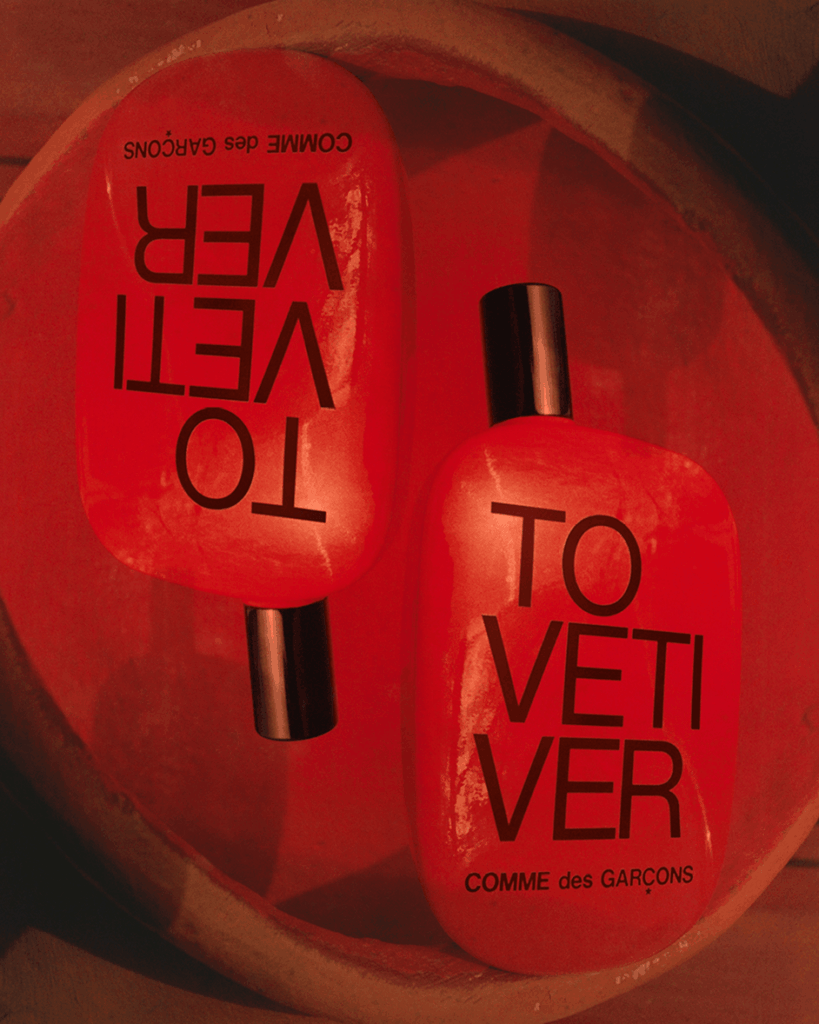
In memory of Christian Astuguevieille, Comme des Garçons Parfums has launched To Vetiver. Deeply personal and poetic, this fragrance captures the rebellious spirit that defined the legendary creative director, turning a profound dedication to perfumery into an emotional tribute. It is an ode to vetiver that feels both ancient and alive—an olfactory journey without destination, rich in spices, musk, and myrrh.

Crafted by Antoine Maisondieu, a master perfumer and longtime collaborator of Astuguevieille, To Vetiver is the final completed work born from their shared creative dialogue. Maisondieu, who has worked on many Comme des Garçons fragrances, infused the scent with a mysterious, almost magical spirit. Drawing inspiration from ancient ingredients and his work with Astuguevieille, he created a composition that feels both raw and refined through his deep commitment to perfume craftsmanship. It embodies the house’s enduring philosophy: fragrance as artistic expression that challenges the senses and celebrates difference. In conversation with hube, Maisondieu opens up about a deep emotional bond with Christian Astuguevieille, a lifelong connection to perfumery, and the inspiration behind To Vetiver.

hube: Comme des Garçons Parfums has long been known for pushing the boundaries of what fragrance can be—often more artistic manifesto than traditional perfume. How would you define the olfactory identity and philosophy of CDG Parfums in its current chapter?

Antoine Maisondieu: I think art has always been very important for Comme des Garçons. You need to be creative. A lot of that came from working with Christian Astuguevieille, who was an artist himself. As for me, I see myself more as a craftsman, so I’m not interpreting things. In this case, Christian was asking, “How do you make a new vetiver for Comme des Garçons?”—because some have already been made.

The Comme des Garçons identity always remains the same. It’s very artistic, creative, and carries something different. You smell it and it feels different from the very beginning—it can be almost a bit disturbing, not too beautiful.

h: To Vetiver is described as “a journey without destination, an ode to vetiver.” What does this perfume represent for you personally—on a deeper, almost philosophical level?

AM: I wanted to put something magical inside it—like voodoo. I was very inspired by that mysterious, a bit dark universe. I wanted to play with spices, along with vetiver and some saltiness. So I used a lot of black pepper, and I also added a resinous note to create this mysterious, magical feeling.

It is this idea of something sacred and ancient. Vetiver is often coming from Haiti, and I’m always really inspired by that. For me, initially, even the name was “Vetiver Voodoo.” That’s the name of the perfume I have in my head. That’s what I wanted to convey. Unfortunately, I don’t really remember the exact words of Christian—it’s funny because I normally always do—but I guess it was his words that inspired me.
Antoine Maisondieu
Christian Astuguevieille 
perfumery
perfume craftsmanship
Photography by JAMIE HAWKESWORTH 
Creative Direction by RONNIE COOKE NEWHOUSE and KARL BOLANDER
Antoine Maisondieu
Christian Astuguevieille 
perfumery
perfume craftsmanship
Courtesy of COMME DES GARÇONS

h: Creating a perfume that became the final completed work of the late Christian Astuguevieille must have been a profoundly intimate process. Could you share something about the creative dialogue and the emotional atmosphere in which To Vetiver was born?

AM: At that time, Christian was staying in Britain. He didn’t really want to travel, so it was harder to meet with him in person, and we mostly spoke on the phone. But we know each other very well after years of working together, so I felt like it was so close.

It’s very emotional for me to talk about it, because Christian taught me a lot of things. We shared the same kind of spirit—being rebellious and at the same time creative and artistic. As for the creative process… Christian was smelling with his heart and with his nose—I guess never with his eyes. So you really had to touch him.

h: The composition brings together ancient, almost sacred materials—vetiver, myrrh, opoponax, and musk. Is there one particular accord or raw material in To Vetiver that you find especially moving or revealing, and why?

AM: For me, myrrh and opoponax do that. They are very ancient materials, so there’s a certain magic inside them. All the ingredients have that—still, if I had to choose, I would say myrrh and opoponax.

h: The perfume launches in Venice in conjunction with Dries Van Noten’s exhibition The Only True Protest is Beauty. How do you see the dialogue between the spirit of To Vetiver and the idea that beauty itself can be a form of protest or resistance?

AM: I think any kind of creation can be a form of protest and is inherently political. Especially with Comme des Garçons, this can reveal itself in several ways. Firstly, beauty is kind of frivolous nowadays. Then, it’s also not a very classical kind of beauty. In a time when everyone wants to look and be the same, I believe it’s political to create a fragrance that is different—not the idea of beauty you find in other brands.

I think it’s more of how we do things. The result is important, but what matters most is the way you make it. If you do things with your heart, if you do them together with someone like Christian, with an artist—if you make a perfume with a lot of passion but also a lot of fun, and you feel very close, like I did with Christian—then the result can be different and beautiful in its own way.

h: Beauty and memory are deeply intertwined in perfumery. Is there a particular smell or moment from your own life that you keep returning to as a source of inspiration or comfort?

AM: There are things that are part of my memory, but I don’t need to return to them. They’re constantly around me—it’s like if you’re a musician or a composer—the music you like is just there in your brain. You don’t need to go back to it.

In my office, I still have these little wooden towers that were used to hold samples of Bulgarian rose. As a kid, I would go to the office with my dad and granddad. They sold rose, and I’ve kept these towers ever since. So rose is very dear to my heart, but it doesn’t mean I use it all the time. It’s more that some perfumes haunt me and stay with me always. When I think of vetiver, it is, of course, Vettiveru by Comme des Garçons, which I love. There’s also Féminité du Bois. And Diorissimo—because it was my mum’s perfume. These things are constantly around you, and you don’t always know exactly what’s inspiring you. But then you think, “Okay, I want to make a vetiver. What is a vetiver really like?”

h: You work with materials that carry centuries of human history—resins, roots, woods. How does it feel to be a contemporary alchemist translating something ancient into a modern emotional experience?

AM: I don’t really feel like that. What I feel is that you need to have history in your creation. You need to take something from the past and then express it in a very modern way.

h: If you think about perfume as a dialogue between the material and the immaterial, between earth and emotion, what have you learned about human nature through this lifelong conversation?

AM: First of all, working on a fragrance teaches you how to keep it simple—and that’s important. You also learn that there is a market, and there are people, and they’re all different. Sometimes the person wearing the perfume can be as much of an expert as I am.

h: If a perfume could be a form of remembrance or continuation of a person’s spirit, what do you hope To Vetiver carries forward of Christian Astuguevieille’s vision and soul?

AM: To me it just carries Christian. I have already said it so many times, but he was someone almost magical to me. You go to see him and something magical is going to happen quite every time. It carries mainly Christian—his elegance, his rebelliousness, his humor, his precision, his craziness.

h: Looking ahead, what directions or new territories at CDG Parfums are you interested in exploring? Are there new emotions, materials, or artistic collaborations on the horizon that excite you?

AM: I’d love to do things that Comme des Garçons has never done before. I have already tried. We almost came up with something—we did it with Christian.

Comme des Garçons is not a brand that is too vanilla or flowery, and I think the best thing I would love to do would be something like a floral scent in the Comme des Garçons spirit. I would love to do that—to create the flower of Comme des Garçons.

h: If you could send a message in scent to the future—a fragrance that captures what humanity needs to remember or feel in the decades to come—what kind of perfume would that be?

AM: I don’t really know. The smell of mint, I would say. I thought that because mint is fresh and very natural. If the future becomes too synthetic, it would be a nice thing to smell nature.

I once worked on a project where I had to create the perfume of the future. My idea at the time was that in the future most ingredients will eventually become forbidden. So perfumers, and then perfumes themselves, would finally be forbidden. Perfume would become clandestine. You’d have to go, like in Blade Runner, to tiny shops to find mixtures you could use. They would be very simple, just a few ingredients. And more than anything—they couldn’t be too strong—which I love, because fragrances are so powerful. They couldn’t be, because it’s forbidden. If it’s too strong, people will find out.

Antoine Maisondieu
Christian Astuguevieille 
perfumery
perfume craftsmanship
Photography by JAMIE HAWKESWORTH 
Creative Direction by RONNIE COOKE NEWHOUSE and KARL BOLANDER

ISSUE 8

issue no8

Discover the new issue — available now