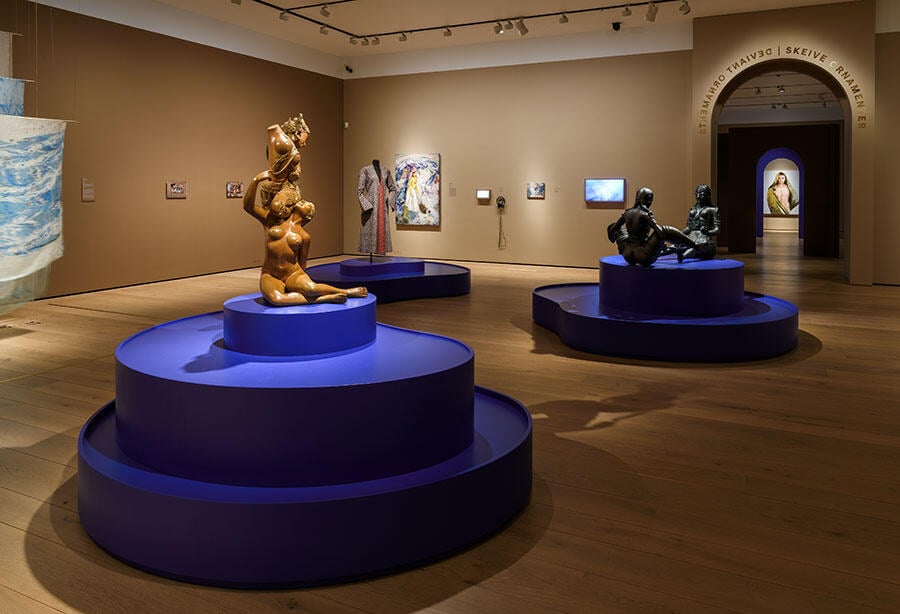
From November 28th, 2025 to March 15th, 2026, the National Museum of Norway in Oslo presents Deviant Ornaments, an ambitious exhibition exploring queer expression in Islamic art over the past 1,000 years. The show brings together historical artefacts and contemporary works to reveal the complex intersections of sexuality, ornamentation, and cultural heritage across centuries and continents.
‘Deviant Ornaments’: concept and vision
Curated by Noor Bhangu, ‘Deviant Ornaments’ examines the representation of queer identities in Islamic art, challenging the assumption that the tradition strictly forbids depictions of living beings. Spanning four continents and over a millennium, the exhibition combines textiles, wall tiles, decorative plates, illustrations, paintings, sculptures, and video works. Bhangu’s curatorial approach draws on both scholarly research and personal experience, highlighting the legacies of colonialism, Orientalism, and the historical erasure of sexual diversity.
The exhibition is divided into three thematic sections: Abundance, Ornamentation, and History of Sexuality. These spaces explore the erotic and expressive potential of ornament, while also connecting past and present interpretations of queer life within Islamic culture.
Key works and highlights
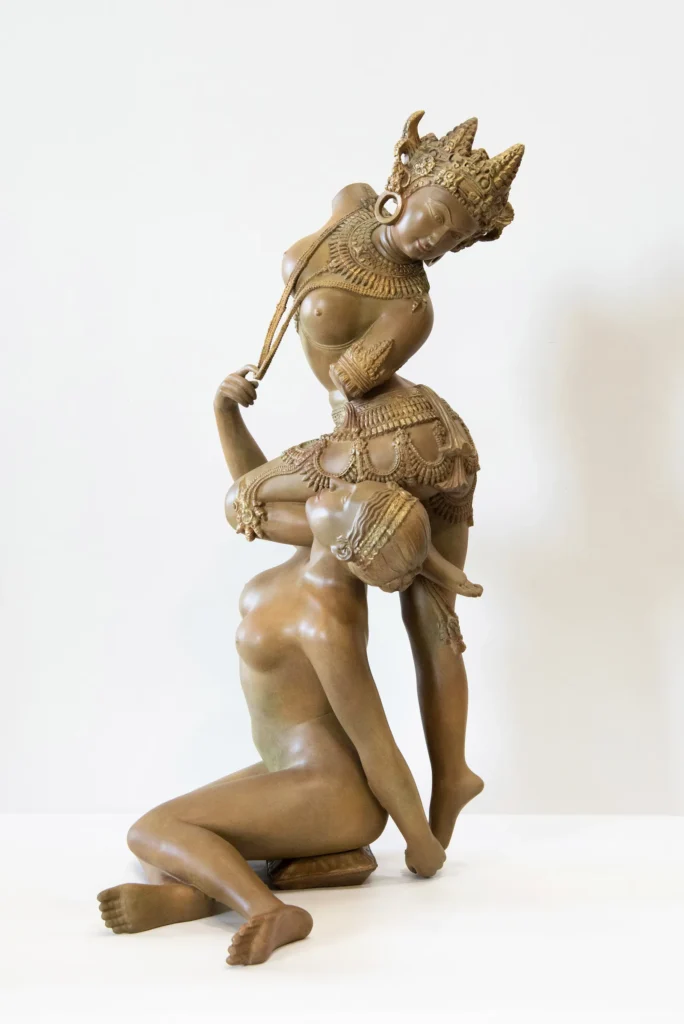
Among the standout contemporary pieces is Amorous Couple (2025) by Rah Eleh, a 3D-printed work inspired by a 17th-century Mughal miniature. The sculpture depicts two queer figures, blending historical reference with a bold reinterpretation of female sexuality in Islamic art.
In the section Abundance, Kasbah (2008) by Lynette Yiadom-Boakye portrays a Black, shrouded figure with ambiguous gender, referencing both North African architecture and colonial-era Orientalist painting, reclaiming space and identity in a contemporary context.
Damien Ajavon’s Chemin vers Oslo (2025), part of the Ornamentation section, uses textiles and protective symbols such as the Hand of Fatima to reflect on queer and Afro-diasporic histories, while acknowledging the challenges of presenting contentious cultural narratives.
Historical and contemporary dialogue
The exhibition challenges traditional readings of Islamic art, highlighting how ornament, pattern, and ritual can carry complex expressions of sexuality. It creates a dialogue between historical invisibility and contemporary visibility, showing that faith, cultural identity, and queer life are intertwined rather than opposed. By presenting over 40 works from 30 artists, Deviant Ornaments offers a rich, multilayered exploration of queer expression in Islamic art, inviting audiences to reconsider both historical and contemporary interpretations.
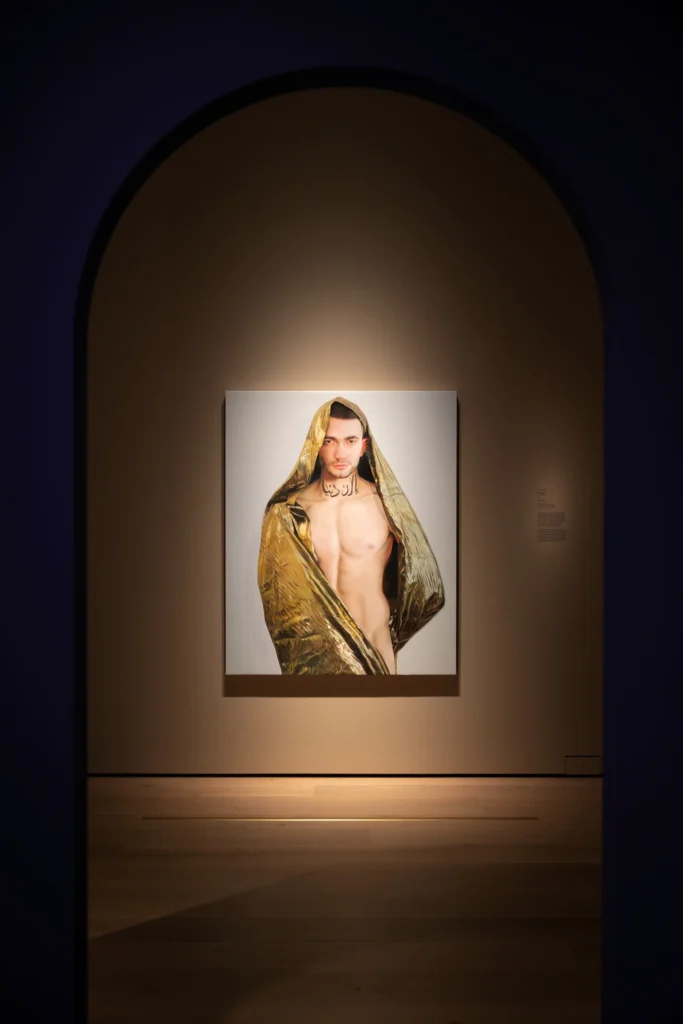
Fake World, 2011
Installation view. Photography by ANDREAS HARVIK, courtesy of NASJONALMUSEET
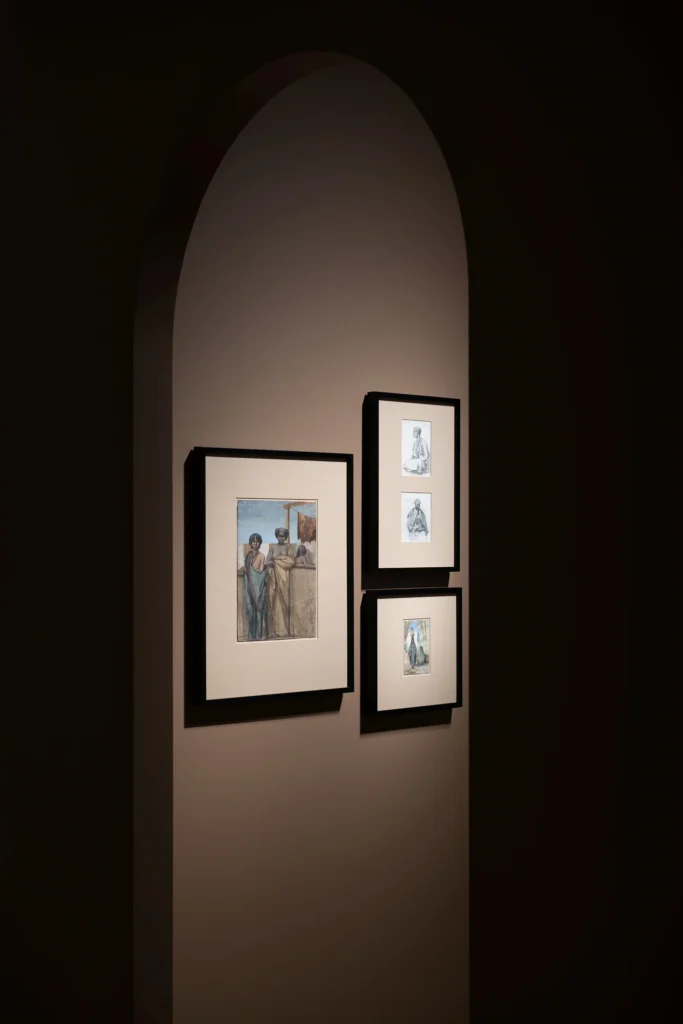
Photography by ANDREAS HARVIK, courtesy of NASJONALMUSEET
Promiscuous Intimacies, 2020
© Shahzia Sikander. Photography by ADAM REICH, courtesy of SEAN KELLY, New York / Los Angeles
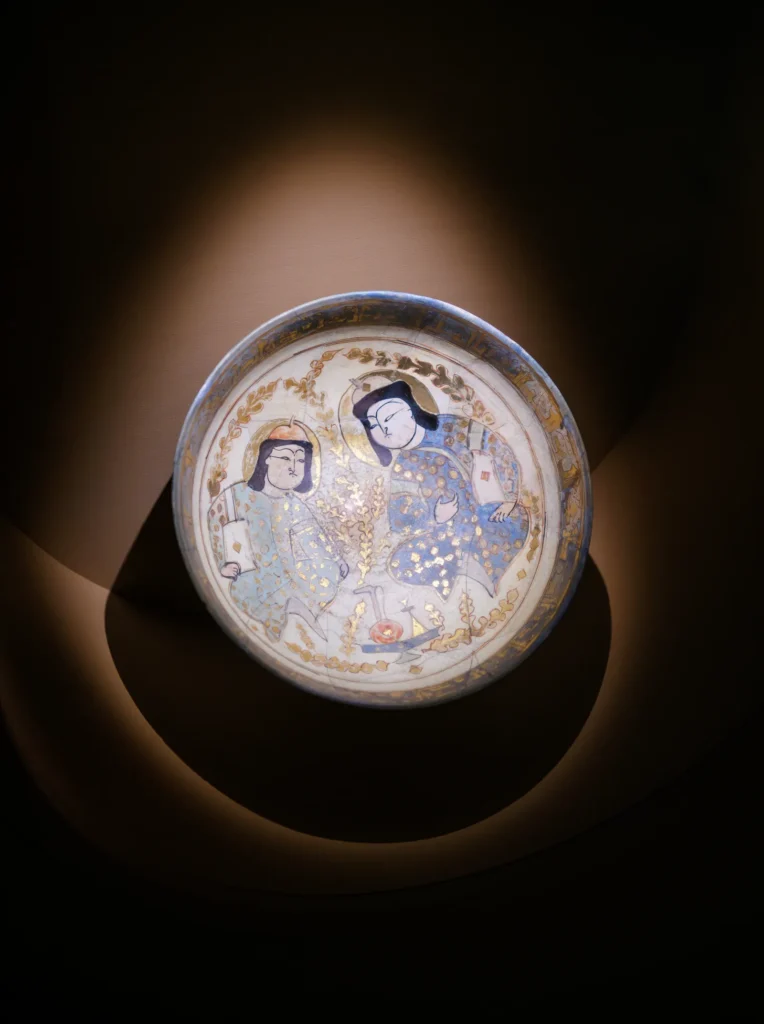
Fritware bowl decorated with colors and gold leaf over white glaze, approx. 1200
Photography by ANNAR BJØRGLI, courtesy of NASJONALMUSEET