From 15 April to 16 August 2026, the Fondation Louis Vuitton in Paris will present Calder. Rêver en Équilibre, one of the most ambitious exhibitions ever devoted to Alexander Calder. Bringing together nearly 300 works, the show explores the artist’s radical vision of movement, balance, and space, positioning his practice at the heart of modern art history. Combining sculpture, drawing, performance, and installation, the exhibition is set to become a landmark moment for audiences interested in Alexander Calder art and the evolution of kinetic sculpture.
Alexander Calder: movement as a new language
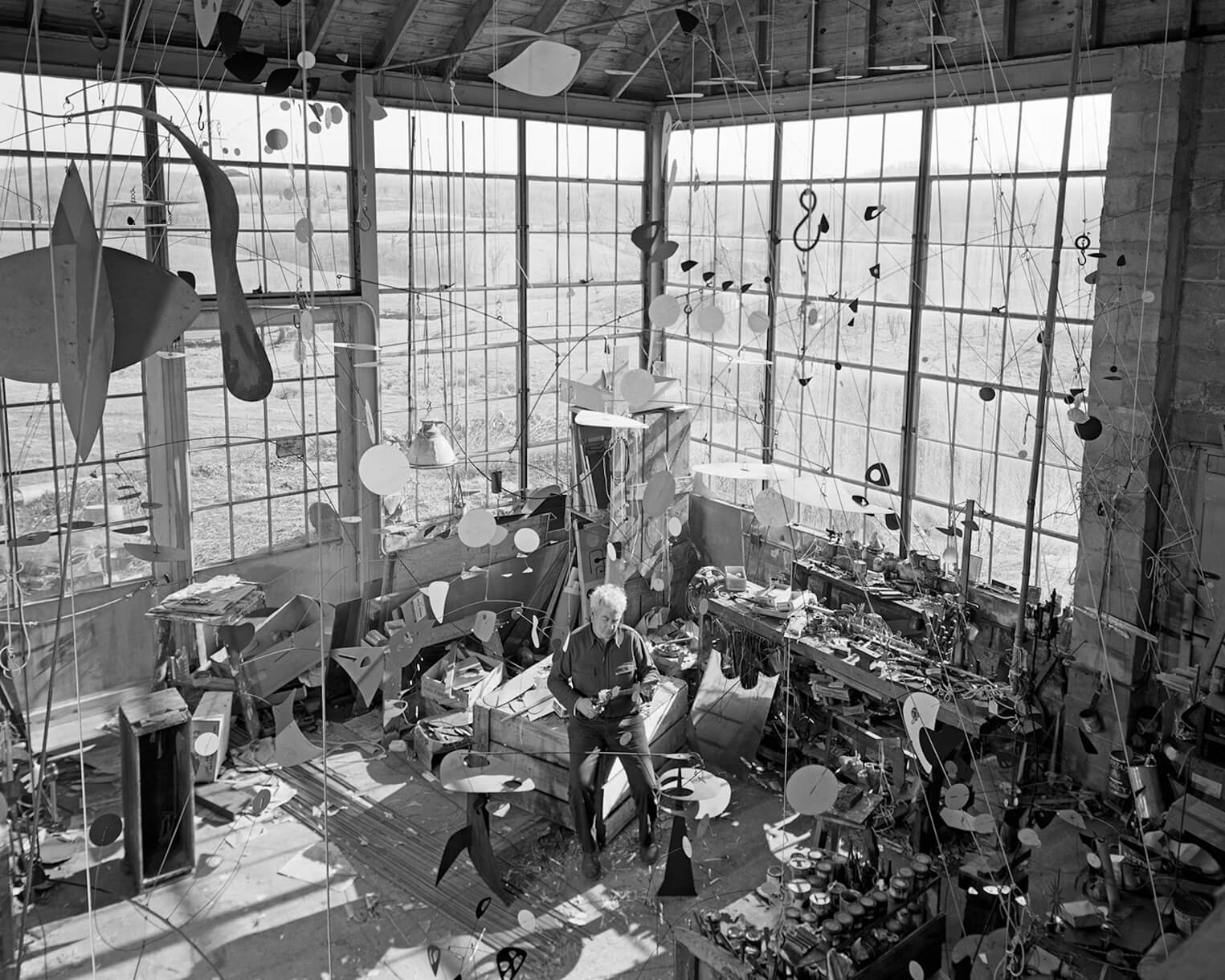
Best known for inventing the mobile, Alexander Calder redefined sculpture by introducing motion as a fundamental element. The exhibition traces his career from the late 1920s to the 1970s, revealing how he blurred boundaries between engineering and poetry. Early wire sculptures demonstrate his ability to draw in space, while later works show how abstraction and balance became central to his artistic language. Throughout the exhibition, movement is presented not as an effect, but as a core principle shaping form, time, and perception.
Kinetic sculpture and the Cirque Calder
A highlight of the exhibition is Cirque Calder (1931), an early and playful project in which the artist animated miniature performers, animals, and props in live performances. Presented through a rare loan, the work captures Calder’s fascination with rhythm, gravity, and spectacle, anticipating many ideas later developed in his mobiles. Alongside this, a selection of hanging mobiles from the Constellation series illustrates how kinetic sculpture evolved into refined compositions activated by air and light rather than mechanical force.
Fondation Louis Vuitton in Paris: art in dialogue with architecture
Staged across all exhibition spaces at the Fondation Louis Vuitton in Paris, the show creates a dialogue between Calder’s works and Frank Gehry’s architecture. Monumental stabiles interact with the building’s volumes, while delicate mobiles float within its vast galleries, turning the exhibition into a choreographed environment. Additional sections place Calder in conversation with contemporaries such as Jean Arp, Barbara Hepworth, and Piet Mondrian, situating his practice within the broader avant-garde.
Calder. Rêver en Équilibre offers a comprehensive view of an artist who transformed sculpture into an art of motion and balance. More than a retrospective, the exhibition reveals how Calder’s ideas continue to shape our understanding of space, movement, and modern creativity.
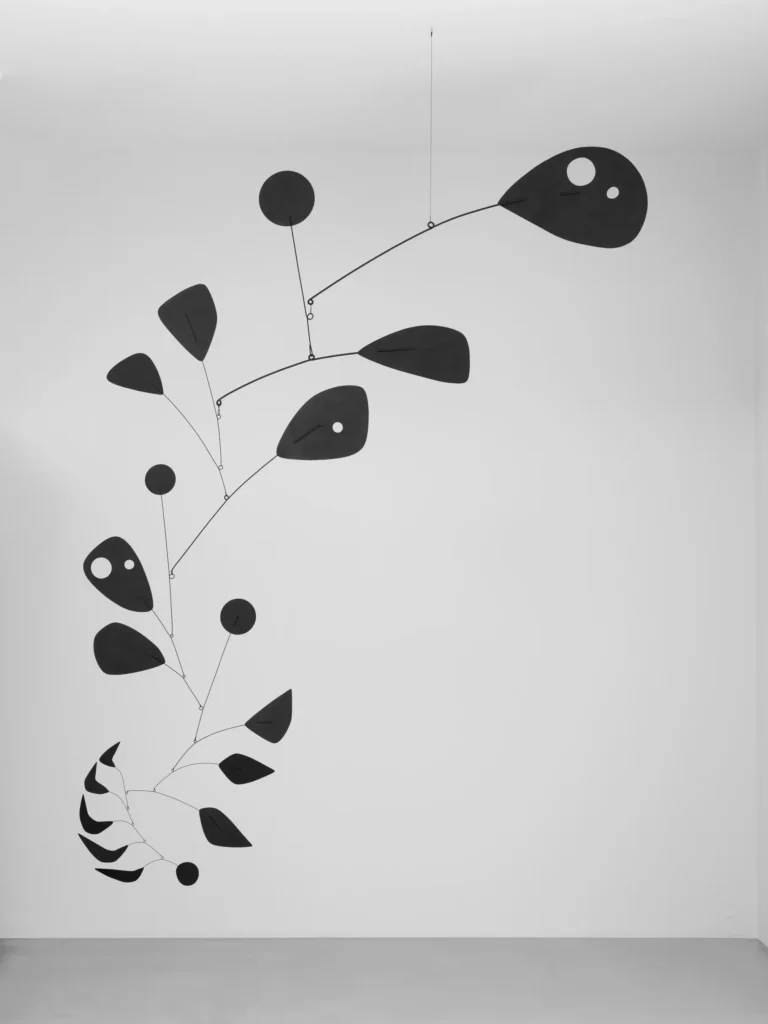
Black Widow, 1948
© 2025 CALDER FOUNDATION, New York / ADAGP, Paris. Courtesy of FONDATION LOUIS VUITTON
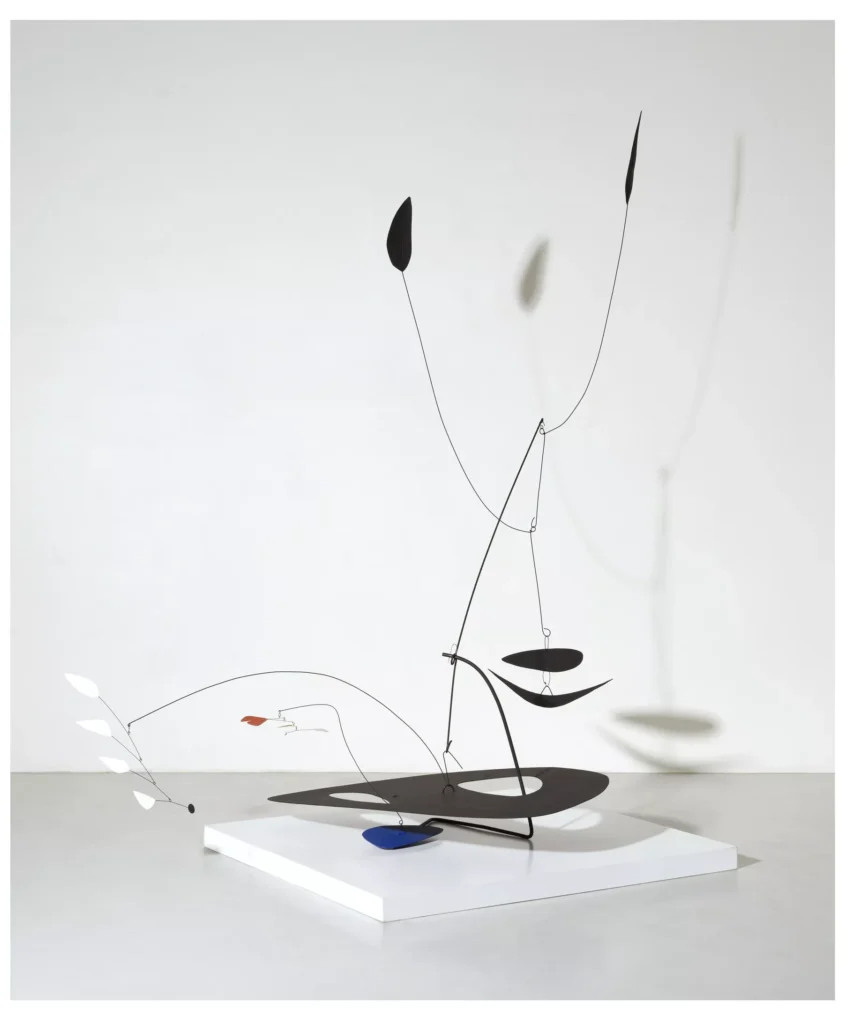
ALEXANDER CALDER
Lily of Force, 1945
© 2025 CALDER FOUNDATION, New York / ADAGP, Paris. Courtesy of FONDATION LOUIS VUITTON
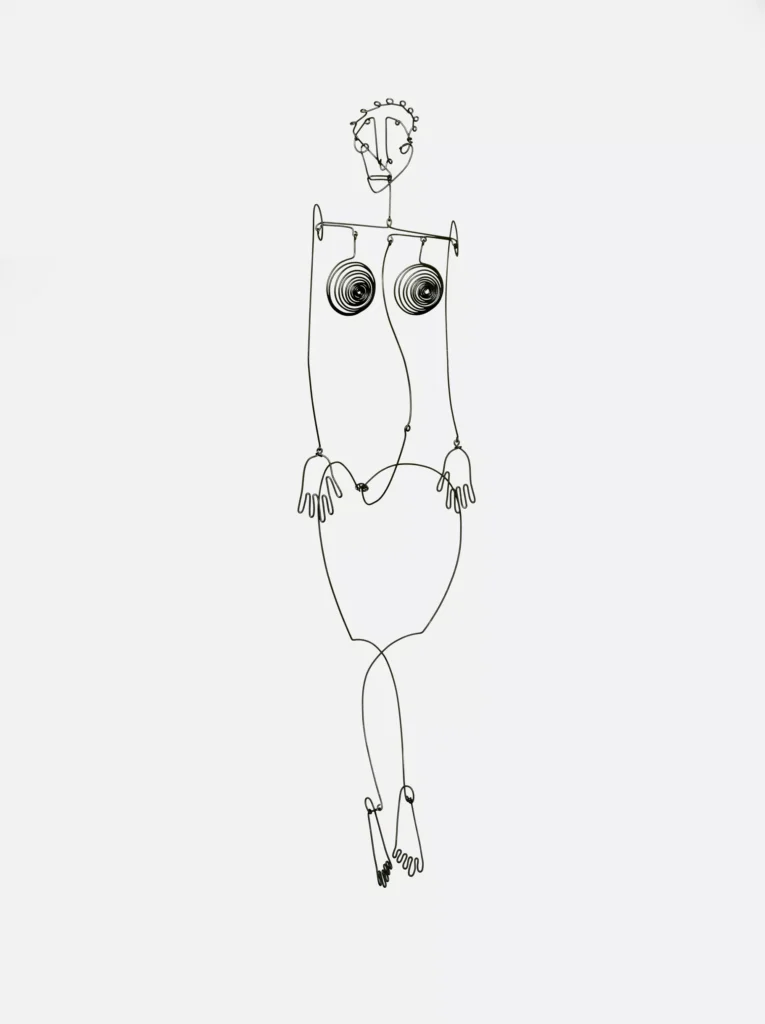
Atztec Josephine Baker, 1930
© 2025 CALDER FOUNDATION, New York / ADAGP, Paris. Courtesy of FONDATION LOUIS VUITTON