Fernando Melo contemporary dance experimental choreography
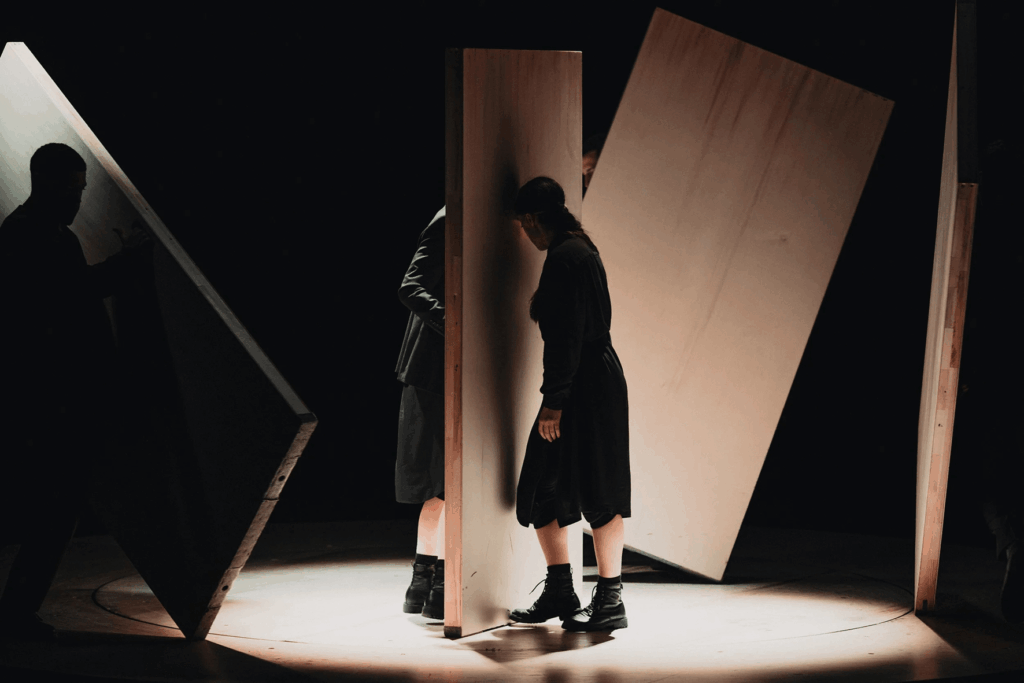
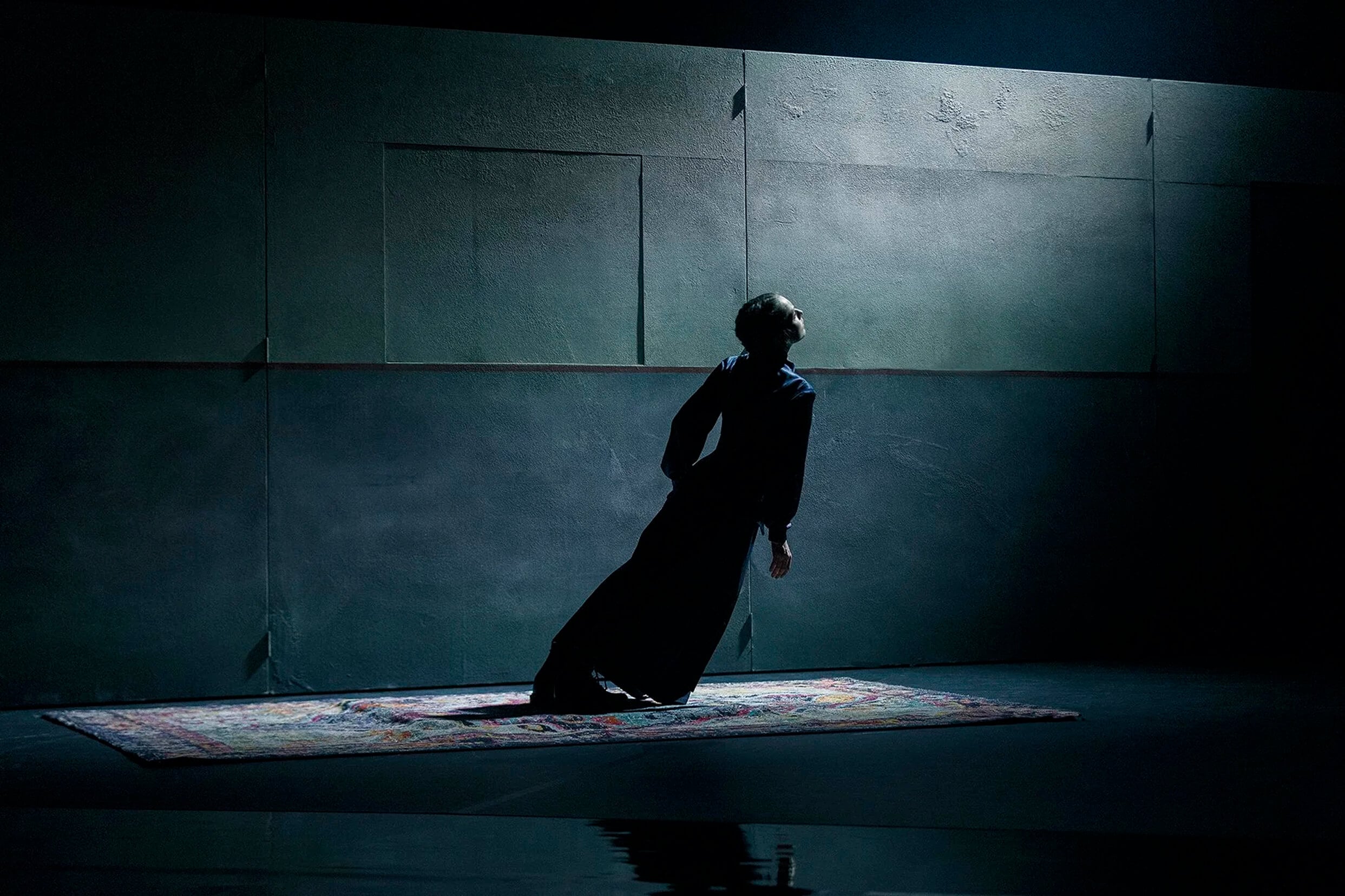
Leaning Tree, DANISH DANCE THEATER. Photography by NATASCHA THIARA RYDVALD

Fernando Melo on contemporary dance and discovering the scene

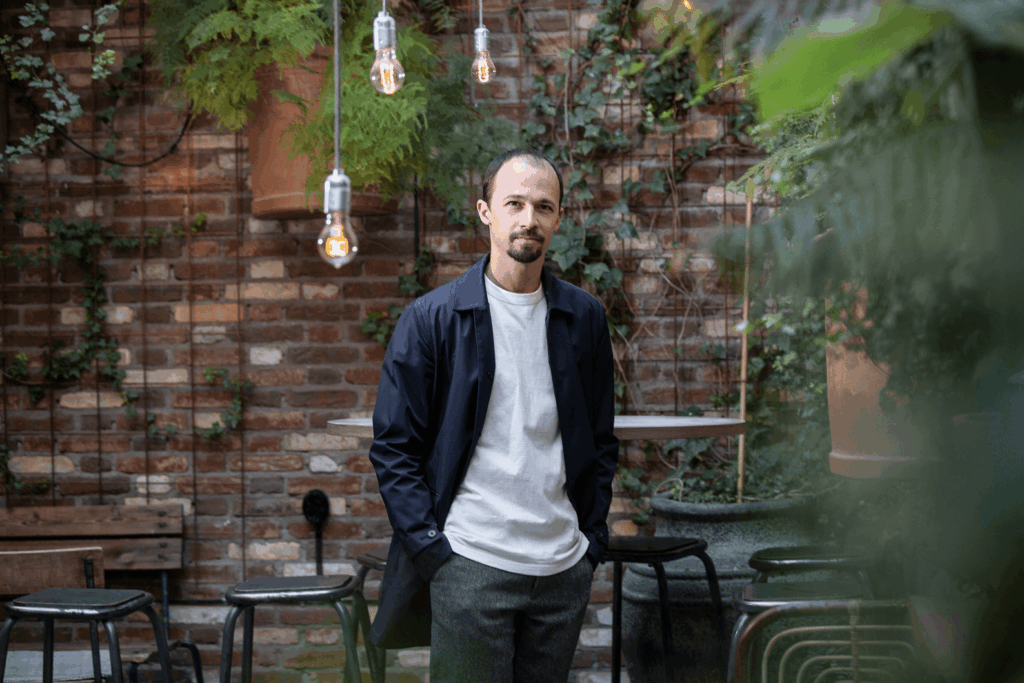
Fernando Melo created his first work as a choreographer at the age of ten—a solo for a string quartet. Since then, the Brazilian-born artist has built a distinctive career across Europe and beyond, creating pieces for renowned dance companies, opera houses, and festivals in more than a dozen countries.

At the heart of his work lies a quiet but powerful conviction: theatre exists to create the conditions for empathy. Whether in Leaning Tree, Tempo, or Out of Order, Melo builds his pieces through patient trial and error, layers of possibility, and a process that often begins in complete silence.  His work is inventive and often visually arresting, combining experimental choreography with active scenography, illusion, and music that is carefully withheld until the very end. Yet beneath the craft runs a deeper thread: the belief that paying attention to another human being on stage is, in itself, an ethical act. In this conversation, Melo reflects on silence and disorder, the limits and possibilities of movement, and the quiet power of presence.

hube: You began your career as a dancer before moving into choreography. Was there a moment when performing no longer felt like enough, and you felt the need to shape the work itself?

Fernando Melo: I started my first dance classes when I was eight, and by ten I was already asked to choreograph a solo to perform with a string quartet. That was my first attempt at creating something, and in a way, it set the tone for everything that followed.

I have always been interested in choreography. From an early age, I was constantly looking for inspiration, trying to watch as many performances as possible across different genres. I was fascinated not only by dancing itself, but by the whole experience of theatre and performance — the atmosphere, the images, the feeling of being transported. I wanted to capture that excitement I felt as an audience member and find a way to create it myself to offer that same experience to others.

Even while working as a dancer in Europe, I continued choreographing whenever I could. I took every opportunity that came my way, and when there wasn’t one, I invented it. Creating work was never separate from dancing—it was always there alongside it. So there wasn’t a specific moment when performing stopped being enough. It’s more that I never really transitioned from one to the other. I was a choreographer who was dancing — learning, observing, gathering inspiration—and gradually, over time, shifted my focus fully towards choreography and directing.

h: Do you believe the body knows things that the mind cannot articulate? And if so, how do you access that in your work?

FM: One of the wonderful things about contemporary dance is that it’s a non-verbal, universal language. It allows us to express imagination and emotion in ways that transcend words. Often, we understand it on an intuitive level—grasping meaning through our senses rather than through language—so the experience can resonate deeply with anyone, regardless of age or background. In that sense, the body can hold and communicate things that the mind cannot always fully articulate.

Over time, I’ve realised more and more that fulfilling our potential as artists has to do with contributing to something bigger than ourselves. I believe that going to the theatre and observing other human beings has a real and meaningful role in society. Something happens when we watch another person on stage. For a moment, we step into someone else’s experience. If we can access how it feels to be someone else, even briefly, we are exercising empathy.

The work I create is about offering that opportunity to the audience. This is really my “why”—creating a space where people can experience and practice empathy. The ideas I choose and the decisions I make come from this intention. The concepts emerge from it, and the artistic choices are guided by this goal.
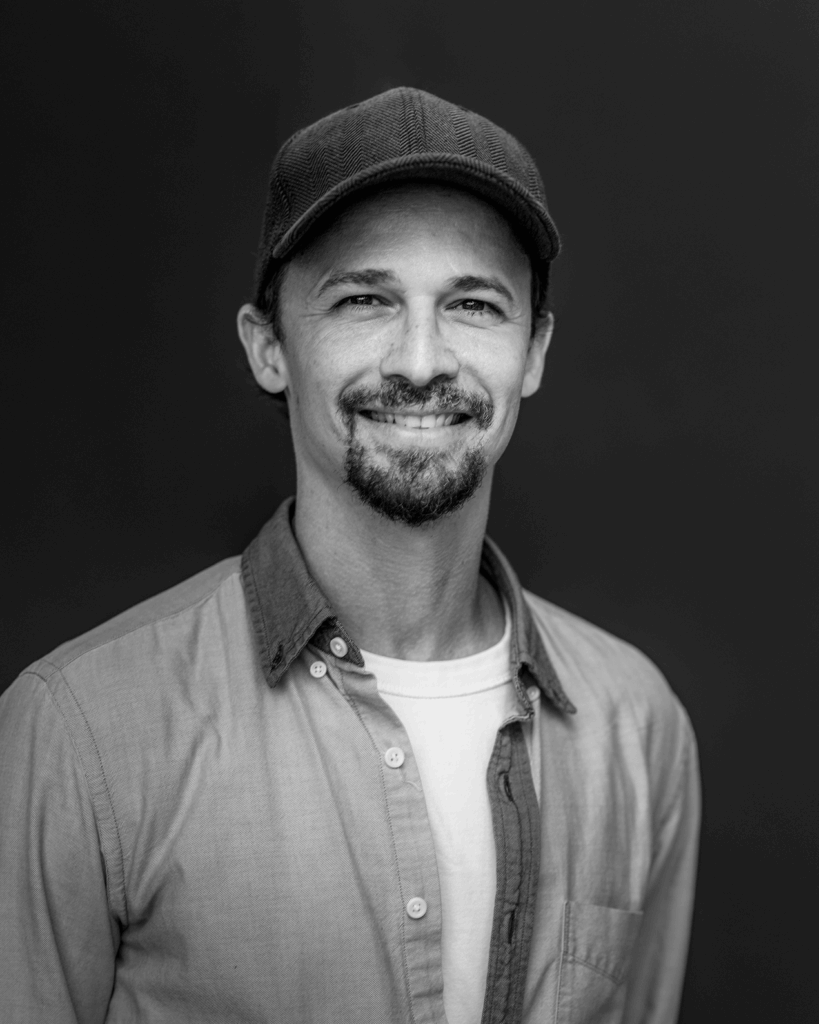
Fernando Melo
contemporary dance
experimental choreography
FERNANDO MELO 
Photography by HARALD NILSSON
Fernando Melo
contemporary dance
experimental choreography
FERNANDO MELO
Photography by MARYAM BARARI
Fernando Melo
contemporary dance
experimental choreography
Shadow Waltz
MUSIKTHEATER IM REVIER
Photography by ZORAN VARGA
Fernando Melo
contemporary dance
experimental choreography
Afterimage 
DACIONAL DANCE COMPANY WALES 
Photography by RHYS COZENS
Fernando Melo
contemporary dance
experimental choreography
Out of Order
HELSINKI DANCE COMPANY
Photography by KALLE NIO
Fernando Melo
contemporary dance
experimental choreography
Tempo
WHS 
Photography by KALLE NIO

h: For Leaning Tree, you created the choreography in silence, with the score coming later. What does silence allow you to hear or notice that music might otherwise guide or limit?

FM: I create through a process of trial and error. My favourite way of working is to develop many different sketches of scenes, almost like exhausting possibilities. When you surrender to this process, you often arrive at places you could never have imagined beforehand.

A big passion of mine is the integration of scenography with the dancers’ bodies. What interests me is how performers interact with space, objects, light, and eventually sound, to create new perspectives on deeply human experiences. This requires a lot of experimentation and discovery. Only when this process has developed enough do I begin to understand which sketches should grow into full scenes. Then I shape and connect them into a coherent structure. It is only at a very late stage that I choose the music.

Sound plays a different role in my work. It helps create the atmosphere of a scene rather than defining it from the beginning. For that reason, it comes at the end of the process. Working in silence can be challenging, especially for the dancers, who sometimes ask for music just to support them. Occasionally, I give them something atmospheric. Generally, silence isn’t something I pursue for its own sake—it’s simply a consequence of the way I work. First, we need to discover what the scene is. Only then can I find the sound that supports it, creates the right atmosphere, and guides how the audience experiences it. It may seem like an upside-down way of working, but for me it’s the only way to truly discover the piece.

h: Your work is often described as demanding for dancers, at least at first. What kind of presence or openness does it require from them? And what do you feel responsible for in return?

FM: The interaction with choreographed scenographic elements can indeed be very challenging for the dancers. As dancers, we are often used to being in control of our own bodies—and sometimes our partners’. But when scenography becomes active, it introduces a whole new layer of complexity.

It requires a lot of trial and error before we begin to understand what these elements can generate. The process demands creativity, problem-solving, patience, dedication, and high precision—qualities that most dancers already possess, which is part of the reason why I bring these kinds of challenges to them. In this work, they are responsible not only for their own bodies and their partners’, but also for many moving elements around them.

Because of this, I feel a strong sense of responsibility in return. My role is not only to ensure a safe working environment, but also to create a space where creativity can truly flourish. Especially at the beginning of a process, there is no right or wrong—only possibilities. It’s important that every idea can be explored before we slowly begin to define what belongs and what doesn’t.

I put a lot of effort into preparation, clear communication, and structuring the process so that everyone actively contributes to solving the creative tasks at hand. Despite the challenges, this way of working often builds a strong sense of teamwork. When everything finally comes together, it can be incredibly rewarding for all of us. The dancers develop a deep sense of ownership and responsibility toward the work, the team, and their scenes. To witness that from the front of the room is something I never take for granted. I am often in awe of what they are capable of creating.

h: When you’re creating, do you imagine how the work will be received, or do you try to keep that question out of the process altogether?

FM: I do create with the audience in mind, but not in the sense of trying to predict or control how the work will be received. First, I need to believe in the piece myself. The concept has to feel necessary to me—something personal, something I feel is worth sharing. My hope is that, by being honest in that way, it will resonate with others.

What continues to surprise me is how often it does, and how differently people interpret the work. Each audience member brings their own perspective and experiences, and in a way, the piece becomes a kind of mirror. Everyone sees something slightly different, and I find that very beautiful.

I work quite intentionally with that idea. In the studio, I often say that a strong scene allows for multiple readings—at least four or more possible interpretations. I’m interested in creating situations that suggest meaning rather than define it. There are narrative elements, but they remain open, inviting the audience to complete them in their own way.

At a certain point, I let go of the question of reception, because it’s not something I can control. What I can control is the rigour of the work: the attention to detail, the clarity of the composition, and whether the piece feels meaningful and moving to me.

If that is in place, then the rest belongs to the audience. And that exchange between what is made and what is perceived is, for me, where the real magic of theatre and contemporary dance happens.

h: You’ve created work across many different countries and contexts. Do you feel your work shifts in response to place, or are you searching for something more universal that can exist anywhere?

FM: As I mentioned before, one of the things I value most is that the work takes on a life of its own in the mind of the audience. In that sense, it’s always a joy to encounter how different cultures engage with it. What changes is not the work itself, but the perspectives people bring to it, the meanings they draw, and the associations they make.

As an artist, it’s a real privilege to meet audiences and collaborators from so many different countries and contexts. Each encounter adds a new layer to the experience of the work, without the need to redefine it. What remains constant for me is the “why”—the purpose, the underlying belief, the reason for creating. That doesn’t change depending on where the work is performed. It’s the anchor. While interpretations may shift from place to place, the core intention stays the same. It’s precisely this combination—a clear internal purpose and an openness to external interpretation—that allows the work to exist across different contexts.

h: Contemporary dance and opera come from very different traditions. What draws you to move between them? Do they change the way you think about movement and expression?

FM: I’ve been drawn to classical music and opera from a very young age, so by the time I began working on opera productions, I already had a strong foundation to contribute. Even though it’s a different genre, opera offers a richness of resources—musical, visual, and dramaturgical, as well as the scale of production, scenography, dancers, singers, and live music—that allows me to explore my ideas in a much broader way.

At the same time, I still see myself as something of an outsider in the opera world, and I experience that as an advantage. It allows me to approach the libretto, the music, and the action from a different angle, bringing a perspective shaped by contemporary dance. I look at the material with a certain distance, discovering connections and possibilities that might not be obvious from within the tradition itself, and translate that tradition into a contemporary language.

Moving between contemporary dance and opera definitely broadens the way I think about movement and expression. It’s also a space where I collaborate with highly specialised artists—singers, musicians, dramaturgs, and a wide range of other collaborators—and I learn a great deal from working with people who bring such depth of expertise. In both forms, I’m ultimately interested in how performance can create a shared experience—something that feels immediate, human, and present.

h: When you look at the world today—politically, socially, emotionally—what role do you feel your work can or should play?

FM: I think a lot about this question. To answer it, I often return to a book that has been very important to me: The Necessity of Theater by Paul Woodruff. In it, he offers one of the most beautiful definitions of theatre I have encountered: “Theater is the art wherein human beings make human action worth watching.” If we pause on that for a moment, it’s actually very profound. It’s about observing another human being, giving attention to their actions, their choices, their presence, and finding value in that act of watching. Woodruff also writes that “half the art of theater is paying attention to other people, and that is the entire basis of ethics.” For me, this is essential. If ethics begins with the ability to pay attention to others, then theatre plays a fundamental role in how we exist together as a society.

From this perspective, I see the role of my work as deeply connected to empathy. Theatre allows us to step into someone else’s experience, even if only for a moment. It creates a space where we can feel with others, not just think about them—encountering perspectives, realities, or possibilities that may be entirely different from our own. In a world that can often feel divided—politically, socially, emotionally—I believe this is incredibly important. The act of caring about people within the fictional space of theater can strengthen our ability to care about people outside of it.

So for me, the role of my work is to create situations where this can happen—to offer audiences the opportunity to pay attention, to reflect, and to connect. Because in the end, that capacity to understand and feel with others is essential for how we live together. I hope that, as artists, we can contribute—however modestly—to making the world a little more humane, one piece at a time.

h: In Tempo, you collaborated with a magician. What interested you about illusion—not just as a trick, but as a way of shaping perception?

FM: For me, creating an illusion is never the goal in itself. What interests me is the shift in perspective it can produce. I’m passionate about the discoveries that emerge when I choreograph not only the performers, but all the stage elements: how bodies interact with scenography, light, and space, and how that interaction can transform the way we perceive a moment. Through this exploration, certain situations appear that may feel like illusions, but are really the result of that integration and discovery.

What matters is how this affects the audience. Even a small shift in perception can open up a different emotional response and allow for new interpretations or readings of the work. So illusion, in that sense, is not about tricking the eye, but about creating the conditions for the audience to experience something in a new way.

h: The title Out of Order suggests both disruption and possibility. For you, does disorder open something up, or does it reflect something already broken?

FM: For me, it’s both. Disorder can reflect something broken, but it can also open something up. I’m interested in this idea as something very human: the cracks, the flaws, the parts of us that feel out of order. They are not exceptions—they are part of being alive.

In Out of Order, I worked with fragmented scenes that appear out of sequence, like pieces of a puzzle. The audience is invited to put things together in their own way, to make sense of what they see from their own perspective. So, the title Out of Order carries these layered meanings. It refers not only to something broken within ourselves, but also to the deliberate displacements in the work’s sequencing.

h: What is the most difficult thing to communicate through movement?

FM: That’s a very good question. Although the body can express a great deal, we often understand it on an intuitive rather than a precise level. That’s actually one of the beautiful things about contemporary dance: it leaves space for interpretation, for the audience to project their own meaning onto what they see.

But if you want to communicate something very specific or literal—a political standpoint, a scientific idea, or a tightly defined narrative—then movement alone has its limitations. The body suggests, evokes, and opens up meaning, but it rarely defines it with absolute clarity. I take that as an advantage. I’m more interested in creating work that invites interpretation rather than delivering a fixed message. I tend to avoid using text or other explanatory tools and instead focus on building situations where meaning can emerge through perception and experience.

That said, other artists have very different needs. A good example is DV8 Physical Theatre, led by Lloyd Newson. In their earlier work, they relied heavily on physicality, but over time Newson became frustrated with how ambiguous movement could be when dealing with complex social and political themes. As a result, he began integrating text—spoken, recorded, often verbatim—into the choreography. This allowed meaning to be both felt physically and understood intellectually at the same time.

It really depends on the intention of the artist. Movement is incredibly powerful, but it doesn’t do everything. If the goal is to communicate something very specific, sometimes you need to go beyond the body.

Fernando Melo
contemporary dance
experimental choreography
Leaning Tree
DANISH DANCE THEATER 
Photography by NATASCHA THIARA RYDVALD
Fernando Melo
contemporary dance
experimental choreography
The Longest Distance Between Two Points 
SKÅNES DANSTEATER
Photography by TILO STENGEL
Fernando Melo
contemporary dance
experimental choreography
Traces
INTRODANS
Photography by HANS GERRITSEN

ISSUE 8

issue no8

Be the first to get the new issue