Photography by JOSHUA VII
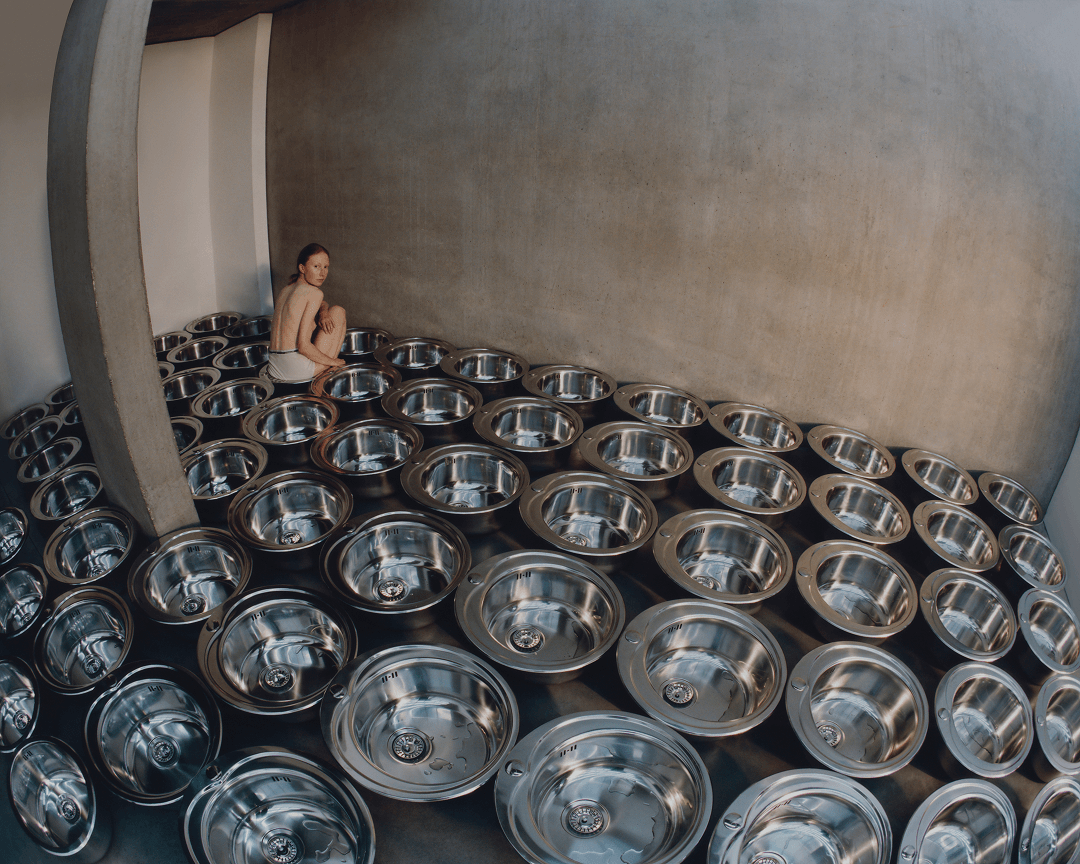
Compliance, 2026
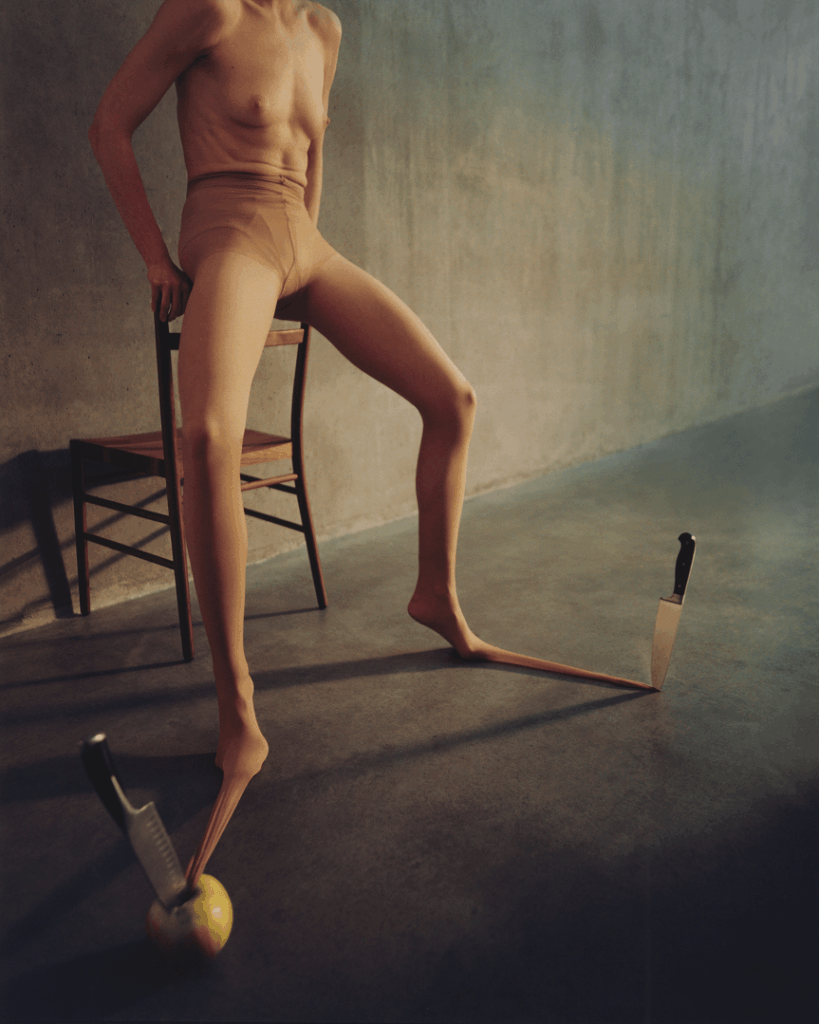
Under The Knife, 2025
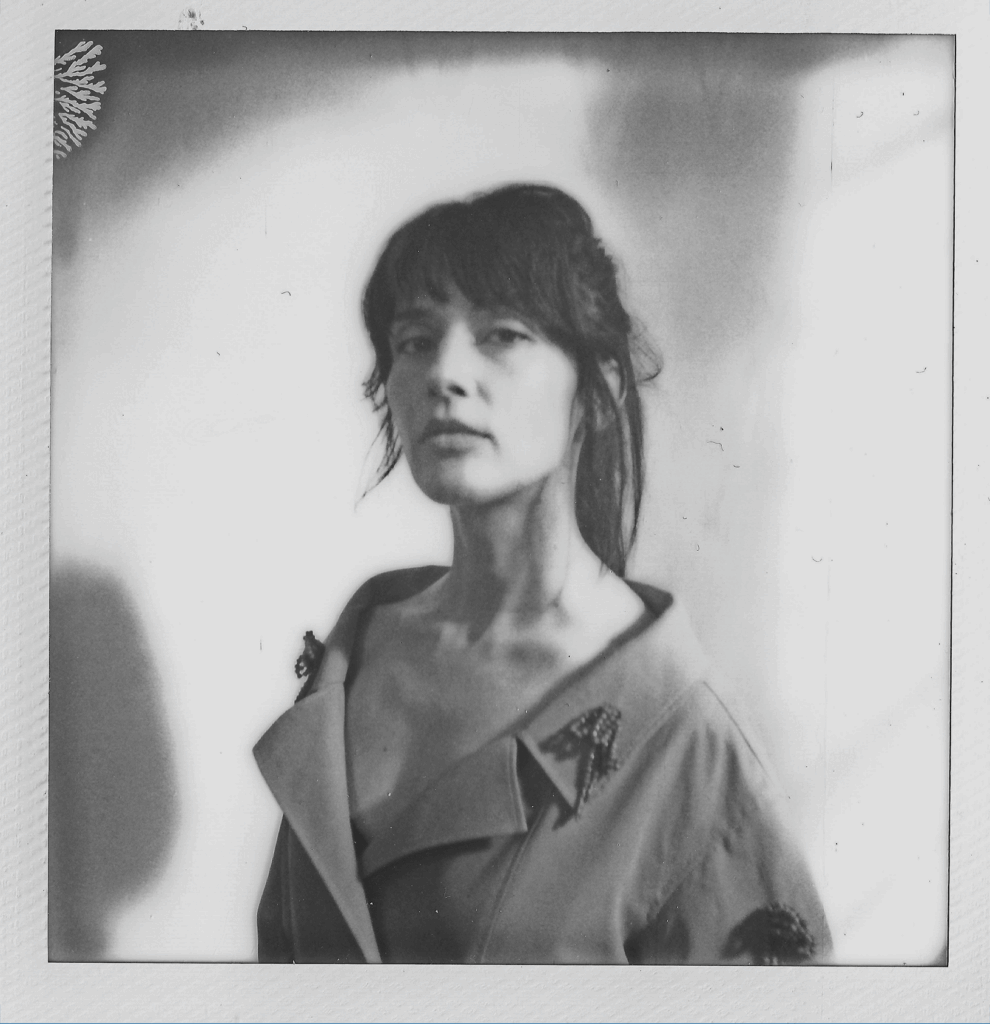
As Soft Interruptions concludes at Flowers Gallery in London, Lisa Jahovic sits down with hube to discuss the visual language that defines her practice. Whether working on a fashion campaign or preparing a gallery exhibition, Jahovic’s photography tests the limits of truth within the photographic image. The lens is poised in anticipation of disobedience; something is not quite right. The only truth is that nothing is ever truly certain. Such an unrestrained surrender to one’s instincts requires a certain kind of bravery, a quality Jahovic possesses in abundance. She savours the coalescence of tenderness and awkwardness, and the act of leaving problems unsolved. For Jahovic, the unexpected is the focus.
hube: After visiting your recent exhibition, Soft Interruptions, at Flowers Gallery on Cork Street in London, something that stayed with us was the sense of tension that permeates the show. Each image seems to flirt with dualities: hard and soft, inertia and action, form and function. The viewer is often held in limbo by these subversive visual collisions of opposites. How do you conceive of these collisions? What draws you to moments of in-betweenness or liminality?
Lisa Jahovic: I’m drawn to those moments because they feel the most truthful. Life rarely exists in absolutes; it’s usually somewhere in between.
The collisions in Soft Interruptions consider the quiet instabilities of contemporary life. I’m interested in the gap between how things are meant to function and how they’re actually experienced. We inherit systems and roles that promise stability, but in reality they often involve constant negotiation. I’m not interested in resolving those oppositions. In fact, I think the work depends on them remaining unresolved. If something is both humorous and unsettling, awkward and tender all at once, it’s much closer to how we experience the world. Those liminal moments are where objects become most alive, and where the everyday reveals itself to be far stranger and more poetic than we usually allow ourselves to notice.
h: It could be said that there is something scientific about your approach: setting up a physics experiment with variables, tests, and equipment; an analysis of physical properties and material relationships. Yet this precision is often undercut by a tongue-in-cheek naivety, bold playfulness, wry inaccuracy, harmless errors, or what might be considered an ‘unfair test’. What role do mistakes and errors play in your creative process? How would you define an ‘error’? Is there such a thing? And what does it mean in the context of your practice?
LJ: I like that reading, because there is something genuinely experimental about the way I work. Although my practice is often rooted in conceptual questions, ideas are often tested through making. The studio becomes a space for thinking materially. It can feel a little like setting up an experiment, but I’m not trying to prove a hypothesis. I’m interested in creating the conditions for something unexpected to emerge—something I couldn’t have arrived at through thinking alone. The physical behaviour of materials, gravity and chance all become collaborators in the process. Because of that, I don’t really think of mistakes as failures. An error is only an error if you’re measuring against a predetermined outcome, and I’m often deliberately resisting that.