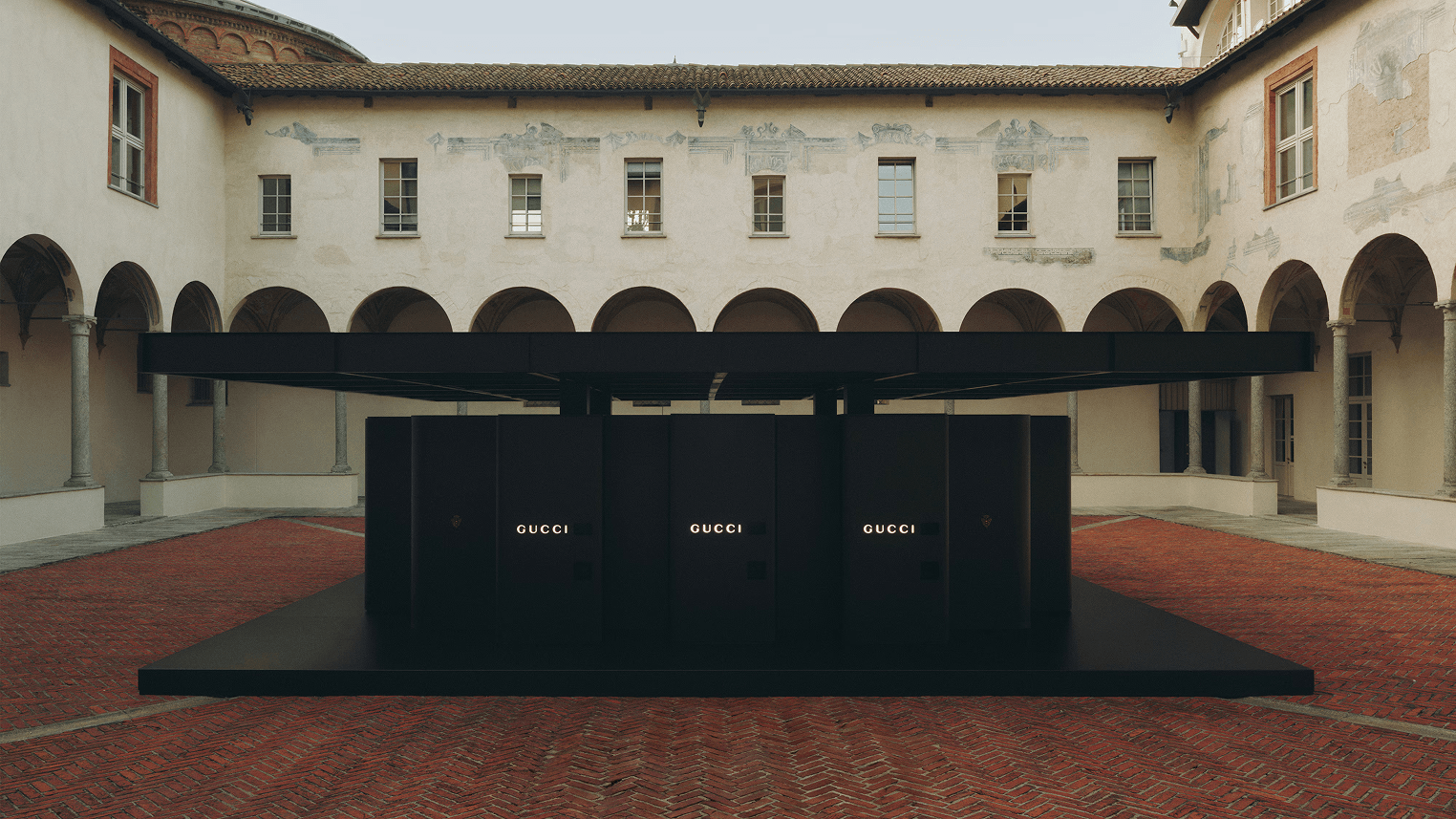
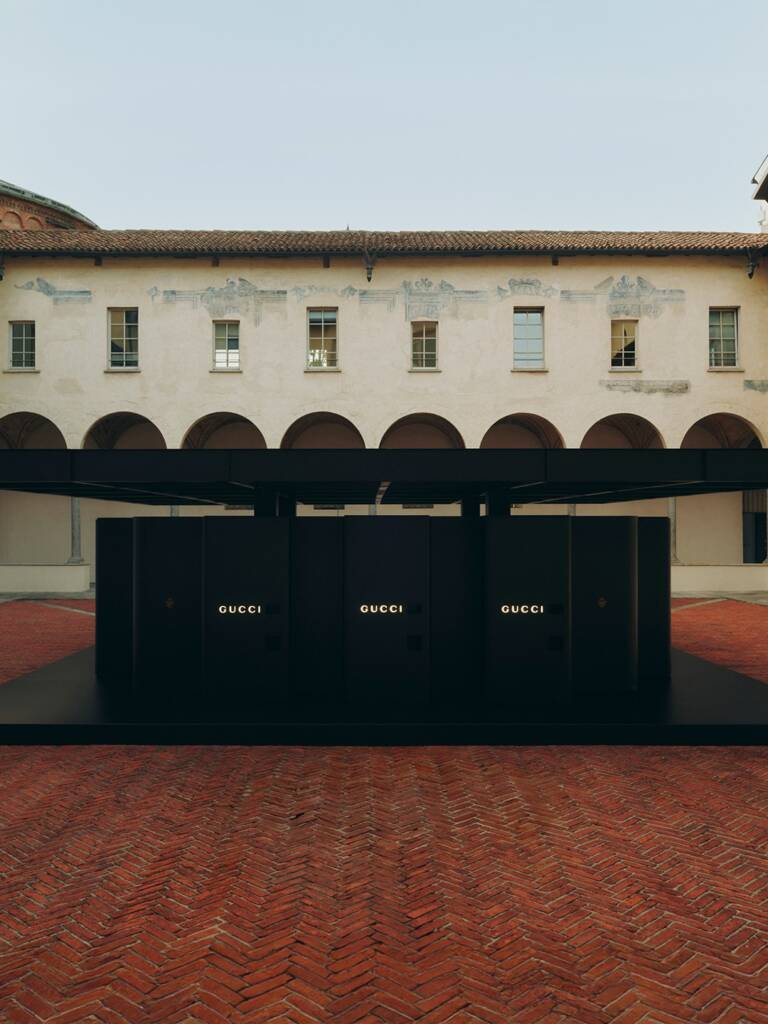
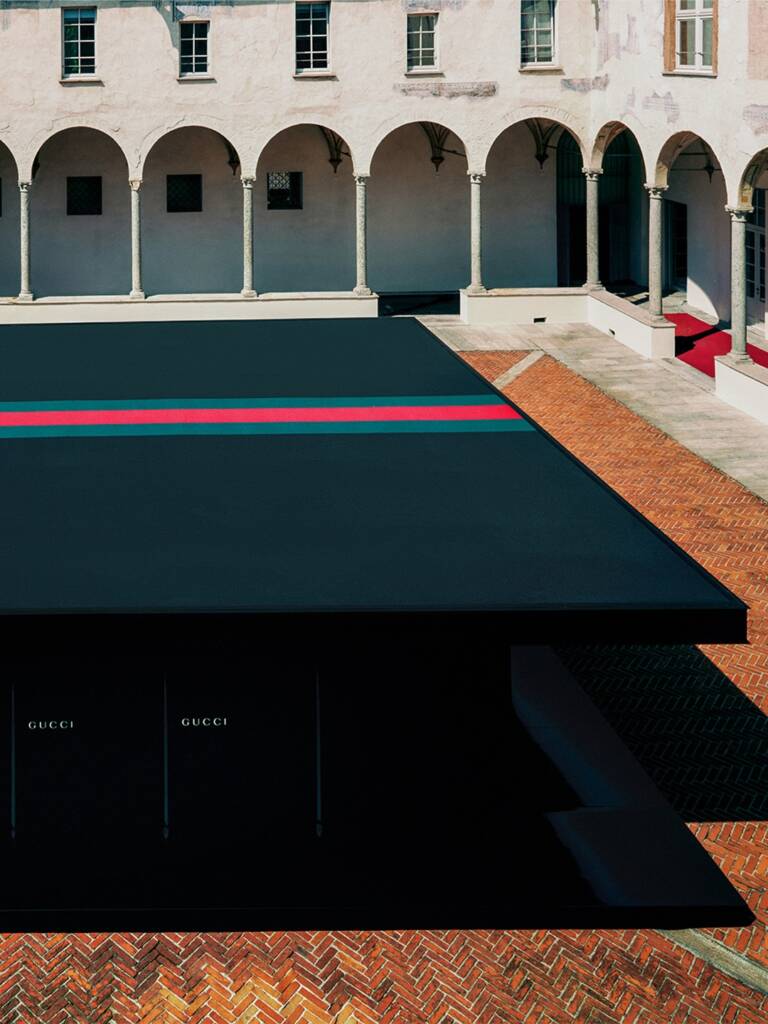
During Milan Design Week 2026, Gucci unveils Memoria, an immersive exhibition curated by Demna. Presented from April 21st to 26th at Chiostri di San Simpliciano, the project reconsiders the House’s 105-year history through a spatial narrative where memory, craft, and identity intersect.
Rather than following a linear chronology, Gucci Memoria unfolds as a sequence of atmospheres. Moving through the cloisters, visitors encounter shifting temporal registers that trace the House’s evolution—from its Florentine beginnings under Guccio Gucci to its present articulation under Demna. Gucci emerges here not merely as a label, but as a cultural force shaping—and reshaping—the codes of luxury.
Weaving memory and modernity into one vision
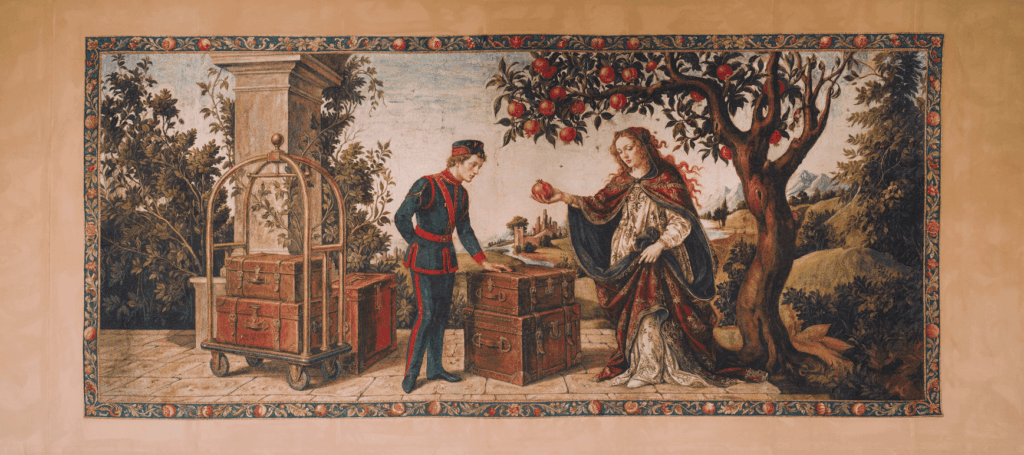
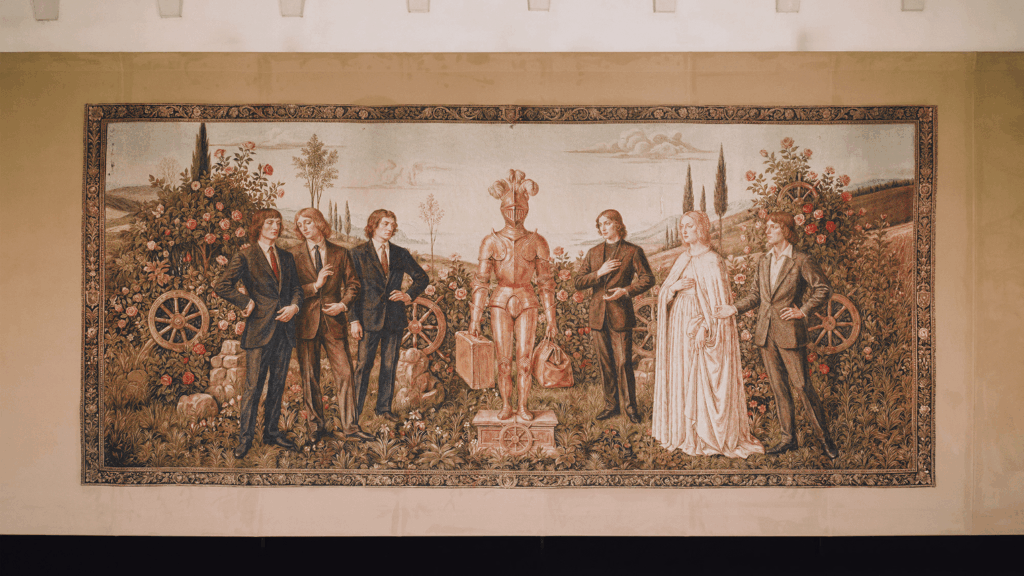
A series of monumental tapestries anchors the exhibition. Drawing on Renaissance traditions, they narrate pivotal moments in Gucci’s history, from its early London years to the creation of emblematic pieces such as the Bamboo 1947 and Jackie 1961 bags. These woven scenes blur temporal boundaries, where historical references collide with contemporary intrusions—a leather gaming chair, a modern silhouette—disrupting any fixed reading of heritage.
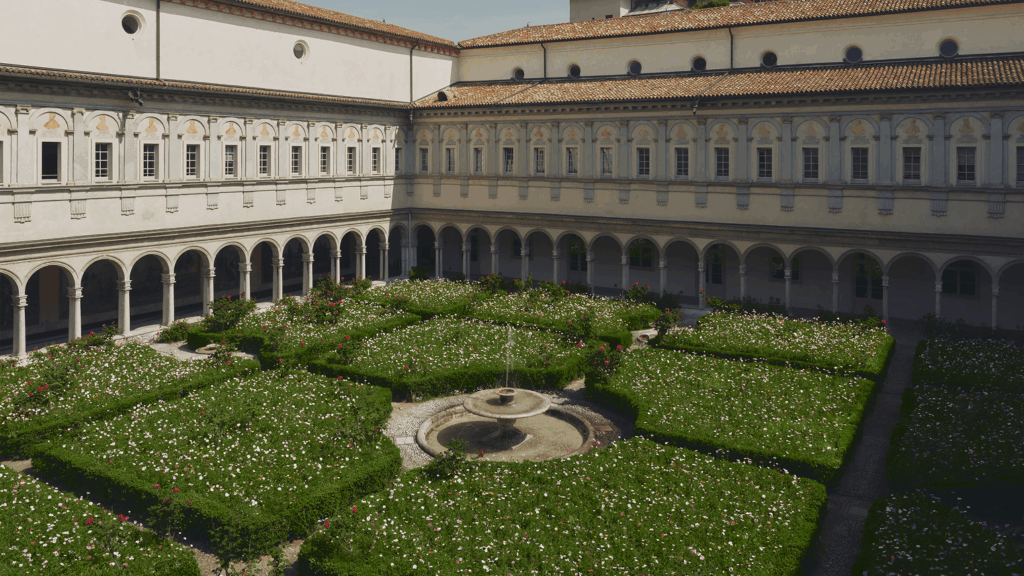
Within the main cloister, Gucci’s iconic Flora motif is translated into a living garden. Inspired by Primavera, the installation transforms a decorative pattern into a seasonal landscape, where nature becomes both image and material—an articulation of renewal and continuity.
‘La Famiglia’: connecting past and present
The exhibition opens with a series of custom vending machines dispensing drinks created by Gucci Giardino. Each can corresponds to a character from La Famiglia, a cast of contemporary archetypes—from La Principessa to L’Influencer. These objects function as both collectible and portrait, translating identity into flavour, gesture, and form.
As Demna’s first exhibition for the House, Gucci Memoria signals a broader cultural direction. Set within a historic Milanese context, it aligns with the spirit of design week, where disciplines intersect, and narratives expand. More than a retrospective, it operates as a living archive—one that continually rewrites the past through the lens of the present.
Courtesy of GUCCI