Hans Dorsinville Balmain Beauty beauty industry
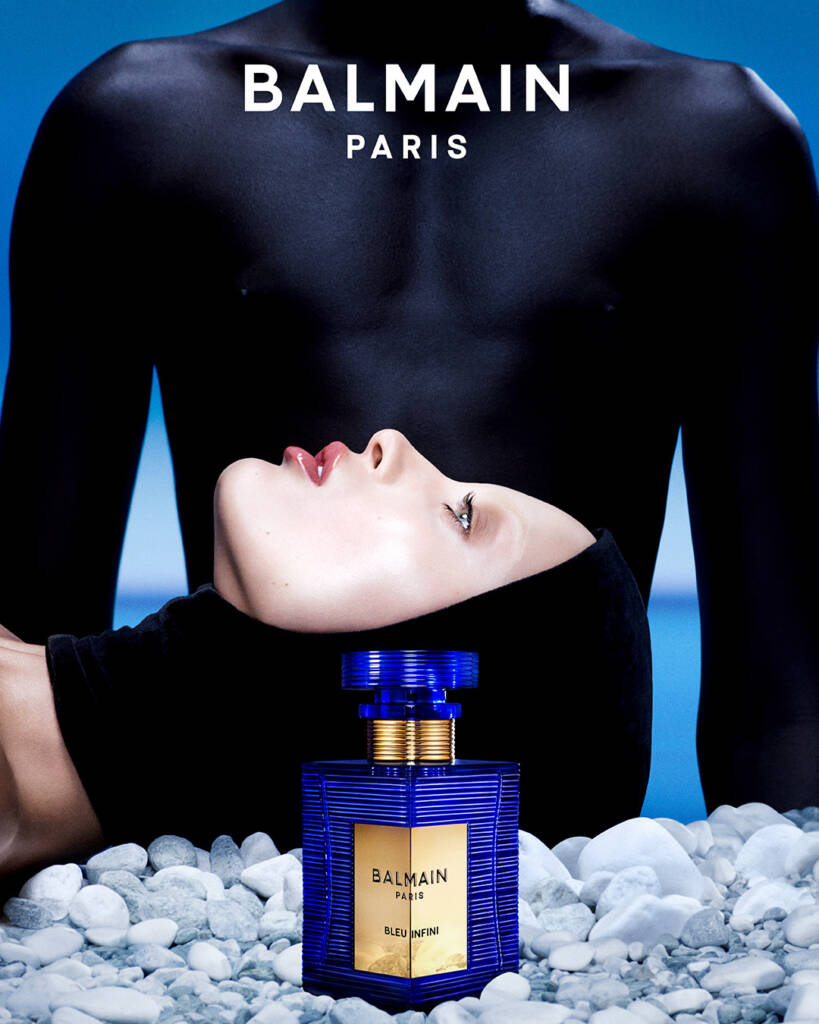
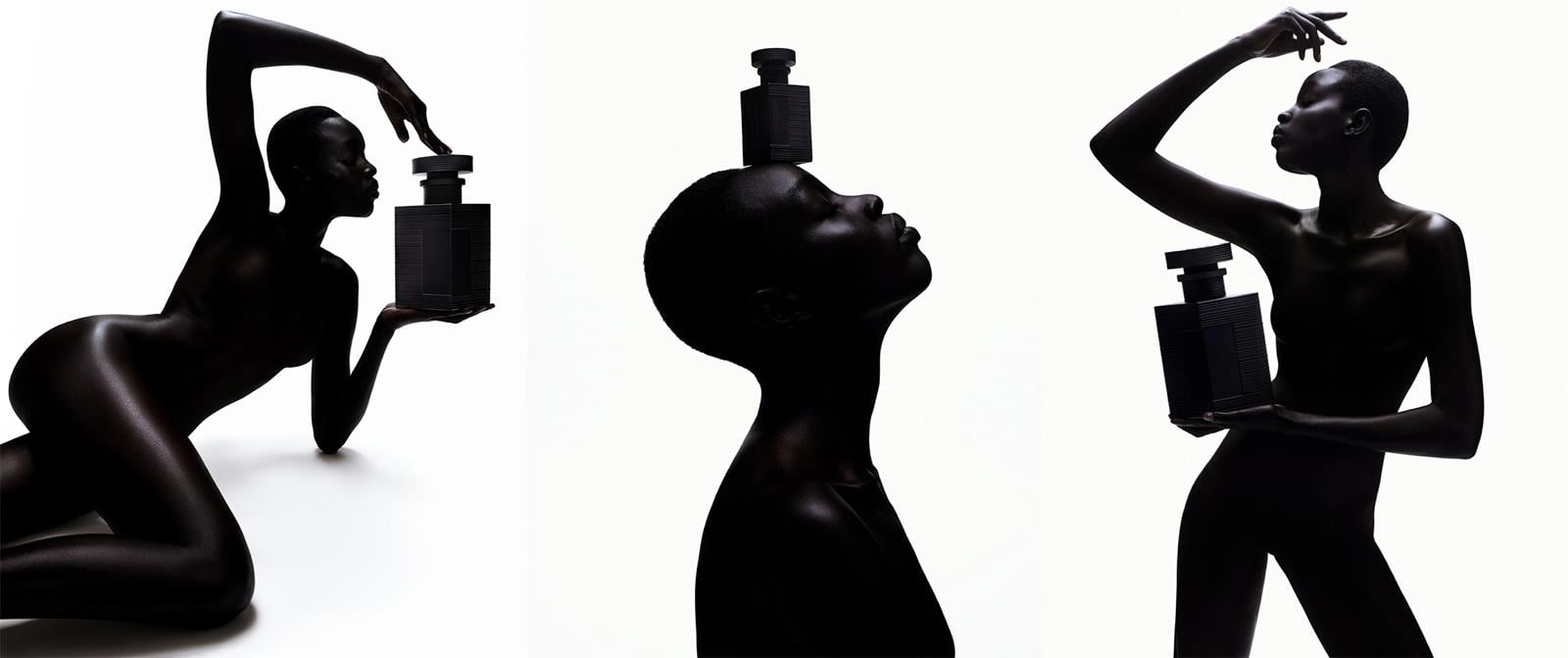
Photography by CARLIJN JACOBS. Courtesy of BALMAIN BEAUTY

Hans Dorsinville: rewriting the language of beauty

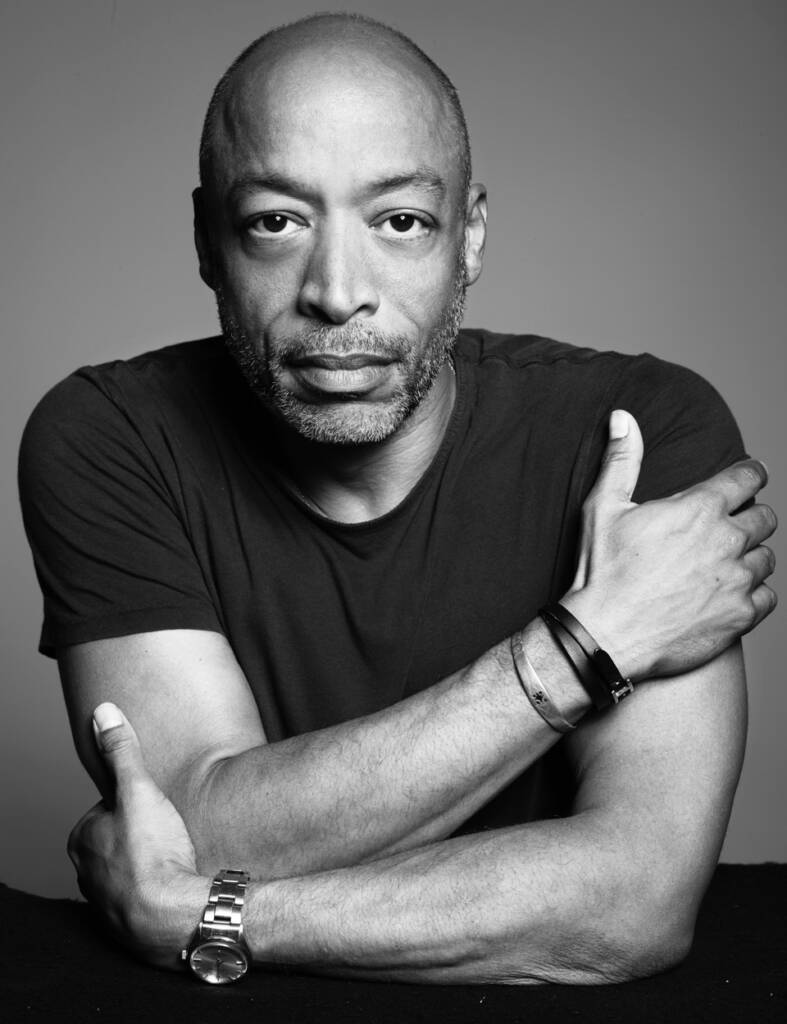
Hans Dorsinville is a prominent former CCO, Creative Consultant & Brand Architect in the fashion and beauty industry, most recently serving as Senior Vice President, Global Creative for Balmain Beauty. With more than 32 years of experience, he’s built a reputation for bold conceptual thinking, visual storytelling, and brand strategy.  He began his career in 1993 as a junior designer in Donna Karan’s in-house creative team, eventually rising to the role of EVP and leading multi-channel campaigns for its fashion and licensing lines. Later, founding Laird + Partners and serving as executive vice president and senior group creative director for more than a decade. In 2017, Dorsinville became Chief Creative Officer at Select World, before contributing his talents to Gotham, partnering with brands across beauty and fashion. Beyond his professional roles, Hans is deeply committed to diversity and inclusion. In 2018, he founded the Creative Coalition for Diversity to help expand opportunities for creatives of color in the industry. His work often weaves together artistry and advocacy, reflecting his belief that visibility and equity must go hand in hand. 

hube: Could you share your professional journey in a more personal way? Were there moments of profound transformation, encounters, or turning points that not only drew you into the beauty world but also shaped how you see it today?

Hans Dorsinville: My earliest memories of beauty come from the 1980s, growing up in Montreal. I was captivated by a series of Revlon ads photographed by Richard Avedon – The Most Unforgettable Women in the World Wear Revlon. I’d tear them from magazines and pin them to my (analogue) cork wall. One image especially stood out: three Black models – Beverly Johnson, Louise Vent and Iman. As a young boy of colour, it was powerful to see Black beauty celebrated in a way that wasn’t common at the time.

In my home, Black beauty was deeply honoured. I was surrounded by African and Haitian art, sculptures, drawings depicting Black women. My father, Haitian, came from a lineage steeped in African culture – his father was the Chairman of the UN missions to several African nations and an avid photographer who documented the beauty he saw everywhere he went. I’d watch his Super 8 films and flip through his photographs during visits to my grandparents’ home, absorbing everything Black and beautiful.

My mother, a French-Canadian Caucasian woman, was an avid user of fragrance. Some of her favourites were Nina Ricci’s L’Air du Temps and Pierre Balmain’s Vent Vert (this became a full-circle moment when I got the job at Balmain). I had been seduced by Lalique’s beautiful and whimsical two doves on the cap of the Ricci perfume. In a way, this was the beginning of my love of fragrance bottles. In my career I got to design several bottles. From her, I learned the emotional power of scent and how it imprints itself in memory.

These early experiences laid the foundation for my connection to beauty – visual, cultural and sensory – even before I recognised it as a path. Years later, while studying at Parsons Paris, I created a fragrance concept for a project. I called it Ivresse. That was my first conscious step into beauty.

After graduating in 1993, I joined Donna Karan’s in-house creative team, where I was immersed in fashion, fragrance and beauty imagery. Peter Arnell’s work – timeless black-and-white visuals filled with sensual storytelling – left a deep impression. One photo in particular, inspired by Jacques-Louis David’s 1793 painting The Death of Marat, showed an anonymous woman draped over a tub. It was both memorable and beautiful. This was the beginning of a long series of beauty and fragrance projects for Donna Karan, DKNY, Coty, Maybelline and, most recently, Balmain Beauty.

h: When Balmain approached you with the role of Senior Vice President of Balmain Beauty, what resonated most deeply with you–was it the heritage of the house, the challenge of reimagining beauty, or something more personal?

HD: I was actually approached by Guillaume Jesel, President and CEO of Tom Ford and Luxury Business Development at Estée Lauder, the licensor of Balmain beauty. The idea of building a beauty brand with such a strong legacy coupled with Olivier Rousteing’s commitment to inclusivity and representation was very appealing.. He spoke of addressing ‘all the beauties of the world, no exceptions’. This was a premise that resonated with me.
Hans Dorsinville 
Balmain Beauty
beauty industry
HANS DORSINVILLE
Photography by TERRY TSIOLIS
Hans Dorsinville 
Balmain Beauty
beauty industry
Photography by CARLIJN JACOBS
Courtesy of BALMAIN BEAUTY
Hans Dorsinville 
Balmain Beauty
beauty industry
Photography by CARLIJN JACOBS
Courtesy of BALMAIN BEAUTY
Hans Dorsinville 
Balmain Beauty
beauty industry
Photography by CASS BIRD
Courtesy of LANE BRYANT

h: The beauty industry has enormous influence on how people feel about themselves. Do you see your role as primarily artistic, or also as a kind of responsibility toward shaping identity and self-esteem?

HD: My career has not only been focused on beauty. Fashion has always been a big part of what I create. I bring this up because in 2016, I created the campaign I’m No Angel for Lane Bryant, an American plus-size clothing brand. It’s during that time that I truly learned the impact of featuring, celebrating and giving a voice to an under-represented group of women. It was my goal to make them feel beautiful but also to make the world see their beauty. It was a powerful message that ignited a conversation and created a cultural shift. The artistry and responsibility are inseparable.

h: Fragrance is often described as invisible yet unforgettable. In your view, how does scent contribute to the identity we construct for ourselves in the world? What inner elements do you seek to evoke when curating the ‘character’ of a fragrance?

HD: Scent is identity. It represents who you are, the mood you are in and how you want to be remembered. It’s a choice: the scent you wear, where you wear it on your body, how much of it you wear. Scent can be a signature; it communicates things you might not dare to say out loud. It’s a language. I strive to evoke the simplest and most real essence of a moment that you would want to relive over and over.

h: You’ve witnessed the beauty industry evolve over the years. Beyond the surface of trends and technology, what deeper shifts–cultural, emotional, or societal–have you observed? If you could catalyze one fundamental change, what would it be?

HD: We are beauty – every one of us. Our uniqueness is what defines us. While outdated ideals still linger, they no longer define the entire narrative. The industry is slowly being reconditioned to see beauty in new ways. The access to the world that has been given to individuals has brought diverse perspectives to the forefront, highlighting different voices and needs. If I could catalyse one shift, it would be to not just redefine beauty but to invent a whole new word for it.

h: What does true innovation in beauty mean to you? Do you see it as primarily technological, artistic, or philosophical–or perhaps the delicate balance of all three?

HD: Innovation should serve people. It should provide people with more options to choose from, reminding them that they are in control of their beauty destiny. They get to choose how they want to interact with beauty – how they want to feel. It’s beauty on their own terms.

h: You’ve spoken about creating ‘multi-sensory’ experiences. Could you expand on how this concept emerged for you, and why you see it as essential to redefining beauty today?

HD: The idea began with a conversation around accessibility: how can someone who is blind experience fragrance? What does a deaf person take away from scent? Can someone who has lost their sense of smell still connect emotionally? This led to the creation of the Sense Portal, a fully immersive fragrance experience. As you lift the tactile, colourful bottles, you are enveloped in sight, sound and scent. Each bottle triggers a visual expression of the fragrance and a bespoke music composition while the scent is gently diffused. It’s designed to be inclusive, emotional and memorable – a fully immersive moment.

h:As the founder of the Creative Coalition for Diversity, how do you envision the beauty industry contributing to inclusivity on a deeper cultural level–beyond representation toward genuine transformation? What accomplishment of the coalition so far feels most meaningful to you personally?

HD: The point of CCD is to work from the inside out. It’s not just about visibility – it’s about influence. ‘If you can’t see it, you can’t be it.’ Its focus is on raising awareness for young people of colour, through exposure to industry leaders of colour, of what the possibilities can be. Helping future talent to consider not only entering the industry but reaching for leadership positions where they can shape the narrative. One project that meant a lot was the launch of Pattern Beauty by Tracee Ellis Ross. Every part of that project – from product to creative direction to photography – was led by people of colour. It was more than inclusive; it was fully aligned with the community it served. That’s the kind of transformation we aim for.

h: Beauty is often seen as fleeting, yet fragrance has the power to linger in memory for years. How do you approach the paradox of creating something ephemeral that also feels timeless?

HD: Beauty is not fleeting; it is evolutive. It transforms itself with time and through acquired confidence. A make-up look can become a timeless signature – the lip colour, the eye style. It’s all up to the individual. Some people don’t follow trends; they are comfortable in the expression of their own unique beauty. Embracing what feels true – that’s what makes beauty timeless.

h: Luxury houses carry a strong legacy. How do you balance honoring tradition while speaking to a new generation with different values and aesthetics?

HD: Heritage is the foundation; it gives meaning and context. It is the reference that you build from. But the execution has to evolve. When tradition feels relevant, it deserves to be honoured. My role as creative director is to reinterpret it in ways that resonate with a more inclusive, accepting and conscious generation.

h: Do you believe beauty has a universal language, or is it always deeply rooted in cultural and personal context?

HD: What’s universal is the pursuit of beauty as an ideal, but what that ideal looks like differs across cultures. At its core, ‘enhancement’ is the goal. It ranges from building confidence, amplifying attractiveness, creating individuality and signalling status. Beauty always reflects both cultural context and personal meaning.

h: If you think about the future of beauty–let’s say 20 years from now–do you imagine it becoming more digital, more personal, or perhaps even more spiritual?

HD: It will be all three. Beauty is often broken into two categories: outer beauty and inner beauty. The outward expression will evolve, norms will change, styles will adapt to the times. The digital world will allow people to experiment more, to try things out without consequences. The inner beauty has always been the more spiritual aspect. It goes beyond the physical and taps into what we can actually change about ourselves at a deeper level. Our most beautiful physical self, as we ourselves perceive it, is not permanent. The future of beauty lies in feeling someone’s beauty, rather than just seeing it.

Pattern Beauty Manifesta
Directed by MICAIAH CARTER
Hans Dorsinville 
Balmain Beauty
beauty industry
Photography by MICAIAH CARTER
Hans Dorsinville 
Balmain Beauty
beauty industry
Photography by CASS BIRD
Courtesy of LANE BRYANT

Words: ISABELLA MICELI

ISSUE 7

The new edition is here