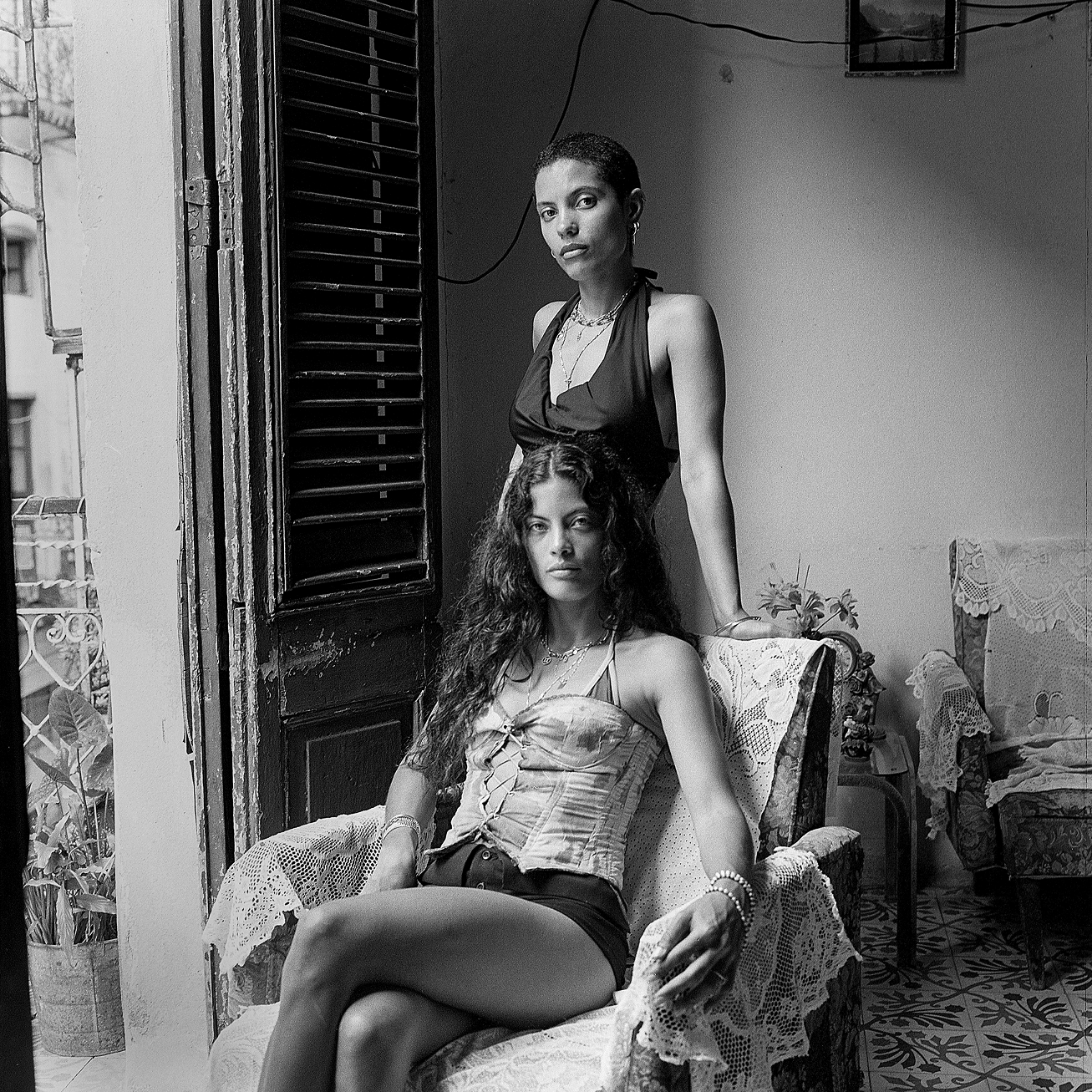
With Offering, Ibeyi return with their most intimate and uncompromising project to date. Released Friday 26th June, the album marks the French-Cuban sisters’ first as independent artists under Ibeyi Records, with a UK and EU tour to follow later this year. Taking a multicultural and multilingual approach to lyricism and percussion, Offering becomes a manifesto in praise of their heritage, an iconoclastic journey of self-affirmation through vulnerability and acceptance.
With this newfound freedom, Lisa-Kaindé Díaz and Naomi Díaz have conceptualised an immensely sensitive audiovisual world, one of introspection and community. There is no holding back: the scenes are at once vividly cinematic and grounded in soulful realism. Each narrative is fearlessly human, with the music videos for Aset and Offerings shot on location at the El Gao Art Community with the Vaillant de la Lisa, Díaz, and Endez de Regla families.
We spoke with Ibeyi about the inspirations and realisations behind this fervently defiant body of work. Offering relishes uncertainty and the courage to let go, together.
hube: What has inspired the album’s visuals, and what was it like crafting these stories in collaboration with local families and artists?
Lisa-Kaindé Díaz: In the making of Offering, we knew that we wanted to reveal something vulnerable. It was a coming back to ourselves, a realignment. Therefore, we knew that we couldn’t create visuals for the album in a studio. We needed to come home. As soon as we thought about Cuba, we knew it was time. We were ready to do it, to say thank you to this island that has given us so much. It was a way to honour our dad. We got to work with family and people that we have known for a long time; all of us are a part of it. It was a way to honour our culture, who we are. It was very emotional to take this offering to Cuba and to commemorate the offerings Cuba has given us.
h: You have previously spoken about the significance of ancestry in your work. What can we learn from looking back and fostering an awareness of those who have come before us? How can an engagement with history, and specifically our family heritage, help shape our futures with mindfulness and empathy?
Naomi Díaz: For us, talking about our family has always been one of the main sentiments behind Ibeyi. We lost our dad when we were eleven, when our other sister was eighteen. So, making music, and doing interviews like this one, are ways to connect with them.
LD: Our dad used to say, escucha a los viejos, which means ‘listen to the elderly’. We always remember that. Knowledge of the past and its traditions are a very important part of growing up.
h: Aset is sung predominantly in Spanish, Offerings in English, while other tracks are performed in French and Yoruba. How does your multilingual background influence the way you write and express emotions? Do different languages allow you to access different parts of yourselves as artists?
ND: We are a mix of different cultures, different languages. Since the beginning, we have used all these tools to make art. It’s something that we see more and more now, but I feel we were doing it early on. Spanish is way more poetic. French is fucking hard—and we finally did it with this album! And English is way more direct. Each language has its own energy, and we move through it all.
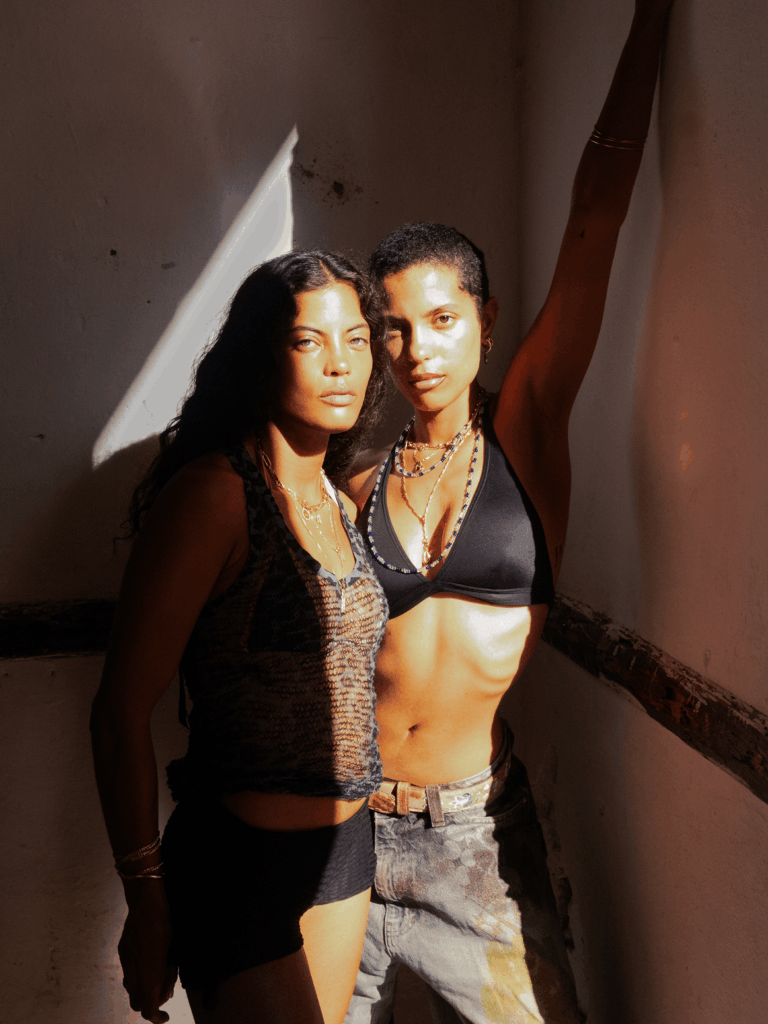
Photography by LISANDRA ALVAREZ