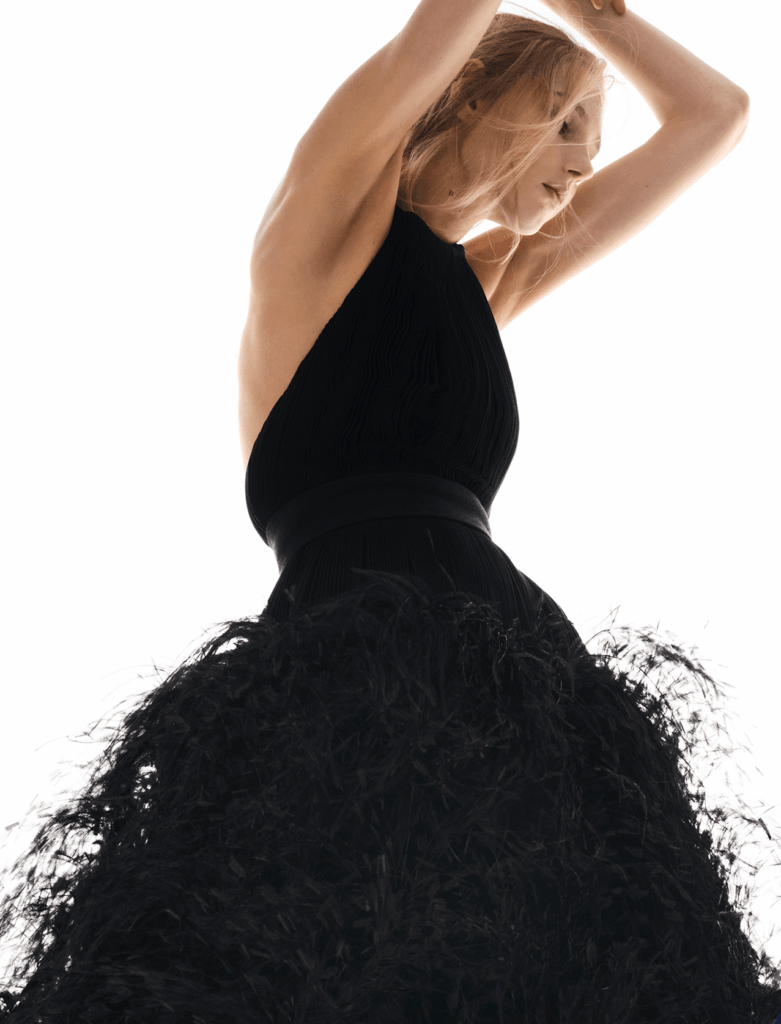
Christelle Kocher Paris Haute Couture Week denim fashion couture embroidery

Innovation through heritage, with Christelle Kocher

Christelle Kocher
Paris Haute Couture Week
denim fashion
couture embroidery
Christelle Kocher
Paris Haute Couture Week
denim fashion
couture embroidery
Christelle Kocher
Paris Haute Couture Week
denim fashion
couture embroidery
Christelle Kocher
Paris Haute Couture Week
denim fashion
couture embroidery

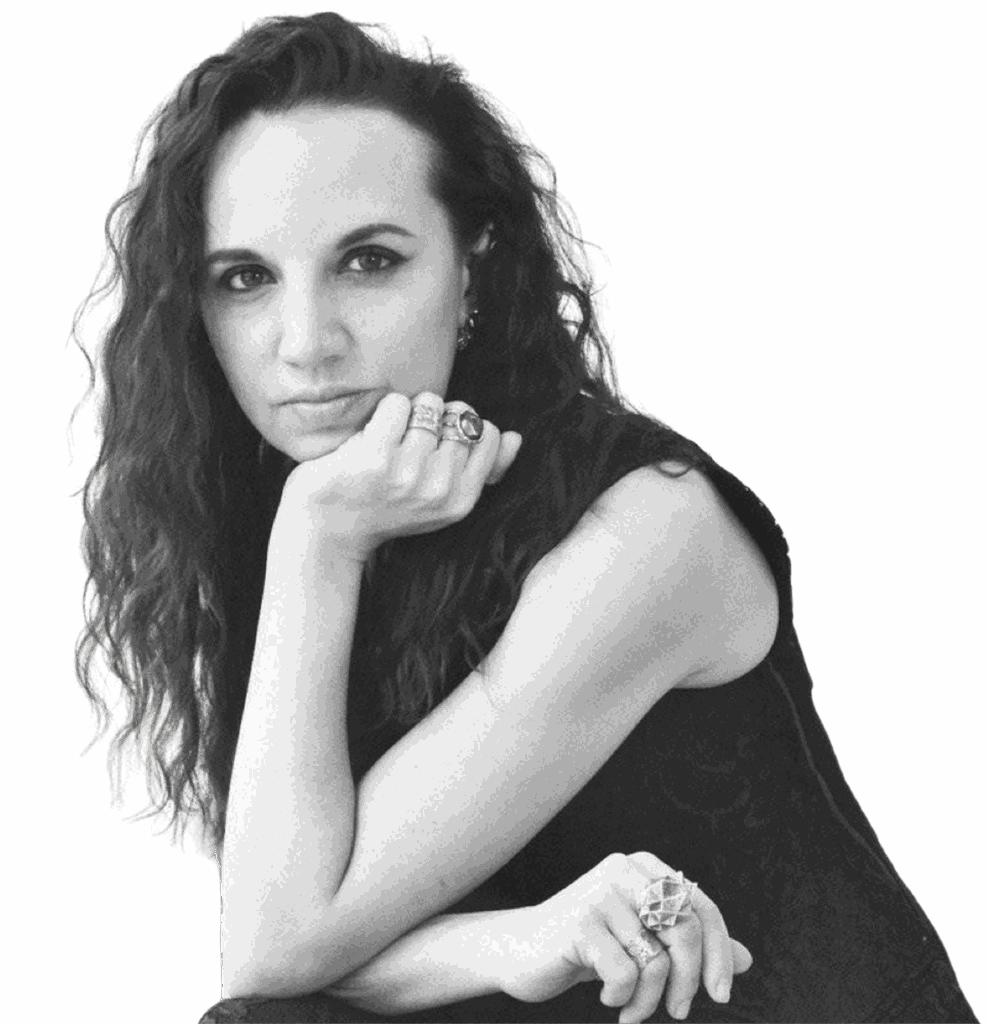
Our conversation begins with Christelle Kocher’s most recent project, Levi’s® by Christelle Kocher, presented during Paris Haute Couture Week. The capsule collection bridges New York and Paris, denim and savoir-faire. Kocher is also the artistic director of Lemarié, Parisian savoir-faire specialists, and the creative director of her label, KOCHÉ.

She muses on dualities: cotton and feathers, delicacy and ruggedness, opulence and functionality. By bringing together denim and couture embroidery, Kocher invites us to see the union of opposites as an opportunity for personal growth, new perspectives and technological innovation. Kocher finds unity through craftsmanship and heritage, insisting that the handmade lies at the heart of community, authenticity and connection. She foregrounds the individual experience: what it feels like to make a garment, wear a garment and become yourself through clothing.

hube: Your Levi’s® by Christelle Kocher capsule collection, presented during Paris Haute Couture Week, brought together two seemingly opposite worlds: American denim and French savoir-faire. Beyond the contrast between these two languages, what unexpected similarities did you discover during the creative process?

Christelle Kocher: People often describe them as opposites, but I haven’t experienced them that way. Both Levi’s and French savoir-faire are built on authenticity. One has its origins in workwear and functionality; the other in couture. Yet both are rooted in exceptional craftsmanship, precision and a profound respect for making.

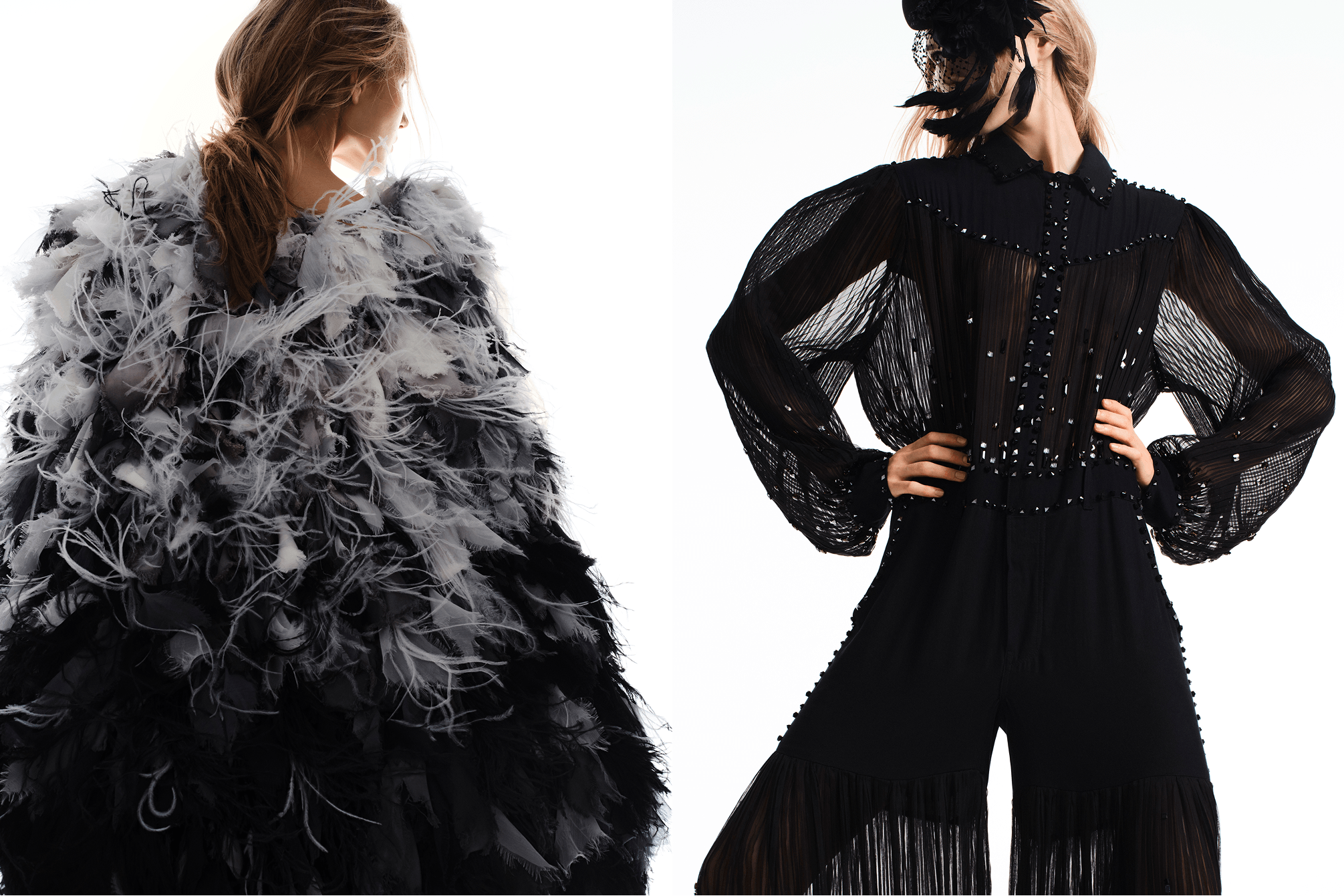
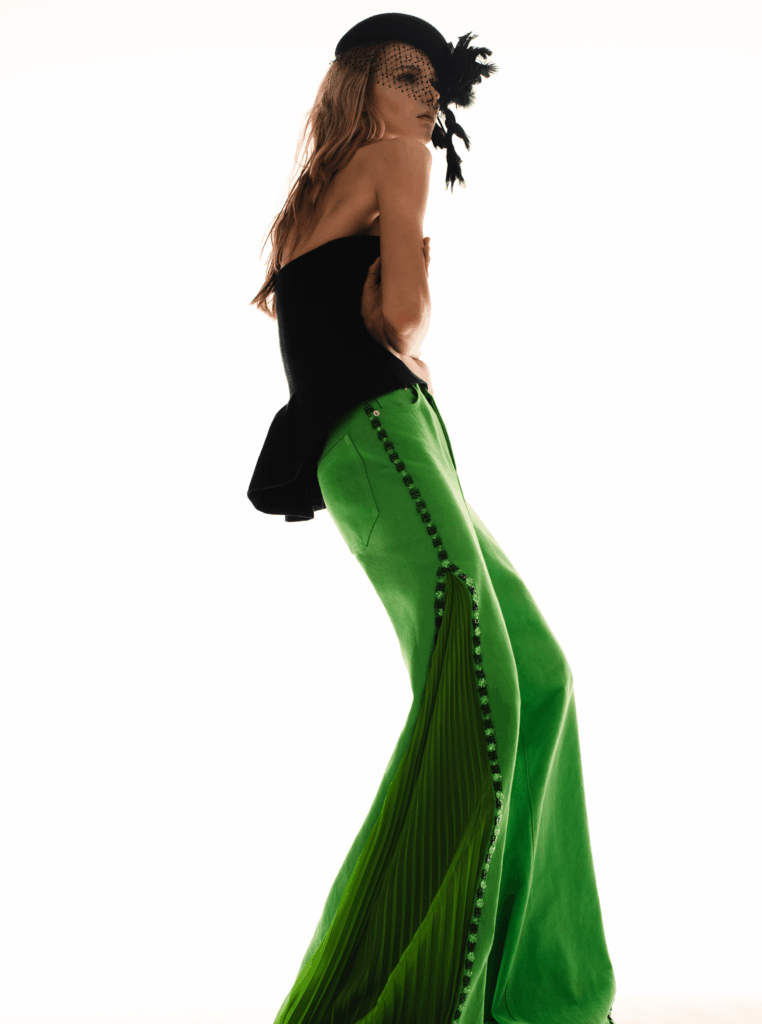
What fascinated me was how naturally these worlds speak to one another. The iconic 501® and Trucker Jacket are already extraordinarily constructed. Rather than changing their identity, I wanted to reveal another dimension through embroidery, feather-work, Maison Lemarié’s Lognon pleating and other artisanal techniques.

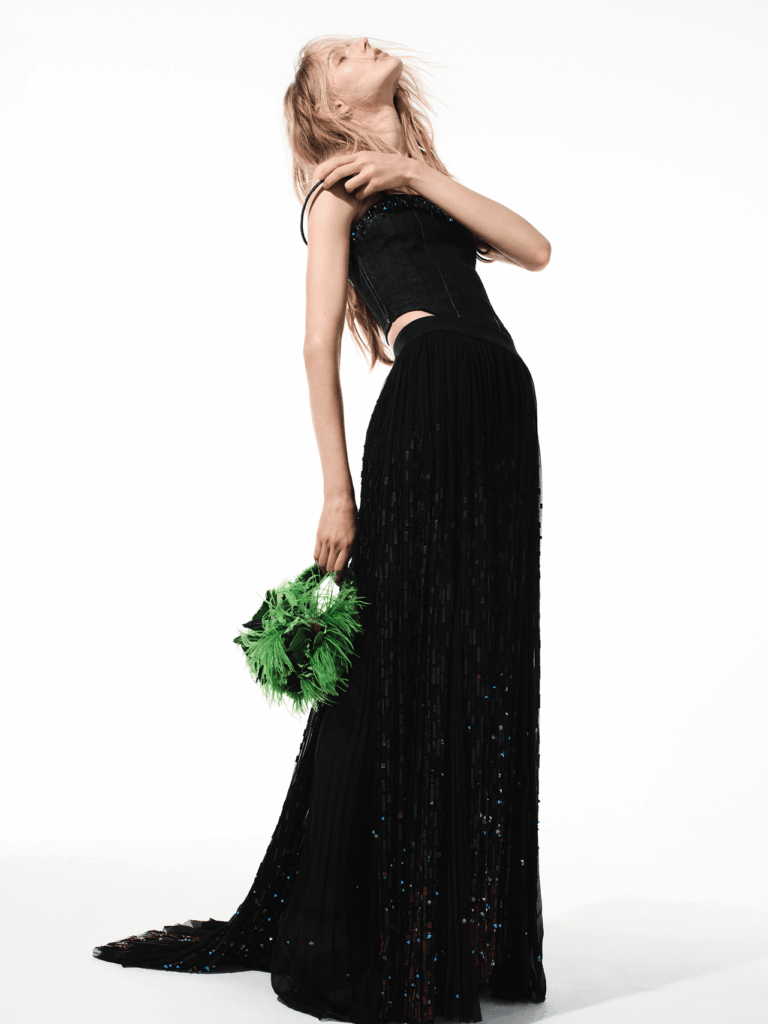
The black gown first revealed at the Cannes Film Festival is a great example. We transformed the black stretch denim by adding a bespoke iridescent coating. We also laser-cut thousands of scale-like pieces and embellished the surface by hand with six different colours of feathers. The garment almost stopped looking like denim, yet it never lost its identity. I love that balance between familiarity and surprise.

h: You divide your time between Paris and New York, two cities with very different relationships to fashion, craftsmanship and everyday style. How have these environments shaped the way you think about clothing?

CK: I divide my time between Paris and New York, but also between Maison Lemarié and KOCHÉ. Both cities and creative worlds constantly nourish each other.

Paris keeps me deeply connected to craftsmanship and history. New York reminds me to stay open and connected to the energy of everyday life. I see the same dialogue between French savoir-faire and Levi’s. One carries generations of knowledge; the other is one of the strongest cultural symbols in fashion. They don’t compete; they enrich one another.

I’ve never considered heritage and innovation to be opposites. Their encounter is often where the most unexpected ideas emerge.
h: When working with an iconic and highly symbolic fabric, such as denim, where do you begin: with its history, its construction or the way people wear it?

CK: I always begin with the people who wear it. Almost everyone owns a pair of jeans. Denim carries memories long before it becomes ‘fashion’, and that’s what makes it so powerful.

Working with the Levi’s teams and the Eureka Innovation Lab completely changed my perception of what denim can be. Together, we developed incredibly lightweight fabrics that allowed it to move with a fluidity you’d never expect.

One of my favourite pieces is the Feather Cape. Every single denim petal was individually cut, frayed, dyed and hand-finished before being assembled alongside layers of ostrich feathers. It feels raw and instinctive, yet it is worn over a sculptural high-waisted silhouette inspired by the elegance of the 1930s. I love that contrast. Strength and delicacy coexist in the same look.

h: Could you take us through your research process for this collection? How do you transform cultural references, historical knowledge and material experimentation into a final garment?

CK: Research always begins with curiosity. I constantly collect things. A photograph, a painting, a film, a flower, a piece of embroidery or an old Levi’s advertisement—like the iconic Shaggy Boombastic Levi’s ad—can all become starting points for a collection. For this project, I spent time in the Levi’s archives in San Francisco. Seeing some of their very first jeans, beautifully repaired workwear, Elton Jones’ embroidered pieces from the 1970s and the optimism of the Flower Power era reminded me that denim always reflects society.

My references are rarely limited to fashion. Marilyn Monroe’s effortless sensuality in high-waisted jeans, Charles James’ sculptural construction, Madame Grès’ precision, Tracey Emin’s drawings, Claire Tabouret’s vibrant colours and Marlene Dumas’ portraits all helped shape the atmosphere of the collection.

Then comes experimentation. I love draping and touching fabrics, pushing textiles beyond convention. Working between San Francisco, London and Paris, we explored new fabric weights, washes and surface treatments before bringing them together through the savoir-faire of Maison Lemarié and the Lognon pleating atelier.

The Nadjah dress exemplifies this journey. We developed a new sunray pleat specifically for ultra-lightweight denim. We paired it with a long ostrich-feather boa; the colours fade from electric blue to indigo and finally black. For me, research is most impactful when it leads you to transform a material into something unexpected.

h: As Artistic Director of Maison Lemarié, you are working with some of the most specialised craft techniques in fashion. What does it mean to be a guardian of this knowledge today?

CK: I don’t think my role is simply to preserve craftsmanship. My responsibility is to help it evolve, transmit it and keep it alive.

When I arrived at Maison Lemarié, very few young people were in this profession. Today, a new generation is genuinely excited to learn these techniques. They come from different countries and backgrounds, contributing fresh perspectives. That gives me hope.

A savoir-faire only survives if it continues to evolve. It has to welcome new ideas, new technologies and new generations without losing its integrity. For me, transmission is just as important as creation, because the future of craftsmanship depends on our ability to share it.

h: What do you learn by working closely with artisans? How has it changed the way you design?

CK: Patience. Precision. Excellence and humility. Watching someone spend hours cutting a single flower, creating a pleat or embroidering a detail completely changes your perception of value. You realise that luxury isn’t about excess or speed; it’s about care, generosity and time.

An artisan once told me that the smallest detail often carries the greatest meaning. I’ve never forgotten that. It reminds me every day that the strongest ideas are often the quietest ones.

Christelle Kocher
Paris Haute Couture Week
denim fashion
couture embroidery
Christelle Kocher
Paris Haute Couture Week
denim fashion
couture embroidery
Christelle Kocher
Paris Haute Couture Week
denim fashion
couture embroidery
Christelle Kocher
Paris Haute Couture Week
denim fashion
couture embroidery
Christelle Kocher
Paris Haute Couture Week
denim fashion
couture embroidery
Christelle Kocher
Paris Haute Couture Week
denim fashion
couture embroidery
Christelle Kocher
Paris Haute Couture Week
denim fashion
couture embroidery
Christelle Kocher
Paris Haute Couture Week
denim fashion
couture embroidery
Christelle Kocher
Paris Haute Couture Week
denim fashion
couture embroidery
Christelle Kocher
Paris Haute Couture Week
denim fashion
couture embroidery
Christelle Kocher
Paris Haute Couture Week
denim fashion
couture embroidery
Christelle Kocher
Paris Haute Couture Week
denim fashion
couture embroidery
Christelle Kocher
Paris Haute Couture Week
denim fashion
couture embroidery
Christelle Kocher
Paris Haute Couture Week
denim fashion
couture embroidery

h: The Levi’s® by Christelle Kocher project brought together several different teams, creative approaches and generations of expertise. Through a project of this scale, what have you learned about collaboration?

CK: For me, it confirmed that creativity is collective. This project brought together designers, engineers, denim specialists, colour experts, pattern makers and artisans from across the world. Everyone looked at the same material from a different perspective.

The best ideas rarely belong to one person. They grow through dialogue and trust. That’s what excites me about fashion today.

h: You describe your approach as Couture-à-Porter — a space between haute couture and ready-to-wear. What gap in the fashion system were you trying to address?

CK: I’ve always believed that luxury is freedom: the freedom to move, to express yourself and to create without fear.

From the beginning, KOCHÉ was about imbuing the generosity and craftsmanship of couture into everyday life. I wanted to make clothes that could move naturally between reality and imagination.

Today, that vision has evolved into two complementary expressions. KOCHÉ Flow explores movement, purity and everyday elegance through an essential wardrobe based on exceptional jersey. Atelier One of a Kind pushes craftsmanship to its highest level through unique, collectible pieces that celebrate savoir-faire.

One is about living with clothes. The other is about dreaming through them. They are simply two chapters of the same story.

h: Today, luxury is often associated with exclusivity, but your work places strong emphasis on people and processes. Do you think the meaning of luxury is shifting?

CK: Absolutely. For a long time, luxury was defined by rarity. Today, I think people are looking for something more meaningful. They want authenticity, transparency and genuine connections. They want to know who made something, why it was made and what story it carries.

Luxury is becoming more human. Innovation only matters if it enriches the final creation. Technology can open new possibilities, but what stays with people is how a garment makes them feel. That’s what gives an object lasting value.

h: In the future, what do you believe will make a fashion house truly relevant: innovation, heritage, craftsmanship, sustainability or something else?

CK: I don’t think the future belongs to the brands that simply make more products. It belongs to those that create meaning. Technology will become increasingly important, not to replace craftsmanship, but to expand what human hands and imagination can achieve.

Joan Didion wrote that “we tell ourselves stories in order to live.” I think clothes do something similar. The most meaningful garments become part of our personal story. If a fashion house can create that connection while remaining curious, authentic and rooted in craftsmanship, it will always stay relevant. That’s the future I’m building with KOCHÉ.

Christelle Kocher
Paris Haute Couture Week
denim fashion
couture embroidery
Christelle Kocher
Paris Haute Couture Week
denim fashion
couture embroidery
Christelle Kocher
Paris Haute Couture Week
denim fashion
couture embroidery

Capsule Levi’s® by Christelle Kocher 

Words: MARTA TERESA

ISSUE 8

issue no8

Discover the new issue — available now