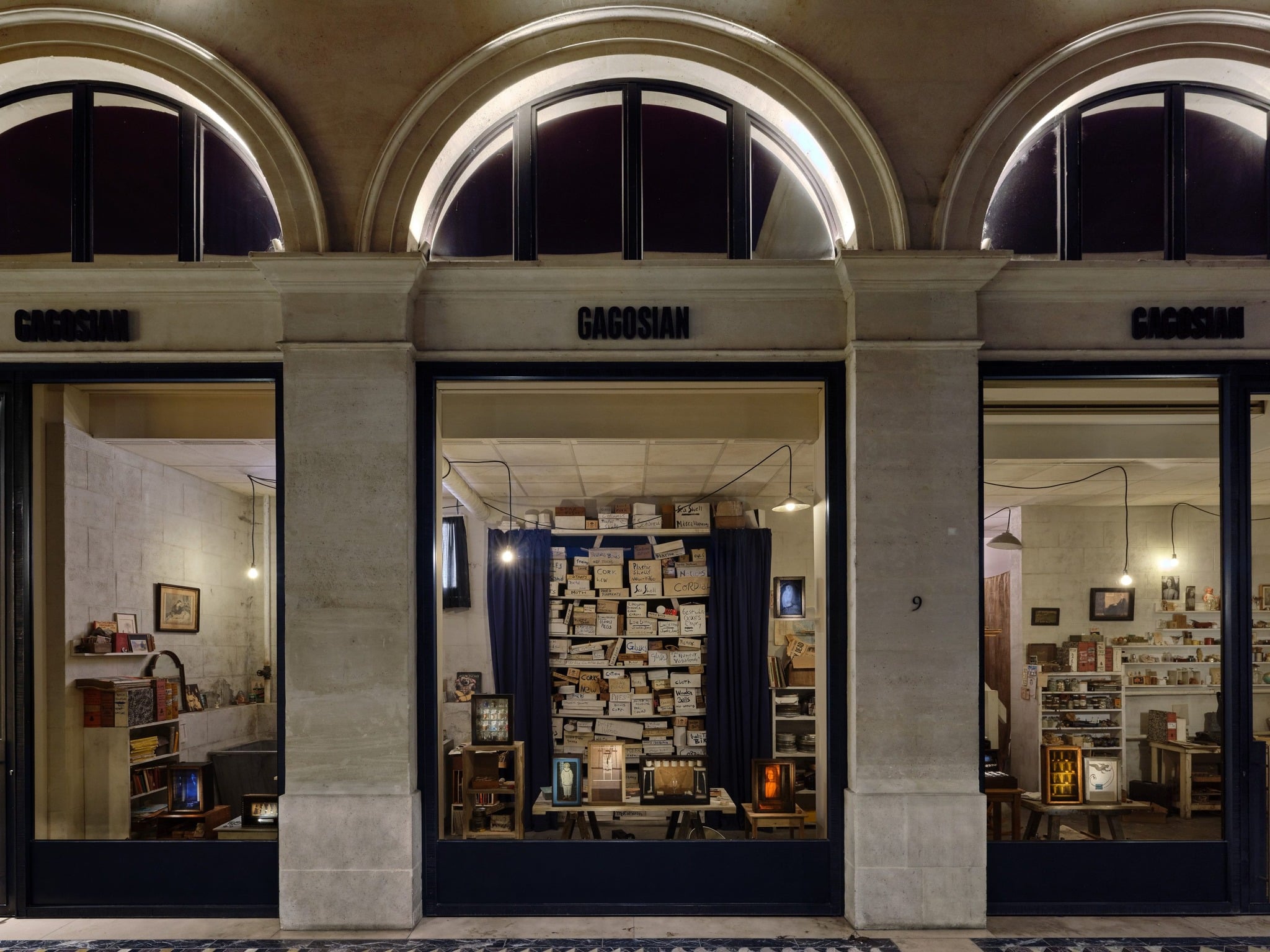
Gagosian Paris opens a rare window into the Joseph Cornell studio with The House on Utopia Parkway, a meticulously staged exhibition that blurs the line between archive, installation, and cinematic set. Running from December 16th, 2025, to March 14th, 2026, the project transforms the gallery’s storefront at 9 rue de Castiglione into an immersive environment shaped by filmmaker Wes Anderson and curator Jasper Sharp, bringing Cornell’s intimate creative universe to the heart of Paris.
The Joseph Cornell studio reimagined
Rather than presenting artworks on white walls, the exhibition reconstructs the modest basement studio Cornell maintained in his family home in Queens. Conceived by Sharp in close collaboration with Anderson and exhibition designer Cécile Dégos, the space unfolds as a life-size tableau filled with shelves, drawers, and boxes. The installation is centred around more than 300 objects from Cornell’s personal collection, including maps, toys, feathers, shells and paper fragments. These items offer insight into the artist’s famously obsessive approach to collecting and ordering the world around him.
This re-creation marks Cornell’s first solo presentation in Paris in over forty years, an especially resonant return for an artist who never visited the city yet imagined it constantly through books, postcards, and conversations with figures such as Marcel Duchamp.
Surrealist assemblage and the poetry of objects
At the heart of the exhibition are several of Cornell’s iconic works, which exemplify his singular approach to surrealist assemblage. Pharmacy (1943), inspired by antique apothecary cabinets, arranges glass vials and paper ephemera into a fragile system of visual logic. Untitled (Pinturicchio Boy) from the Medici series layers Renaissance imagery behind tinted glass alongside maps and wooden toys, collapsing time and geography into a single, dreamlike frame.
Other highlights include A Dressing Room for Gille (1939), a quiet homage to Watteau’s Pierrot housed nearby at the Louvre, and Blériot II (c. 1956), which nods to early aviation and French invention. Together, these works reveal how Cornell transformed humble materials into poetic structures of memory, fantasy, and longing.
The House on Utopia Parkway ultimately presents more than a historical reconstruction. Through contemporary exhibition design and Anderson’s eye for detail, it provides an intimate portrait of the artist’s inner life, where the Joseph Cornell studio becomes a living environment and a surrealist assemblage unfolds as a way of seeing, remembering and quietly reshaping the world.
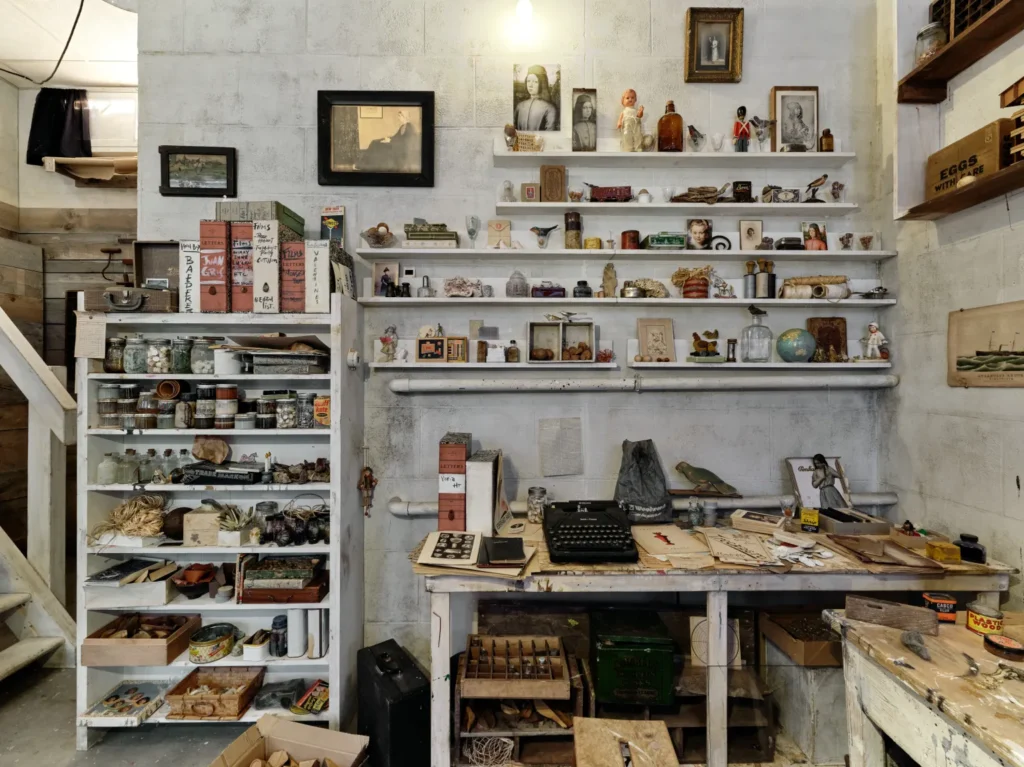
Photography by THOMAS LANNES, courtesy of GAGOSIAN
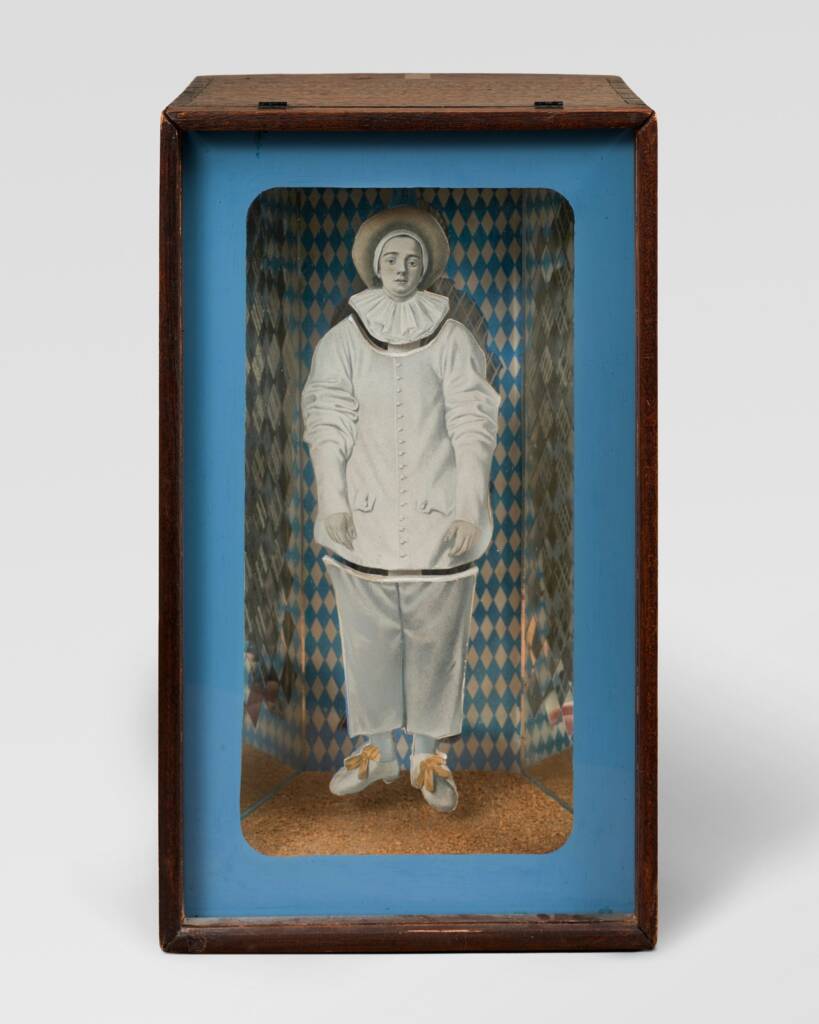
A Dressing Room for Gille, 1939
© 2025 THE JOSEPH AND ROBERT CORNELL MEMORIAL FOUNDATION/Licensed by VAGA at ARTISTS RIGHTS SOCIETY (ARS), New York. Photography by OWEN CONWAY
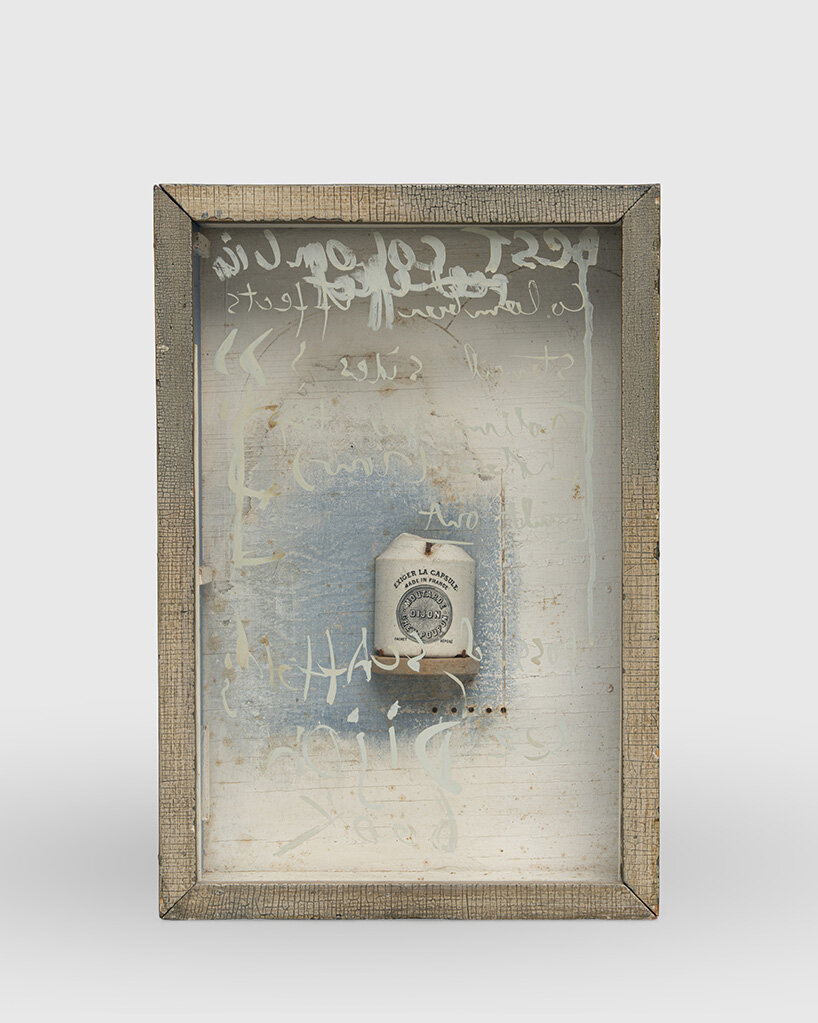
Chambre Gothique Moutarde Dijon Pour Aloysius Bertrand ‘Sulphide’, 1950
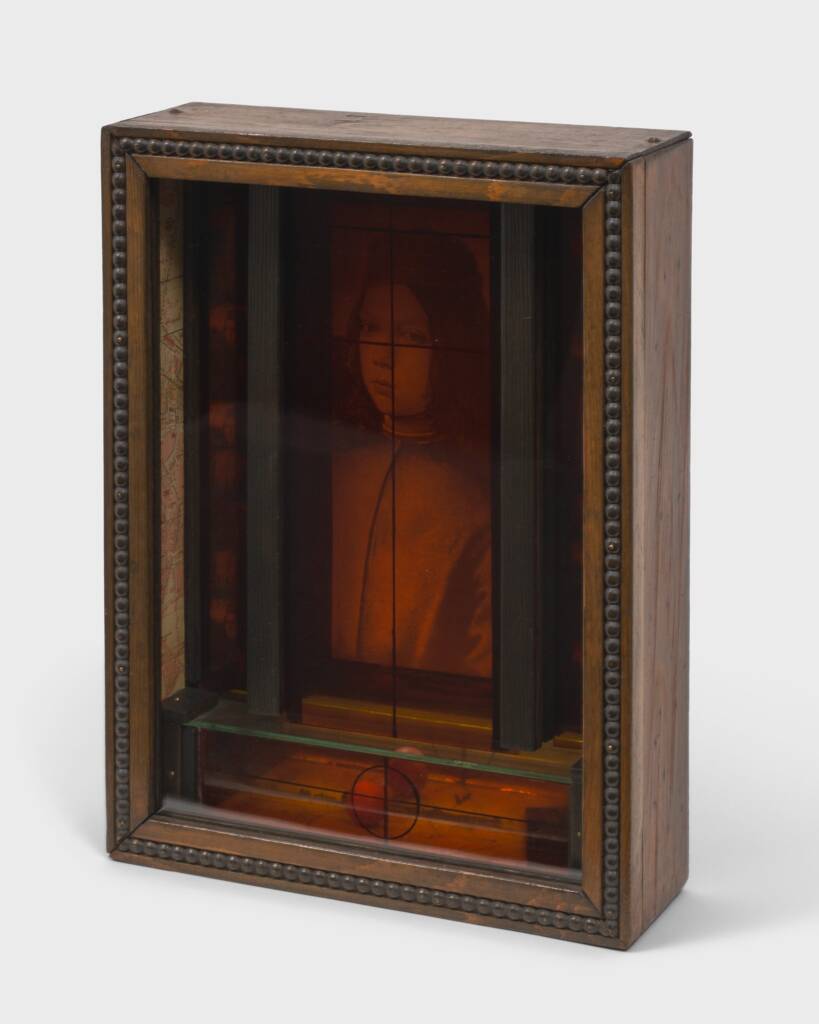
Untitled (Medici Series, Pinturicchio Boy), c. 1950
© 2025 THE JOSEPH AND ROBERT CORNELL MEMORIAL FOUNDATION/Licensed by VAGA at ARTISTS RIGHTS SOCIETY (ARS), New York. Photography by OWEN CONWAY