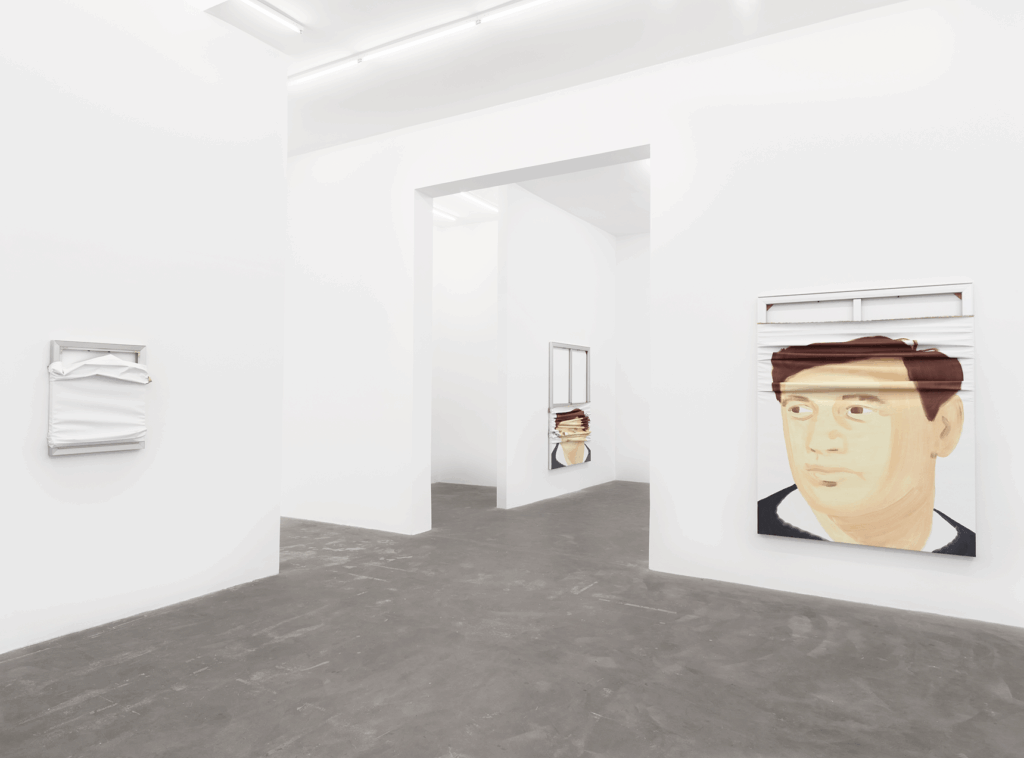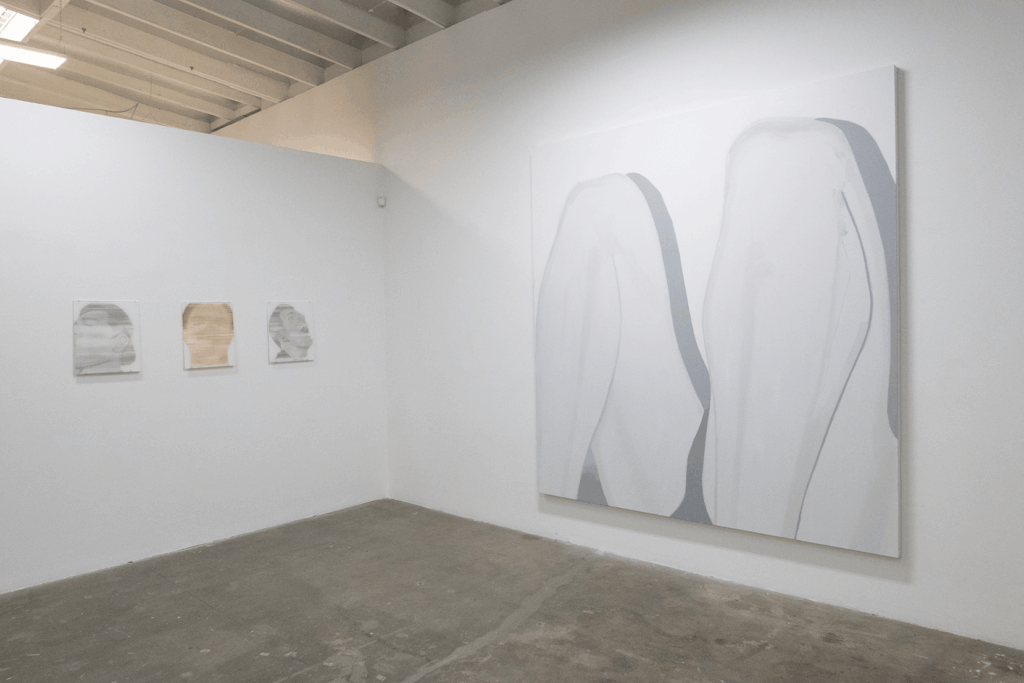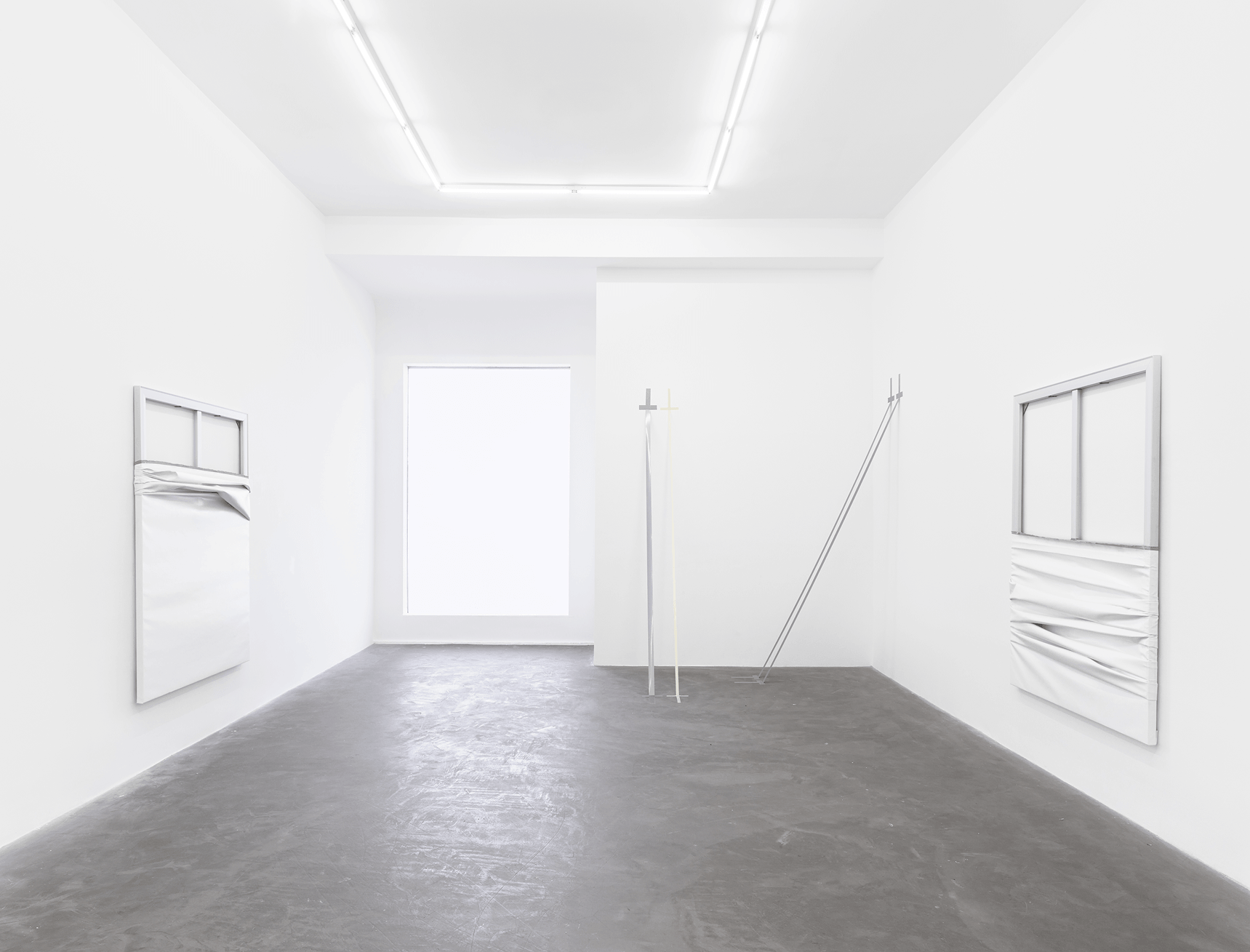
Jwan Yosef’s paintings dwell in the charged space between presence and absence. Much of his work is decided by where the edge falls; the source material is more often found than staged, and the finished canvases seldom tell you who anyone is. Born in Syria, raised in Sweden, trained in Stockholm and London, and now working in Los Angeles, Yosef has spent nearly twenty years building a body of work that is unusually self-consistent: the same preoccupations resurface—closeness, wanting, exposure, the way paint behaves when it is asked to stand in for skin—and each new group of pictures tests them again rather than replacing them.
Intimacies, published by Baron Books in 2025, was his first monograph, and pointedly not a career survey. It draws on three bodies of work—Touch, Object, and Brush—sorted by preoccupation rather than by date. Object is where the painting stops behaving like a painting: canvases worked loose over their stretchers until they carry themselves as things rather than images. The solo exhibition TOUCH took the same questions off the page and into a room. Yosef is pushing further off the wall now, toward furniture and whole environments, while returning to intimate scales and to the reversed oil-on-plexiglass experiments of his early years. What persists is the inquiry he keeps returning to: how we touch, how we desire, how we remember, and how we connect.
hube: Your work often operates in a space of suggestion rather than explicitness—cropped bodies, subtle tensions, and what is left unseen. What draws you to this kind of language?
Jwan Yosef: I’ve always been more interested in what remains unresolved than in what is immediately legible. Suggestion creates room for the viewer to participate—to project, remember, desire, or even misunderstand. That ambiguity mirrors how intimacy actually functions. We rarely experience one another in complete clarity; we encounter fragments, gestures, glances, absences.
Cropping the body also shifts it away from portraiture and toward something more universal. A shoulder, a mouth, a hand—they stop belonging to one individual and begin carrying broader emotional and psychological weight. For me, what remains outside the frame is often as important as what is visible.
h: Themes of intimacy, desire, vulnerability, and queer sexuality recur throughout your paintings. How do you see these elements intersecting with broader questions of human connection in your art?
JY: While my perspective is inevitably informed by my experience as a queer man, I’ve never wanted the work to function as autobiography alone. Desire is one of the most fundamental human experiences—it shapes how we relate to others, to ourselves, and even to memory.
I’m interested in intimacy as a condition rather than an identity. The paintings ask what it means to be close to another person, to long for connection, to experience tenderness alongside uncertainty. Queerness enters the work not as a subject to illustrate but as a way of understanding the fluidity of bodies, relationships, and desire.
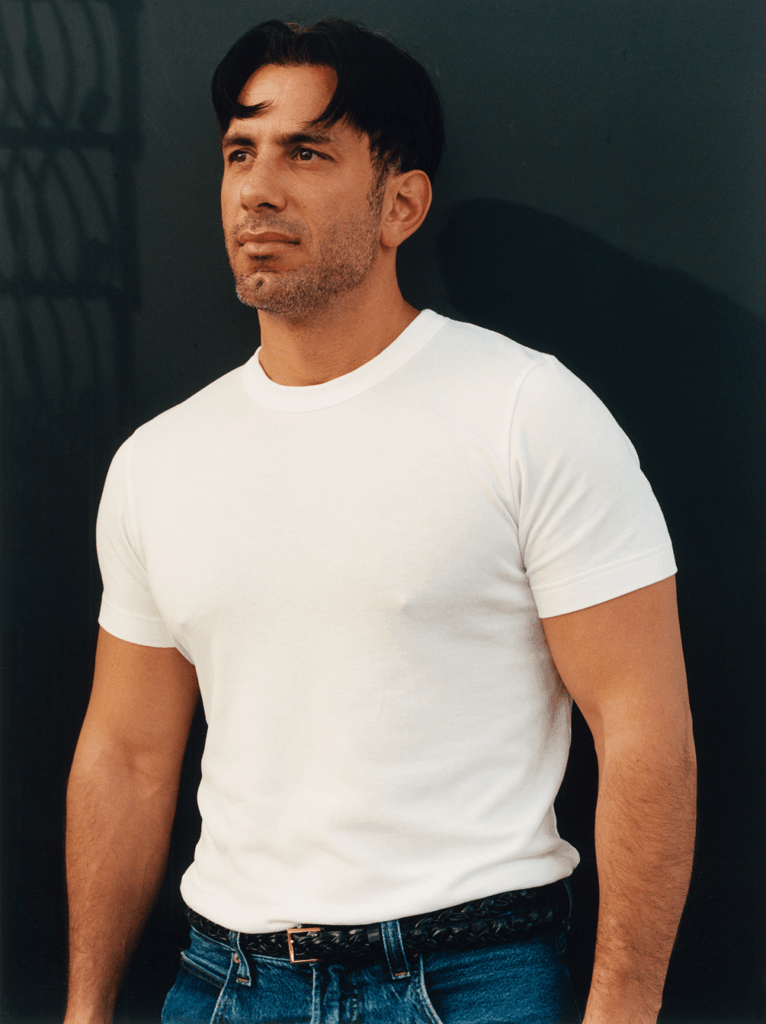
Photography by CAM LINDFORS