With Lisa Konno Paul Kooiker currently on view at Museum Kranenburgh in the Netherlands, we spoke with Konno about the importance of centring humanity and empathy amid the commerciality of fashion. Her pensive and thoughtful energy infuses the conversation with sincerity, a quality which anchors the versatility of her practice. Konno’s projects are just as pertinent to the museum as they are to the screen or the stage, narratives of play and boundlessness. Community provides fertile ground for her inquisitiveness. Through the creation of something individual, personal, and intimate, the universality of human experience comes into focus.
h: Your current exhibition with Paul Kooiker at Museum Kranenburgh invites visitors to look at fashion in unexpected ways. When two artistic practices are placed in dialogue, what becomes possible? Have there been moments when Kooiker’s work changed the way you saw your own?
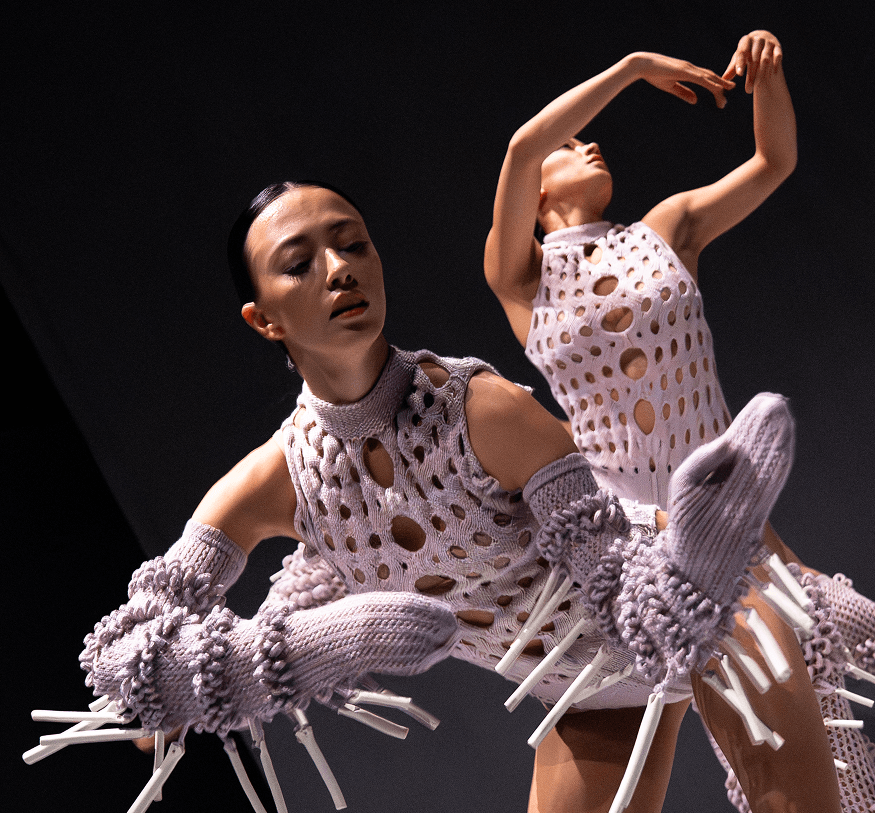
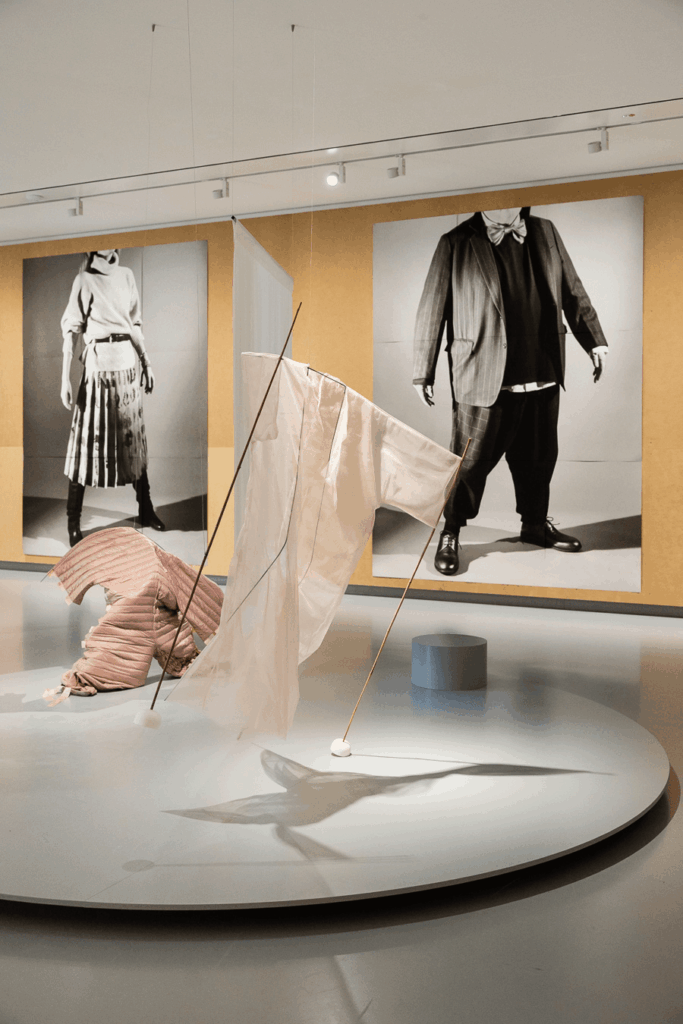
LK: Our practices derive from very different perspectives, but what we have in common is that we both work with fashion but are not necessarily in fashion. We strengthen each other’s ideas, yet each artist’s work stays individual. For instance, Paul’s photographs are of CEOs and creative directors of big fashion houses, but the photographs crop just below the head. We don’t see who they are; they’re just like mannequins. The pieces I’m exhibiting are costumes for a ballet [titled Figure, performed by the Dutch National Opera & Ballet]. The dance is about the different stages of a woman’s life. Placed in the context of Paul’s work, it becomes a commentary on the fashion system.
It’s like a confrontation. You are confronted by how it all feels together. I started to focus on the shapes. What is the rhythm in the space? I was no longer hung up on the detail, or the linear storytelling that happens on stage. It allowed me to see my work as sculptural. Each piece becomes a sculpture.
h: With Figure in mind, what interests you most about the moment when an object becomes something that is worn, moved in, and performed?
LK: There is a line between fine arts and applied arts. I aspire to blur that line. I think this separation is an artificial construct. To me, art is how you live your life, not just what you make. Objects in a museum can be brought back to life by performance.
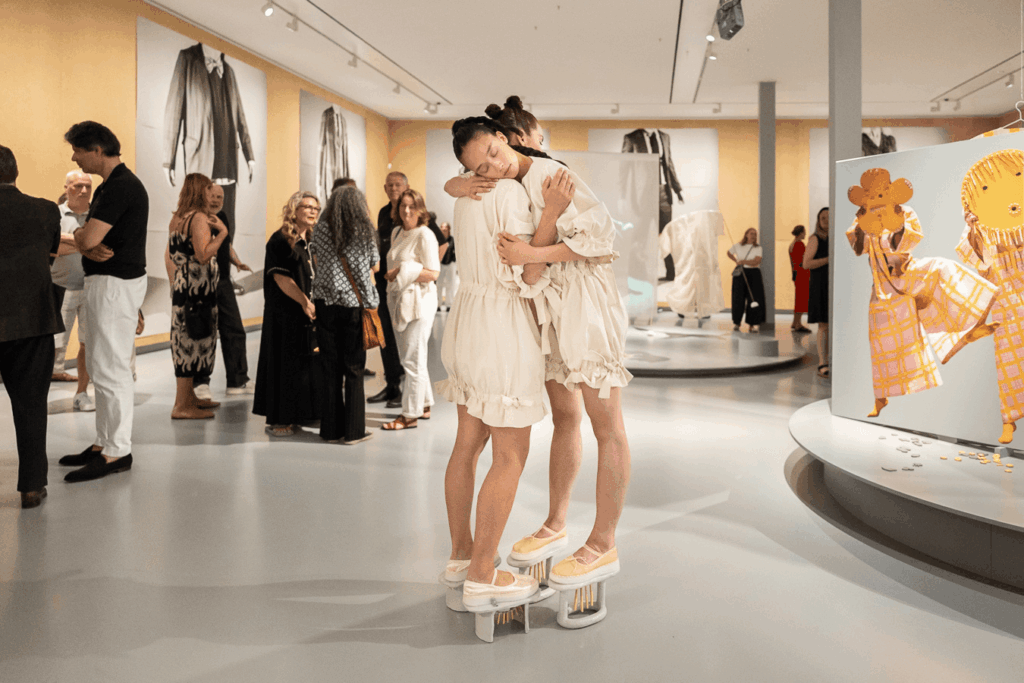
We hosted a performance during the opening night of our exhibition. And there are video screens in the exhibition which show the costumes ‘activated’. It removes the ‘glass box’ of the museum, where things are only there to be preserved. I like this aliveness. Everything becomes tactile and visceral. It emphasises the dramatic purpose behind the pieces.
For Figure, I made gloves with long ceramic beads attached to the wrists. When the dancer moved, their arms produced sounds. I loved it, but I felt that there was still a lot of untapped potential in that idea. You could even make a symphony, making music through clothing. There is wonder, but also tension. You are afraid of it breaking; the fragility is surreal.
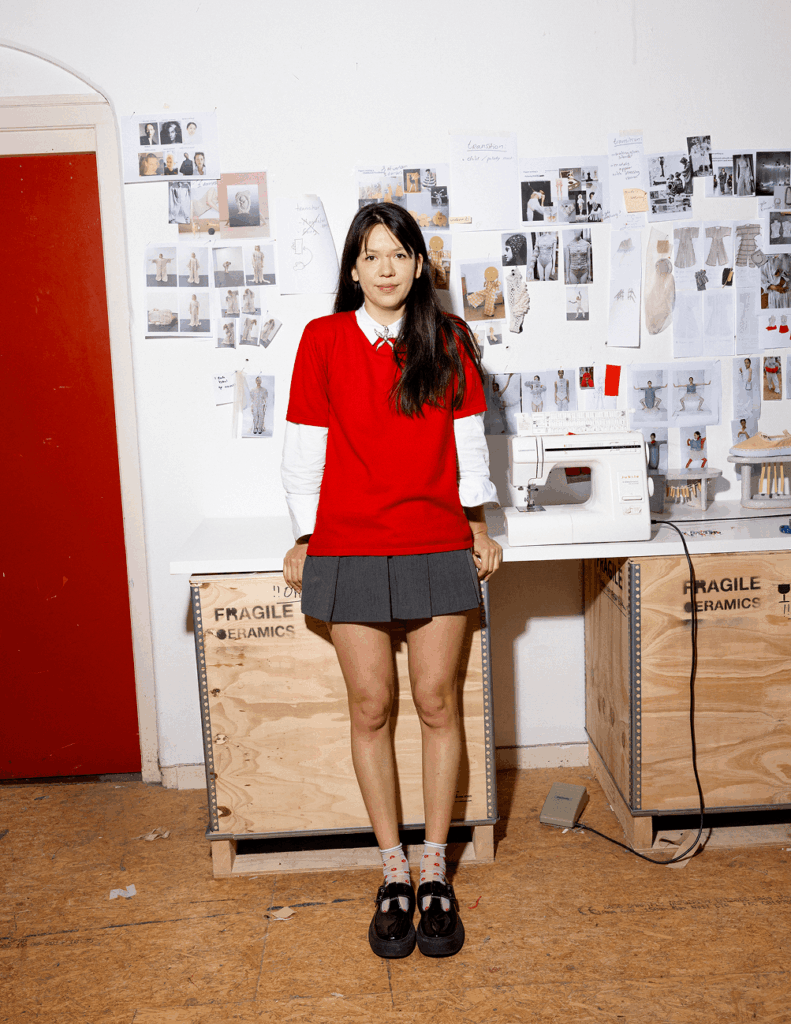
Photography by MAARTEN NAUW
Photography by MAARTEN NAUW