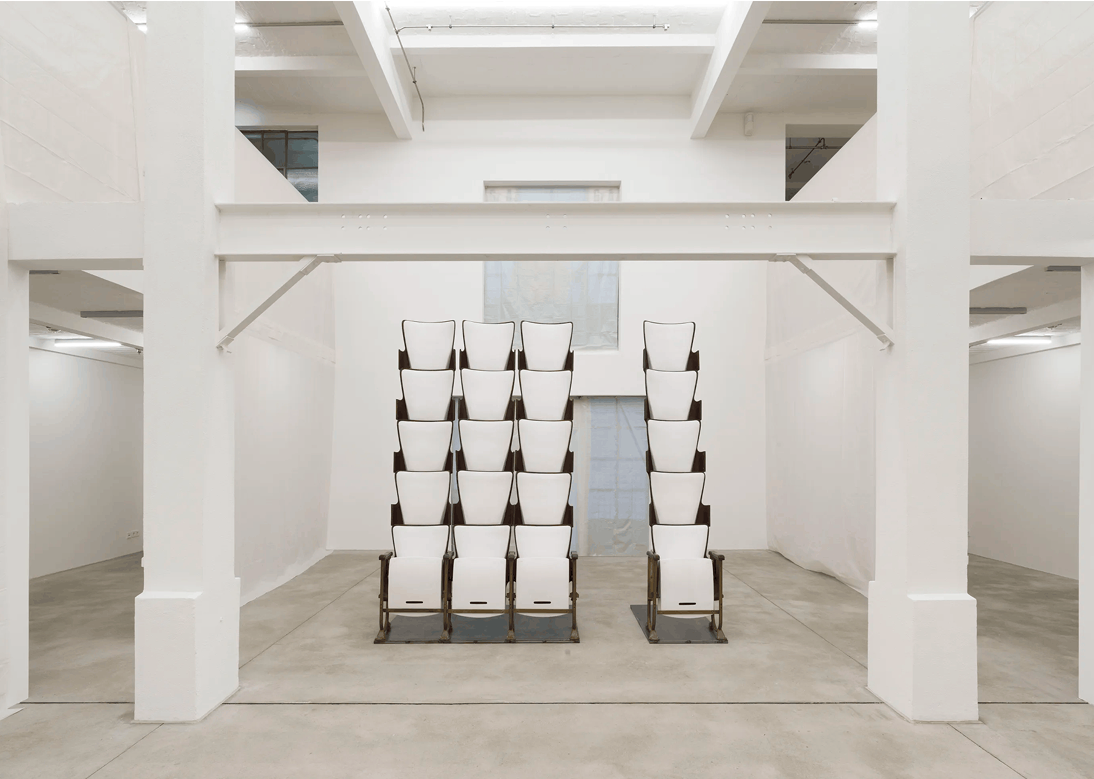
Martin Margiela arrives in Berlin with his first exhibition in Germany, presented by Konrad Fischer Galerie. On view from September 11th to December 19th, 2026, the Martin Margiela exhibition brings together sculptures and altered everyday objects, exploring the artist’s enduring fascination with the body, materiality and the uneasy space between the familiar and the strange.
Since leaving fashion in 2008, Margiela has devoted himself to art, developing a multidisciplinary practice rooted in close observation of everyday materials. He paints, strips, defaces and distorts ordinary objects, using simple physical interventions to shift their appearance and meaning.
From reclaimed cinema seats to distorted objects
The gallery itself becomes part of the exhibition. Two walls have been built beneath the mezzanine, while opaque painter’s sheeting partially conceals the entrance and raised balustrade. These interventions divide the space into intimate zones, restricting sightlines between visitors and artworks and creating a quiet tension between visibility and absence.
At the centre is Audience (2026), a monumental sculpture assembled from reclaimed cinema seats stacked into a monolithic wall. Margiela removes their original upholstery and replaces it with plaster and acrylic casts, turning an object associated with collective viewing into a stark architectural structure.
Elsewhere, coat hangers, bathroom and kitchen tiles, magazines, underwear, furniture and carpet undergo similarly tactile interventions. Painted, distorted or stripped of their familiar function, they hover between recognition and abstraction. Images of heads, hair and faces punctuate the exhibition, extending Margiela’s inquiry into the body and the spaces surrounding it.
His art carries forward the material curiosity that defined his fashion practice, examining how the objects we wear, sit on, read, watch and touch can acquire unfamiliar forms and meanings.
Read our rare conversation with Martin Margiela as he reflects on deconstruction, the creative potential of found objects, and why anonymity remains essential to his practice.
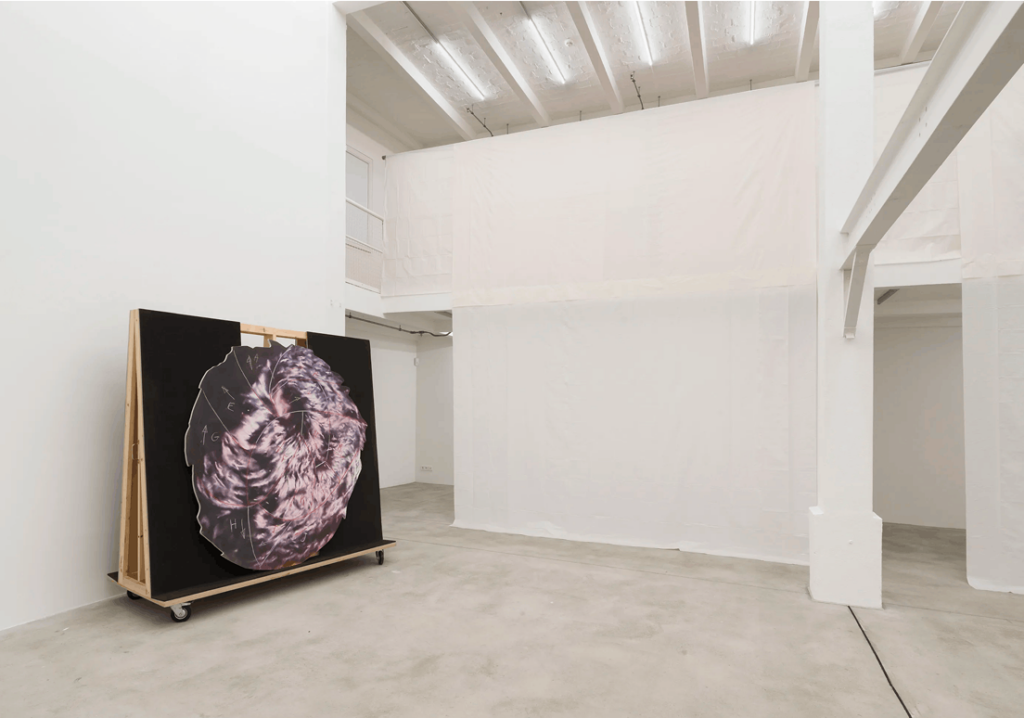
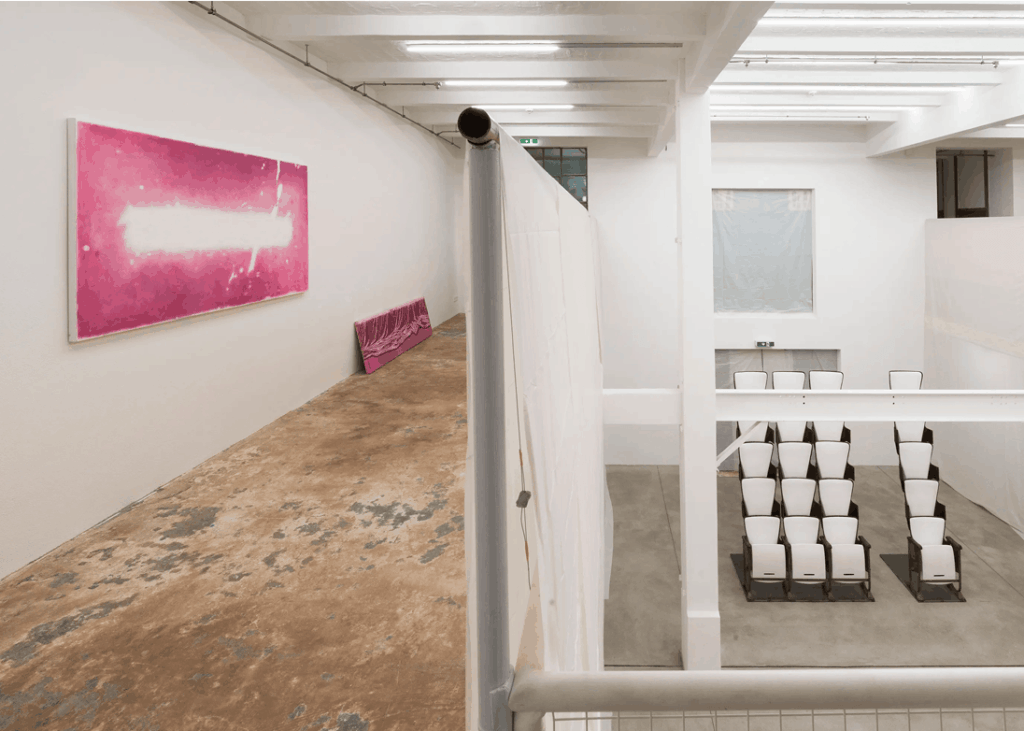
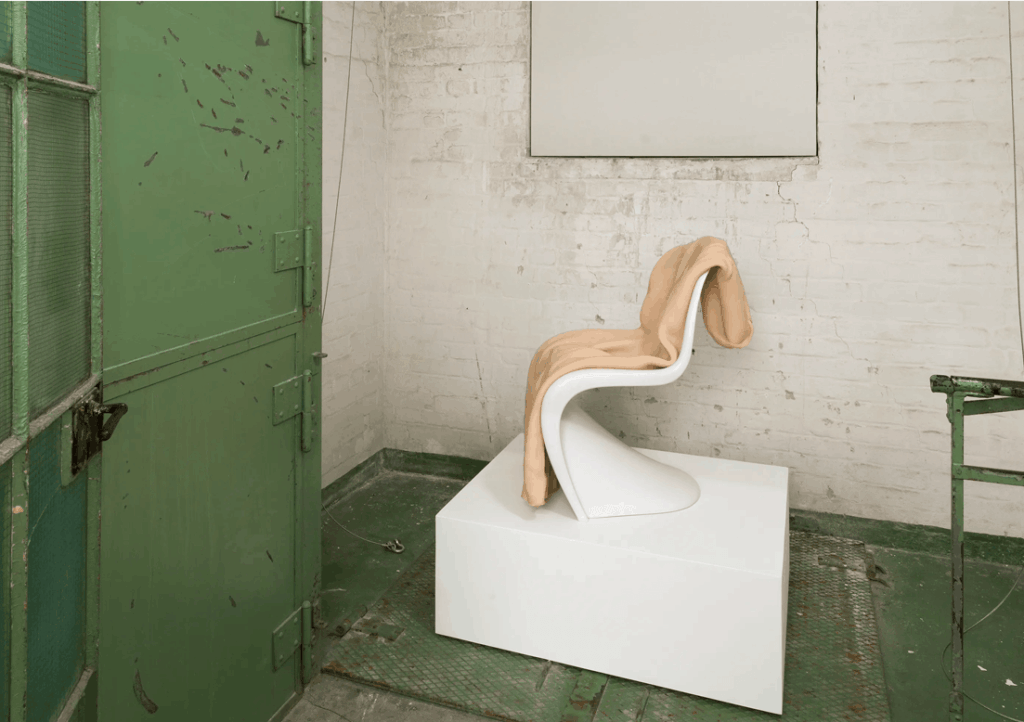
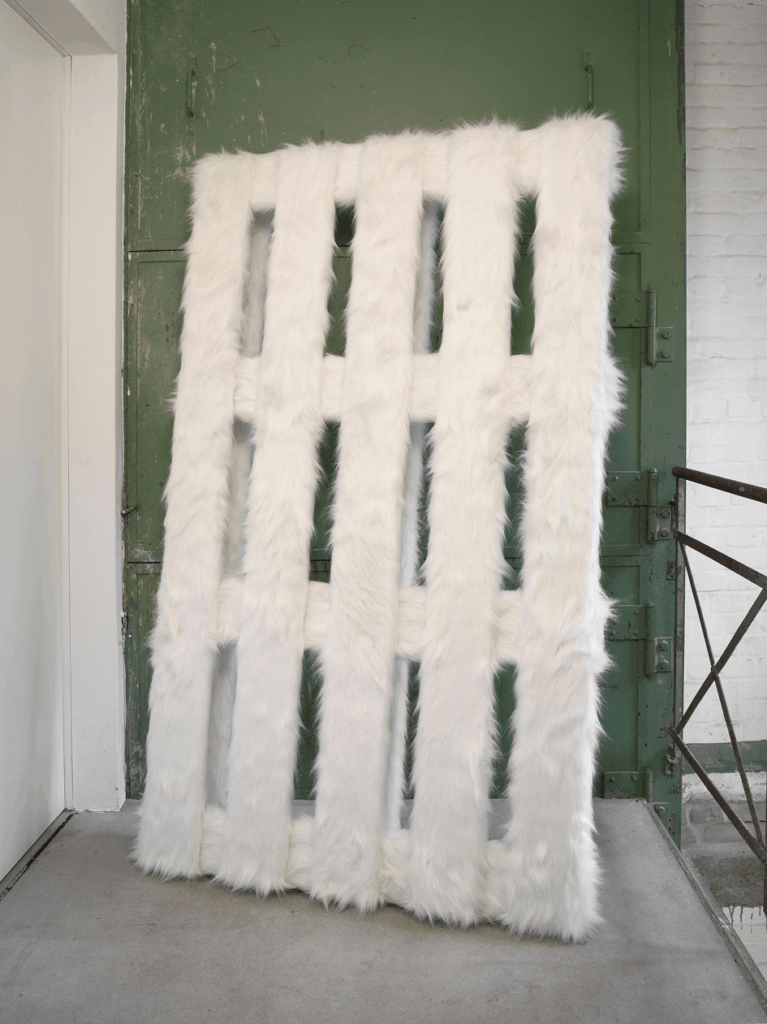
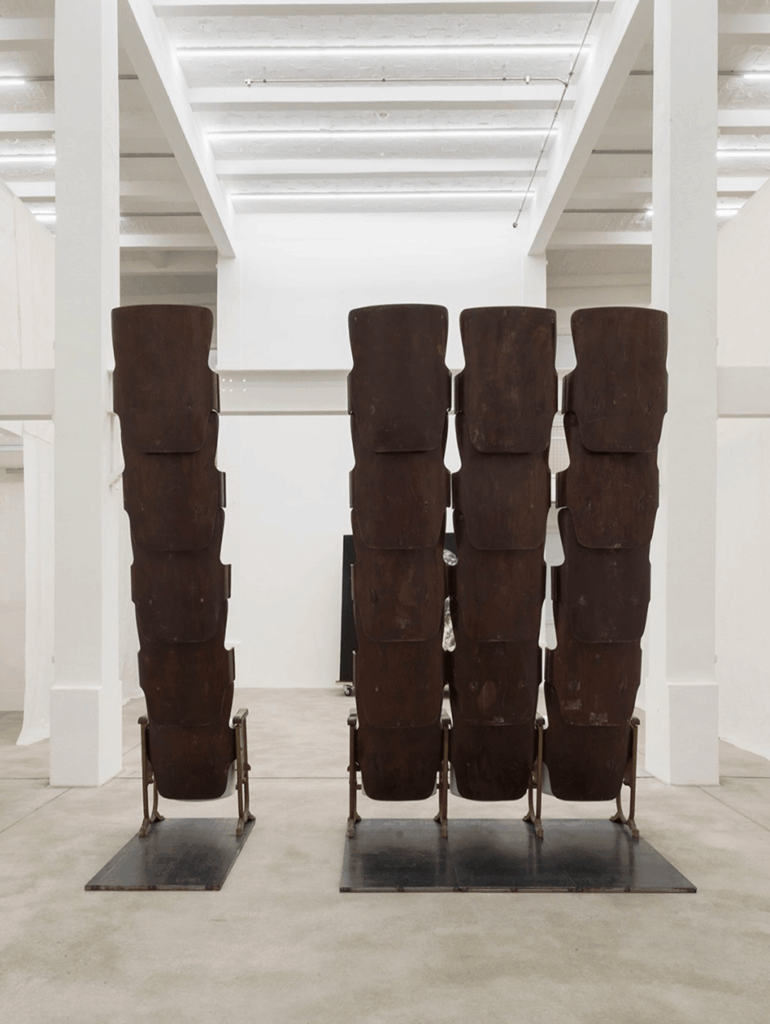
MARTIN MARGIELA, Installation Views
Courtesy of KONRAD FISCHER GALERIE