What happens when an artwork makes us laugh before making us uncomfortable? And when a familiar image suddenly raises questions about guilt, power, memory and collective trauma? For more than three decades, Maurizio Cattelan has built his practice around such uneasy shifts, using humour, shock and moral ambiguity to leave questions lingering long after the initial surprise. This autumn, his provocative art arrives in Berlin with NIGHT, his first major solo exhibition in Germany.
Opening on September 10th, 2026, at the Neue Nationalgalerie, NIGHT brings key works from Cattelan’s career into dialogue with new commissions conceived for Mies van der Rohe’s iconic glass-and-steel building. The exhibition marks the 2026 Preis der Nationalgalerie, awarded to Cattelan in November 2025, and runs through March 7th, 2027.
Maurizio Cattelan’s art meets the architecture of the Neue Nationalgalerie
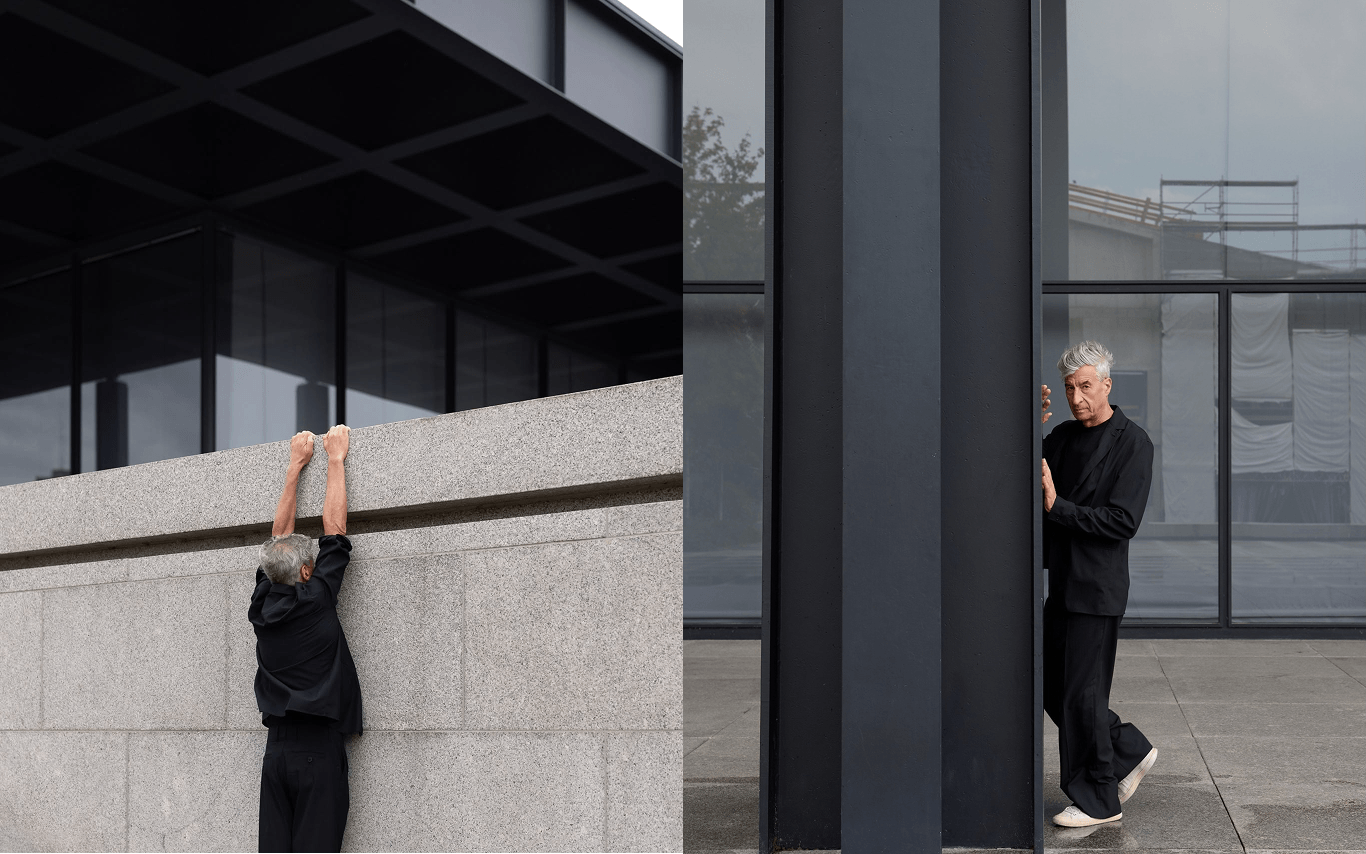
Cattelan’s works rarely behave as objects simply placed inside a room. They redirect attention, alter the atmosphere and make architecture part of their meaning. At the Neue Nationalgalerie, this relationship becomes especially charged.
Developed through an extended dialogue between the artist and the museum, NIGHT brings existing works into contact with new site-specific commissions. One new intervention alters the building’s spatial organisation, influencing how visitors move through the exhibition.
The title suggests a shift in perception: night can obscure the familiar while bringing overlooked details into focus. Against Mies van der Rohe’s disciplined geometry, Cattelan introduces instability, setting the pavilion’s modernist clarity against the ambiguity of his imagery.
The effect is striking in a building long regarded as an almost temple-like monument to modernism—transparent, ordered and rigorously composed. Cattelan disrupts that order, making the architecture an active participant in the exhibition.
Exhibition highlights
Among Cattelan’s best-known works, Novecento (1997) suspends a taxidermied horse between motion and stillness. Its theatrical image of strength rendered helpless takes on a striking tension inside the Neue Nationalgalerie’s vast glass hall, where weight, mortality and vulnerability meet Mies van der Rohe’s precise architecture.
In Him (2001), a small kneeling figure initially appears almost childlike, until the viewer moves around it and recognises Adolf Hitler. This delayed recognition turns innocence into horror, confronting the uneasy distance between empathy and revulsion. In Germany, the work carries an especially charged resonance, its power resting in the moment when an innocent image gives way to a painful historical reality.
La Nona Ora (1999) depicts Pope John Paul II struck down by a meteorite, his ceremonial robes and authority intact despite his physical vulnerability. The absurd scene provokes laughter before raising darker questions about power, belief and human frailty. This uneasy blend of comedy and gravity reflects Cattelan’s “comic existentialism”, where irony and tragedy remain closely entwined.
From TOILETPAPER to the Schaubühne
On September 10th, NIGHT extends beyond the museum as the Neue Nationalgalerie and Schaubühne celebrate Cattelan, TOILETPAPER and the magazine’s new season campaign. After a 4 PM poster signing at the museum, the evening moves to the Schaubühne forecourt, where this year’s TOILETPAPER campaign will be displayed from 6 PM, alongside signings with Cattelan, Pierpaolo Ferrari and members of the Schaubühne Ensemble. A special bus links the two venues, bringing art, theatre and TOILETPAPER’s surreal visual language into the same conversation.
A remarkable place in art history
Twenty years after co-curating the 4th Berlin Biennale, Maurizio Cattelan returns to Berlin, bringing his provocative practice into dialogue with Mies van der Rohe’s iconic architecture. His works may begin with a joke, but often leave behind uneasy questions about power, memory, responsibility and vulnerability.
Read our conversation with Cattelan as he discusses technology’s influence on art, the tensions between truth, beauty and ideals, and why art should never stop asking difficult questions.