Miyako Bellizzi Marty Supreme costume design

Miyako Bellizzi: tailoring a hustler’s dream in Marty Supreme

Miyako Bellizzi had never cared much about table tennis—until a script pulled her into the restless, sharply dressed world of Marty Mauser. The costume designer, known for her long-time collaboration with director Josh Safdie on films such as Good Time and Uncut Gems, found herself building the visual language of Marty Supreme—one of the most talked-about releases of 2025.

Safdie’s A24 directorial debut, starring Timothée Chalamet, Gwyneth Paltrow, and Odessa A’zion follows a fiercely ambitious ping-pong player chasing fame across the melting pot of 1950s New York. Bellizzi’s costumes don’t just recreate an era—they map character, class and desire, shaping the film’s gritty elegance and earning an Oscar nomination for Best Costume Design.

In conversation with hube’s editor-in-chief, Sasha Kovaleva, Bellizzi reflects on the research and intuition behind dressing Marty’s world, the cultural references and personal stories woven into every look, and her thoughts on AI, the changing film industry, and the uncertain—yet exciting—future ahead.

hube: What first drew you to Marty’s world, and how did that initial impression shape your vision for his wardrobe throughout the film?

Miyako Bellizzi: When I first heard about the film, I knew it was about ping pong—which I knew nothing about. I read Marty’s autobiography, and that’s when I really started to get excited, but more on a human level, thinking about Marty as a character. The real Marty Reisman was incredibly eccentric, had a wild sense of style, and was a hustler from the Lower East Side who often got himself into—I don’t want to say it—trouble. He had a personality far beyond table tennis, and that’s what truly inspired me, especially in terms of how his character informed what he would wear as his table tennis uniform.

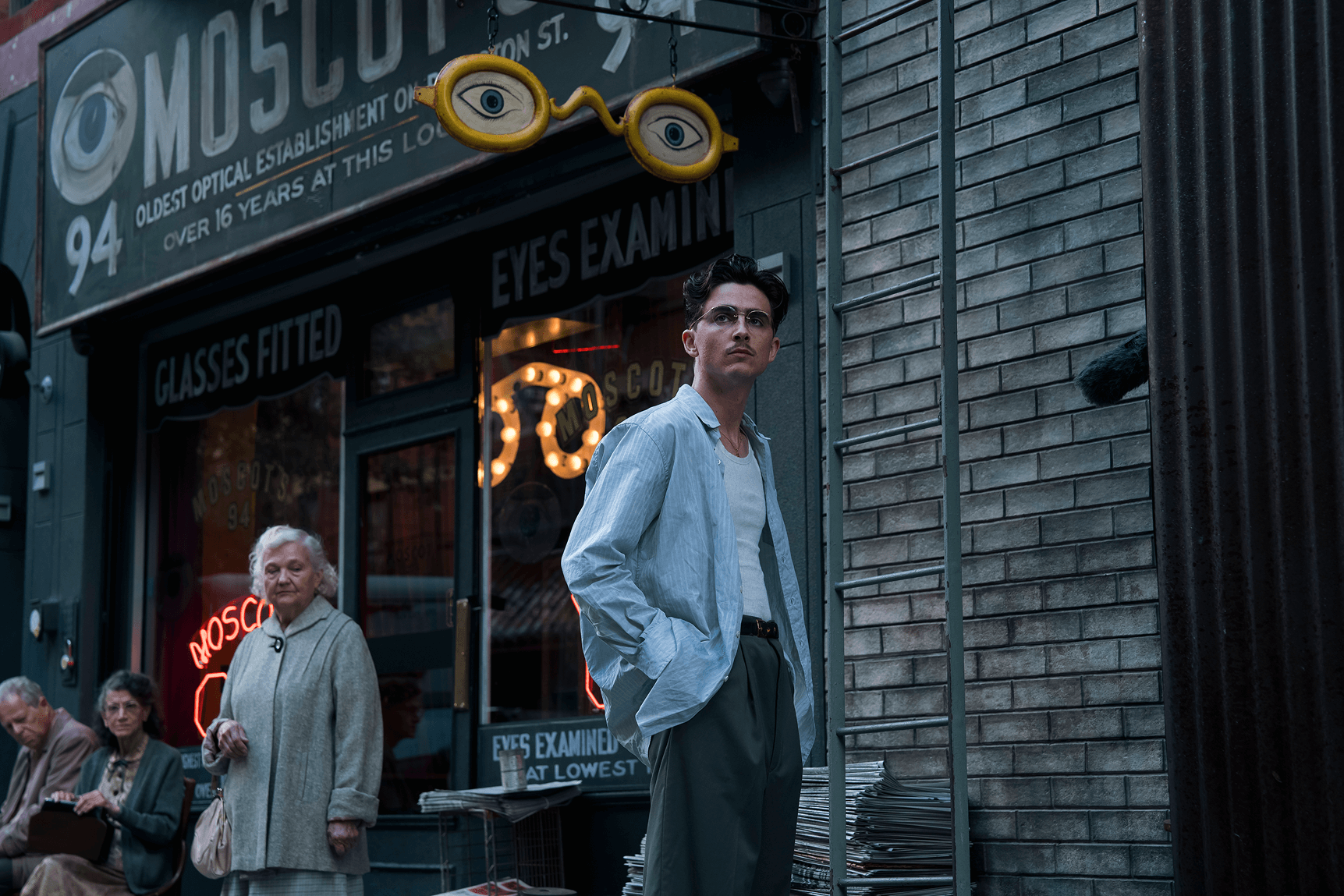
What also drew me in was the world of the Lower East Side—how vibrant the neighborhood was and how exciting that moment in New York City felt. It was the true melting pot for people arriving in America. Large waves of immigrants would begin there before branching out across the city. Many newcomers first lived in tenement buildings, which is such an important part of New York’s history, particularly on the Lower East Side. Each generation brought different communities, arriving in groups and reshaping the neighborhood over time. That world fascinated me, and I really wanted to reflect it in the Lower East Side scenes—the Romanian grandmothers, Jewish families, Asian communities, all these overlapping influences. How do you show that world on screen? People living together in tight spaces, trading, selling, passing things along—that’s what the street vendors represent. It was a true melting pot of communities learning to coexist—and in many ways, that’s America. Thinking about that environment helped shape Marty’s world: what he sees around him, who he looks up to, and the kinds of men whose style and attitude influence him.

Miyako Bellizzi
Marty Supreme
costume design
MIYAKO BELLIZZI, photography by DANIEL ARNOLD
Miyako Bellizzi
Marty Supreme
costume design
TIMOTHÉE CHALAMET
Courtesy of A24
Miyako Bellizzi
Marty Supreme
costume design
GWYNETH PALTROW
Courtesy of A24
Miyako Bellizzi
Marty Supreme
costume design
GWYNETH PALTROW
Courtesy of A24
Miyako Bellizzi
Marty Supreme
costume design
ODESSA A’ZION
Courtesy of A24
Miyako Bellizzi
Marty Supreme
costume design
MIYAKO BELLIZZI, photography by CLEMENCE POLES
Miyako Bellizzi
Marty Supreme
costume design
Photography by ATSUSHI NISHIJIMA

h: I can only imagine how much time the entire research process can take. When did you start working on this project?

MB: Unofficially, I started thinking about the film a few years ago, while Josh was writing the script—maybe during or just after Covid. He was writing a lot during that period, and I knew about the project, but I never knew exactly when it would shoot. I first met Timmy while we were working on Uncut Gems, and I knew he would be involved in this film. But then his schedule was so busy, Covid hit, and so many things were happening, so it stayed in the back of my mind.

From the moment Josh first told me, I began collecting 1950s clothes and old Life magazines. Josh knows how much I love that era, so over the years he would give me updates about the characters, which was really fun. That’s when I started thinking: how do I even approach a 1950s period film? I needed to understand what life was like in 1952—it was all about the research. At the time, I was working on Bonjour Tristesse in France, and I collected materials for Marty Supreme, like old textile books from flea markets.

You always wish you had more time, and research never really ends. You could spend forever digging, but at some point you have to move on. There are so many tangents—you could spend a whole day immersed in one tiny detail that isn’t even directly relevant to the film, but you get drawn in. Honestly, research is my favorite part. Even reading about how hard it was to get wool in certain countries after the war, or how tricky it was to source in London, fascinated me. All these small facts—how can we bring them to life on screen?

h: Beyond the glitter and the ping pong matches, Marty’s world has a gritty, competitive edge. Were there any specific research trips, vintage discoveries, or subcultural influences that shaped how you dressed the supporting characters?

MB: Abel Ferrara, for example—to me, he represents the bad guy, the hustler, the gangster, and money is a big part of his world. He became a reference point for Marty. In my mind, their suits are intentionally similar. I did that on purpose, because I noticed it during my research. That’s another thing about research—things come full circle. Ferrara is the kind of character Marty isn’t necessarily trying to emulate, but he’s the type who lives fast, gambles, and we don’t really know what he does—he’s just a hustler. And then it clicked—maybe that’s how the two of them are similar, character-wise. That’s who Marty looks up to in terms of style.

Tyler, The Creator’s character is different. I did a lot of research for him as well. I wish there had been more world-building around Harlem and uptown, because uptown and downtown were very different at the time, even within the communities. Harlem is a historically Black neighborhood, and that’s where he lived. He worked as a taxi driver—a blue-collar type—and had a family. So what influenced Wally’s style? Why are he and Marty friends? How did they come together? Beyond their love for ping pong, they also go on these runs together to make money. Wally has an edge. He has a family, but also another side he likes to explore. What shaped that side of him?

In Harlem, zoot suits were very popular. Wally has the widest pants, because that was the style there—they measured them by width. It’s a small detail I learned while researching the era, about uptown dressing that you didn’t see downtown. He’s my one uptown character—how do I translate that visually? That’s what sets him apart from Marty.

h: Do actors ever influence your designs? Maybe there has been a moment where an actor’s own personality or movement changed what you created for them?

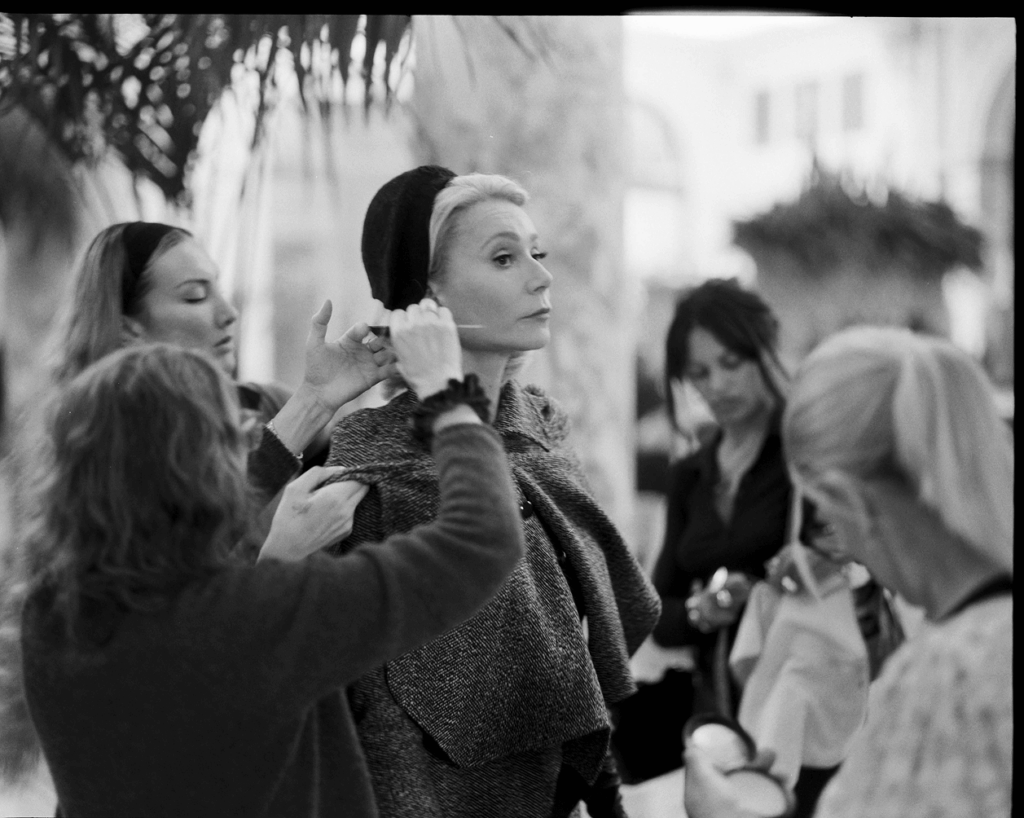
MB: Always—yes, it’s really interesting. I feel like much of my job is about working with people and understanding them. You work with actors and help them get into character, but often you don’t really see how it all comes together until a fitting. You go through each scene in detail. You might have an idea of who they are as a person, but then you have to break it down. It’s very logistical: like, “Gwyneth, we open with your character walking through the lobby. You’re in London. It’s winter.” These are all parameters—who you are while traveling versus who you are and how you dress in everyday life as this character. But then you meet them, and certain shapes, silhouettes, or details inform how they move, how they want to present themselves, or how they feel.

I’d say this is especially true when working with women, more so than men, because they tend to be more conscious of how they appear on camera. Unfortunately, there’s a lot more written about women and how they look on camera than men, and there are simply more conversations in general. We go into micromovements in detail—how someone walks through a room, for example, and how that affects the design. Like the robe Gwyneth wears in the hotel scene—we discussed it at length.

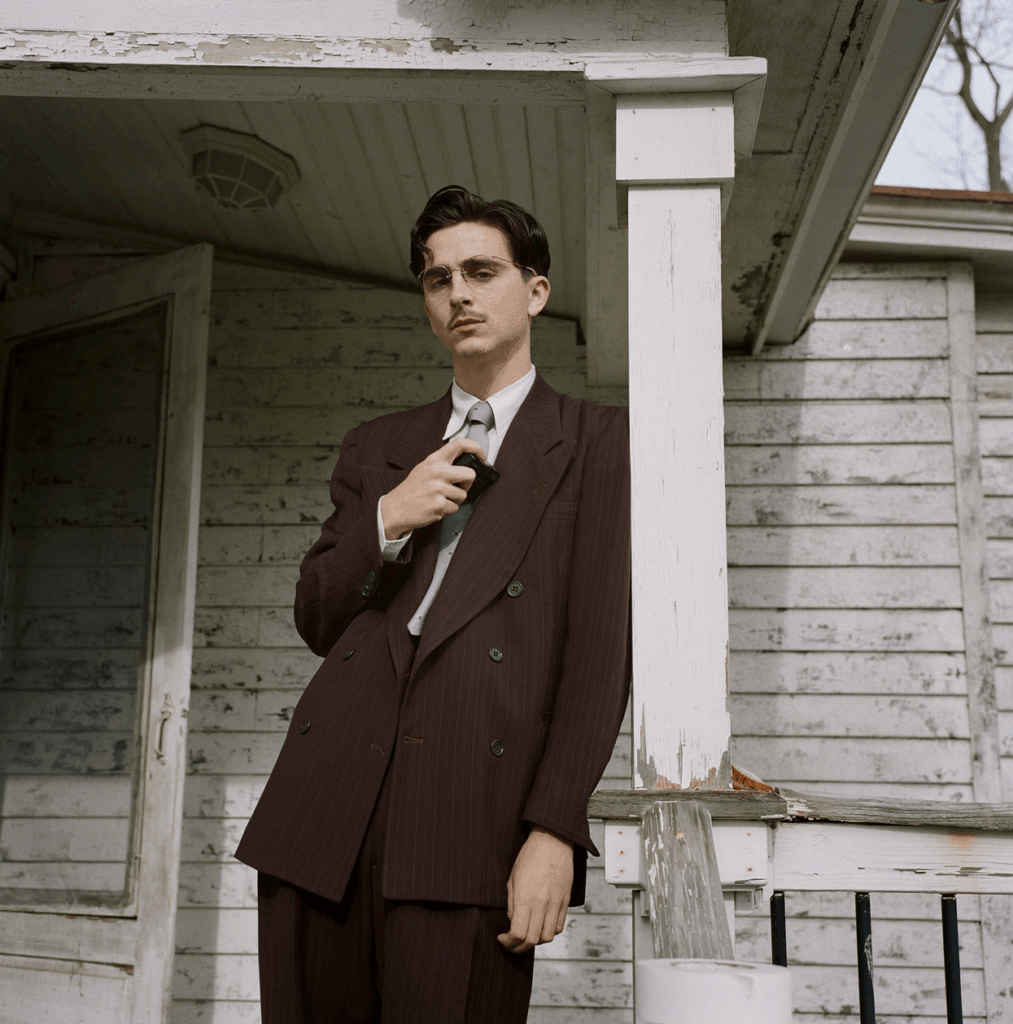
With Timmy, it was more about functionality. He’s from the Lower East Side, and he likes to pretend he’s—I don’t know a better term — “hood rich.” He’s young and carefree with his money; he doesn’t have to pay rent or think about certain responsibilities. That informed how I approached his style. He’s a little flashier than most in the way he dresses. He cares about his image and will spend everything on one suit he thinks is the best.

It’s interesting how these things translate differently on each person. When I first met him, he was coming off A Complete Unknown. The first two or three fittings were tough, because he looked a lot like Bob Dylan. I remember thinking, how do I transform him into Marty? You have to try everything, but some ideas don’t work. Some jackets looked almost too collegiate—maybe because of his Dylan vibe. I thought, “You look like a college student, like a sophisticated student. You don’t look like Marty yet.” But that’s good—it helps morph him gradually.

Timmy has style, and I was very lucky on this film. He gave me plenty of time for fittings. We spent hours and hours just experimenting. That openness is so helpful. We would talk, review photos, try things again, and refine. He had ideas, I had ideas, and narrowing it down was the hardest part.

Characters are incredibly important. As soon as someone is cast, everything changes. You have an idea in your head, then someone gets cast, and based on who they are, how they look, even their personality, new things emerge.

There are so many special people in this film. One of the most remarkable I met barely has a cameo: Philippe Petit, the tightrope walker from the documentary Man on Wire. He walked across the World Trade Center in the ’70s and still tightropes every day. His character brought the fittings to life. We gave him a quirky hat and added personality to his otherwise normal suit—it really helped him shine.

h: This is so inspiring to hear, because as an audience, we only see the two-and-a-half-hour story on screen—but there are so many other stories behind it, and the mental worlds you create for each character are just incredible.

MB: There are so many stories. I think I’d like to do some sort of book or project about how someone comes in when they’re cast, and over the course of fittings you gradually morph them into a character—how that process works, and how certain things, even their personality or who they are, or something they happen to wear when they arrive, can inform the character.

Kevin O’Leary, Mr. Wonderful, for example, always wears collar bars—and that’s something he brought to the role. He really cares about the jewelry in his clothes, which makes sense, because his character would too. He collects cufflinks, and he was wearing his own solid gold, diamond, 1950s‑vintage cufflinks—and watches that mattered to him—which we incorporated into his character. Everyone brings something, which is exciting. You have to pull it out in a way that makes them feel comfortable in themselves while also enhancing their character.

Miyako Bellizzi
Marty Supreme
costume design
ABEL FERRARA
Courtesy of A24
Miyako Bellizzi
Marty Supreme
costume design
GWYNETH PALTROW
Courtesy of A24
Miyako Bellizzi
Marty Supreme
costume design
Photography by ATSUSHI NISHIJIMA
Miyako Bellizzi
Marty Supreme
costume design
Courtesy of A24
Miyako Bellizzi
Marty Supreme
costume design
Courtesy of A24
Miyako Bellizzi
Marty Supreme
costume design
Courtesy of A24
Miyako Bellizzi
Marty Supreme
costume design
Photography by ATSUSHI NISHIJIMA

h: AI tools begin to appear in costume design from virtual fittings and this kind of stuff. How do you see them affecting the tactile aspects of your craft? Do you view it as a helper, or a threat, or something in between?

MB: It’s a bit conflicting. I think less for me personally, but more for my team. I don’t really know how it’s going to work. For example, we’ve used that technology for big crowds, to digitally populate stadiums—and that makes sense, because it’s helpful for large-scale scenes like that.

It’s tricky, because you miss aspects of the craft—actually building the clothing and seeing it worn on a real person. There’s a bit of a disconnect. I’m not sure we’ll even notice it—and it’s a little scary how realistic AI can look. You can make anything, everything—it can almost make any world possible. Right now, part of the beauty of filmmaking is that you’re creating with limitations. You’re creative because you don’t have the full world. But if you can have everything instantly, it will change how things look. How do you make something imperfect in AI? Maybe you add stains or adjust colors.

I’m interested in it because I know it’s the future. I think it’s going to change the industry a lot. It will change teams and how we work if everything becomes virtual—but I’m not entirely sure yet.

h: Speaking about the future, what excites you most about it?

MB: Right now, it’s all unknown. I have no idea what’s coming next. I’ve been struggling since Marty Supreme ended; it was really hard. It’s a tough film to follow up, and I don’t know what my next project will be. In the meantime, I’m just doing other things. I don’t know how much, but I do know this film will affect my career, even just from being nominated. I want to work on another project eventually, but maybe I’m not in the right headspace yet. That film took so much out of me creatively. It was my dream project—I had always wanted to do a period film, that specific period. And now I’ve done it, and was successful enough to be nominated—my first big period film.

Working on a 1950s film is tough. It’s a very different way of working compared to contemporary film. That’s part of why I’m still in awe. There are designers who only do period—like Sandy Powell, my favorite classic designer—she’s done every period and that’s what she’s known for. Some designers focus more on fantasy, like Kate [Hawley], who did Frankenstein. Those costumes are unbelievably beautiful, but that’s her wheelhouse; that’s her world. She does those types of films.

I like to mix it up and try things I’ve never done before, so we’ll see. It would be tough to do another 1950s film after this one. I’m also finding it hard to think about returning to contemporary films because I really loved working in period. I don’t know, but it feels exciting. My whole life feels unknown right now. Even personally—I’m in an Airbnb, I don’t have a home, I don’t have an office, I don’t know where I’ll go next or where I might move. I’m just trying to let life guide me a little and see what comes next. There’s a lot of uncertainty in my life at the moment, beyond this film.

h: There’s definitely some beauty in this moment. So just enjoy it.

MB: Thank you. For me, there’s still a lot to figure out, but I think it will all work itself out.

Miyako Bellizzi
Marty Supreme
costume design
Courtesy of A24
Miyako Bellizzi
Marty Supreme
costume design
Courtesy of A24

ISSUE 7

The new edition is here