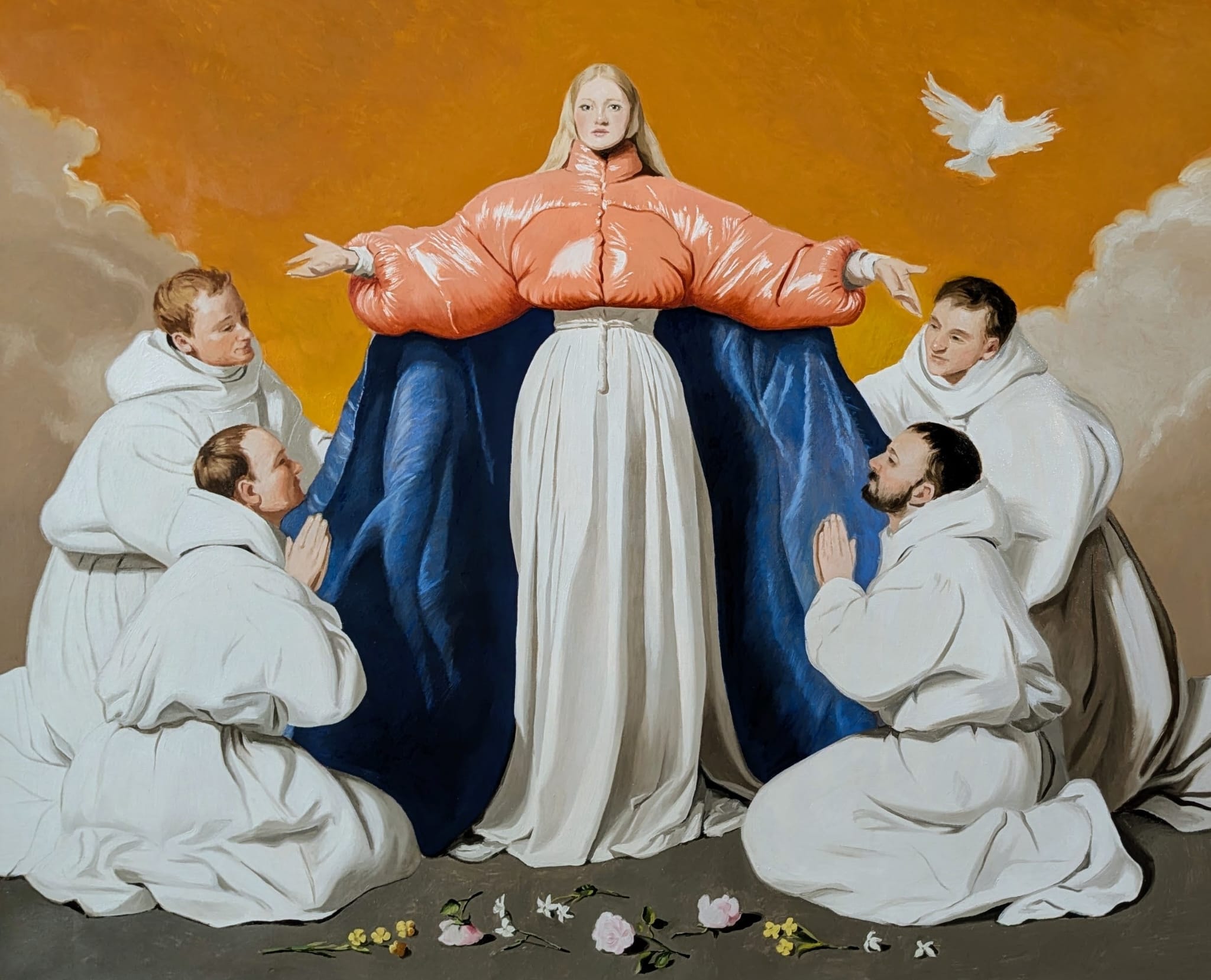
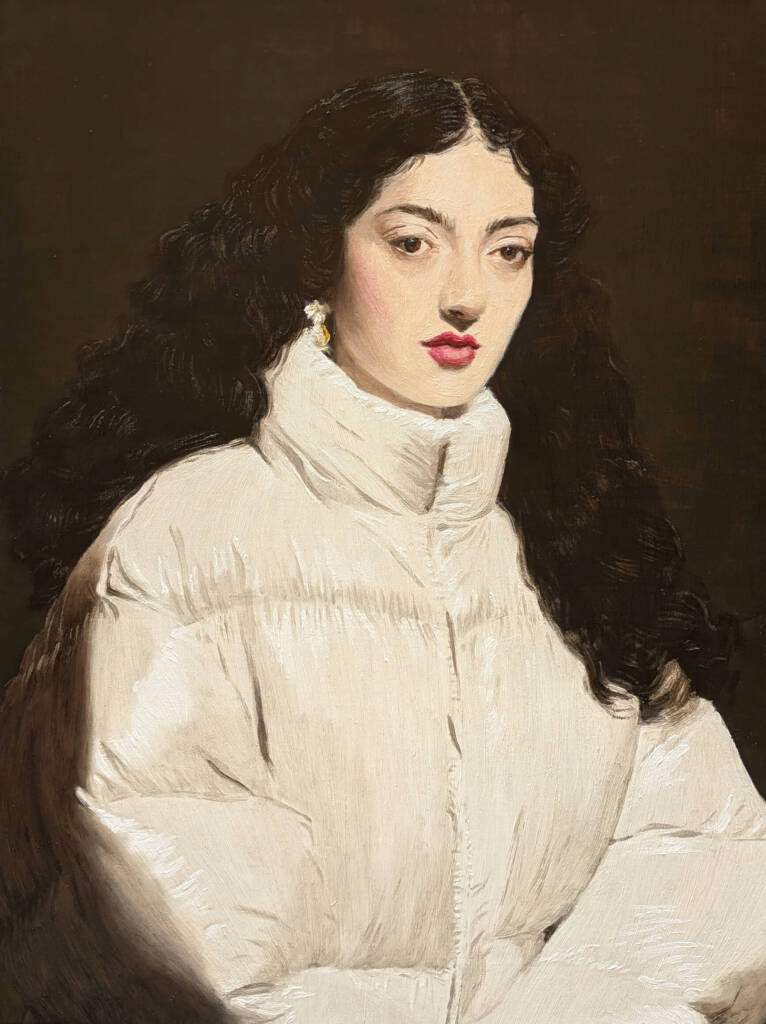
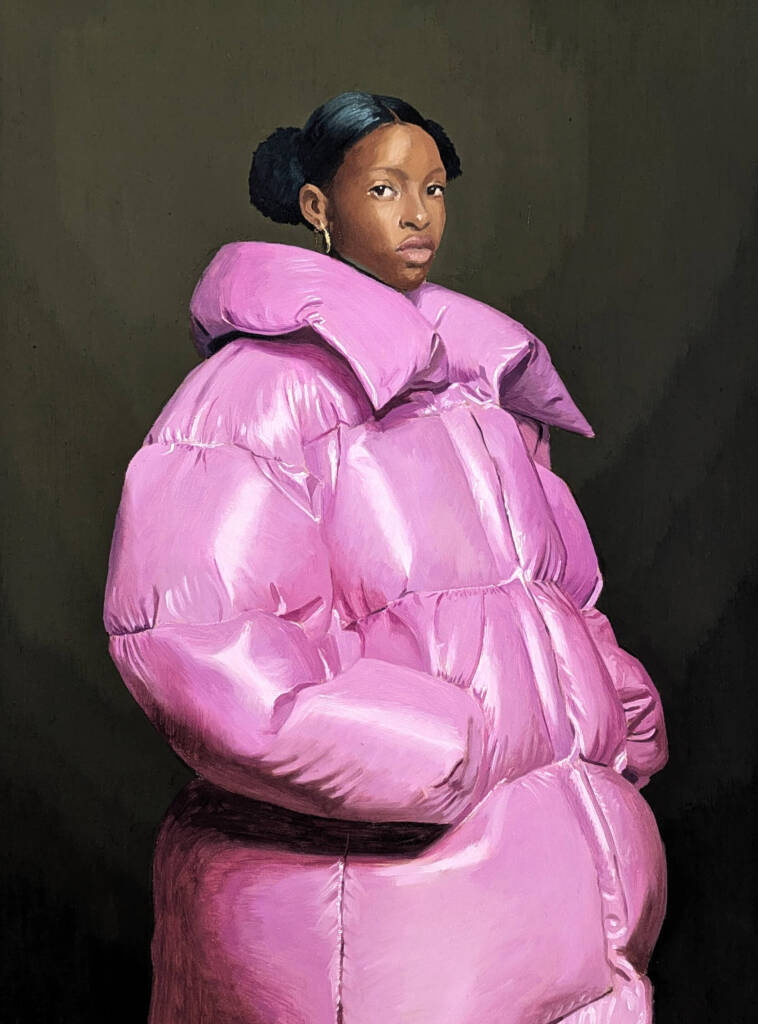
An Andalusian native, Nieves González creates work—like her home—that converges the present day with the long, richly layered heritage of craftsmanship, blurring the line between the old masters and the cultural emblems of today. A graduate of the University of Seville, with both a BA and MA in Fine Arts, she has developed a distinctive body of contemporary portraiture that merges the composure of classical technique with the wit of modern observation. Her paintings often depict modern women rendered with the solemnity of historical icons—a dry irony that reveals both humor and critique. While her subjects may carry a subtle playfulness, her style and technique remain resolutely serious, rooted in the discipline of traditional painting—an approach so rarely fostered in the 21st century that it feels almost resistant to the digital present, inviting the viewer to slow down and enter her world. In 2025, her work reached a broader audience when she created the cover art for West End Girls, Lily Allen’s comeback album—a commission that transformed her blend of Baroque depth and contemporary wit into pop iconography. Her tone is poised; her subjects, never still.
hube: Your Spanish heritage often threads subtly through your work. Do you ever feel a tension between honoring tradition and engaging with the contemporary?
Nieves González: I don’t experience it as a tension. Tradition is part of me because I grew up in Andalusia, surrounded by classical imagery, color, and ritual. At the same time, I live fully in the present, so what is contemporary enters my work naturally. I don’t feel I need to choose between the two—they coexist with complete freedom in my practice.
h: Growing up in Andalucía—a region layered with overlapping histories, mythologies, and visual codes—must have shaped your creative lens in complex ways. How has that environment informed the symbolic grammar of your images? And does coming from a place so defined by identity sharpen or complicate your own sense of belonging?
NG: Andalusia shaped me deeply. Huelva, the Sierra, my family’s town, Cumbres Mayores, and later Seville all gave me a strong connection to tradition, nature, and a particular way of understanding images. Symbols and atmospheres from that world appear in my painting without effort. Instead of complicating my identity, it gives me clarity. I know where I come from, and that foundation lets me move with freedom.
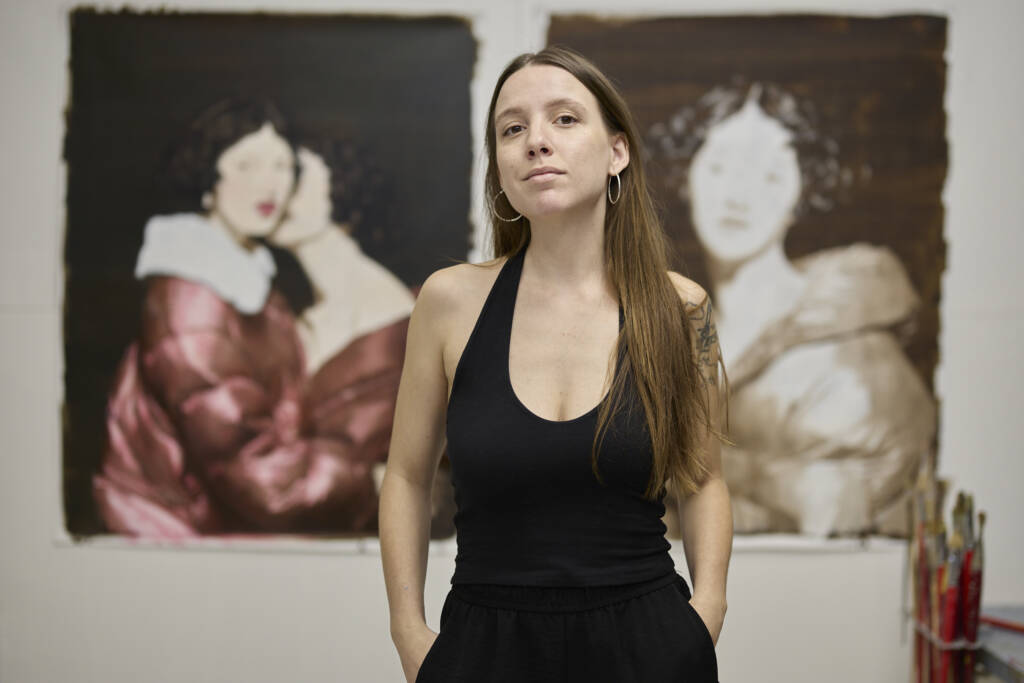
Photography by JOSE ALBORNOZ
Frontera de lo puro, flor y fría
La Santa y el beso
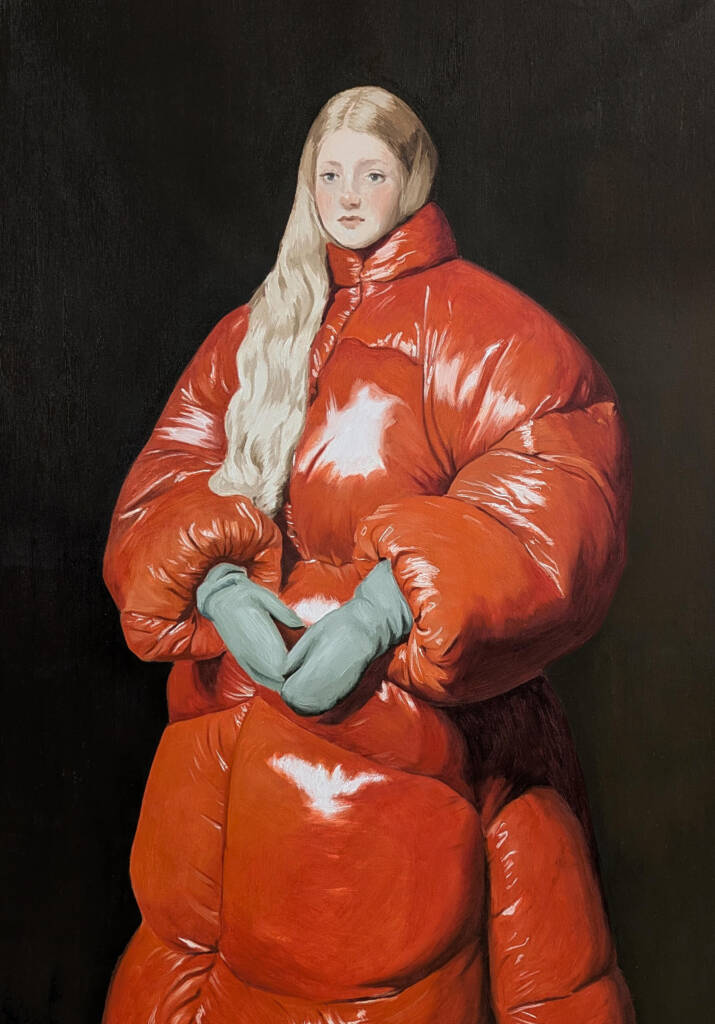
Golpeate el corazón, 2025
Photography by ELEONORA CERRI PECORELLA

Photography by ELEONORA CERRI PECORELLA

Photography by ELEONORA CERRI PECORELLA

La Santa y la aurora, 2025

La Santa y el oso

La santa y La hiedra

La santa y el delfín

La Santa y el cisne
h: Your work recently appeared on the cover of Lily Allen’s West End Girls. How did that collaboration unfold on a conceptual level, and what conversations or shared intuitions guided the final visual direction?
NG: It was a very natural process. Leith Clark contacted me because she knew my work and felt it aligned with the energy of the album. We had several conversations, including a video call with Lily, which helped me understand her presence and what they hoped to express. I hadn’t heard the album yet because it wasn’t available, but I understood the emotional universe behind it. From there, everything flowed easily.
h: Women recur throughout your work, not just as subjects but as distinct psychological presences. Did this focus emerge organically, or was it a deliberate recalibration of your practice? What do these figures allow you to examine that other subjects might not?
NG: It happened completely naturally. My paintings speak about me and the people around me, and many of those experiences come from a feminine perspective. I’m a woman, and I understand that world intimately. Painting women allows me to explore strength, fragility, resistance, and intimacy—emotions I know from within.
h: When choosing your subjects, what draws you to a particular face, aura, or internal world? And when collaborating with a widely recognized figure like Lily Allen, how does visibility itself alter the dynamics of vulnerability, distance, or trust?
NG: I usually start with models, but I transform their faces freely as I paint. I’m drawn to a mood or presence rather than physical accuracy. With Lily, the dynamic was different because she is instantly recognizable, but I tried to approach it the same way: not copying her, but capturing something of her energy without losing my own language.
h: In a time when imagery circulates faster than meaning can settle, how do you think about authenticity within your work? What does it mean to craft an image that resists disposability and holds emotional weight beyond the digital present?
NG: For me, painting is already a form of resistance. While everything moves quickly, a painting asks you to slow down. I’m not interested in creating something that’s consumed instantly—I want the image to have presence, to hold emotion, to require time. Authenticity comes from working slowly and honestly, letting the image exist beyond immediacy.
h: Do you feel that mystery is essential to art, or is transparency just as valuable? Where do you situate yourself between those two poles?
NG: Mystery is important to me. I don’t want to explain everything. I prefer leaving space for the viewer to enter the work and complete it with their own interpretation. Painting needs room to breathe, and I always lean toward what remains unsaid.
h: Do you think an artist has a responsibility to reflect their time, or is the act of withdrawing from the present equally valid?
NG: One way or another, you always reflect your time. Even if you try to step away, that decision also says something about the moment you’re living in. For me, what matters is working honestly from my own experience; your present always finds its way into the work.

El gato negro

Equinox

La Santa y la Fiera

Photography by ELEONORA CERRI PECORELLA
Words: ISABELLA MICELI
