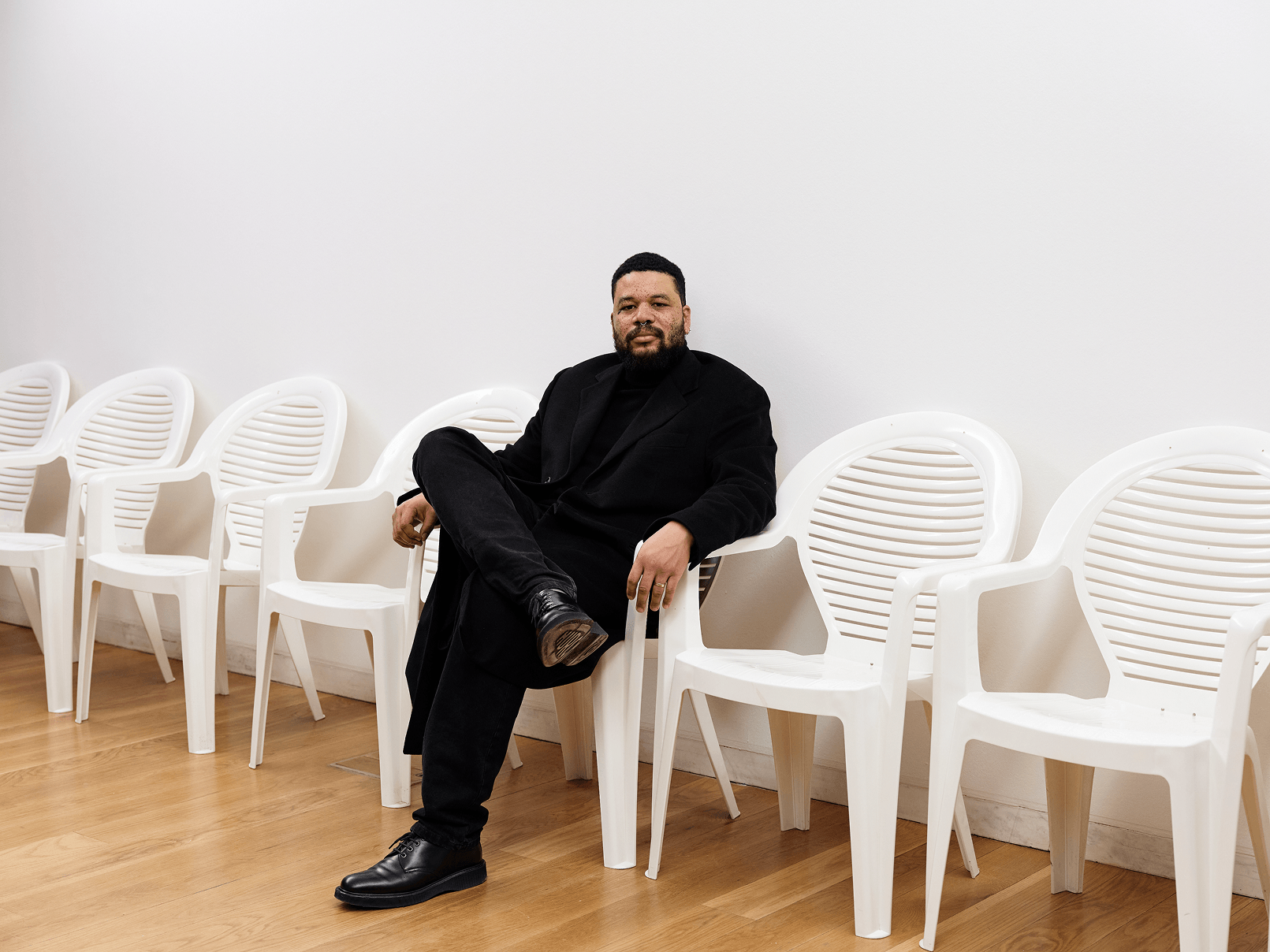
Colombian artist Oscar Murillo has exhibited his work around the world, including at prestigious institutions such as the Tate Modern in London and as part of the 36th São Paulo Biennial. He has earned acclaim for an inventive practice that draws on both traditional techniques and experimentation to reflect broader social commentaries on the human experience.
Murillo’s output ranges from large-scale paintings and installations to long-term projects and socially engaged art, most notably Frequencies, which involved schools all over the world and invited students to draw and mark on blank canvas fixed to their school desks. Ongoing for over a decade, the resulting archive was later compiled into a book of the same name, published in 2024. Murillo’s latest solo exhibition at the Kurimanzutto gallery in Mexico City, el pozo de agua, featured paintings and installation works that propose a well of shared energy, embracing the dialogue between material, mark-making, collectivity and art.
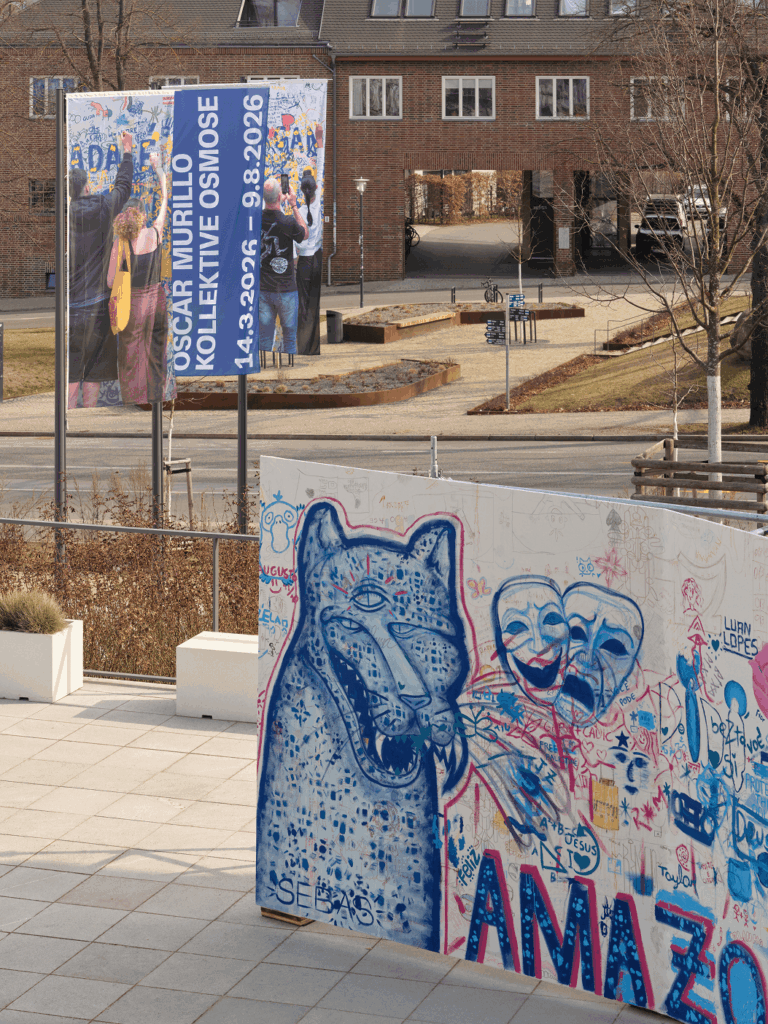
Until August 9th of 2026, his exhibition ‘Collective Osmosis’ will be on view at DAS MINSK and the Museum Barberini in Germany, serving as the inaugural collaboration between the two institutions. In this interview, Oscar Murillo opens up about the tension between aestheticism, beauty and social contradiction, and the power of collective ‘mark-making’ as a way of registering the complexities of our time.
hube: Looking back, when did art first become meaningful to you? Was creativity part of your everyday life growing up, or did it emerge later—perhaps as a response to movement, displacement, or change?
Oscar Murillo: What became formalised as art was always meaningful for me. Before I was uprooted from my village in Colombia, I loved immersing myself in construction sites after school. When I was seven, my family—my parents and younger sister—moved to the newest part of the village. We were one of only about five houses that were newly constructed, so as the neighbourhood grew, my after-school recreation was always helping out on construction sites. I think that experience was instrumental.
Later, upon arriving in London at the age of eleven, I felt the severity of the cultural shift. I grew up among mango trees and rivers and found myself in social housing in East London. Drawing became the only vessel that carried my depression and nostalgia. The early years on construction sites and the friendships left behind were suddenly situated on a kitchen table next to a pirate radio. So, creativity was always meaningful; it just shifted.
h: When you begin a new work, what usually comes first: an image, a feeling, a question, or a situation? And when doubt or resistance enters the process, what helps you stay with the work rather than abandon it?
OM: My former art history professor, Patricia Bickers, was an inspirational figure—she was the person who helped me understand how to bridge the gap between art and life, between society and politics, and find the gaps within those universes where I, as an artist, can exist. The practice becomes a method, a constant situation; doubt and resistance are always allies.
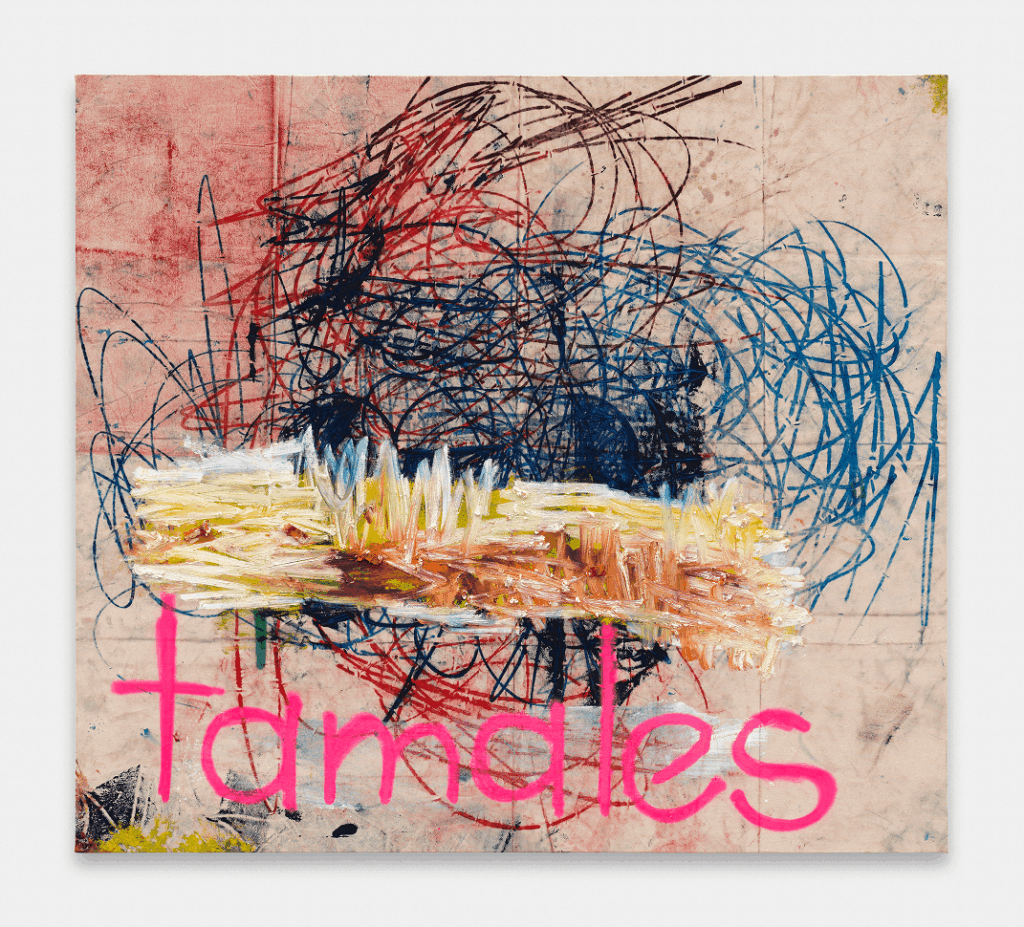
tamales (Drawings off the Wall), 2012, oil, oil stick, graphite and dirt on canvas, 170 × 190 cm.
Courtesy of the artist © OSCAR MURILLO. Photography by TIM BOWDITCH & REINIS LISMANIS
Photography by TIM BOWDITCH
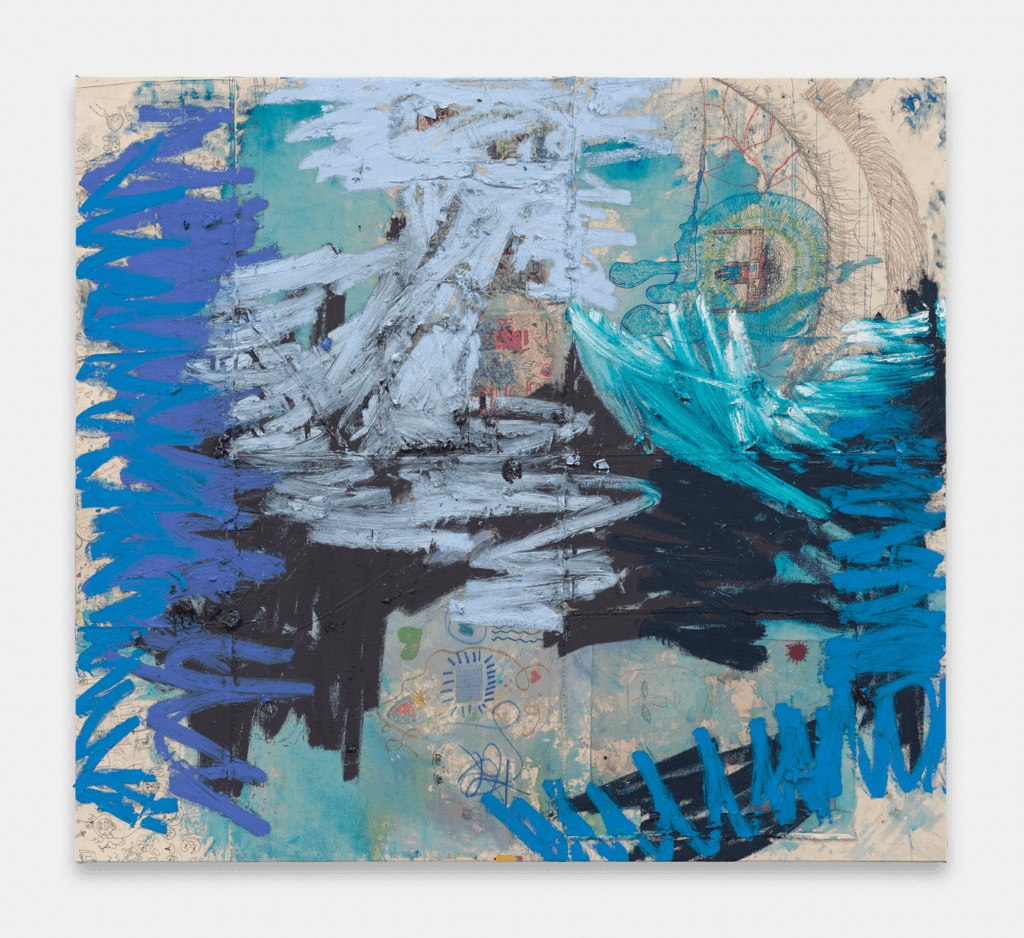
disrupted frequencies (United States, Japan, Colombia), 2013–2025, oil, oil stick, ballpoint pen, fountain pen, graphite, felt tip pen, highlighter pen, permanent marker, paint, crayon, staples, natural pigments, debris, and other mixed media on canvas, 180 × 200 cm.
Courtesy of the artist © OSCAR MURILLO. Photography by TIM BOWDITCH & REINIS LISMANIS