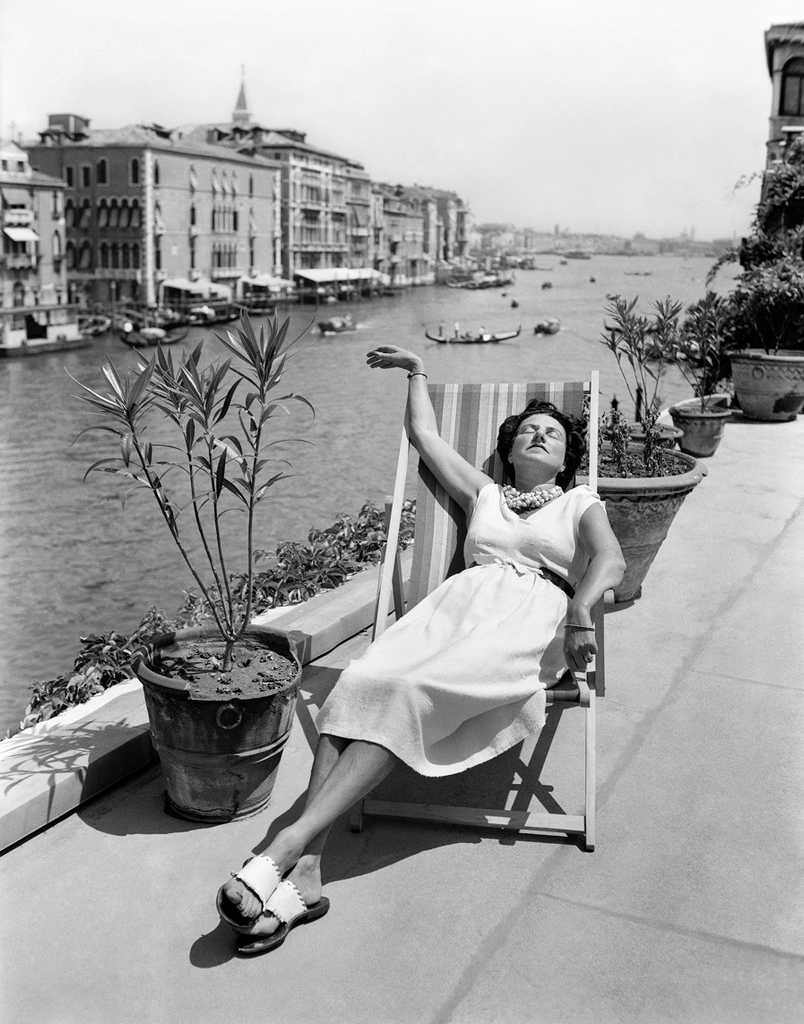
Before Peggy Guggenheim became one of the 20th century’s most influential art collectors, London helped shape her vision. Nearly nine decades after opening her pioneering Mayfair gallery, she returns to the city through Peggy Guggenheim in London: The Making of a Collector, a major exhibition at the Royal Academy of Arts, supported by Bottega Veneta. Running from November 21st, 2026 to March 14th, 2027, the exhibition revisits the formative 18 months that defined her collecting career.
The gallery that challenged an establishment
In January 1938, Guggenheim opened Guggenheim Jeune at 30 Cork Street, challenging London’s conservative art establishment with exhibitions dedicated to Surrealism and abstraction. Over its 18-month existence, the gallery staged more than 20 shows, introducing British audiences to artists and ideas that would reshape the country’s understanding of modern art.
Encouraged by mentors Marcel Duchamp and Samuel Beckett, Guggenheim embraced contemporary art, championing artists including Vasily Kandinsky, Jean Cocteau and Yves Tanguy. The gallery hosted the UK’s first group exhibition dedicated to collage and a controversial contemporary sculpture show. It also gave a young Lucian Freud his first public exhibition, featuring Old Man Running (1937–1938).
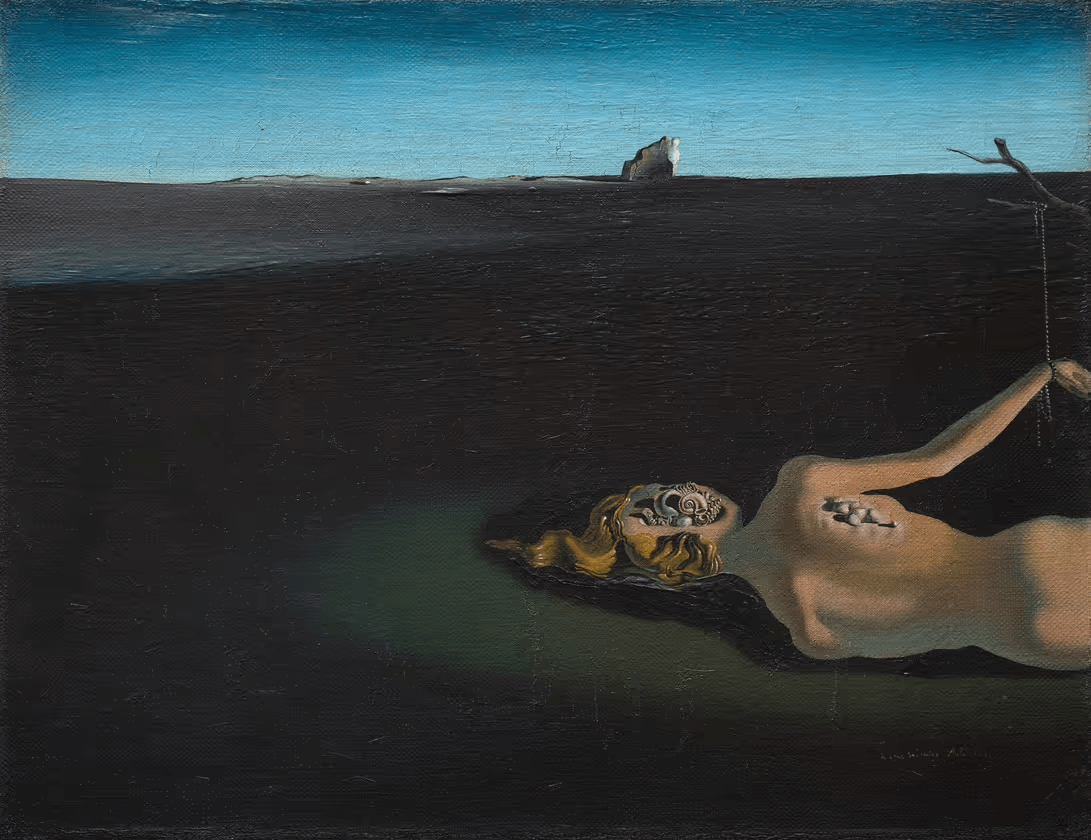
The Royal Academy gathers more than 80 works spanning painting, sculpture, drawing, collage, printmaking and photography. Many return to London for the first time since their original display. Artists include Eileen Agar, Salvador Dalí, Barbara Hepworth, Rita Kernn-Larsen, Henry Moore, Piet Mondrian, Sophie Taeuber-Arp and Yves Tanguy.
From Surrealism to Abstraction: inside the making of a collector
Structured around Guggenheim Jeune’s landmark exhibitions, the show traces the collector’s artistic ambitions and the relationships that shaped her taste. Portraits by Cedric Morris and photographs by Gisèle Freund offer glimpses of her circle, while personal objects include Yves Tanguy’s Earrings for Peggy Guggenheim (c. 1938), featuring miniature Surrealist paintings.
Another section revisits Guggenheim’s 1938 exhibition of children’s art, reflecting her conviction that young artists deserved the same recognition as adults. Among the works is Freud’s Old Man Running, painted during his teenage years.
The galleries move through organic and geometric abstraction, collage and printmaking, with works by Kandinsky, Charles Howard, Eileen Agar and Paule Vézelay. Puppets by Marie Vassilieff reveal the breadth of Guggenheim’s interests and her commitment to women artists. The final section turns to Surrealism, featuring Rita Kernn-Larsen, Grace Pailthorpe, Reuben Mednikoff and Wolfgang Paalen.
Even after Guggenheim Jeune closed in June 1939, London remained part of her plans. She began developing a permanent museum of modern art for the city, with art historian Herbert Read as its prospective director and Roland Penrose approached for exhibition loans. The outbreak of the Second World War put an end to the project. Guggenheim left Europe, eventually establishing her celebrated collection in Venice. Her London circle, however, left its own institutional legacy: Read and Penrose went on to found the Institute of Contemporary Arts in 1946.
Bottega Veneta’s art sponsorship brings Guggenheim’s London story to the spot
The exhibition marks another chapter in Bottega Veneta’s longstanding support of the arts. Its cultural partnerships have included Punta della Dogana and the Pier Luigi Nervi Foundation in Venice, Seoul’s Leeum Museum of Art and Bangkok Kunsthalle.
For creative director Louise Trotter, the collaboration carries a personal connection. She described the sponsorship as “a bit of a full circle” moment, reflecting both her British background and London’s formative influence on Guggenheim. The partnership also speaks to Bottega Veneta’s own ties to Venice, where the collector eventually established her renowned collection.
Organised by the Peggy Guggenheim Collection in Venice in collaboration with the Royal Academy of Arts, the exhibition revisits the city where a remarkable collecting vision first took shape. On Cork Street, Guggenheim challenged convention, championed overlooked artists and gave experimental ideas a public platform. Nearly 90 years later, her brief London chapter stands as a testament to the lasting influence one gallery can have on an entire cultural landscape.
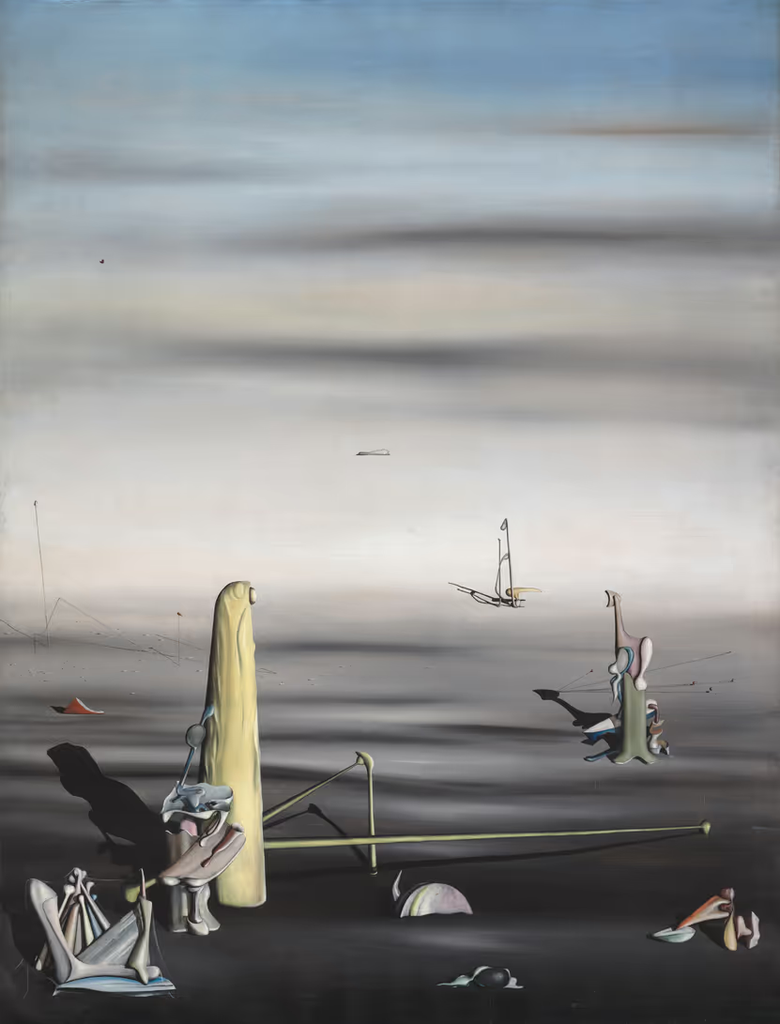
The Sun in its Jewel Case, 1937.PEGGY GUGGENHEIM COLLECTION, Venice (SOLOMON R. GUGGENHEIM FOUNDATION, New York).
Photography by DAVID HEALD © 2025 THE SOLOMON R. GUGGENHEIM FOUNDATION, New York